
An AI search visibility platform shows whether AI tools can find your pages, cite them, name your brand and recommend it, as four separate results. It also points at the fix behind each one. Treat every outcome as its own measurement, because a cited page is not the same as a recommended vendor.
For a lean team, the useful platform is one you can check against a fixed list of buyer questions and act on. Below you will find the four definitions, how each one is measured, what to ask a vendor, and a 14-day plan.
These words get used as if they meant one thing. They are four different results, and each is measured in its own way. AI visibility is the umbrella term for how often and how well you show up in AI answers. It is made of the four results below, so keep them in separate columns of your tracking sheet.
A citation says an AI tool used your page as a source. A recommendation says the tool would suggest your product. The first depends on the page. The second depends on the product, how well it fits the question, and what other sites say about it.
Imagine someone asks an AI tool for the best software for a task. The answer might cite your how-to article for a definition (a citation), name your brand once in the explanation (a mention), and then list three other products as the ones to try (no recommendation). Your page did its job. The product did not change the answer.
When a recommendation is missing, check four things before you rewrite anything: category fit (does the question describe a job your product does), credible third-party evidence (reviews, comparison pages, partner pages), landing-page clarity (does the first screen say what it is and who it is for), and product coverage (does it really do what the question asks).
AI visibility improves when you ship clear signals steadily and measure each outcome on its own.
The SCOPE Model is a simple operating system for startups: Signals, Coverage, On-Page, Provenance, Entities. Signals are the technical and editorial cues that help AI systems read you. Coverage means owning the query space with clusters. On-Page makes each URL unambiguous and useful. Provenance shows where your content comes from and who stands behind it. Entities tie your content to recognized concepts and brands.
Apply SCOPE weekly. Build brief-first clusters, add schema that matches the visible text, publish what an editor approves, and check entity links. The tradeoff is speed against depth: a small set of well-linked, well-sourced pages usually serves readers better than a large set of thin ones. Failure modes include noisy internal linking, missing or mismatched schema, and off-topic sections that blur what a page is about.
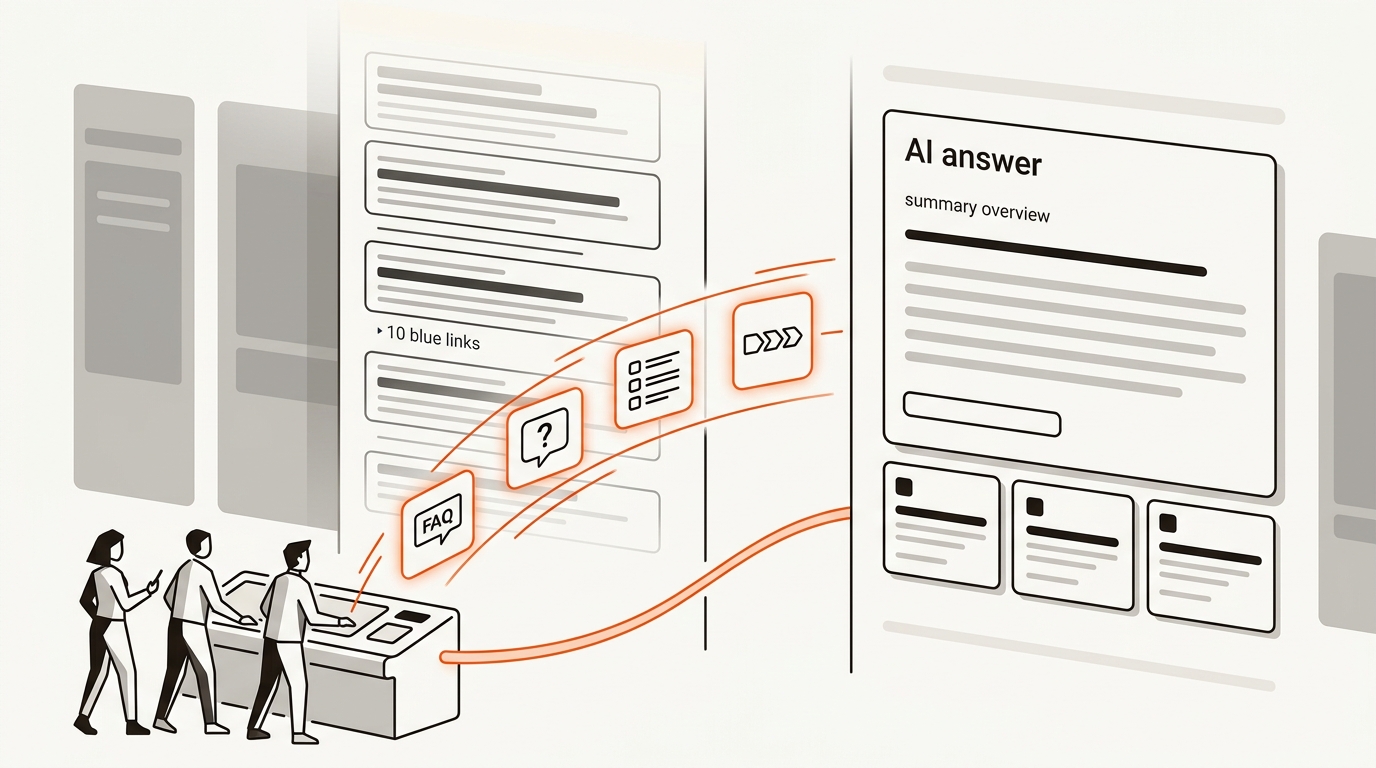
An AI search visibility platform should show, separately, whether AI tools mention, cite or recommend your brand, how your pages do in Google, and what to work on next. If you cannot tell the four results apart, you cannot tell which fix to make.
Many tool roundups list features and prices. Few explain how to tell a citation from a recommendation.
Enterprise suites such as BrightEdge, which describes itself as an enterprise SEO and AI search platform, are aimed at enterprise teams. Our angle is the small-team workflow: define each outcome, keep a fixed prompt list, and act on the gap you find.
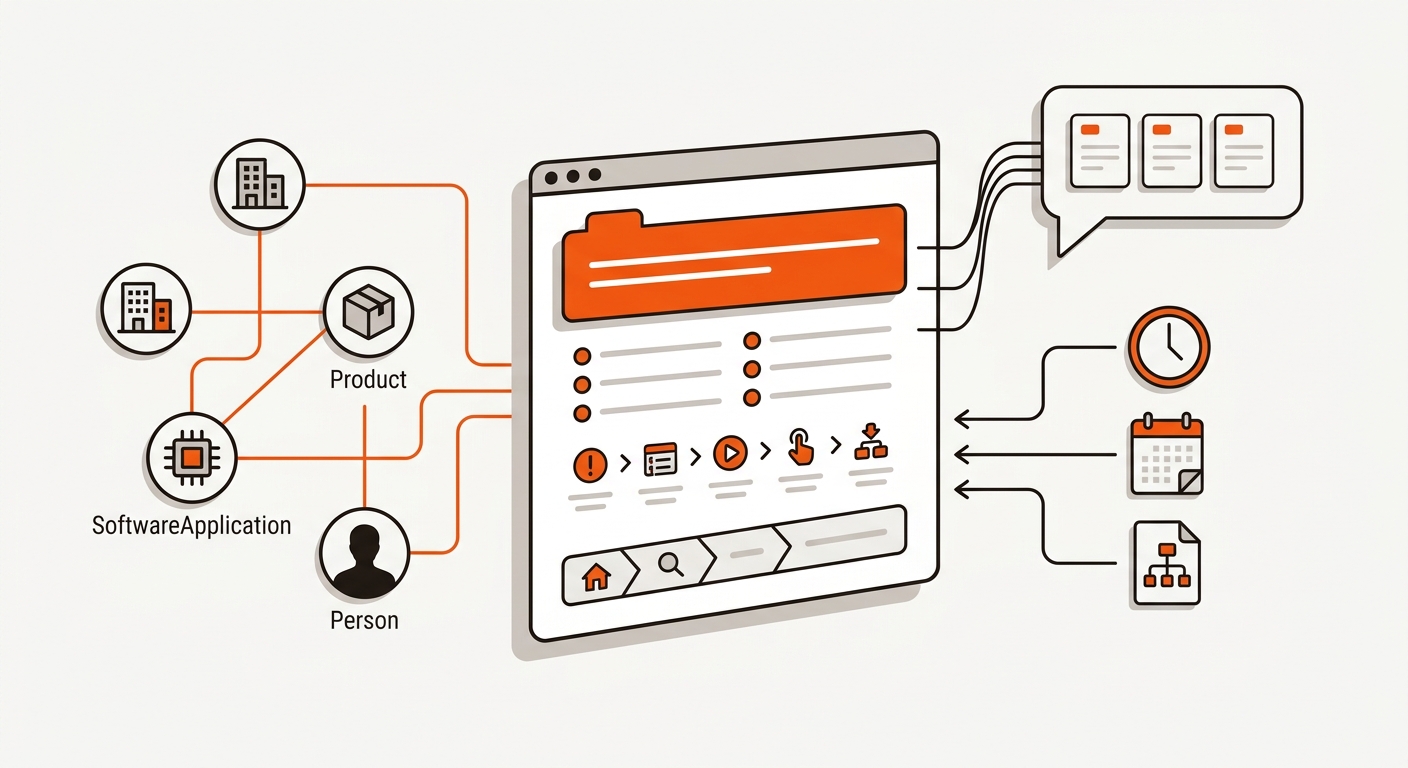
A platform earns its place when it records each outcome separately and points at what to fix.
You need three jobs done, by one tool or several: 1) research and briefs that reflect real buyer questions, 2) drafting and on-page work that ships clean schema matching the visible text, and 3) measurement that records mentioned, cited and recommended separately on a fixed question list. A tool that merges them into one score hides the difference that matters.
In practice that can mean Ahrefs or Semrush to source clusters, a crawler such as Screaming Frog to check technical basics, Search Console and Bing Webmaster Tools for index status and clicks, and a platform that publishes to your CMS. The loop closes when your Google data and your prompt-list results are both reviewed every week.
Lean teams win by cutting manual work between brief and publish while a person stays in charge of what goes live.
A small growth team usually cannot afford manual schema, ad hoc internal linking, or a separate measurement routine for every article. A useful platform takes approved outlines, drafts sourced sections, adds FAQ schema where the page has real questions, suggests internal links to related pages, and publishes what an editor approves. Weekly off-page tasks stay small: submit new URLs to Bing, keep your brand facts the same across profiles, and earn a few third-party mentions that describe you correctly. The limit is editor time, so choose a workflow where review is quick.
Pages that are unambiguous, verifiable and consistent about who you are give AI tools more to work with. No signal below guarantees a citation, a mention or a recommendation.
Two focused sprints give you a first baseline and a first set of improved pages.
Pull your seed terms and competitor data from Ahrefs or Semrush. Cluster the keywords around purchase or mid-intent topics. Write briefs with sub-intents like pricing, alternatives, setup and integrations. Assign the evidence each page needs: one table and one source-backed fact. Then write your fixed prompt list and record a baseline before you publish anything: for each question, whether you are mentioned, cited or recommended.
Generate drafts to briefs. Add FAQ schema that matches a real FAQ section. Add entity links to the first mention of your product, categories and partners. Build a tight internal link map across the cluster. Validate with Screaming Frog or a similar crawler so schema parses and links can be found.
Publish the pages an editor has approved. Update your XML sitemap and request indexing in Google Search Console. Submit to Bing Webmaster Tools. Build a single HTML hub that lists every page in the cluster with short descriptions. Check that canonical tags point to the right URL, especially for calculator or template variations.
Share two or three data snippets on LinkedIn and community channels with links back to your page. Offer one summary to a partner blog with a canonical link back to you. Add an original table to any page that lacks one, because tables are easy for people to scan and easy for tools to copy.
Rerun the prompt list you wrote on day 1, with the same AI tools and settings. Record mentioned, cited and recommended in separate columns. Compare Search Console impressions and average position for the new URLs. Where your page is cited but your brand is not recommended, check category fit, third-party evidence, landing-page clarity and product coverage before you rewrite the page.
Track the four outcomes like rankings: by question, by URL, by week, in separate columns.
Build a sheet with your fixed prompt list. For each question, tool and date, log whether you are mentioned (yes or no), cited (yes or no, with the URL), recommended (yes or no), and the role the brand plays in the answer. Pair that with Search Console clicks by query and Bing Webmaster Tools impressions.
Answers change between runs. Run each question more than once, keep the wording stable, and judge the trend over several weeks. Do not change all your prompts after a bad week, and do not turn the order of a list into a score.
Use a crawler such as Screaming Frog to check your cluster each week for missing schema or broken internal links. Check Ahrefs or Semrush for new keywords your pages now rank for, because wider long-tail coverage is a useful early signal.
Speed against depth decides outcomes on small budgets.
If your platform encourages volume over verification, expect trouble earning trust from AI tools and from human readers. Favor fewer pages with clear schema, consistent facts and proof.
Ask what you can verify in the first week: a baseline on your prompt list, schema that parses, and pages you can edit before they go live.
Mergeflo is an autonomous SEO platform for startups. It finds search gaps and buyer questions, drafts briefs and articles in your brand voice, adds FAQ schema when an article is published, and publishes to Webflow when you press Publish. It tracks your Google clicks and positions and your Bing indexing status. On paid plans, a weekly scan asks ChatGPT, Gemini and Claude your buyer questions and records whether your brand is mentioned, cited or recommended, as separate results. It does not check Perplexity or Google's AI Overviews.
An AI search visibility platform is software that checks how AI tools and search engines treat your brand: whether your pages can be found, cited as a source, named and recommended. The useful ones record each result separately and show what to fix. On paid plans, Mergeflo's weekly scan records mentions, citations and recommendations from ChatGPT, Gemini and Claude next to your Google data.
No. A citation means an AI tool used your page as a source. A recommendation means the tool suggested your brand as an option. A page can be cited while a competitor is the one recommended, so track the two in separate columns.
Write a fixed list of buyer questions, ask them in each AI tool on a schedule, and record mentioned, cited and recommended separately, with the date. Answers vary from run to run, so repeat each question and judge the trend over several weeks.
No. On paid plans the weekly scan covers ChatGPT, Gemini and Claude, and it records Google results. If your buyers use Perplexity or Google's AI Overviews, check them by hand with the same question list.
There is no fixed timeline. Google does not promise when, or whether, a page will rank. Watch Search Console impressions for the questions the page targets each week, because impressions move before clicks. A page with no impressions after a few months usually needs a sharper angle or more internal links.
Cost depends on who does the work: your own team's time, a freelancer, an agency or a software tool. Mergeflo has a free plan, and paid plans are listed on the pricing page.
