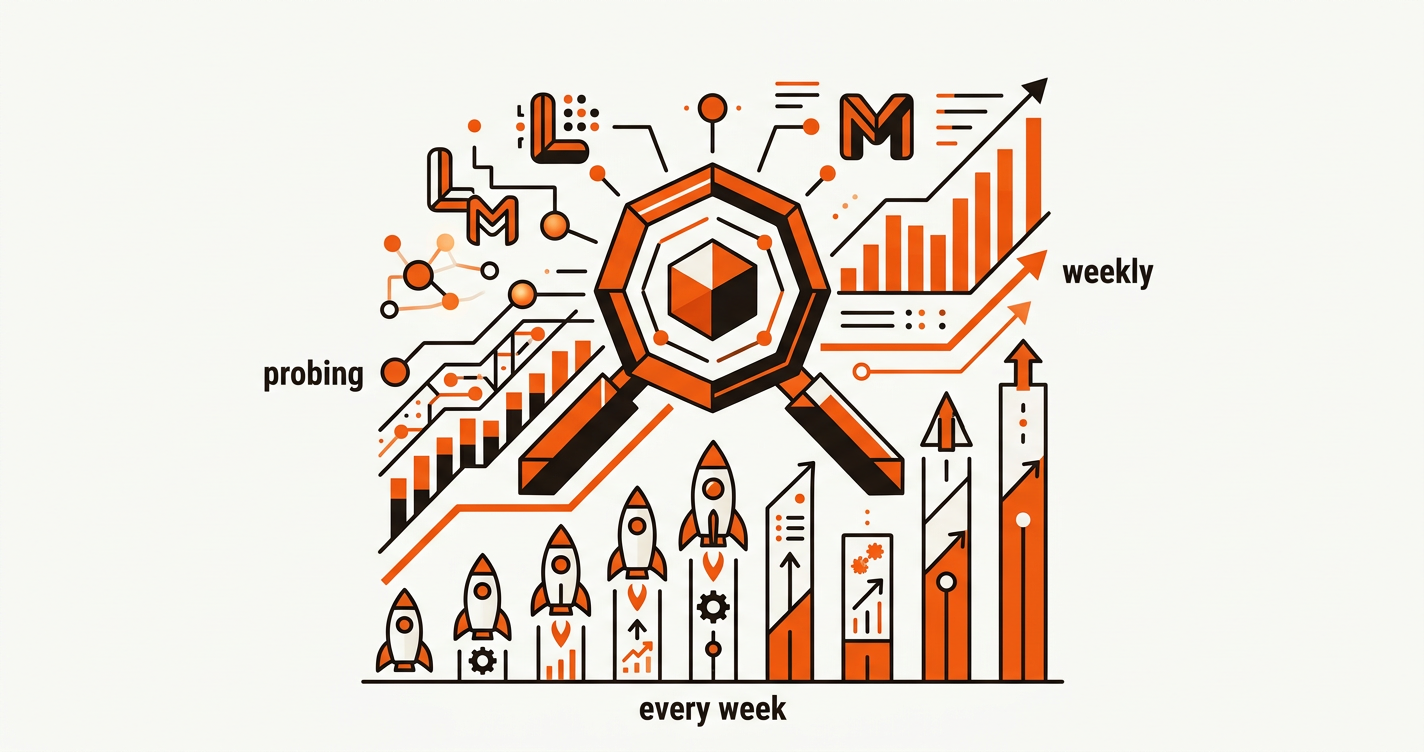
Short answer: LLM visibility tracking means running a fixed set of buyer prompts across ChatGPT, Perplexity, Google AI Overviews, Gemini, and Copilot every week, then logging where your brand is mentioned, cited, or described wrong. For a lean startup, probe about 40 prompts across three engines weekly and fix only what you can close inside 48 hours.
You cannot steer what you cannot see, and LLMs change state faster than your content calendar. If LLM visibility tracking startups is on your roadmap, run it as an operating rhythm instead of a static dashboard. In week-sized cycles, probe the same prompts, engines, rivals, and citations so movement reflects your work. Route fixes into a refresh queue you actually close.
Link your measurement to an action queue from day one. Start with AI visibility tracking to anchor weekly probes to assets and owners.
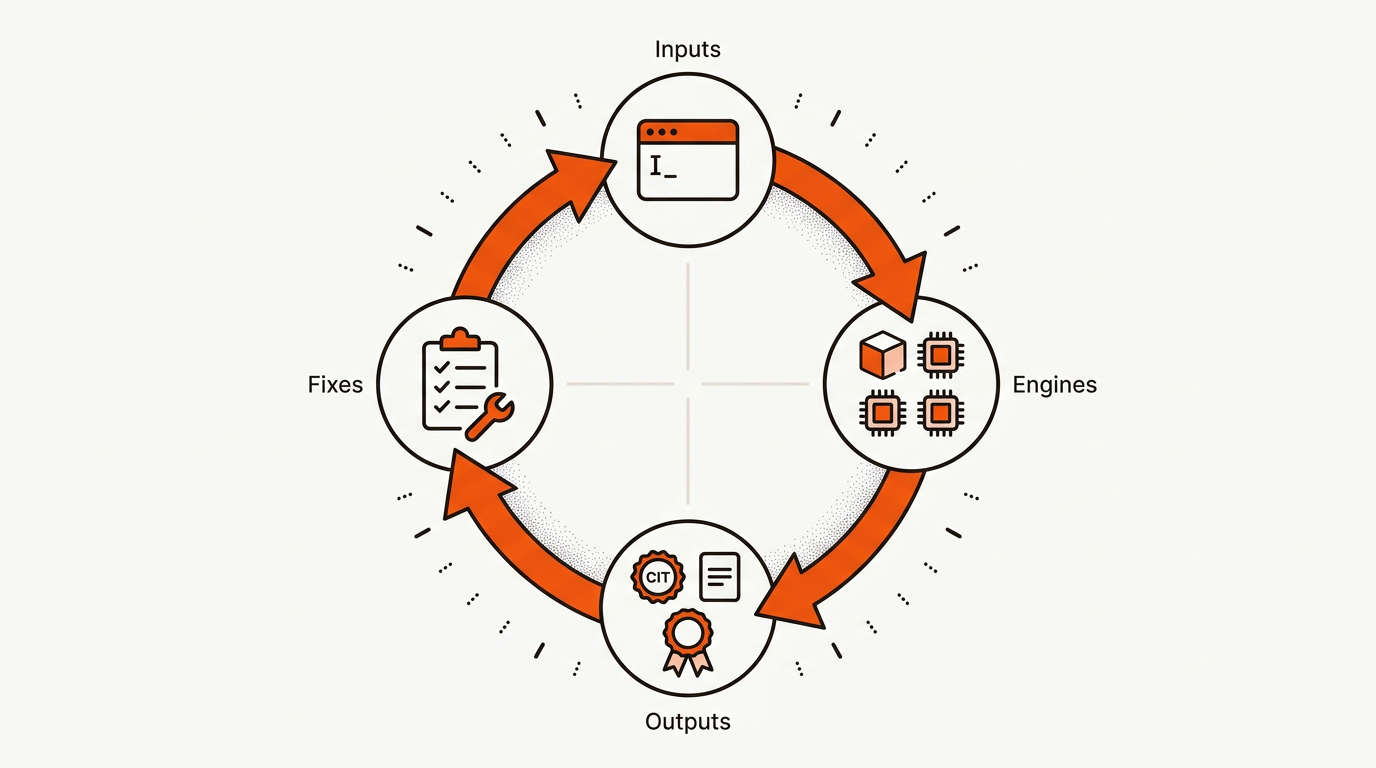
Expect surface quirks. ChatGPT often names brands but omits links. Perplexity cites aggressively yet can favor forum threads. Gemini leans on Google-indexed freshness. Your fix queue should mirror these behaviors: citation creation for Perplexity, structured answers for Gemini, and authoritative mentions for ChatGPT.
Context-rich pieces win across AI search; see AI search visibility. For ChatGPT-specific work, align your prompt set with guidance in how to rank in ChatGPT.
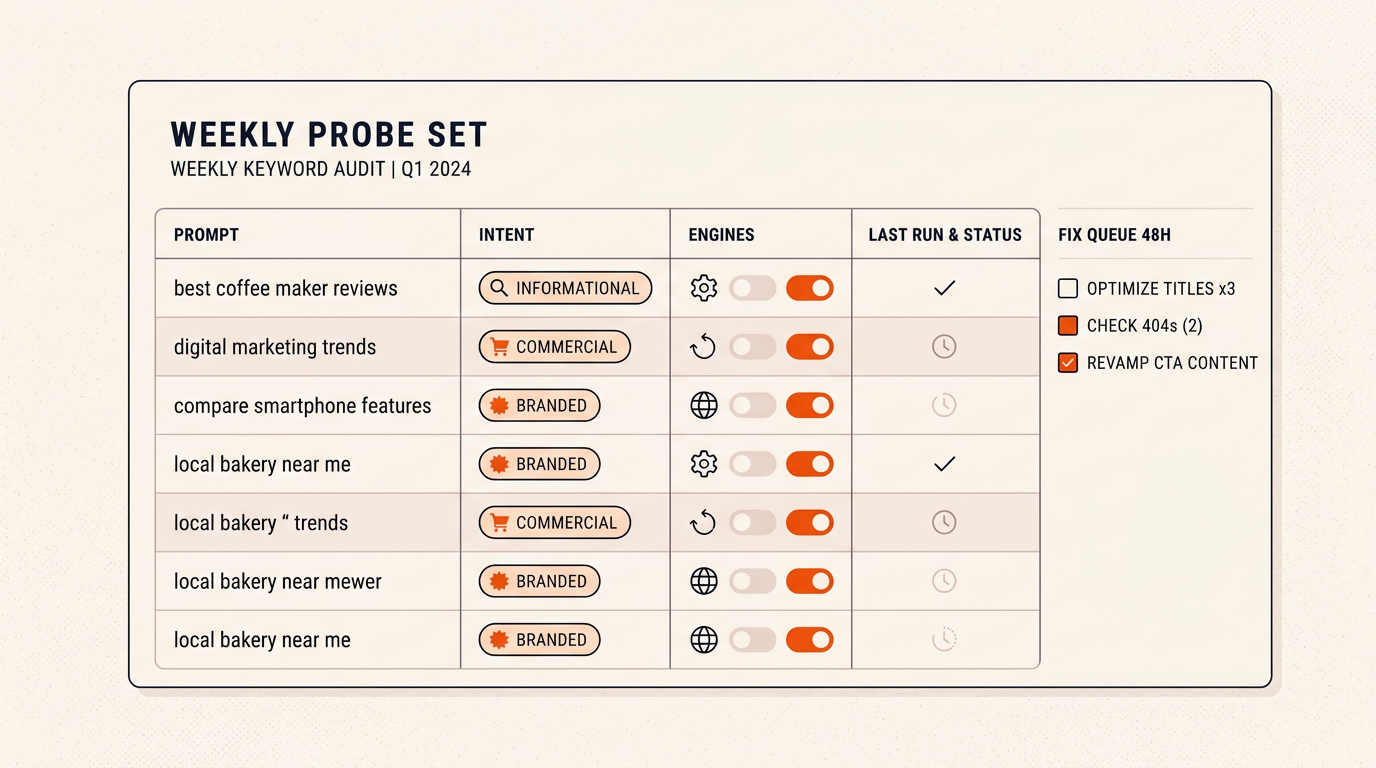
If LLM visibility tracking startups becomes a reporting exercise, you burn runway and keep guessing. A weekly probe plus a 48-hour fix SLA converts sightings into work orders: refresh content, seed sources, correct claims, and reclaim placements. That is how you see movement before the next board update.
You do not need perfect attribution to act. You need a visible chain from prompt to answer to fix to incremental improvement. The faster that chain closes, the sooner you protect positions in Google AI Overviews and appear in ChatGPT and Perplexity answers.
Roundups from SitePoint and Yotpo pitch AI share of voice, but they rarely show replication protocols or fix pipelines. Agency lists on DesignRush and creator takes like Nick Lafferty's GEO and Profound mentions focus on tool menus while skipping operational discipline. Our angle: a weekly standard with fixed prompts, raw capture, rival comparison, and a fix queue you can audit is what converts visibility into durable placements you can defend.
Most public guides also ignore failure rates. Changing prompts mid-stream or mixing testers creates noise that looks like movement. The weekly rhythm beats that noise by design.
The 6C Loop turns raw probes into compounding visibility. Capture: run a fixed prompt set across engines and store raw outputs with screenshots and text. Classify: tag each answer for mention, placement, sentiment, and citation freshness using a single rubric. Compare: benchmark against 2–3 named rivals per intent and note where they win citations. Correct: fix inaccuracies in your pages and seed authoritative sources that LLMs cite. Cite-ability: structure pages with FAQ blocks, schema, and quotable lines and publish on domains LLMs trust. Cadence: repeat weekly and only ship what you can close within 48 hours.
Tradeoffs: small prompt sets reduce noise but miss edge cases; larger sets improve coverage but slow fixes and create backlog. A practical cap for lean teams is 40 prompts x 3 engines. Failure modes: changing prompts mid-stream, skipping source seeding after a correction, and shipping edits that do not change crawlable evidence.
Operators use this loop as a weekly standup. Open with deltas, then each owner reports closed fixes and upcoming corrections. Keep the agenda to 20 minutes. The win condition is not a pretty dashboard. It is seeing your brand move from unmentioned to cited and from cited to recommended on the prompts that matter.
Anchor your loop to numbers you can count and audit.
Baseline: 40 prompts x 3 engines = 120 checks/week. Record mentions, recommendations, and citations each week, and compare them with the baseline after each round of fixes.
For the full picture, see how to approach AI content visibility tracking.
LLM visibility tracking startups covers the structural work of the article above: the page inventory, the workflow that keeps it shipping, and the measurement loop that confirms it's working. The sections preceding this FAQ describe each part in detail.
There is no fixed timeline. Google does not promise when, or whether, a page will rank. Watch Search Console impressions for the questions the page targets each week, because impressions move before clicks. A page with no impressions after a few months usually needs a sharper angle or more internal links.
Cost depends on who does the work: your own team's time, a freelancer, an agency or a software tool. Mergeflo has a free plan, and paid plans are listed on the pricing page.
Mergeflo researches topics, writes briefs and drafts in your brand voice, adds FAQ schema and suggests internal links. You choose the topics and approve each article, and it publishes to Webflow only when you press Publish. For pages losing reach, Mergeflo flags them, and when you press Refresh it writes a refresh brief for you to review.
