
Revenue comes from pages. Build the money-page map first so every click has a path to cash. This playbook shows how to ship a complete money-page spine, route intent from content, and measure impact before scaling volume on autopilot. Treat startup money pages SEO as the first system.
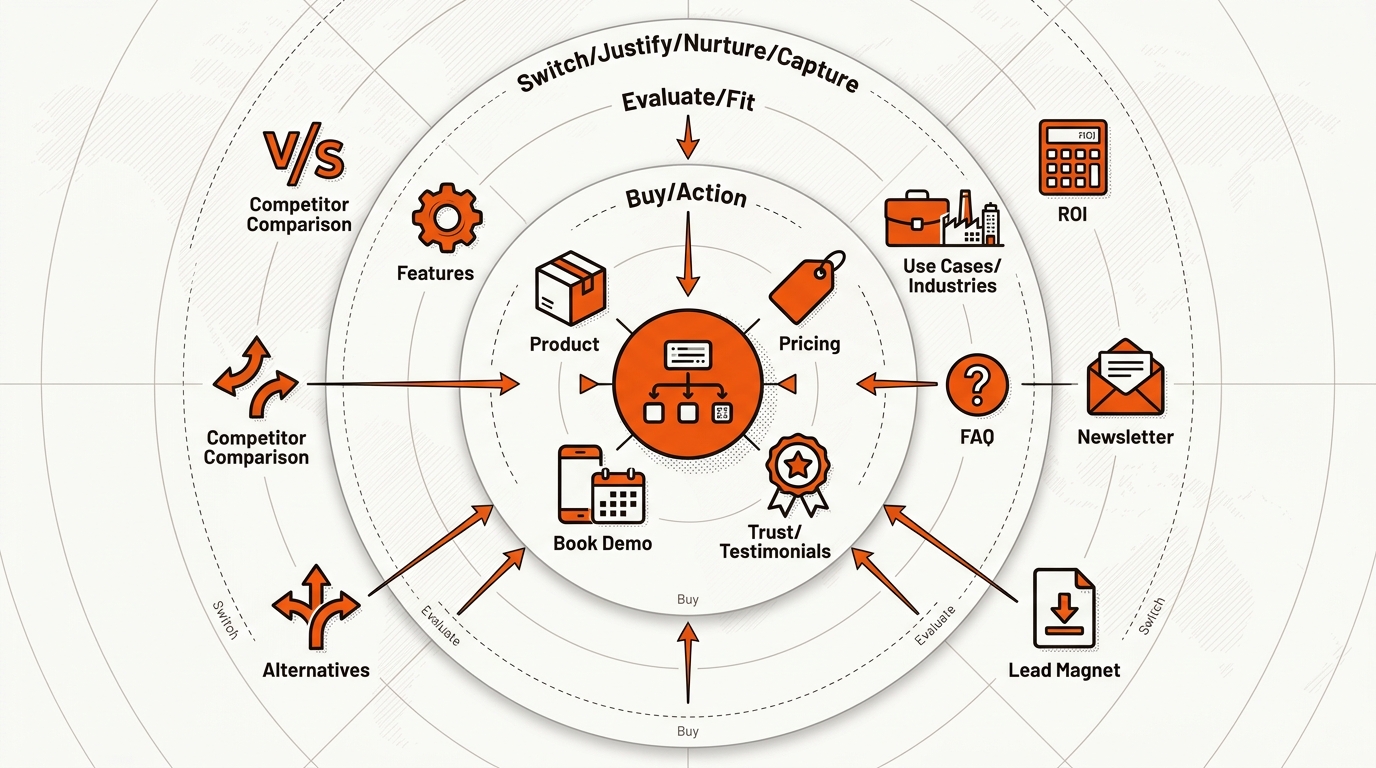
Link your early posts to a conversion path using an SEO for startups program. The map below is how you avoid orphaned traffic and turn impressions into pipeline.
Backlinko found the #1 organic result averages a 27.6% click-through rate, and clicks fall off further down the page. Ranking matters only if traffic can convert. Backlinko
A small growth team cannot afford dead-end clicks. You have to turn existing impressions into demos while search visibility stabilizes. Money pages make every internal link do real work from day one.
Speed vs depth is a real tradeoff. Many thin articles without a destination lose to a few thorough posts that route to a sharp pricing or demo page. Depth converts; routing captures the upside.
Ship this baseline, then scale posts that route to them.
Include schema, clear CTAs, and internal links in each page. Treat each row as a destination for clusters you will publish later.
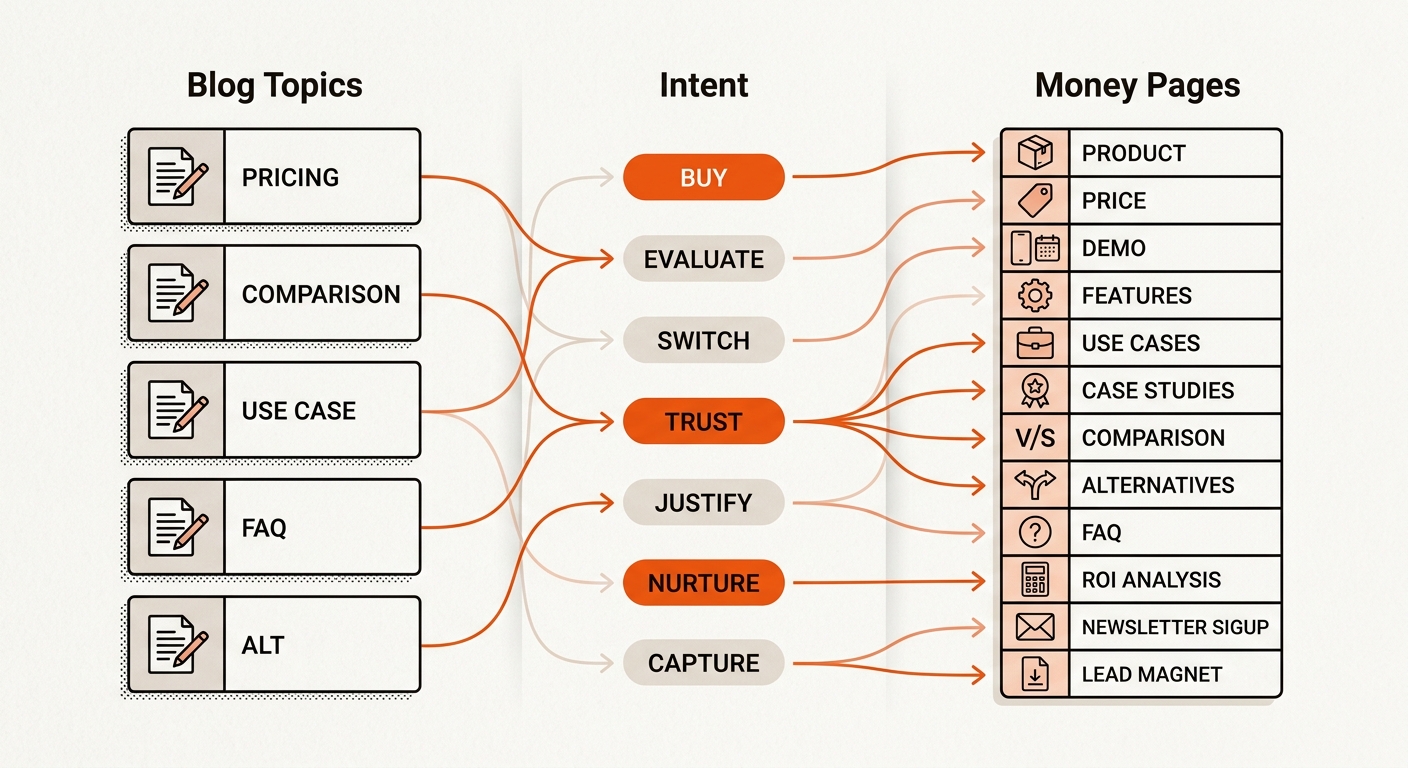
You can build this spine in two sprints. Sprint 1: Product, Pricing, Demo, Use Cases, and one Comparison page. Sprint 2: Case Studies, FAQs with schema, two feature pages, an Alternatives page, a simple ROI tool, and a single resource hub. Keep copy benefit-first, proof-driven, and fast. Pass Core Web Vitals thresholds (LCP under 2.5s, CLS under 0.1) because conversion drops on slow pages.
Do not oversplit features into dozens of thin URLs at this stage. Collapse near-duplicates into one strong page to prevent cannibalization. You can expand to a feature hub later once traffic and queries justify it in GSC.
Every post should link to exactly one primary money page with descriptive anchors. Use 1-2 internal links high in the article body to the best-fit page, plus a footer CTA. Route pricing-sensitive topics to pricing; route platform and automation topics to product.
Mid-funnel posts about automation should also reference your autonomous SEO platform for topical reinforcement. Use Ahrefs Parent Topic, SERP feature checks, and the GSC Queries report to validate intent alignment. If the top 5 results include comparison and pricing URLs, your post should point to a commercial page.
Operational workflow:
• Set one main target page per post in the brief. Write the exact anchor text you will use, like "See pricing" or "Schedule a demo".
• Place the first internal link early in the body. Use a descriptive anchor that mirrors the user’s next action.
• Mirror navigation with in-body links. Header nav helps users; in-body links send clear topical signals to crawlers.
A real constraint: this approach breaks as live URLs grow if your CMS templatization is brittle. Indexing lag and inconsistent anchors compound. Solve with a layout component that injects the primary CTA and a reusable internal-link block into every template. It keeps startup money pages SEO consistent at scale.
MAP is a 3-step model for turning posts into pipeline. Monetize: define one canonical page per commercial intent and make it conversion-ready. Align: for every draft, choose a single intent and match it to the canonical page with consistent anchors and schema. Path: create a repeatable internal-link pattern (header nav, in-body, end CTA) so users and crawlers follow the same route. Tradeoffs: over-linking dilutes signals; under-linking strands content. Failure modes: misaligned anchors (vague "learn more"), cannibalization across near-duplicate pages, and missing schema.
MAP is built for lean teams that publish every month. It removes decision fatigue from briefs and enforces a predictable user journey. Add outcome proof on the target page and your posts have a better chance of generating meetings even at mid-SERP positions.
Use MAP language in your briefs so it sticks: "Intent = Evaluate. Canonical = Pricing. Anchors = 'See pricing' + 'Compare plans'. CTA = 'Book a demo' in footer." Consistency compounds both ranking signals and conversion rate.
Small improvements compound when routed to conversion-ready pages. Start from your own numbers: mid-funnel posts per month, impressions per post, average position, click-through rate and the share of readers who click the demo CTA.
• Monthly clicks = posts × impressions per post × click-through rate
• Demo clicks = monthly clicks × CTA click rate
• After you add routing and sharper anchors, measure both rates again; do not assume a lift
• To value the change, multiply the extra demos by what one demo is worth to you
In this model the change comes without increasing post volume. It is routing and conversion hygiene tied to a money-page spine. On a small content budget, testing whether money-page anchoring lifts demos is a quick way to check content ROI.
Now combine MAP with query pruning. Use Ahrefs to drop topics with KD > 40 unless they carry clear commercial modifiers you can win with feature or pricing intent. Publish fewer posts that point to the same money pages. The aim is steadier demo growth, because anchor consistency tends to beat thin volume.
Big-brand guides optimize for content volume and ignore startup conversion paths. Ahrefs and HubSpot publish strong SEO fundamentals, but their playbooks often over-index on blogs and topic clusters while glossing over bottom-of-funnel page architecture for lean teams. Moz’s beginner guides are similar. Our angle: build money pages first, then use programmatic internal linking so every post serves a canonical path.
References: Ahrefs, HubSpot SEO, Moz Learn SEO
Their advice works for large libraries with existing bottom-funnel coverage. Early teams need a smaller blueprint: 12 decisive pages, intent-routed blogs, and schema-backed proof. Startup money pages SEO wins by turning mid-SERP visibility into meetings.
Use authoritative checklists to standardize execution across pages. For crawlability and performance, review Google Search Central. For Core Web Vitals impact on conversions, see Web.dev. For internal linking patterns, see Ahrefs internal linking guide.
• Support your conversion path with SEO for startups
• See how an autonomous SEO platform maintains your map
• Price your stack on the pricing plans
• Understand the product workflow
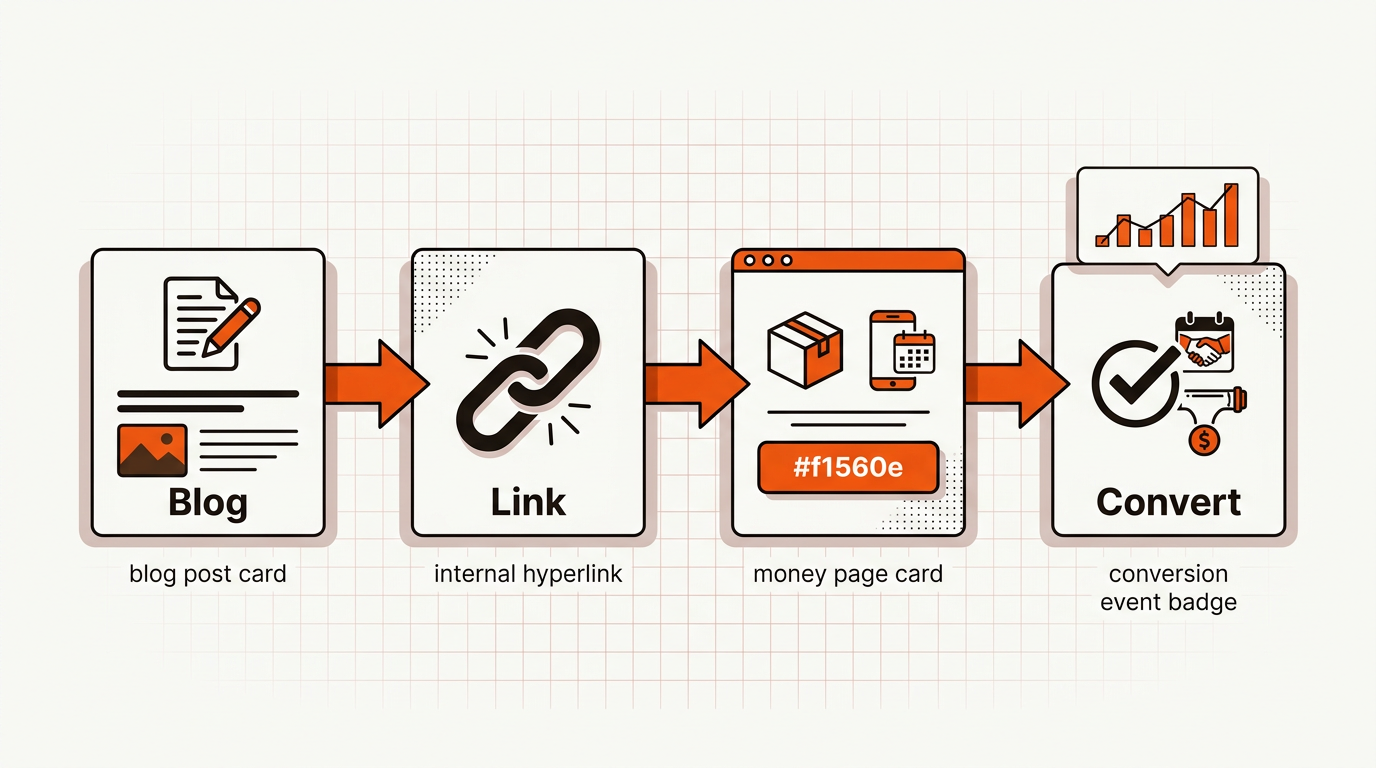
Ranking without routing wastes budget; routing without automation stalls as the library grows. Ship the 12-page spine, MAP every post to a main page, and measure demos from day one. Then automate the pipeline. Startup money pages SEO turns content from a cost center into a predictable meeting engine.
Startup money pages SEO covers the structural work of the article above: the page inventory, the workflow that keeps it shipping, and the measurement loop that confirms it's working. The sections preceding this FAQ describe each part in detail.
There is no fixed timeline. Google does not promise when, or whether, a page will rank. Watch Search Console impressions for the questions the page targets each week, because impressions move before clicks. A page with no impressions after a few months usually needs a sharper angle or more internal links.
Cost depends on who does the work: your own team's time, a freelancer, an agency or a software tool. Mergeflo has a free plan, and paid plans are listed on the pricing page.
Mergeflo researches topics, writes briefs and drafts in your brand voice, adds FAQ schema and suggests internal links. You choose the topics and approve each article, and it publishes to Webflow only when you press Publish. For pages losing reach, Mergeflo flags them, and when you press Refresh it writes a refresh brief for you to review.
