
Short answer: Link building prices vary widely by method: vetted outreach, marketplaces and digital PR campaigns each price differently, usually per link or per campaign. How much does link building cost depends on referring domain traffic, topical fit, link type, and content scope. Cheap, low-traffic sites rarely move rankings and add policy risk.
Cheap links rarely move target pages because they come from low-traffic, off-topic sites that do not rank themselves.
Two failure modes eat budgets fast: buying DA-tiered placements from domains with little organic traffic, and running PR without mapping links to pages with query potential.
A small team cannot afford dead links. Anchor control and speed premiums inflate CPL and increase risk; they also correlate with obvious paid networks. Verify traffic (Ahrefs/SEMrush), indexation (site: queries), and outbound link density before paying. Review Google’s guidance: https://developers.google.com/search/docs/essentials/spam-policies
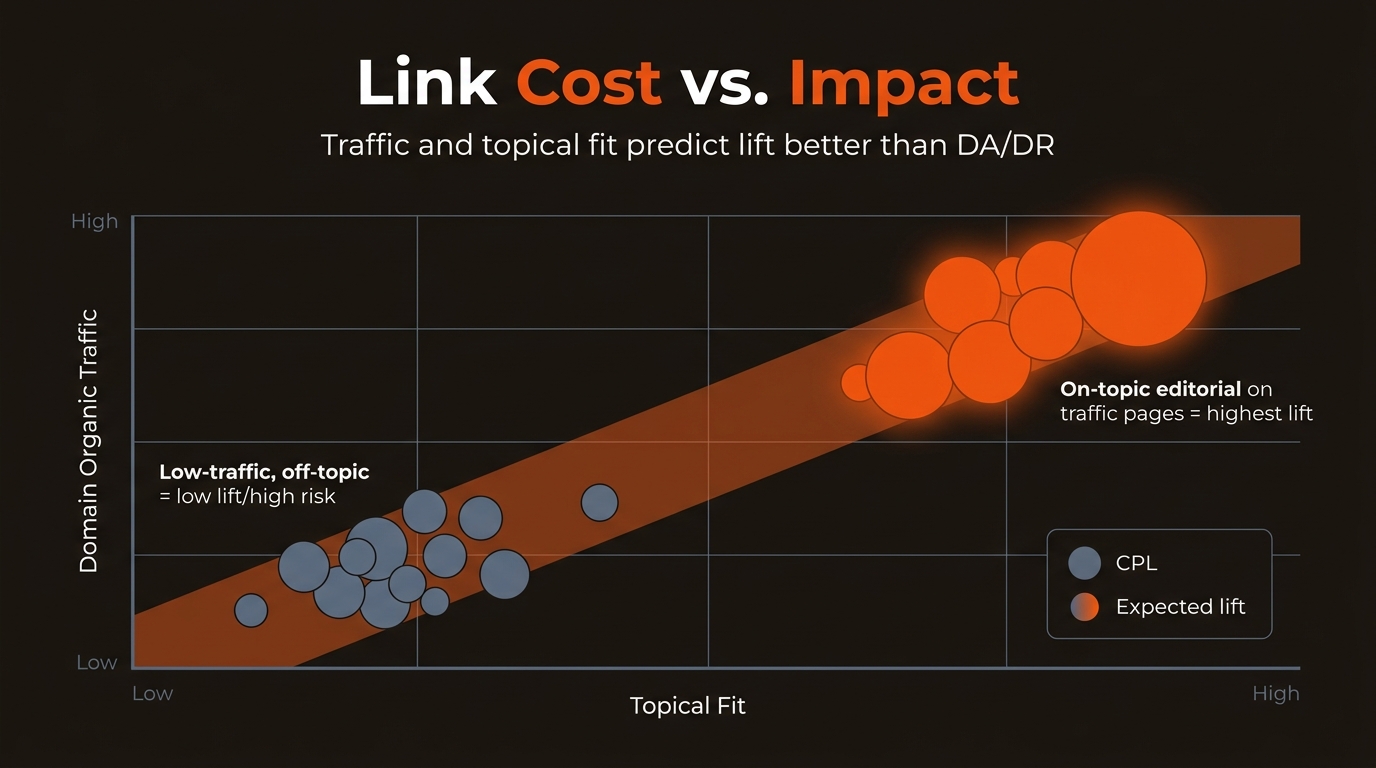
Price tracks quality, control, and risk; model CPL against traffic from target queries.
Benchmark quotes against effective CPL and impact potential. Prioritize in-content editorial links on pages that already earn search traffic in your topic. Discount sidebar links, author bios, and domains with flat or declining traffic trends.
caption
A practical tradeoff: control vs. safety. Buying exact-match anchors at speed lowers outreach friction but increases footprint risk and future disavow work. Earned editorial links take longer and limit anchors, but they age well and actually move rankings when placed on real, traffic-driving pages.
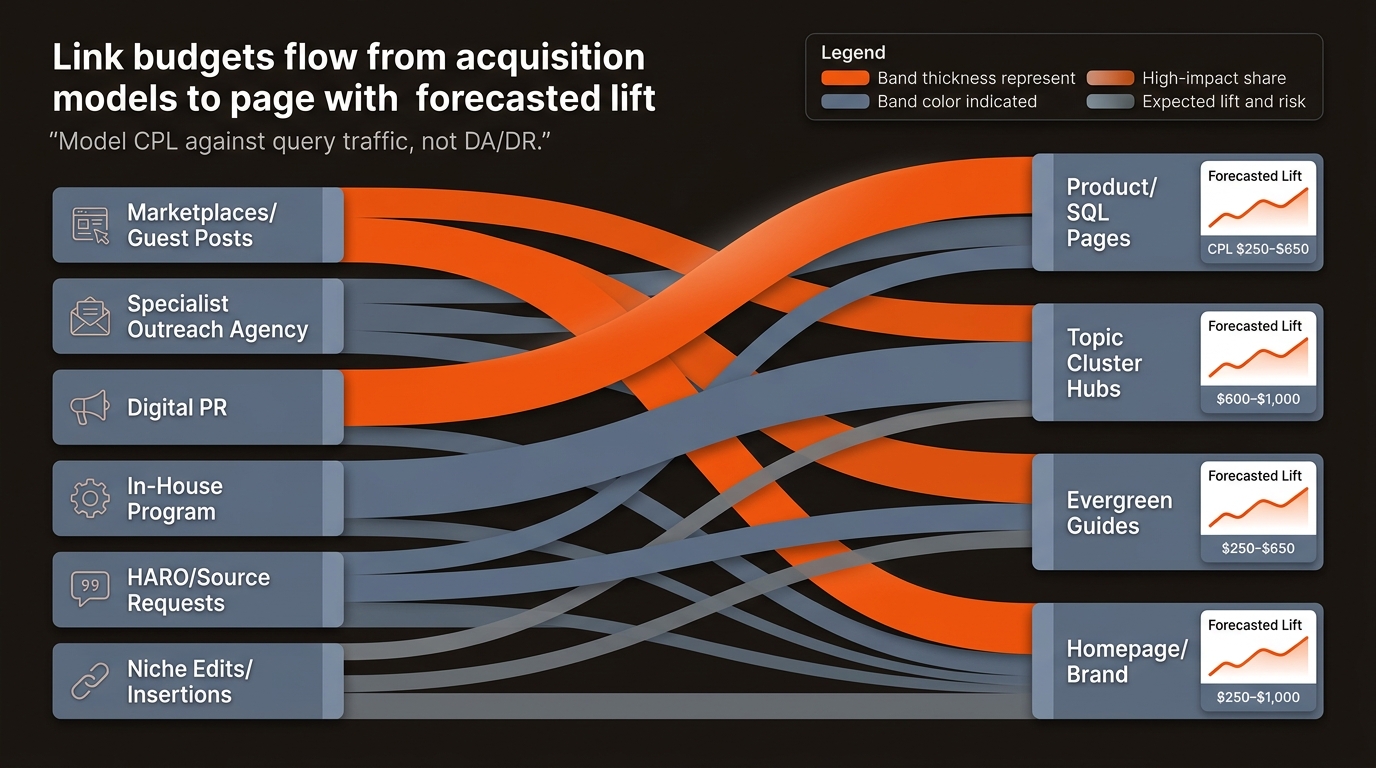
In-house outreach: add up writer, outreach and editing hours at your own rates, plus list building and tool costs, then divide by the links that actually go live. Sponsored inserts: a fixed placement fee and near-certain delivery, but a low ceiling on domains before footprint issues. Digital PR: a larger asset cost spread over however many pickups you earn, so the cost per link varies widely.
Route spend to pages that can win a cluster, then acquire only links that help those pages clear page-one thresholds.
Plan pages before placements. Map target queries, build internal links, and publish content that can win the SERP. Only then buy or earn links that raise those specific pages’ competitiveness. For context on link types and use cases, see this primer: What Does Link Building Mean.
This is exactly where Mergeflo slots in. Our autonomous SEO + AEO content engine finds gaps, drafts articles with FAQ schema and suggested internal links, and publishes the ones you approve to Webflow. It tracks your Google positions and, on paid plans, checks whether ChatGPT, Gemini and Claude mention your brand.
Start with a single revenue page. Pull current referring domains to that URL and the top three ranking competitors, then compute the delta. For example, if your page has 8 referring domains and the leaders average 20, the gap is 12. Multiply the gap by the cost per link you expect to set a budget, and pace it over a few months. Plan anchors by intent, mostly branded or URL. Align internal links from supporting articles the same week each external link lands. Track rank, clicks, and assisted conversions at the page level before scaling.
Price the program on effective CPL and page movement in GSC.
Editorial outreach on real sites with topical fit costs more than marketplace links but carries less risk. Marketplaces are cheaper but riskier and weaker. Digital PR mainly lifts brand and domain metrics rather than a single product page. Get several quotes. Track results against URL-level traffic in GSC.
Model against page-one baselines. Compare against the referring domains of the pages in the top 10, and plan enough quality links to close the gap, plus strong internal links and on-page alignment. Use Ahrefs or SEMrush to compare URL-level referring domains and traffic, not just domain-level DR or Authority.
Yes in accounting; no in ranking impact modeling. Nofollow/sponsored/UGC links can help discovery and diversify the profile, but do not plan ranking lift around them. Treat them as supplemental and price them accordingly in your how much does link building cost model.
Pay for topical traffic and real audience. A smaller site with real traffic in your niche can be worth more than a high-authority site with thin, off-topic traffic. Always verify organic traffic trends and indexation. Authority without traffic is a red flag and often signals a paid network.
