SEO is not dead in 2026, but it now covers more than ten blue links. People also get answers from AI Overviews, snippets and chat tools. Google says the same SEO best practices still apply to its AI features. Keep ranking, and also make each page clear on who wrote it, what it covers and what it claims.
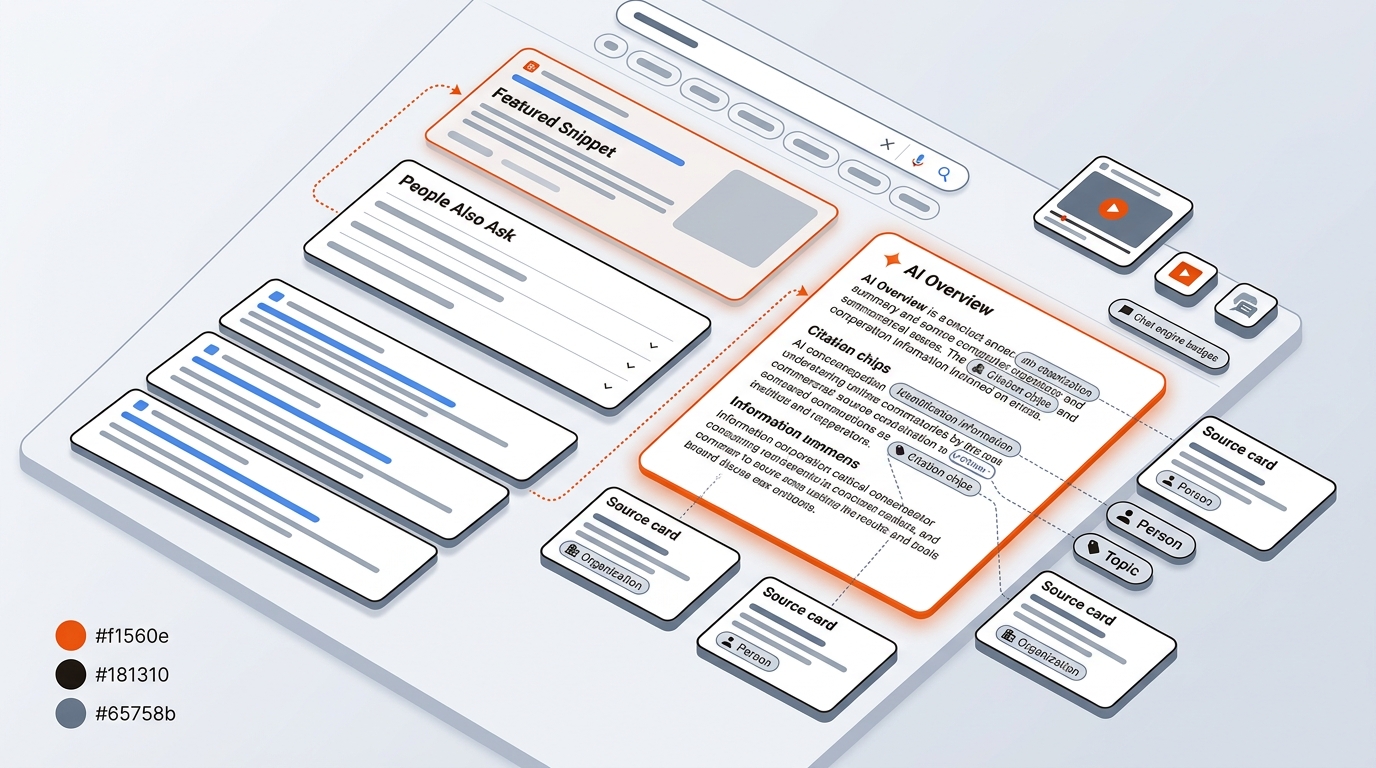
Optimizing only for ten blue links leaves out the places where people now read answers. Those include AI Overviews, People Also Ask, featured snippets and AI chat tools that name some sources. If your process ends at "publish a blog post and wait," you miss those surfaces.
Pew Research Center tracked the web browsing of 900 U.S. adults in March 2025. Its report found that people clicked a traditional search result link in 8% of visits where they saw a Google AI summary, and in 15% of visits where they did not. That is one study of one month in the U.S., so treat it as a signal, not a forecast for your site.
Common breakpoints are content without clear entities (no author, no organization details, names that change from page to page) and clusters that leave related questions unanswered. The result is a crawlable page that gives readers, and AI tools, little reason to treat it as a source.
Treat AI answers and classic rankings as one visibility system. You're building entity authority, not just pages.
Sources: Google Search Central: AI features and your website, Google Search Central: Intro to structured data, Pew Research Center: Google users are less likely to click on links when an AI summary appears.
A useful first step is an audit. List which result types show for your target queries, review your Search Console search appearance data, check how Google crawls your site, and write down the gaps in how your brand and authors appear online.
The results page is now a set of result types, so write pages that name their entities, show their sources and cover a topic in depth. Clusters help readers because they answer related questions in one place, under one author and one set of consistent names.
Schema helps Google understand a page. Google says structured data gives it explicit clues about a page's meaning. Schema is not a requirement for AI features, though. Google says there are no additional requirements to appear in AI Overviews or AI Mode and no special schema to add: the page has to be indexed and eligible to be shown in Search with a snippet.
One schema note: Google stopped showing FAQ rich results in May 2026 and no longer shows How-to rich results, so write every answer to work as plain text first.
Operationally, your workflow should cluster by entity and topic, add the schema types that match the visible page (Article, Organization, Person, FAQ), publish answers written by named experts, and track AI mentions next to your Search Console clicks and impressions.
For speed-constrained teams, the tradeoff is overhead per page. Schema, author details and citations take extra time on every post, so build them into your brief and CMS template once instead of redoing them each time. Is SEO dead or evolving in 2026? It's evolving, and teams that adjust their briefs and templates are working with that change, not against it.
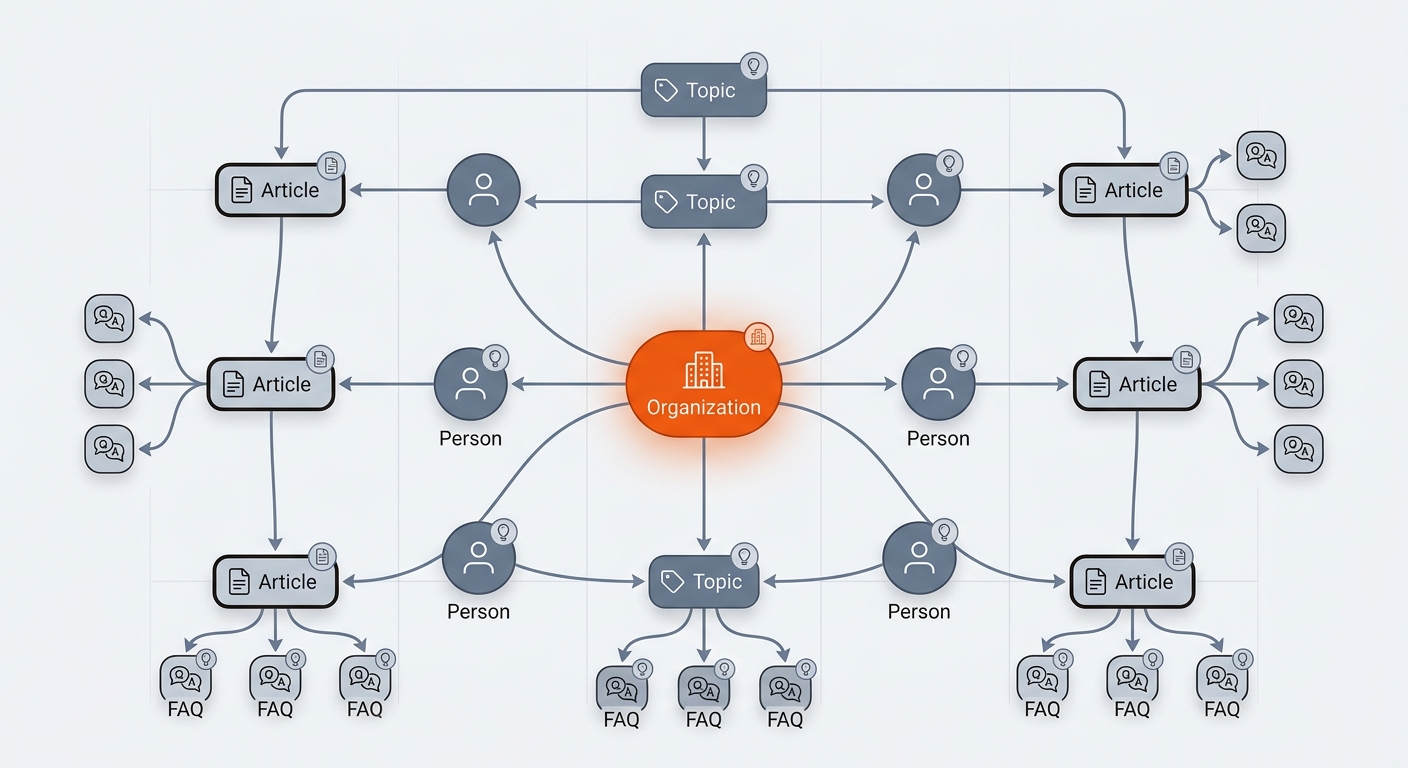
Shift the operating model from page-first to entity-and-cluster-first, with measurement across Google and AI tools.
Legacy vs 2026 SEO: Operating Differences
A concrete move for Monday: put Article, Organization and Person schema in your CMS template, ask for two or three pieces of evidence per post (quotes, data, named tools), and plan internal links by anchor so each post connects to the related questions. Then ask your buyer questions each week in ChatGPT, Perplexity, Gemini and Copilot and note whether your brand appears. Answers can differ from one run to the next, so watch the trend over several weeks.
Build entity-first clusters, schema and refreshes into your routine instead of only writing more posts. Mergeflo covers part of that routine. It finds search gaps and buyer questions, drafts articles in your brand voice, adds FAQ schema, suggests internal links for you to approve, and publishes to Webflow when you press Publish. It tracks your Google clicks and positions and, on paid plans, runs a weekly scan that asks ChatGPT, Gemini and Claude your buyer questions and records whether your brand is mentioned, cited or recommended. It checks only those three tools and does not track Google AI Overviews, so check other tools by hand. See how the autonomous SEO platform works.
If you're moving to dual-track visibility, this primer on AEO vs SEO vs GEO walks through one workflow that covers both blue links and AI answers.
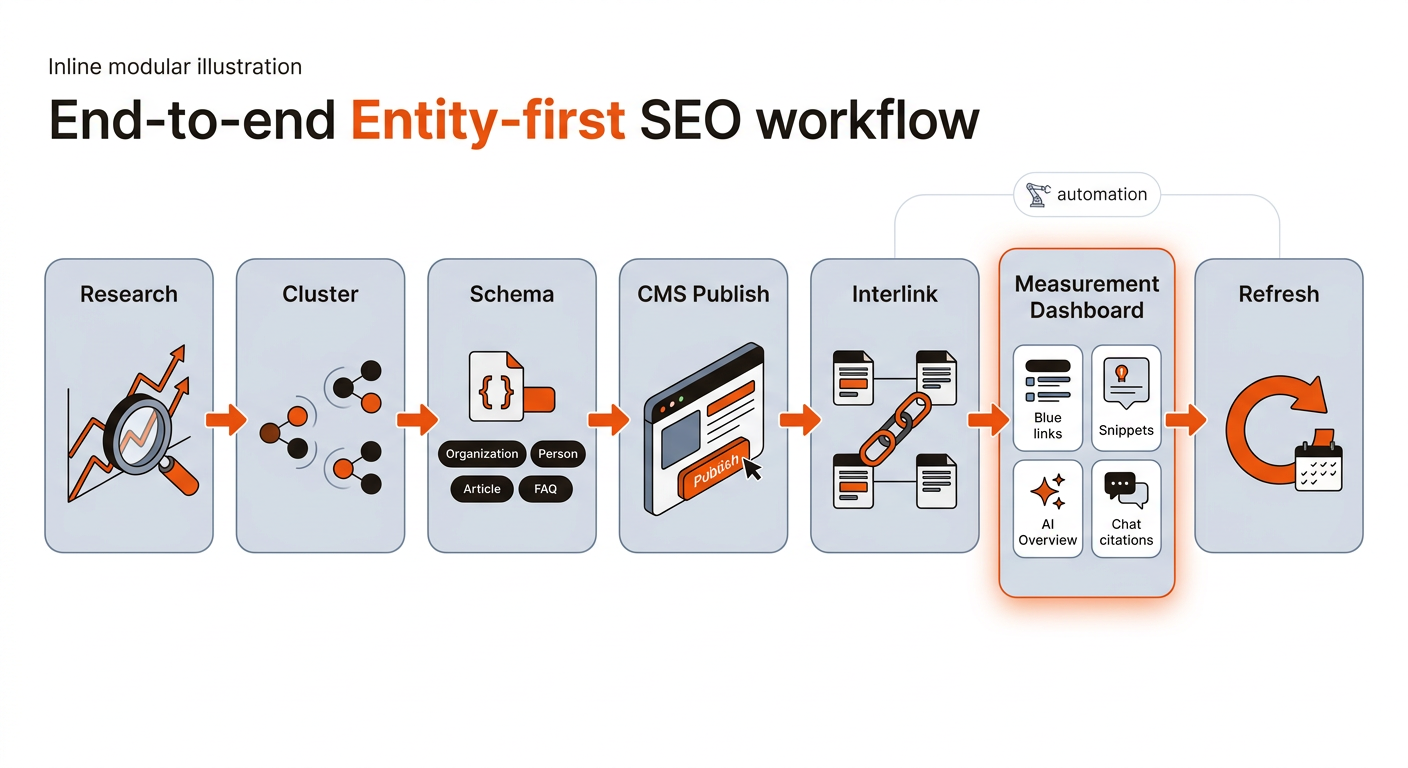
This plan is a starting point, not a promise. Search engines and AI tools do not say when, or whether, a page will be shown or cited, so set your own targets from your own baseline.
Google says traffic from its AI features is counted in the Web search type of the Search Console Performance report, together with other web results. So compare clicks, impressions and click-through rate for the same queries before and after known changes, and look at the trend over several weeks. Also note brand mentions and referral visits from AI tools where your analytics show them. Pew Research Center found that people clicked a result link less often on visits that showed a Google AI summary, but that is one study of one month in the U.S., not your site.
Add entity mapping (Organization, Person, Product), the schema types that match the visible page, and a note on evidence for each section, such as a quote, a sourced number or a named tool. List the questions the article must answer and the internal link targets by anchor. Require an author name and role. Is SEO dead or evolving in 2026? A brief like this is one sign that it is evolving.
Start with 3 to 5 clusters of 6 to 10 pages each. Keep a steady weekly rhythm, for example two new pages and one refresh, and add schema where it matches the page. Use Ahrefs or SEMrush for clustering, Screaming Frog for audits and Search Console for measurement, and publish through your CMS. Protect time for earning links and brand mentions through lightweight digital PR.
Nobody can promise a citation, and AI tools do not say when or whether they will name a source. What helps is the same groundwork as good SEO: publish expert points of view with specific numbers and cite where they come from, add Person schema for authors, and write crisp definitions and FAQs. Earn credible references through podcasts, niche newsletters and partners. Keep your Organization, Person and Article details the same across your site and social profiles.
It is optional. Google stopped showing FAQ rich results in May 2026, and it has said unused structured data does no harm. Google also says there is no special schema you need to add to appear in AI Overviews or AI Mode. Write each answer so it works as plain text on the page, and keep any markup identical to that text.
