
Short answer: The Rule of 40 for SAAS says your annual revenue growth rate plus your profit margin should be at least 40%. Calculate both on the same period (TTM or fiscal year) using a single margin definition, typically EBITDA or operating margin. Early-stage teams often clear 40 via growth; mature firms rely more on margin.
Operator mistake: teams mix definitions and periods, then draw the wrong conclusion. Use a single period (TTM or calendar year) and a single margin definition across comparisons. Switching between EBITDA and operating margin, or blending quarterly growth with annual margins, breaks comparability.
A 4-person growth team at $8M ARR saw 28% TTM growth and -5% EBITDA margin (Rule of 40 = 23). When they switched to operating margin including SBC, the margin became -12% and the score dropped to 16. The metric did not get worse; the definition changed. Pick once, disclose, and trend it.
High growth can offset negative margins, but it must be efficient. Keep CAC payback under 12 months for SMB motions and under 24 months for enterprise. Track gross margin above 75% to avoid buying Rule-of-40 points with expensive COGS. Normalize one-time items (restructuring, write-downs) before you calculate.
A Rule-of-40 score of 40% or higher is generally considered strong performance for SAAS operators and investors.
Wikipedia and strategy firms align on the formula. For stage nuance and value-creation context, see McKinsey's perspective.

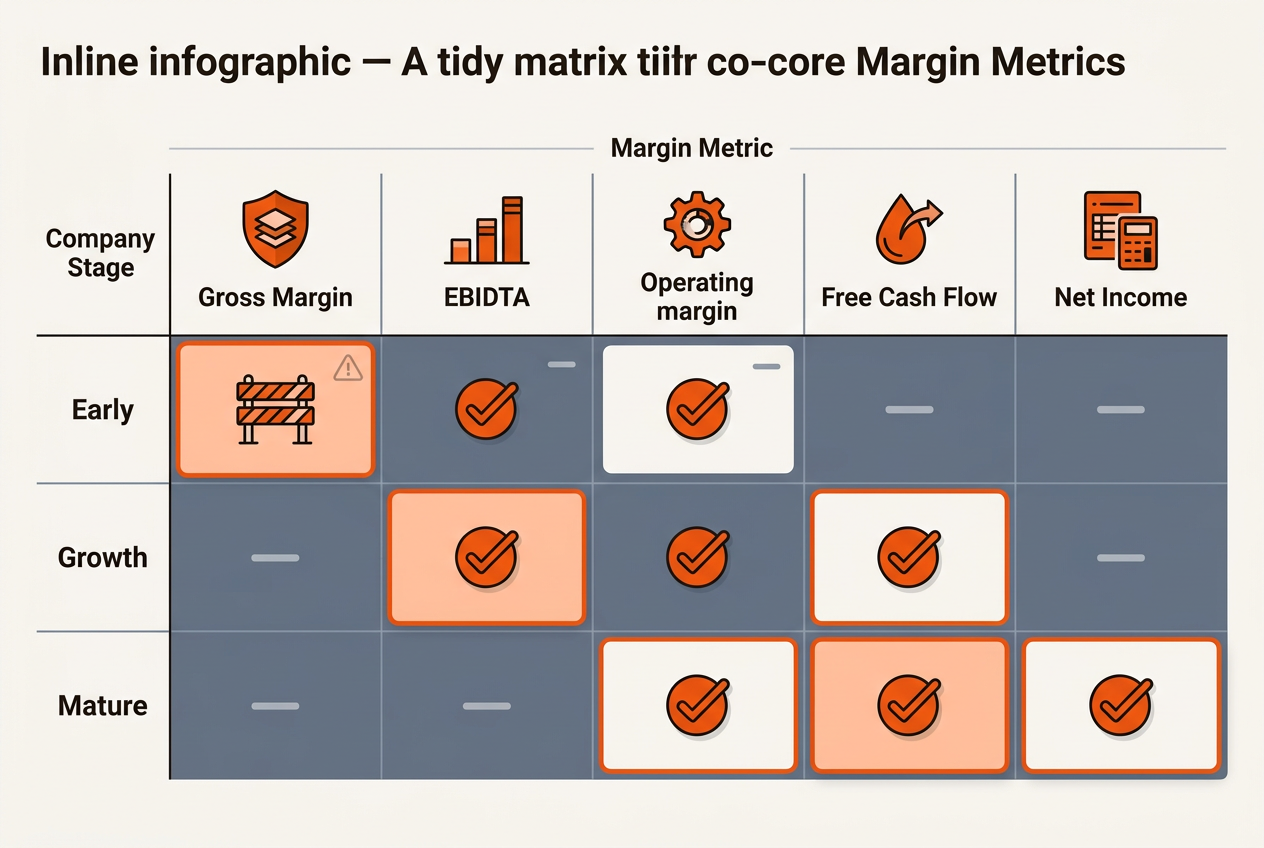
Pick a margin metric you can report consistently and that reflects true operating performance. EBITDA margin is common, but many teams use operating or free cash flow margins due to SBC, capital intensity, and cash realities in SAAS.
Comparison of Margin Metrics for Rule of 40 Calculations
Worked examples:
• 30% growth + 15% EBITDA margin = 45% (meets)
• 55% growth + -10% EBITDA margin = 45% (meets)
• 15% growth + 10% EBITDA margin = 25% (below)
Use the Rule of 40 for SAAS as a board-ready signal. For quarterly planning, operate with guardrails: CAC payback, net revenue retention, and gross margin. These drive the components that move the score.
You improve your Rule of 40 by pulling efficient growth and margin levers. Organic acquisition with compounding retention is the safest way to add growth without crushing margins.
Mergeflo is an AI search visibility platform for startups. It is an autonomous SEO + AEO content engine: research to published, AI-citable pages in your CMS, with schema, internal links, and ongoing refresh. It is end-to-end and autonomous — it measures AND fixes visibility across Google and AI engines (AI Overviews, ChatGPT, Perplexity, Gemini, Copilot), and it is startup-priced.
Operational impact:
• Lower blended CAC by replacing a chunk of paid with durable organic and AI-citation traffic.
• Faster content-to-index cycle with structured data and internal linking that ships itself.
• Stable contribution margin by avoiding perpetual auction inflation.
A common constraint: a 3-person growth team with $2k per month for content and $20k in paid. Shifting 20% of paid to programmatic clusters that rank within 30-45 days can add 8-12% incremental monthly signups at similar or better CAC, improving growth while protecting EBITDA margin.

Treat the Rule of 40 as a health test tied to real levers you can move within a quarter.
Price and packaging experiments, expansion revenue, and partner-sourced deals lift growth without heavy CAC. On margin, improve gross margin via cloud/COGS optimization and cut non-performing paid channels. In a 3-person team with a $2k per month content budget, shifting 20% to compoundable organic plus tightening CAC payback can move the score within a quarter.
Use it as a guardrail. Sub-$5M ARR companies often accept negative margins to fund product fit and distribution learning, aiming for 60%+ growth to clear 40 overall. Set a glide path: hold growth above 50% while improving margin 5-10 points per year as payback normalizes.
Calculate monthly on a trailing-twelve-month (TTM) basis for stability and trend visibility. Reconcile quarterly to your board pack and annual plan. Keep the margin definition fixed year-over-year to preserve comparability, and annotate any one-time items you exclude so audits and investors can follow your policy.
Be explicit. Many operators exclude SBC in EBITDA-based calculations but include it in operating margin. Pick a policy, disclose it in the footnotes of your metrics deck, and run a sensitivity: if including SBC drops you below 40, share the path to normalize as hiring pace and growth efficiency improve.
