
Short answer: Yes, AEO before domain authority can work if you target narrow intents, enforce entity consistency, and publish citeable, clearly structured answers. Answer engines reward extractable content and trustworthy entities. Authority still helps, but specificity, structure, and off-page entity signals let lean teams win early.
Read the operator blueprint for AEO for startups.
Most early domains miss AEO because engines cannot disambiguate the entity and cannot extract a clean answer fast. Anonymous bios, scattered descriptions, and prose-only pages make you untrustworthy and unusable for answer engines. Fix the entity, then fix the page pattern.
AEO before domain authority fails when your brand graph is thin across your site, LinkedIn, Crunchbase, GitHub, and YouTube, and when your answers hide below the fold. You can correct both without a big link profile by standardizing entity signals and shipping extraction-first page layouts.
• Make your entity unambiguous across your site, LinkedIn, Crunchbase, GitHub, and YouTube. Keep names, descriptions, and topical focus consistent.
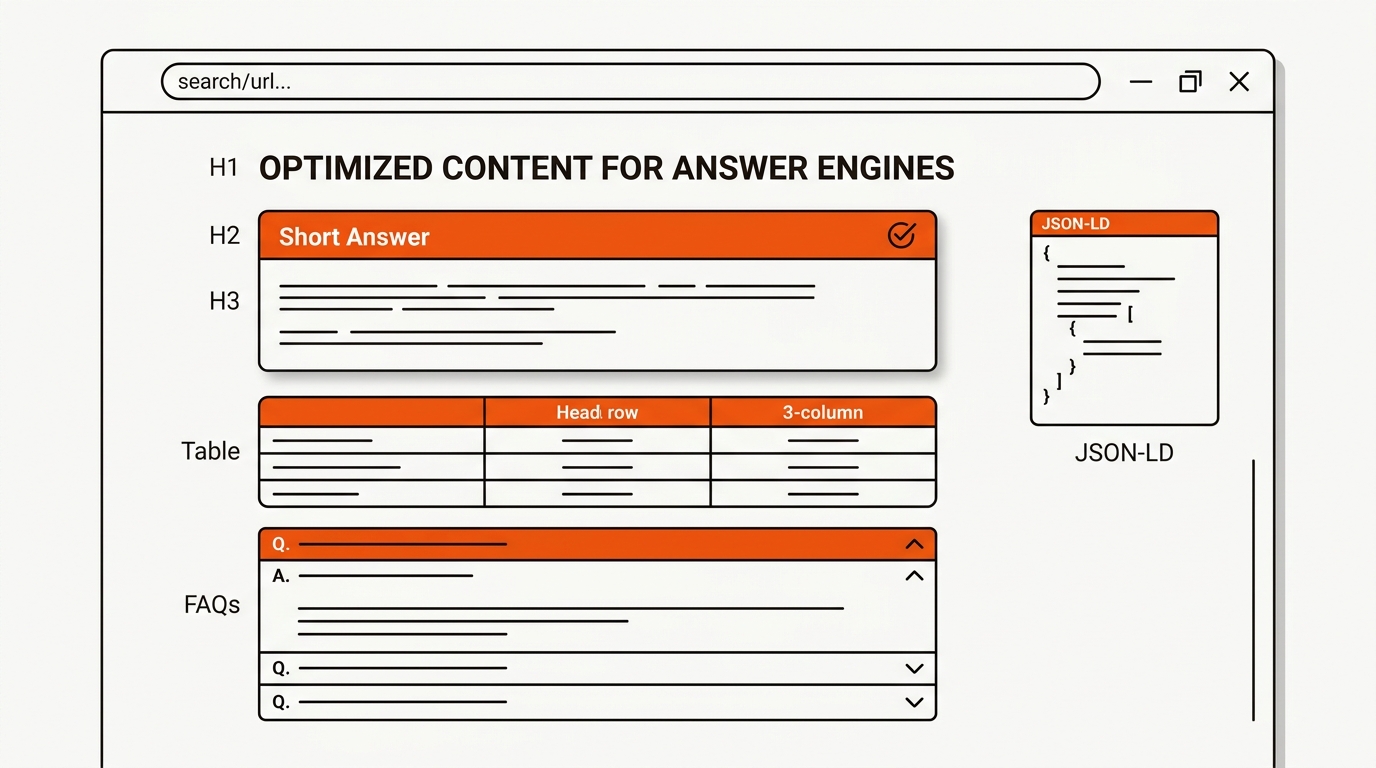
• Ship extraction-friendly layouts: a Short Answer block, 1 table, 4-6 FAQs with JSON-LD, and clean headings. Validate with Rich Results Test from Google Search Central.
External sources:
• Google Search Central: Structured Data
• Perplexity: How Sources Are Chosen
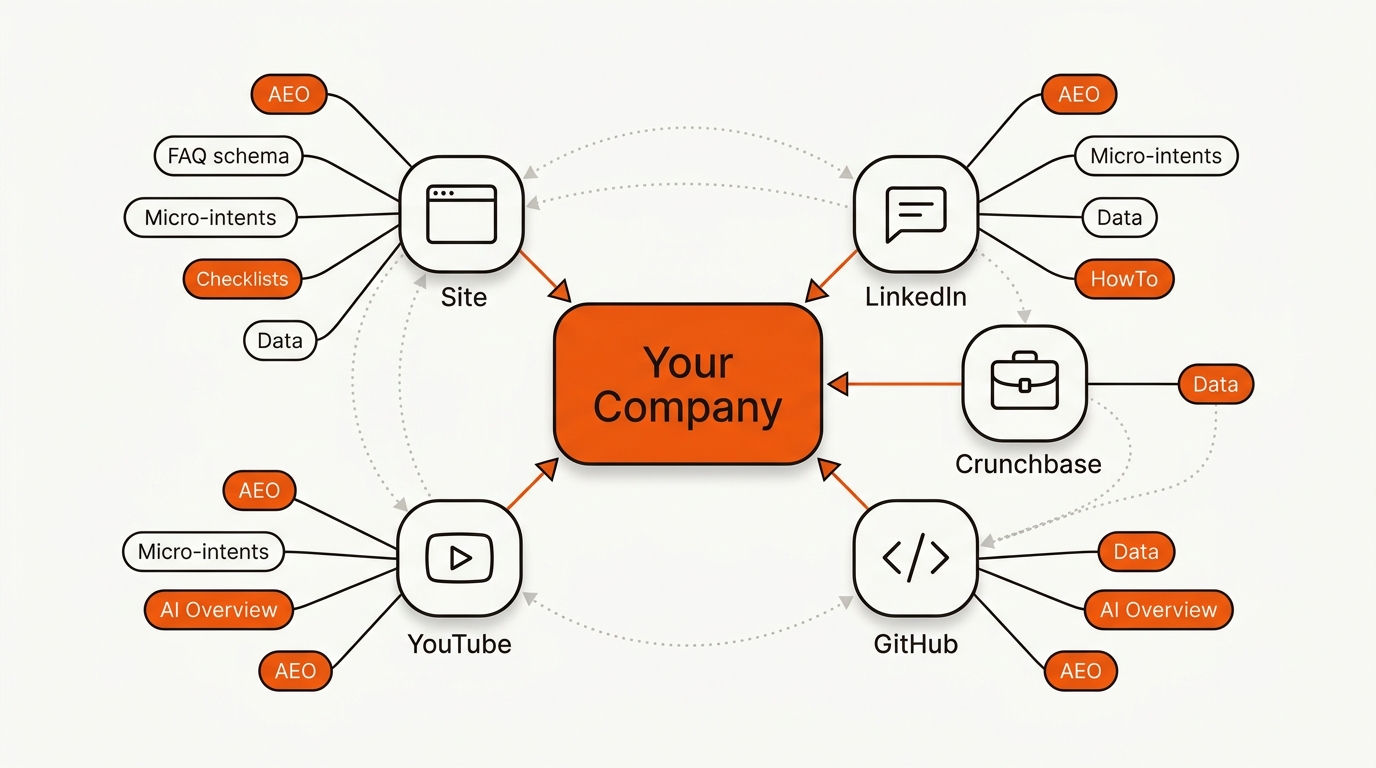
Two patterns stall early AEO: fuzzy entities and pages bots cannot reliably parse. If a page targets onboarding, state the entity precisely, for example Enterprise onboarding software implementation for Salesforce admins, and ground it with explicit names, versions, and audiences. Choose one precise entity per page even if it splits a broad topic across two URLs. Put the direct answer near the top, in plain HTML. Avoid closed accordions for the key sentence. Use FAQPage schema with mainEntity. Test with a text render. If the answer disappears or moves far down the page, refactor the layout.
When authority is low, build pages that are extractable, citeable, and entity-aligned instead of chasing head terms. Treat answerability as your core KPI.
caption
You win AEO without authority by systematizing intent clustering, entity enforcement, and extraction-first publishing. Mergeflo is an autonomous SEO platform for startups: it finds search gaps, drafts articles, and publishes the ones you approve to Webflow.
Here is how teams apply it:
• Intent clustering tuned for answerability, not just volume and KD.
• Page blueprints with mandatory Short Answer blocks, one table, and 4-6 FAQs with JSON-LD.
• Entity enforcement across author bios and org profiles, plus YouTube descriptions.
• AEO observability: watchlists for Perplexity and Bing Copilot citations.
Tradeoff: this workflow demands editorial discipline. If you broaden topics too early or skip citeable assets, extraction rates drop and time-to-signal doubles.
If citations are the next mile for you, read our playbook on how to get cited in Perplexity.
Turn intents into a repeatable build. Start with an entity registry and map each high value question to one entity and one URL. Create an Answer content type with fields for a short summary, step list when required, schema type, and freshness TTL. Add pre publish checks for duplication, DOM placement, and schema validity. Configure an extractor that verifies the answer appears near the top of the rendered page. Ship through the CMS API and ping sitemaps. Monitor answer coverage, snippet text match rates, and time to first impression. Iterate weekly against thresholds.
New to this topic? Start with the basics of what answer engine optimization is, then see how to build citable pages that win AI answers.
Citations come faster when you publish extractable answers and align entities, and you should measure impact across AI surfaces, not just traffic.
No one can promise a date. Google decides when to crawl and index a page, and AI tools decide what to cite. Narrow, well-structured pages with consistent entity names give you the best chance. Volume matters less than precision.
It limits head-term inclusion while leaving room for long-tail and niche intents. Answer engines use authority-like priors, yet they surface precise, extractable answers from newer domains when entity clarity and citeable assets are strong. Climb from niche questions to broader ones as your mentions grow.
Short answer blocks, FAQ sections and tight comparison tables are easy for AI tools to quote. Use a clean H2/H3 hierarchy and JSON-LD for FAQs. Keep the first answer short. Validate structured data with the Rich Results Test and crawl the site with Screaming Frog.
Track citations and mentions in Perplexity, Bing Copilot, and ChatGPT browsing sessions on a defined query set. Pair that with index coverage, brand mentions across LinkedIn and YouTube, and page-level saves in Perplexity. In GSC, segment by pages built for AEO and watch impressions and queries including your brand plus topic.
