
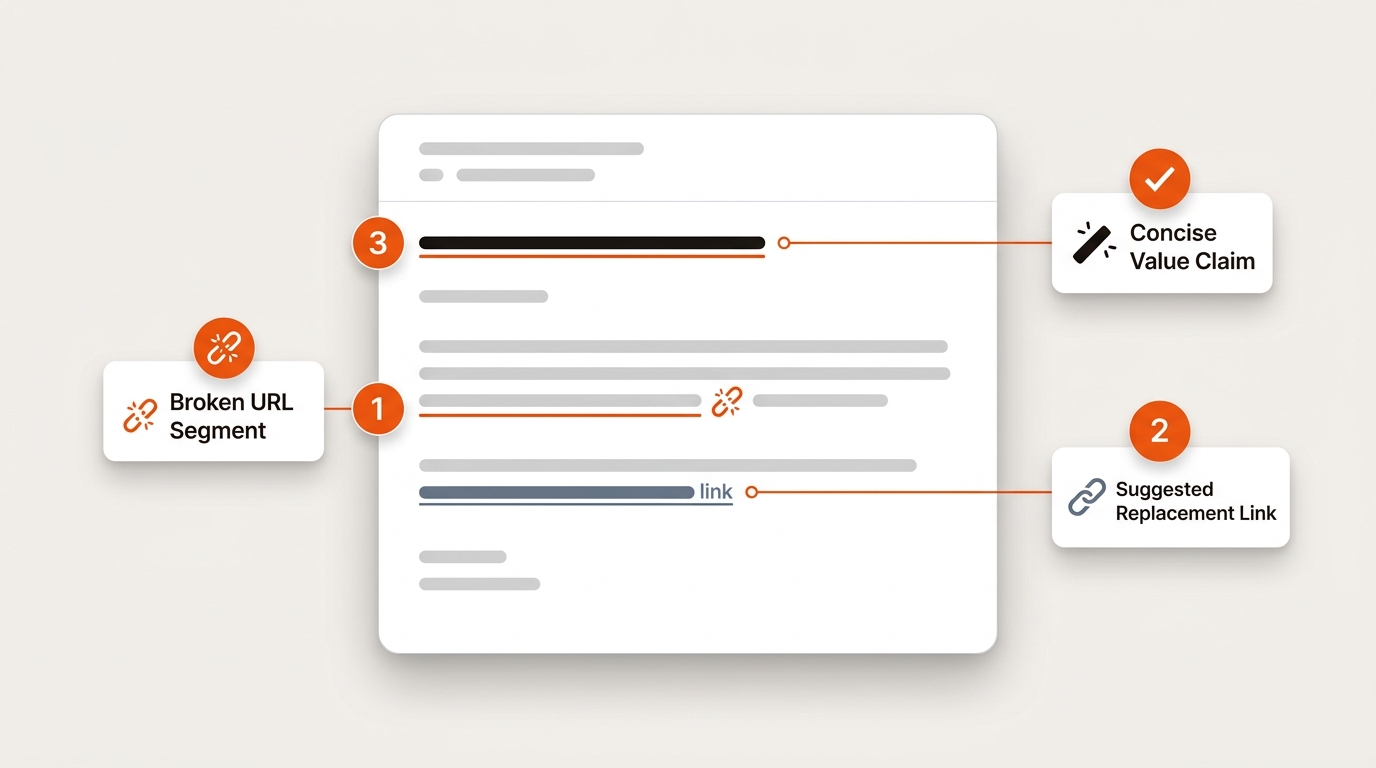
Short answer: A clean example of link building for SEO is broken link building. Find 404s on relevant resource pages, map each dead link to a high-quality replacement on your site, then email the editor with the exact location and suggested URL. One polite follow-up is enough. Expect single-digit win rates if targeting and relevance are tight.
In practice, pick one asset and one audience, then run a tight play. Example: a payroll SAAS publishes a multistate paycheck calculator that updates monthly. Prospect 150 pages that link to state tax resources and calculators, qualify by traffic and topical fit, and collect editor emails. Draft one outreach template with a 2-sentence value pitch plus two lines showing state coverage. Send 120 emails, follow up twice at day 4 and day 10.
Editors say yes when you fix their problem before asking for anything. Most teams pitch links without offering value. Editors care about clean UX and accurate sources. When you surface a specific broken link on their page and hand them a credible replacement, you reduce their to-do list and improve their content.
Treat this like a pipeline. Build a sheet with page URL, broken link URL, anchor text snapshot, your suggested replacement, and status. Verify 404s with Screaming Frog or Check My Links. Validate the host page still gets visits via Ahrefs/Semrush. Keep emails short: proof of the break, your replacement, and why it fits.
Tradeoff: Quality beats volume, but volume matters. If you chase every 404 you’ll tank reply rates and burn domains. If you only chase perfect unicorns, you won’t ship enough pitches to learn. Target 20-40 high-fit emails per week. This is the most repeatable example of link building for SEO that lean teams can run in hours.
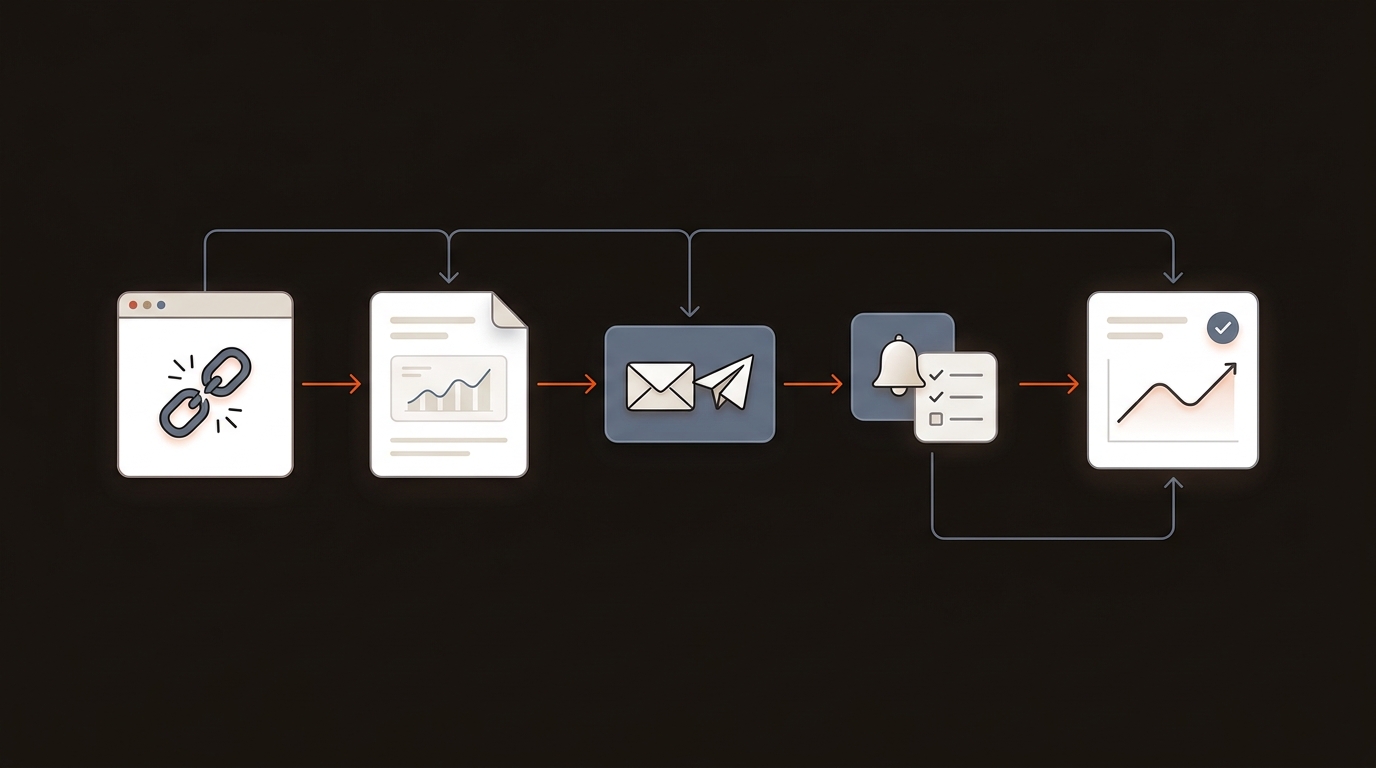
Pick tactics by asset fit, win rate, and hours per acquired link. Broken links, reclamation, and reporter requests each work in different conditions. Your constraint is time and inbox goodwill. Use the table below to set expectations and staff accordingly. For most B2B teams, broken links are the lowest-risk example of link building for SEO that scales to dozens of wins.
Comparison of Link Building Tactics for Lean B2B Teams
Sources: Search Engine Journal, Siege Media
Execution details that move results: Use Google operators to find targets (intitle:resources "topic", site:.edu "resources"). Thread deliverability basics (SPF/DKIM/DMARC) before starting. Track inbox-by-inbox results; if a sender drops below 30% open rate for two weeks, pause and warm. Add schema and precise anchor matching on your replacement asset to increase acceptance and help AI Overviews cite it.
Links compound when your assets, schema, and internal links are built for discovery and citation. Mergeflo is an autonomous SEO platform that finds search gaps, drafts articles with FAQ schema for your review, and publishes the ones you approve to Webflow. That gives you credible replacements for broken-link outreach, structured data for AI citations, and internal links that distribute PageRank once you land placements.
Most teams also need a conceptual baseline before scaling outreach. If you are defining what a quality backlink means for your niche, start here: What Does Link Building Mean.
Systemize the play like a sales pipeline. Create stages for Prospect, Pitched, Follow-up 1, Follow-up 2, Edit Requested, Live, Lost. Set weekly quotas: 100 net-new prospects, 80 first touches, 60 follow-ups. Build a shared prospecting rubric with disqualifiers like thin pages, affiliate-only policies, or outdated directories. Maintain a library of three proven templates and two subject lines, rotate weekly, track reply and link rates by variant. Block 90 minutes on Mondays for list building and 30 minutes daily for sends. Ship a monthly refresh of the asset so you can re-pitch new markets without fatigue.
Use Google operators (intitle:resources + "your topic"), then scan with Check My Links or Screaming Frog for 404s. Pull topics into Ahrefs/Semrush to confirm the pages still receive traffic. Prioritize pages with topical relevance, organic traffic, and outbound link patterns similar to your asset.
Prioritize topical relevance, editorial context on the page, a unique referring domain, and index status. Page-level authority and traffic matter more than just domain metrics. Avoid sitewide links, paid placements, or irrelevant directories; they rarely move rankings and can create risk.
One. Send the initial email with the exact broken URL location, your replacement, and a one-line value claim. Follow up once 5–7 days later by forwarding the original thread. More than that burns goodwill and can hurt deliverability.
Track new referring domains, the linked page’s query lifts in Google Search Console, and assisted conversions in your analytics. For planning, measure hours per acquired link by tactic. Impact shows only after Google recrawls the linked pages, so track them in Search Console over the following weeks.
