
Short answer: A concrete example of structured data is a Product JSON-LD snippet that declares name, description, sku, brand, price, currency, and availability on a product page. This machine-readable schema makes the page eligible for rich results in Google and clearer citations in AI systems, improving discoverability and click-through.
The miss: teams conflate data tables with SEO schema and ship neither correctly. In analytics, structured data is a table (CSV with columns). For ranking, the actionable version is JSON-LD embedded on-page that matches visible content and passes validation. Mix them up and you lose rich results and AI citations.
Google is explicit: add structured data to become eligible for rich results and follow content-consistency rules. Invalid JSON, missing required properties, or markup that does not match the page blocks eligibility and can suppress enhancements across Search and AI surfaces. Use Google’s guidelines and validate at publish.
Google: Adding structured data makes your content eligible for rich results, but implementation must be valid and reflect on-page content.
A lean scenario: a 3-person growth team shipped 42 product pages without schema. After adding valid Product JSON-LD mapped to visible price/availability, GSC showed Product snippets coverage rise from 0 to 38 valid items in 72 hours, and CTR on enriched pages improved by 0.9 percentage points over a 28-day window against matched controls.
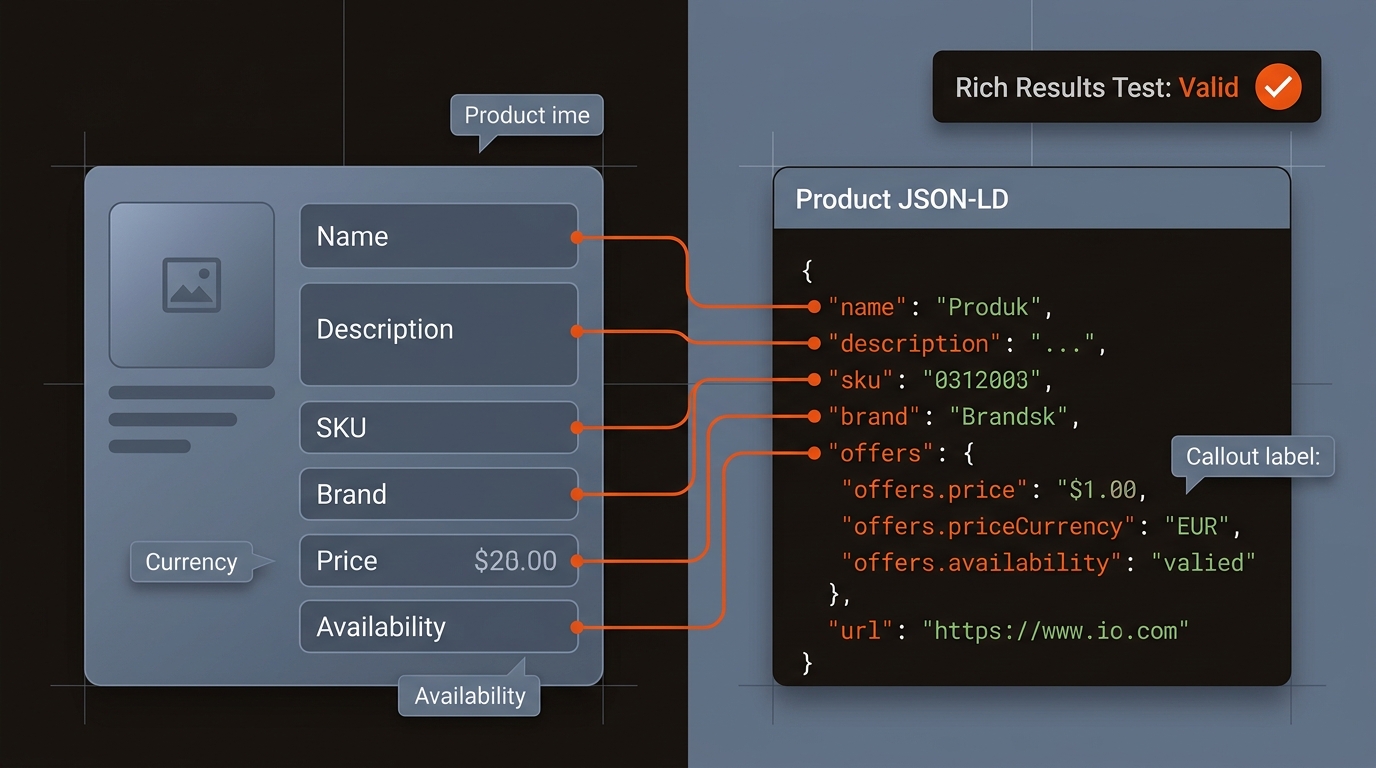
Pick the schema type that matches page intent, fill required fields, and validate before shipping. These are rank-relevant structured data examples operators actually deploy. Use this mapping to avoid mismatches that kill enhancements and confuse AI parsers.
Comparison: Structured Data Types, Where to Use Them, and Failure Checks
Reference schemas at Schema.org Product: https://schema.org/Product
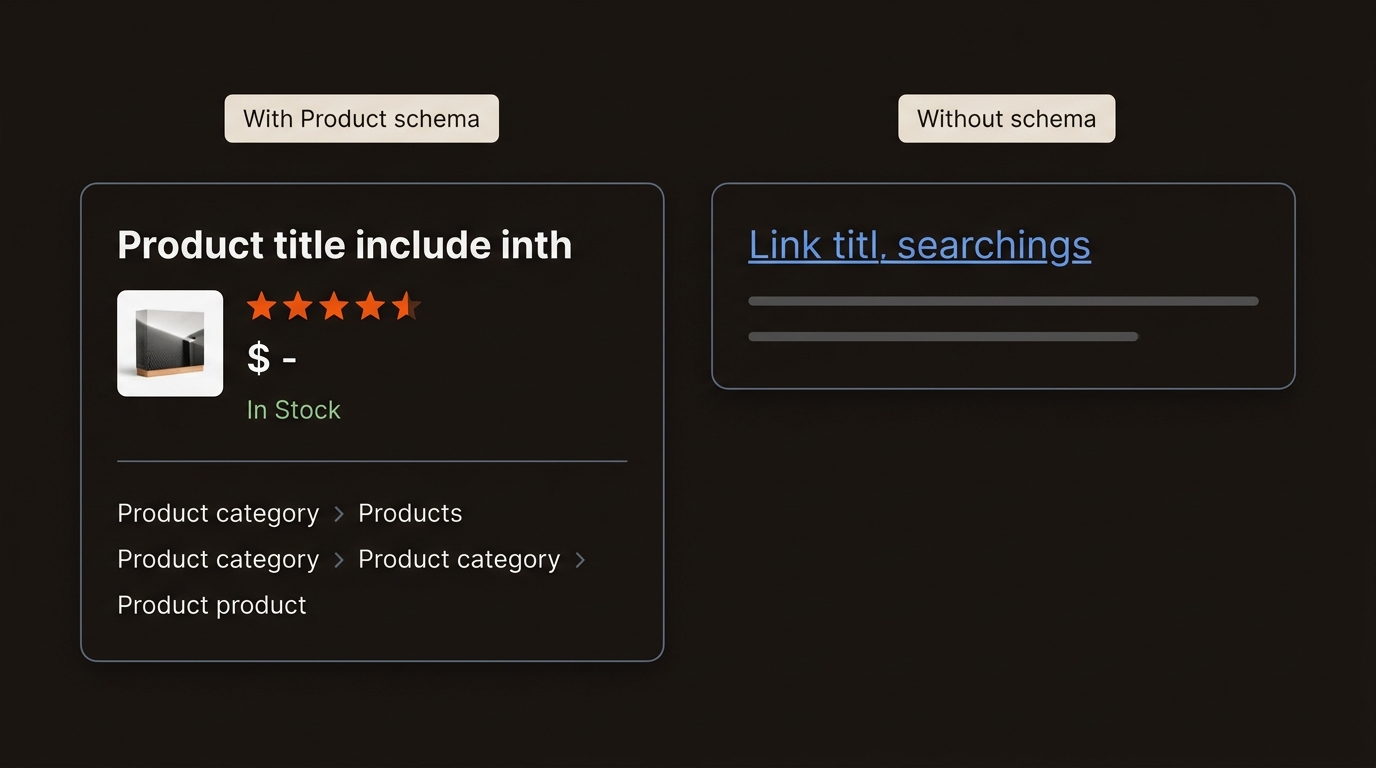
Product detail pages benefit from Product with name, image, sku, gtin13 or gtin14, brand, offers price currency availability, aggregateRating ratingValue reviewCount, and shippingDetails. Blog posts map to Article with headline, datePublished, dateModified, author, mainEntityOfPage, and image. FAQs belong on a dedicated FAQPage where each question is a mainEntity item with acceptedAnswer. Jobs use JobPosting with datePosted, validThrough, employmentType, jobLocation, and baseSalary. Events take Event with startDate, location name address, and offers if tickets exist. Home and category pages are lighter: Organization or Website plus BreadcrumbList. Avoid emitting properties not visible on the page to prevent mismatches.
Schema needs a repeatable pipeline that stays in sync with content and survives template changes. Practical flow: map content types to schema types, generate JSON-LD at build time, validate in CI (lint JSON, assert required properties), publish, and monitor Rich Results coverage in GSC by type. Manual paste works for 1-2 pages; it breaks at 50+ SKUs and rolling price updates.
For founders, the operational tradeoff is speed vs. accuracy. Hard-coding snippets is fast until prices change and your JSON-LD goes stale, which can suppress enhancements. Mergeflo is an autonomous SEO + AEO content engine: research to published, AI-citable pages in your CMS, with schema, internal links, and ongoing refresh. If you want background on why schema matters for visibility, see our primer on What Is Schema Markup.
Start with a template inventory and tag each layout to a target schema. Map fields in a single sheet: source field, transformation, target property, required yes or no. Build JSON-LD templates with conditionals so offers only renders when price, currency, and availability are present. Generate stable @id values using the canonical URL plus a fragment, for example #product or #organization. Add unit tests with one real URL per template. In CI, lint JSON and fail builds on missing required fields. Roll out behind a flag to 10 percent, then 50 percent, then 100 percent. Monitor errors and alert when null rates exceed 0.5 percent.
Use JSON-LD. Google recommends JSON-LD for most implementations, it is easier to generate dynamically, and it keeps markup decoupled from HTML templates. Microdata and RDFa work but are brittle to front-end changes and harder to test in CI.
Use Google’s Rich Results Test and the Schema Markup Validator in automation. For 100+ pages, add a CI step that lints JSON, checks required properties per type, and fails builds on errors. Post-publish, track coverage and errors in GSC’s Enhancements and Rich Results reports by content type.
Yes, indirectly. Valid, consistent schema improves machine understanding of entities, prices, dates, and relationships, which supports AI answer generation and attribution. It is not a guarantee, but pages with clean schema and matching on-page text are more likely to be surfaced and cited.
Watch three signals: Rich Results impressions/clicks in GSC for the specific enhancement, CTR deltas on pages that gained enhancements versus matched controls, and validation error rate trending to zero. For commerce, also track add-to-cart rate changes after price/availability surfaces in the SERP.
