
Short answer: To check AI search visibility, build a prompt list tied to core topics, test each prompt across AI Overviews, ChatGPT, Perplexity, Gemini, and Copilot, and log three items: citation presence, link quality, and placement. Compare against 2-3 competitors, trend weekly, and route misses to page-level fixes. Use a shared sheet plus Semrush’s AI search visibility checker for coverage.
Unstructured, one-off checks do not produce decisions, so nothing gets fixed. Most teams eyeball a few prompts, skip screenshots, and never record whether the model cites, links, or only mentions the brand. That kills prioritization and hides which page should be fixed first.
"Identify prompts where competitors appear but your brand does not.". Semrush AI Search Visibility Checker
Run a repeatable workflow. Use consistent prompts, a fixed weekly cadence, and one sheet logging engine, prompt, citation status, source URL, placement, and competitor presence. Use Semrush AI Search Visibility Checker to validate your findings and surface platform-specific gaps you missed in manual runs.
A real scenario: a 3-person growth team with a 2k monthly content budget tracked 110 prompts across 9 clusters. The first pass took 55 minutes with screenshots and a simple sheet. Week 2 took 28 minutes because prompts and fields were standardized. They shipped two rewrites, and Perplexity citations appeared on the next recheck.
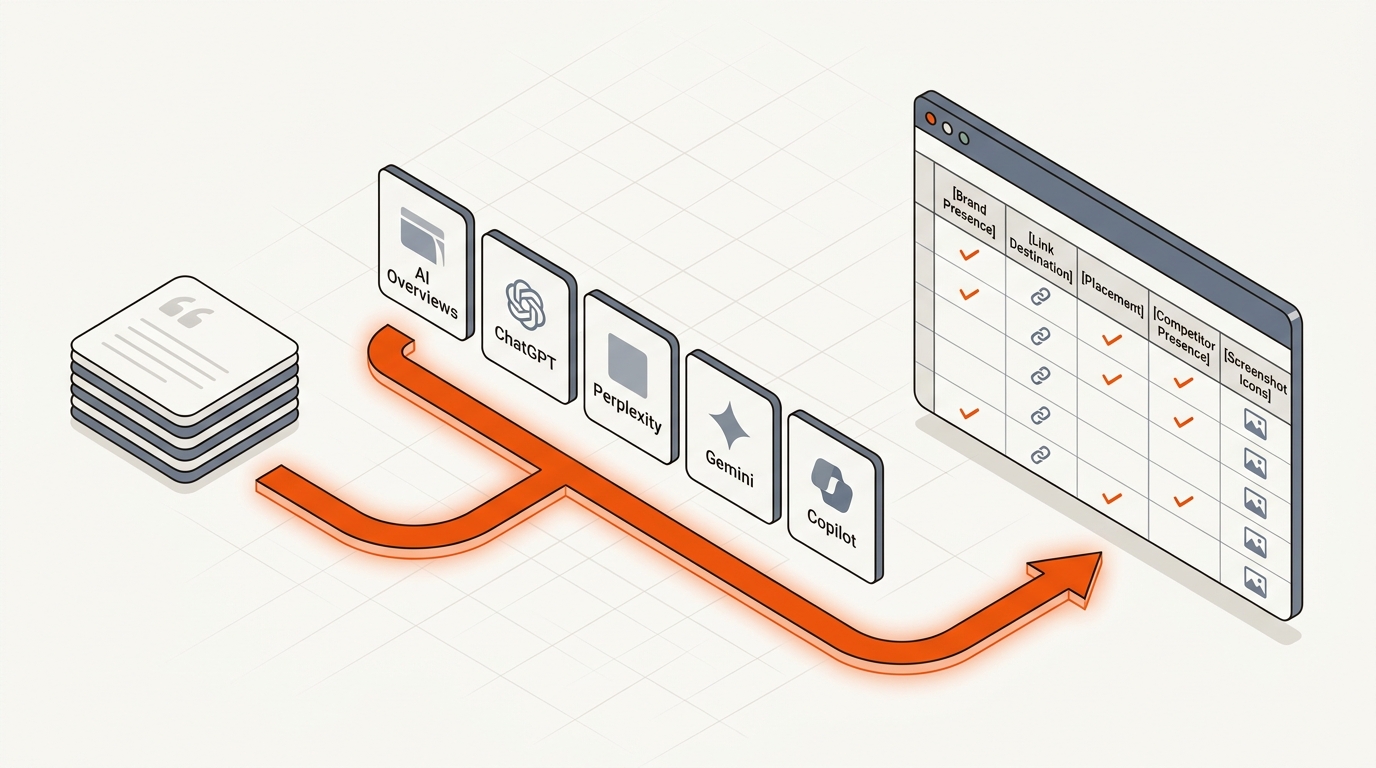
Track citations, outbound links, and placement per engine, then decide fixes from the sheet. You need consistent evidence that maps to pages and actions.
Caption: Side-by-side methods and metrics to run a 20-minute AI visibility audit
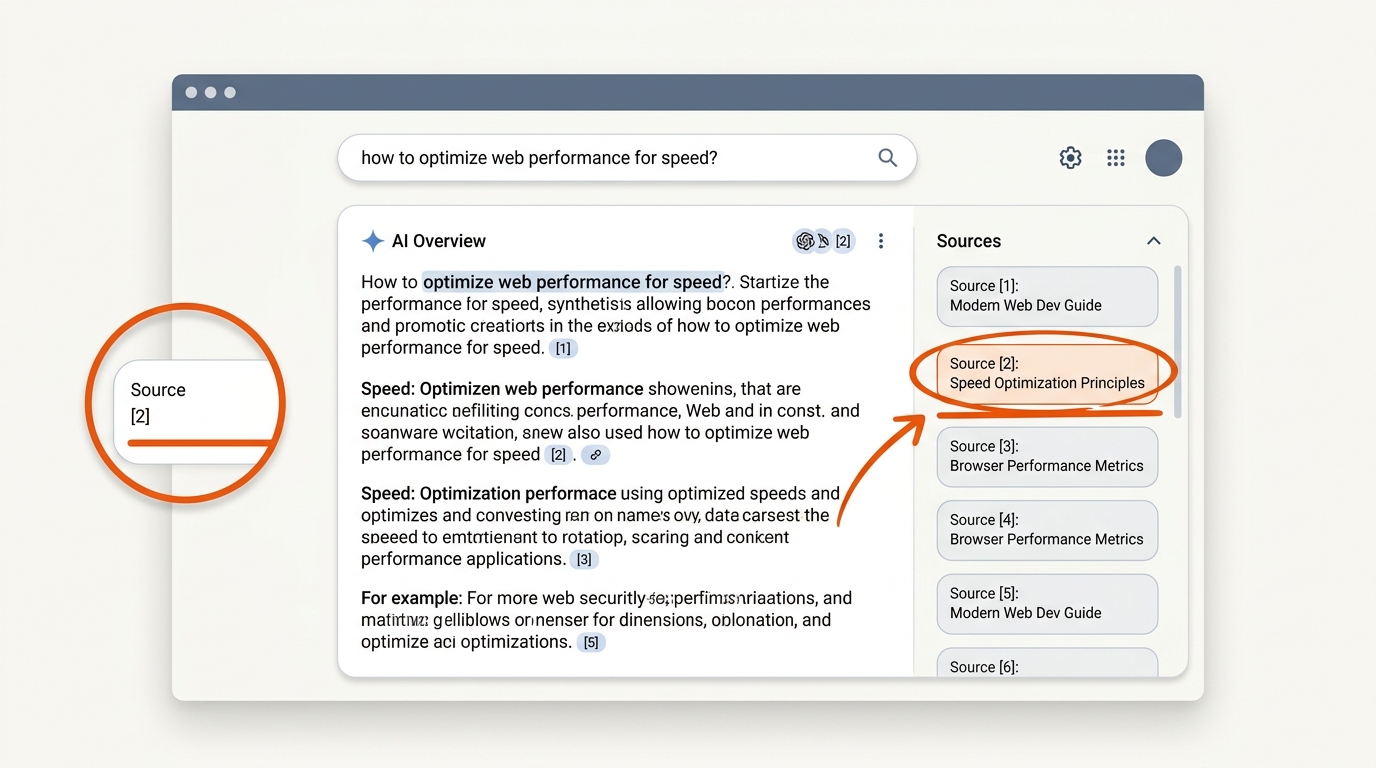
How to check AI search visibility with speed and coverage. Build a 10-12 prompt set per cluster: 1 head term, 3-4 mid-intent, 6-7 problem-led variants. For each prompt, run the five engines, record citation yes/no, exact linked URL, and placement. Screenshots backstop disputes. Prioritize fixes where an engine cites competitors and your matching page exists but is not cited.
Operational tradeoff: manual checks scale well to 100-150 prompts per week but slow beyond 200 because screenshot and logging overhead compounds. If you need more coverage, automate capture or narrow to the clusters that drive pipeline this quarter.
On AI overviews in web search, track three things: inclusion, position, and attribution quality. Example: for 120 intents, record whether your brand appears, if it is within the first 2 cited sources, and whether the snippet cites the canonical URL. On chat surfaces, log whether the assistant names your brand unprompted, the first clickable link offered, and which follow-up prompts your content can satisfy. On shopping surfaces, capture SKU match rate, price freshness, and review snippet pull-through. Run each intent across 3 locales and 2 devices, twice per week, yielding 120 x 3 x 2 x 2 equals 1,440 observations.
Visibility checks pay off only when they trigger targeted page updates and scheduled rechecks. Mergeflo is an AI search visibility platform for startups. Rank on Google and get cited by AI (AI Overviews, ChatGPT, Perplexity, Gemini, Copilot). Measures AND fixes visibility, autonomous, startup-priced.
We convert your prompt set into weekly audits, map misses to target pages, and ship updates in your CMS: Autonomous SEO + AEO content engine that publishes AI-citable pages with schema, internal links, and ongoing refresh. If you are evaluating tooling, see our take on visibility tools for AI search to understand where a tracker ends and a fixer begins.
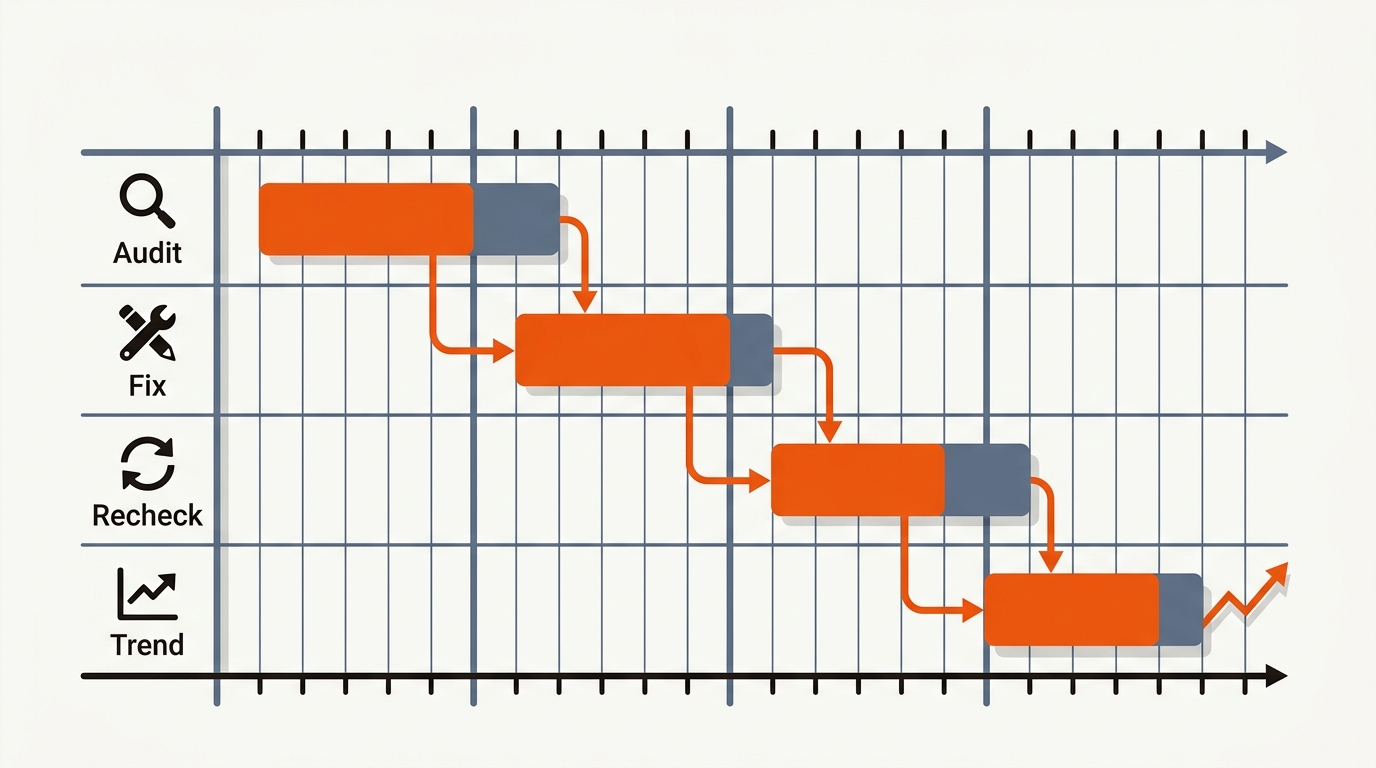
Use the failure codes from checks to trigger repeatable fixes. Missing inclusion maps to entity or schema gaps; degraded attribution points to canonical mismatches; weak link prominence signals thin summaries. In Mergeflo, create a playbook: 1) tag failing intents, 2) map each to content nodes and SKUs, 3) run templates that add organization, product, and FAQ schema, tighten titles to 55 to 60 characters, and add a 120 to 160 character summary, 4) ship through your CMS, 5) recheck after 48 hours. Track deltas by intent cluster and surface, and stop once confidence intervals stabilize.
Start with 8-12 prompts per topic cluster: head, mid, and 2-3 problem-led variants. That gives coverage without bloating the sheet. For a 10-cluster site, 100-120 prompts is manageable in 45-60 minutes weekly.
A true win is a clickable citation to your target page, not just a brand mention. In conversational engines, record mention vs link and the linked URL. Favor links to the exact page that answers the prompt.
Use downstream proxies: branded impressions in GSC for the target pages, referral logs from Perplexity and Copilot, and lift in assisted conversions tied to those pages. Track prompt-level citation gains week over week and pair them with page-level organic CTR trends.
Inspect weekly, batch fixes biweekly, and recheck the next cycle. Prioritize prompts with competitor citations and clear intent-match pages. If a page misses citations for 3 consecutive cycles, plan a structured rewrite with schema and stronger internal links.
A final note: if you cannot answer how to check AI search visibility in one sentence and show the sheet, you do not have a system yet. Build the prompt set, run the five engines, log citations, and fix the pages that should win. Then recheck.
