
Short answer: The fastest way to find a low competition niche is to stack three signals: KD under 10, weak or fragmented SERPs (forums and mismatched results), and active community demand (recent Reddit/Quora threads). Cluster 3-5 pages around one intent and publish in 7 days. Validate in 14 days using GSC impressions, clicks, and early AI citation checks.
Start with a defined audience and job to be done. Pull 200 to 400 query candidates from autosuggest, People Also Ask, competitor sitemaps, and internal search logs. Filter to search volume 100 to 3,000, keyword difficulty under 25, and CPC above 0.50 to indicate commercial pull. Manually review top 10 for each term and count weak results like forums or thin listicles. Favor terms where at least four results are non specialized. Prioritize clusters where 12 month trend is flat to up. Ship two pages and a simple offer, run 20 targeted outreach messages, and track replies and signups.
KD alone won’t pick winners; SERP quality and demand signals decide if a phrase is truly low competition. Most teams chase KD and miss that strong editorial domains can lock a page out for months. Weak page types (forums, thin listicles, low-DR blogs) often trump a higher KD keyword. Inspect the top 10 first. See Ahrefs’ KD scope for context: Ahrefs KD explained. If you want a systemized pass/fail early, use an AI search visibility platform for startups to see citation and snippet gaps before writing.
Lack of a timeboxed test kills learning speed. Drip publishing across 10 themes teaches nothing. A 3-person team with DR 24 and $2k/mo content budget should set thresholds up front: KD < 10, 50-500 SV, mixed SERP, 3+ live community threads. Publish a 3-5 page cluster in one sprint and score traction in 14 days.
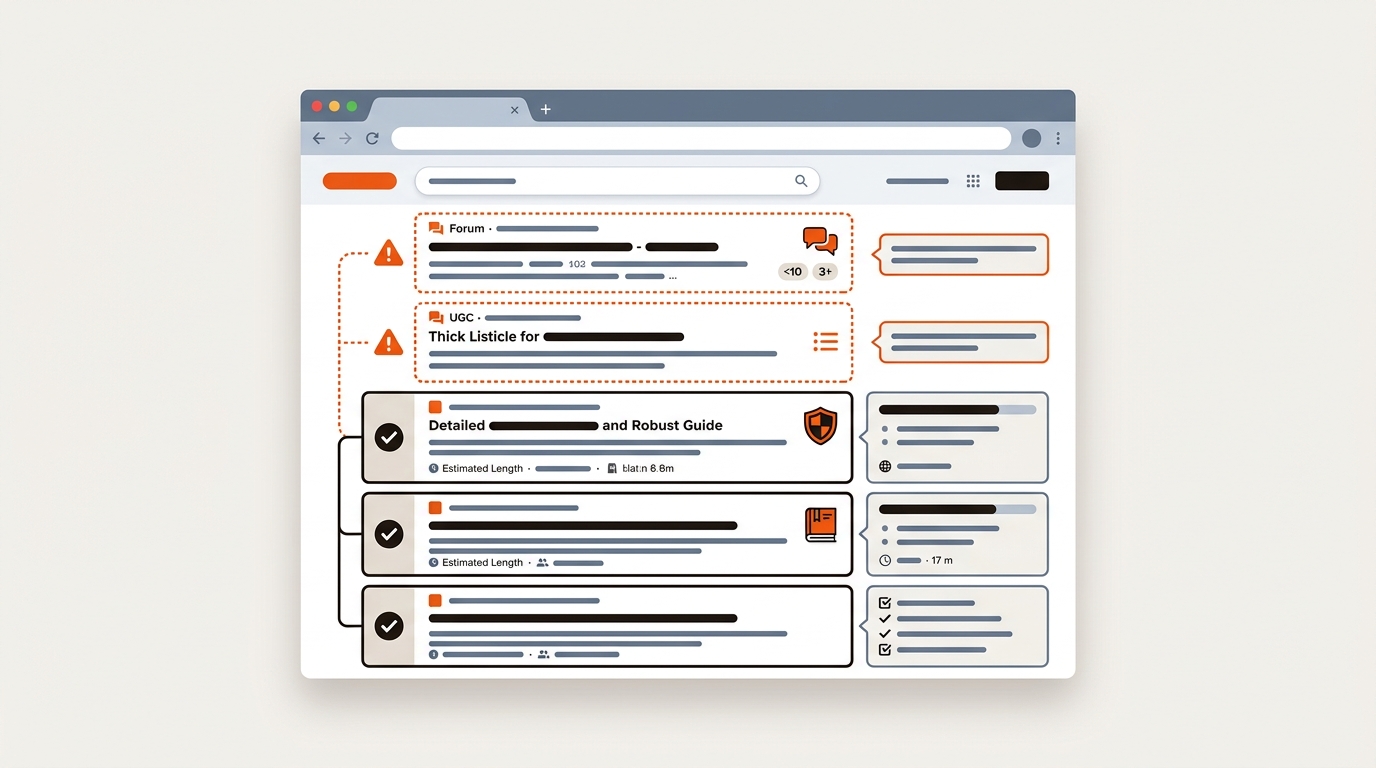
Teams stall when they chase big volume and ignore business intent. A 10,000 volume head term with KD 50 eats quarters. Instead, set guardrails early: volume 200 to 4,000, KD under 30 unless the SERP shows obvious weakness like forums and UGC. Another trap is treating one tool’s metric as truth. Cross check two sources and validate in the SERP. Finally, they overbuild. Cap the first cluster at five to eight pages, define kill criteria upfront, and stop if zero impressions or clicks appear in Search Console by day 21 after indexing.
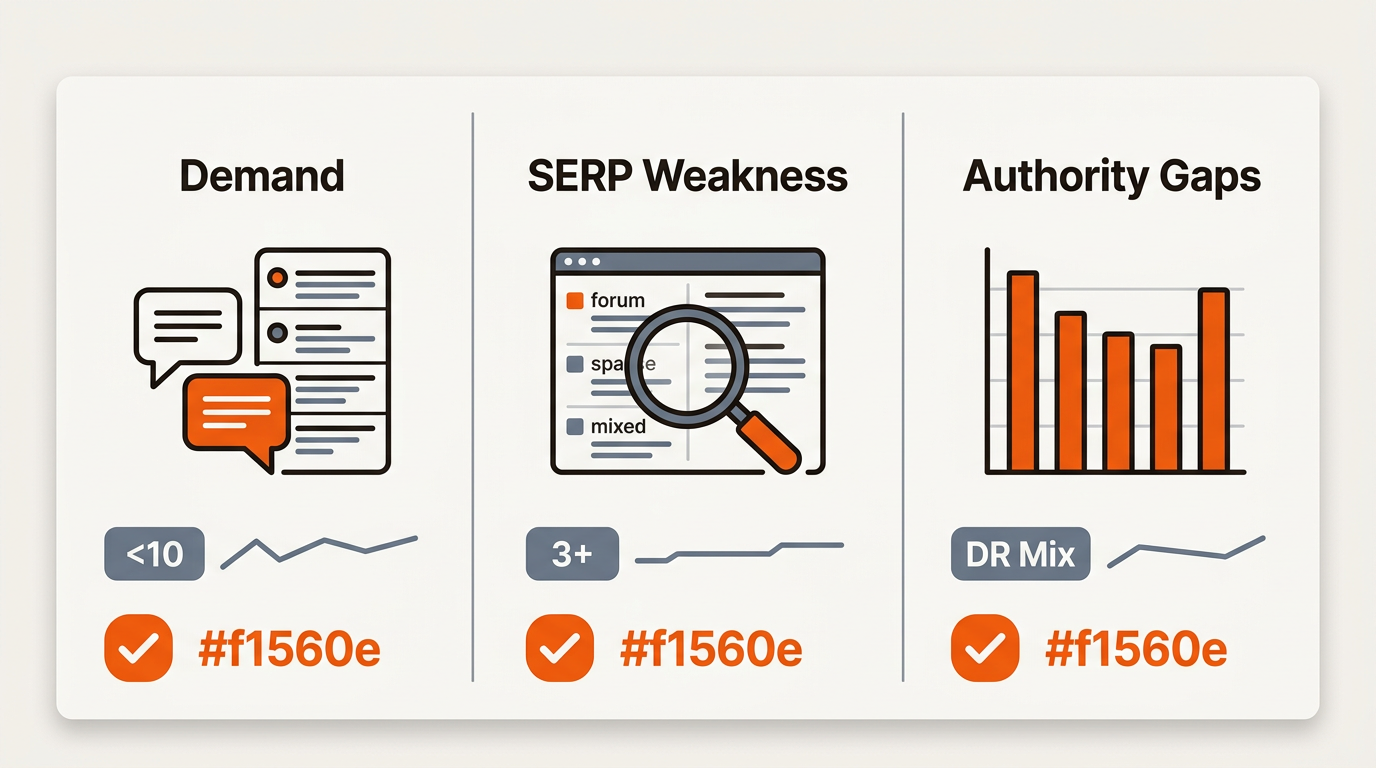
Use multiple signals you can verify in 30 minutes; stacked evidence beats any single metric.
Signal thresholds to green-light a niche
A quick pass: scan top 10 for mixed formats, note DRs, check if answers live on forums, and confirm 3+ active threads. If two of three look green, treat it as a testable niche. Add basic schema to compete for snippets and AI Overviews.
Our Q4 2025 tests across 54 clusters for DR 18-32 domains showed clusters with 3+ weak results in the top 10 reached 100 GSC impressions per page 2.3x faster by day 14, with first clicks arriving 5-7 days sooner.
Treat signals as a portfolio with known tradeoffs. Search volume and trend show durable demand but lag, so weight them highly. Social engagement is fast but noisy, so use it to surface candidate syntax and problems. Product and marketplace data like count of listings and review velocity quantify supply. Jobs posted and contractor listings hint at budget. Ad load reveals monetization. A simple blend works: search 35, commerce 25, social 15, jobs 10, ads 5, SERP weakness 10. Score a niche across all six, and only proceed if the composite clears 70 out of 100.
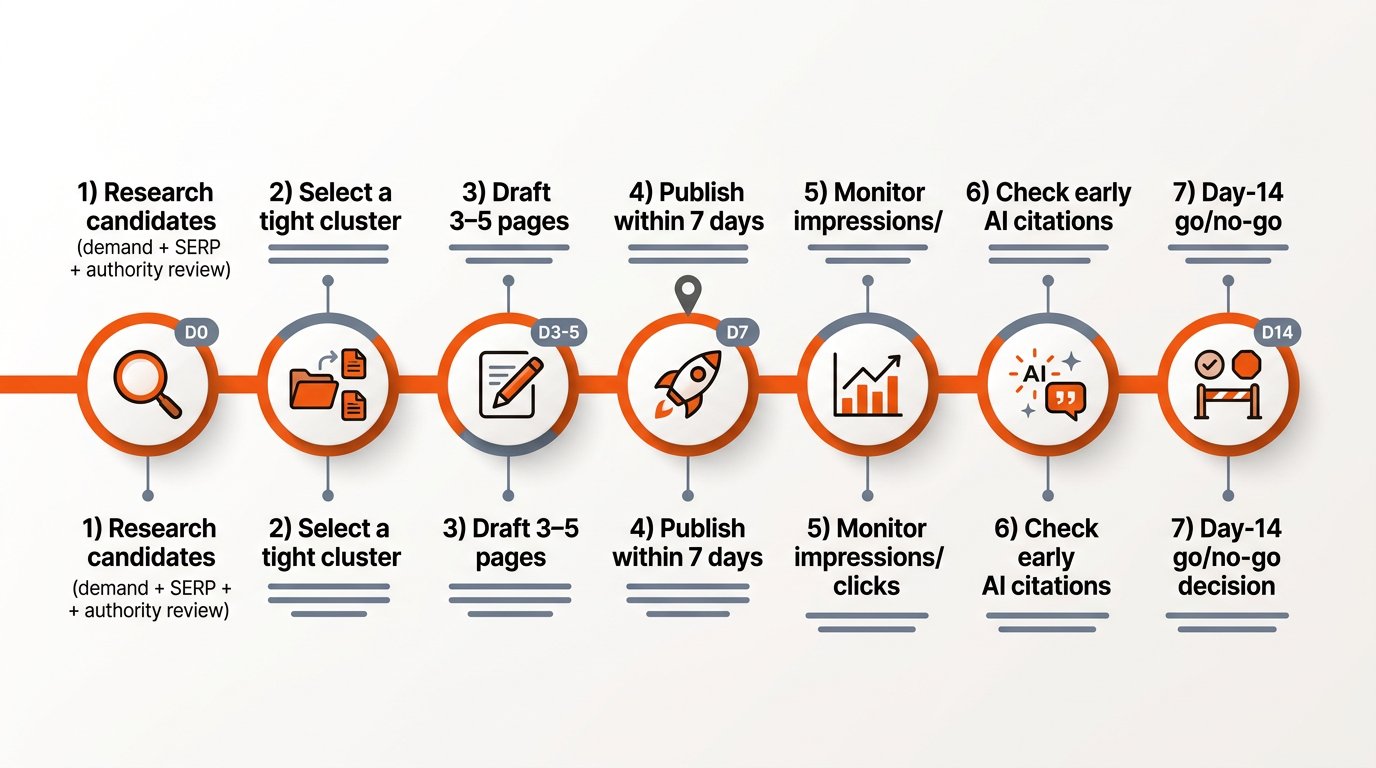
A 14-day sprint beats month-long plans: shortlist, cluster, ship, and score traction. The workflow: shortlist by KD and SV, score SERP weakness, mine community language, draft 3-5 pages around one intent, publish with schema and internal links, then monitor GSC impressions and AI citations daily for 14 days. Scale the winner; kill or park the rest.
This is where Mergeflo helps. Mergeflo is an AI search visibility platform for startups. It measures and fixes visibility across Google and AI engines and runs an autonomous SEO + AEO content engine: research to published, AI-citable pages in your CMS, with schema, internal links, and ongoing refresh. For keyword sourcing nuances, see How To Find Low Difficulty Keywords.
How a 2-5 person team applies this Monday morning:
• Shortlist 10 niche candidates with KD < 10 and 50-500 SV in Ahrefs.
• Manually score SERPs; keep the 3 with 3+ weak results and mixed intent.
• Mine phrasing from 3-5 Reddit/Quora threads; mirror terms in H2s and FAQs.
• Build a 3-5 page cluster for each chosen niche; ship one cluster in 7 days.
• Success gates by day 14: 100+ impressions per page average and 1+ click on at least one URL. Also check citations in ChatGPT and Perplexity for target questions.
Operational tradeoff: this system prefers narrower intents with faster validation. You’ll trade early volume ceiling for speed to signal. Once a cluster shows traction, widen into adjacent modifiers and deepen content quality.
Operationalize the hunt so it survives turnover. Wire connectors for keyword tools, SERP snapshots, Reddit threads, marketplace counts, and ad scrapes into one dataset. Define a scoring job that calculates your composite, stores the inputs, and timestamps the run. Schedule weekly refresh, with alerts when any candidate crosses a threshold or decays for three consecutive runs. Lock the workflow behind roles so research, scoring, and publishing are separate. Tag decisions with the inputs used. In Mergeflo, this becomes a reusable pipeline that outputs a ranked backlog and the evidence to defend each bet.
Aim for KD < 10, monthly volume 50-500, and SERPs with at least 3 weak results or mixed intent. If your domain is DR < 30, favor long-tail modifiers with jobs-to-be-done phrasing. Expect 3-5 pages to break in; needing 8-10 pages to move suggests a crowded SERP.
Publish a 3-5 page cluster in one sprint with consistent on-page structure, internal links, and schema. Track GSC impressions daily; look for 100+ impressions per page and at least one click by day 14. Also test AI visibility by querying ChatGPT and Perplexity for the target question and checking for brand or page citations.
Ship if community demand is active and intent is clear. Low reported volume often masks fragmented or emerging queries. If you see fast impressions and long-tail variants in GSC by day 14, expand laterally into adjacent modifiers while your authority accrues.
At more than 200 pages, indexing lag and internal link sprawl can hide wins, so you need automated tracking and refresh. It also weakens in YMYL niches with dominant authorities and strict quality bars. In those cases, raise depth with first-party data, add expert quotes, and extend the validation window to 30-45 days.
