
Short answer: To get mentioned in ChatGPT answers, publish concise, citation-ready facts on high-authority profiles and Q&A-style pages with schema, then earn consistent third-party mentions. Use Organization/Product/FAQPage schema, keep Wikipedia/Crunchbase/G2 current, and write query-matched headings with 50-60 word summaries. Build consensus across sources so the model can confirm and cite you.
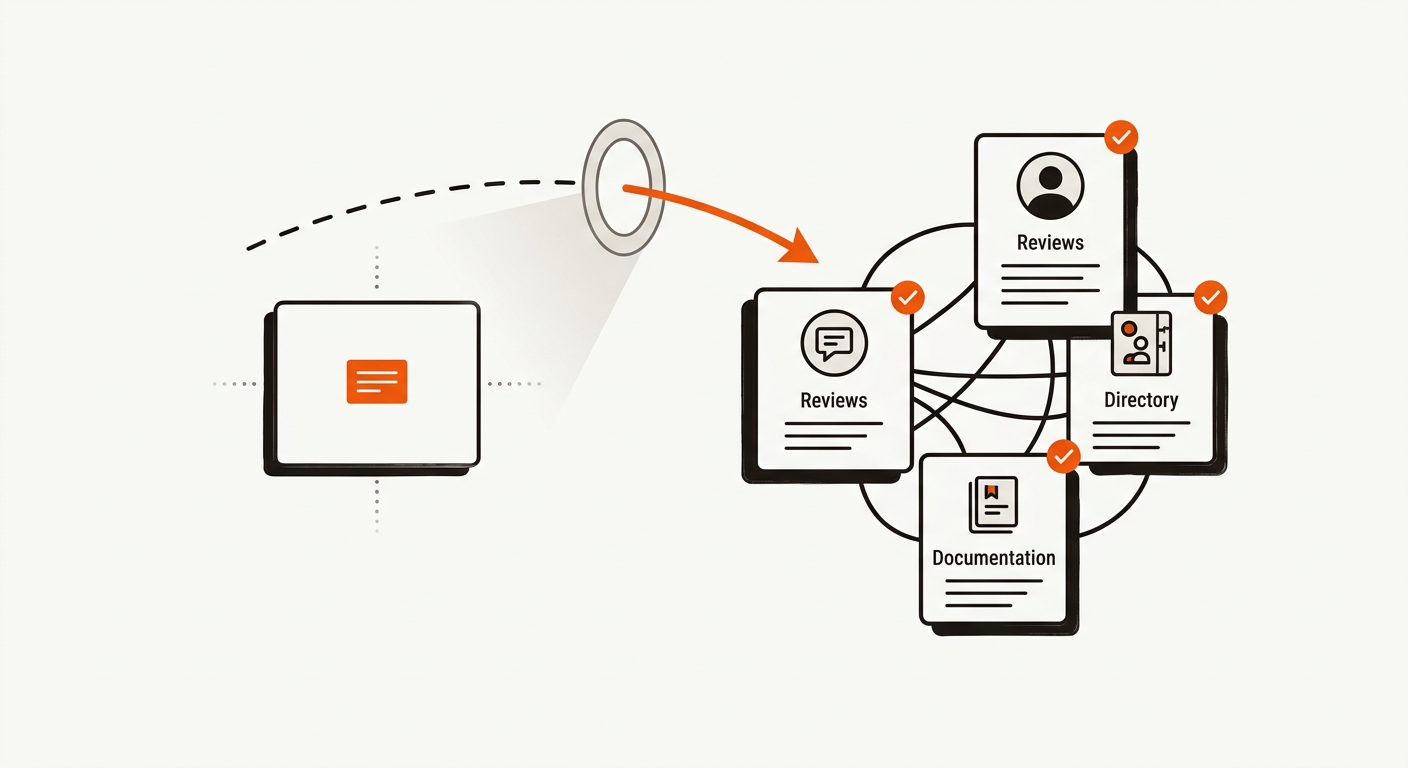
Engineer extractable facts, then distribute them to sources ChatGPT and GEO systems trust.
• Publish answer-engine pages for priority queries: H2 phrased as the question, a 50-60 word short answer, and a comparison table or checklist.
• Add schema: Organization, Product, FAQPage, and SameAs links to Crunchbase, GitHub, LinkedIn, and docs. Validate with Google’s Rich Results Test and Schema.org validator.
• Stand up authoritative third-party profiles: Crunchbase, G2/Capterra, Product Hunt, GitHub (for SDKs), and a lightweight Wikipedia entry if you meet notability. Keep identical facts (founded year, HQ, pricing model).
• Ship one unique data point quarterly. A mini study (methodology + sample size) earns citations from reporters and industry newsletters faster than generic content.
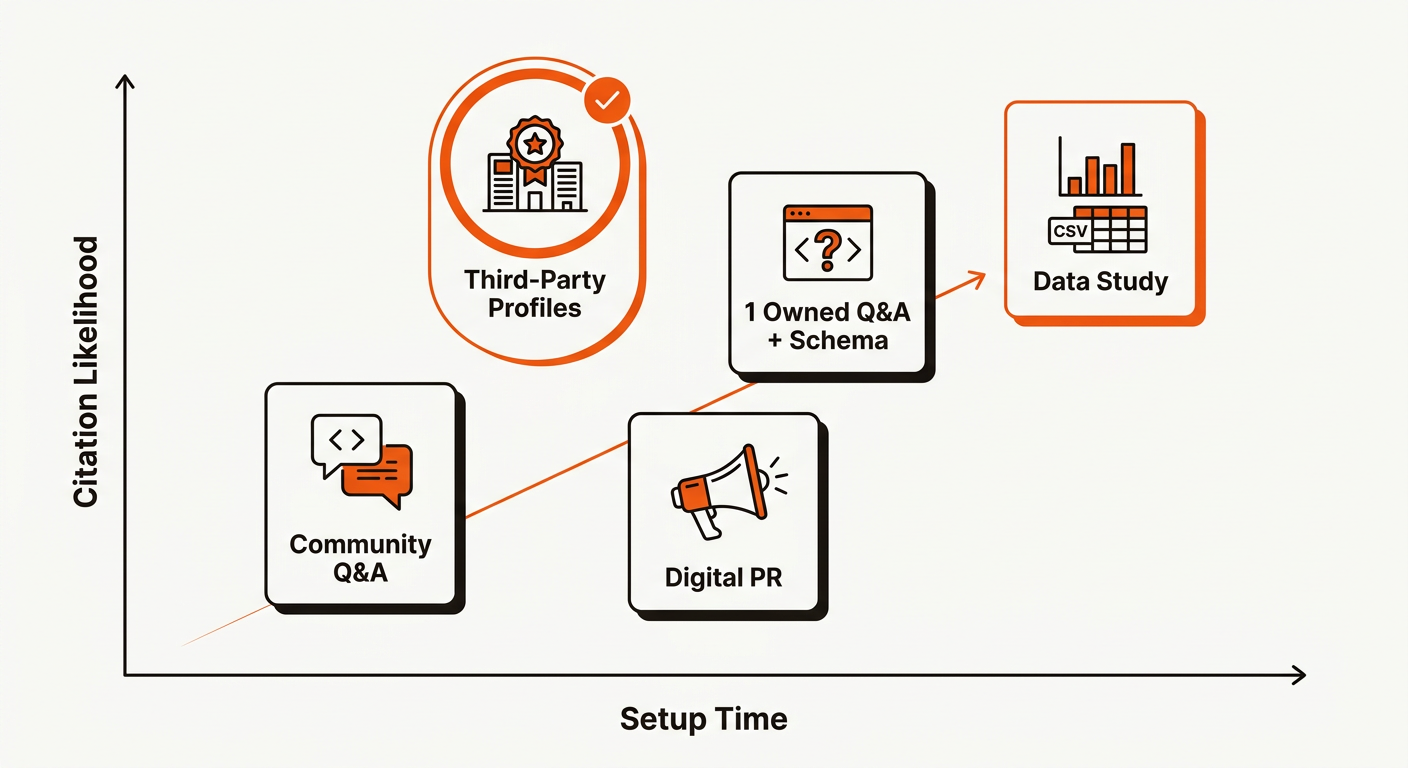
Balance speed, control, and citation likelihood across owned and third-party channels.
caption
Ship a repeatable, 4-week sprint that converts facts into citations the model can confirm.
Week 1: Use Ahrefs or SEMrush to extract 25 prompts where brand mentions would be natural (e.g., “best [category] for [ICP]”, “[category] pricing”, “[brand] vs [competitor]”). Draft one Q&A page per theme with a 50-60 word short answer, a small table, and FAQPage schema. Validate schema and index with Google Search Console.
Week 2: Normalize your entity. Update Crunchbase, G2, Product Hunt, and LinkedIn with identical facts. Add SameAs in Organization schema to all profiles. Publish a concise “About” page with founding year, HQ, funding, and leadership. Crawl your site with Screaming Frog to confirm a single canonical “About” URL.
Week 3: Produce one mini data study. Example: aggregate anonymized product usage across 1,000 accounts over 30 days. Document methodology and share a CSV. Pitch 10 niche outlets and 5 newsletters with one quotable stat and a link to the study.
Week 4: Seed community credibility. Answer 5 relevant questions on Reddit or Stack Overflow with specific code snippets or screenshots. Link to your docs. Monitor brand mentions via Ahrefs Alerts and GSC “Queries contains: brand”.
Track entity coverage and answer-engine inclusion like KPIs.
• Coverage: Count completed profiles (G2, Crunchbase, Product Hunt, LinkedIn, GitHub, Wikipedia). Target 5+ with consistent facts.
• Inclusion proxy: Weekly spot-check 30 prompts in Perplexity and ChatGPT with browsing; log mentions and cited sources.
• Authority delta: Use Ahrefs to track referring domains to your data study and Q&A hub. Aim for 5-10 new domains per month.
Operational tradeoff: publishing on third-party sites increases authority but reduces control. Facts can go stale. Calendar a monthly audit to update numbers across profiles to prevent propagation of outdated claims.
Mergeflo handles research and first drafts for your review so you can focus on high-signal distribution. As an autonomous SEO platform for startups, Mergeflo drafts Q&A-style articles with FAQ schema and suggested internal links for your review. You keep control of facts; the platform drafts in your brand voice and runs claim checks before anything publishes.
Keep reading: how to rank in ChatGPT and answer engine optimization platform.
Tight answers that operators can use Monday morning.
Results vary by authority and consensus. There is no guaranteed timeline, so track mentions weekly across Perplexity and ChatGPT with browsing and adjust as you go.
No. Wikipedia helps, but not every startup meets notability. You can still get mentioned in ChatGPT by aligning Organization schema, maintaining Crunchbase/G2 profiles, and publishing verifiable studies. If you do create a page, avoid promotional tone; cite third-party sources and keep facts consistent.
For brand mentions: Organization and Product with SameAs links. For extractable answers: FAQPage, QAPage, and HowTo where relevant. Validate JSON-LD, ensure each page has one primary entity, and keep the 50-60 word summary near the top for easy extraction by answer engines.
There’s no official log, so build a proxy. Run a fixed prompt set weekly in ChatGPT with browsing and Perplexity, record citations, and capture screenshots. In parallel, use Ahrefs Alerts for new brand mentions and GSC to track “brand + query” impressions. Trend lines matter more than single datapoints.
Most misses come from inconsistent facts and non-extractable pages.
• Inconsistent founding year or pricing across profiles blocks consensus.
• Long-form essays without a 50-60 word summary reduce inclusion odds.
• Data studies without methodology look like marketing and won’t be cited.
• Over-indexing on your own site slows mentions; distribute facts to reputable profiles first.
If you want to get mentioned in ChatGPT, publish verifiable facts, make them extractable, and build consensus across trusted profiles. You don’t need more words. You need tighter answers, cleaner schema, and third-party validation. Build the system once, then run the sprint every month.
