
Short answer: Increase AI search visibility by publishing entity-centered, question-led pages with schema, first-party evidence, and tight internal links. Cover FAQs, pricing, comparisons, and workflows. Refresh monthly and validate citations across AI engines. Measure brand mentions by model, then expand clusters based on gaps. Prioritize high-intent topics.
AI assistants cite clear entities, current facts, and structured answers: not generic blogs. Blogs without defined entities, FAQs, or schema rarely get quoted. Thin pages, vague claims, and stale timestamps lower model confidence and cut you from AI answers.
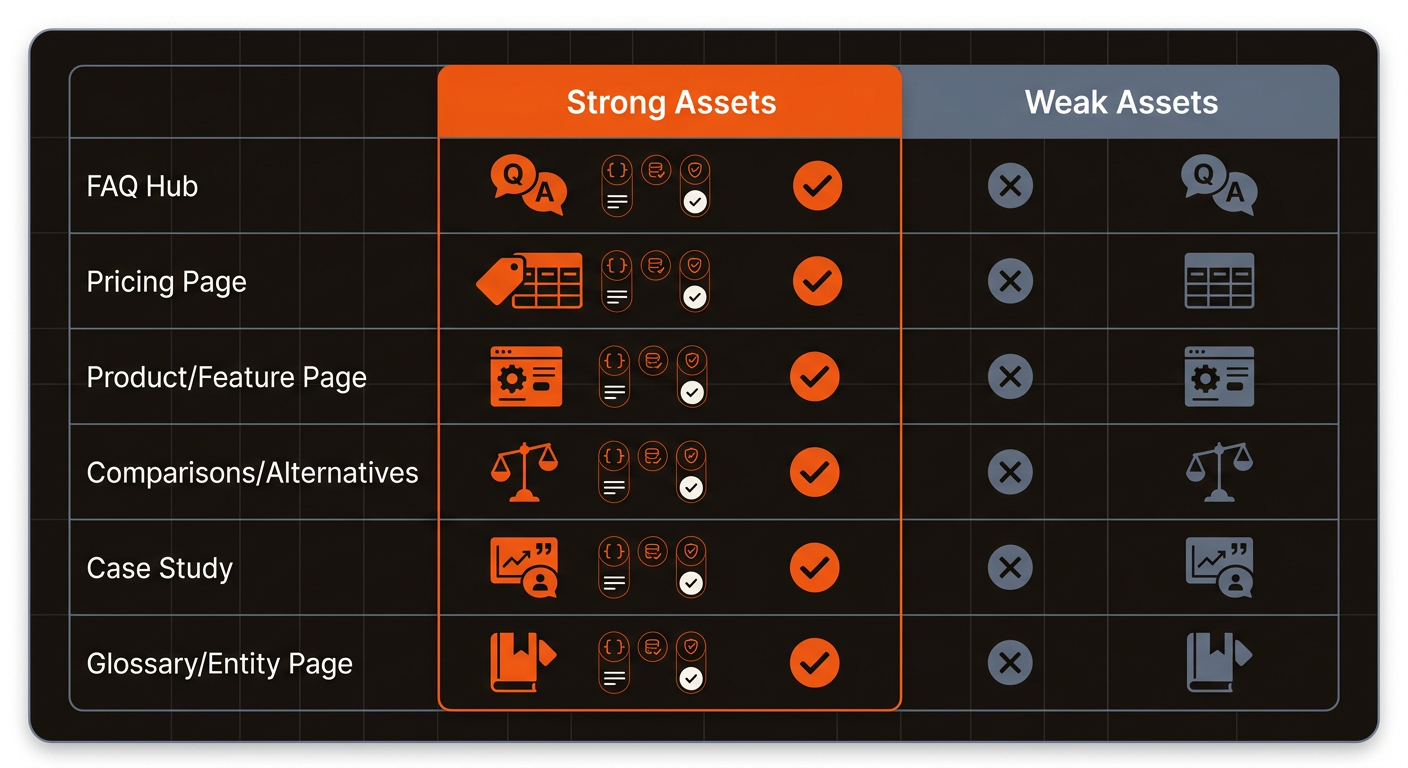
You need scannable utility pages that answer buyer questions and prove claims. Ship structured FAQs, pricing, comparisons, and product pages with real data, named experts, and dateModified. Missing internal links and schema buries relevance signals and limits how to increase AI search visibility.
Original first-party data consistently boosts inclusion in AI answers, with a reported 30-40% lift when used to support claims. Digital Marketing Institute
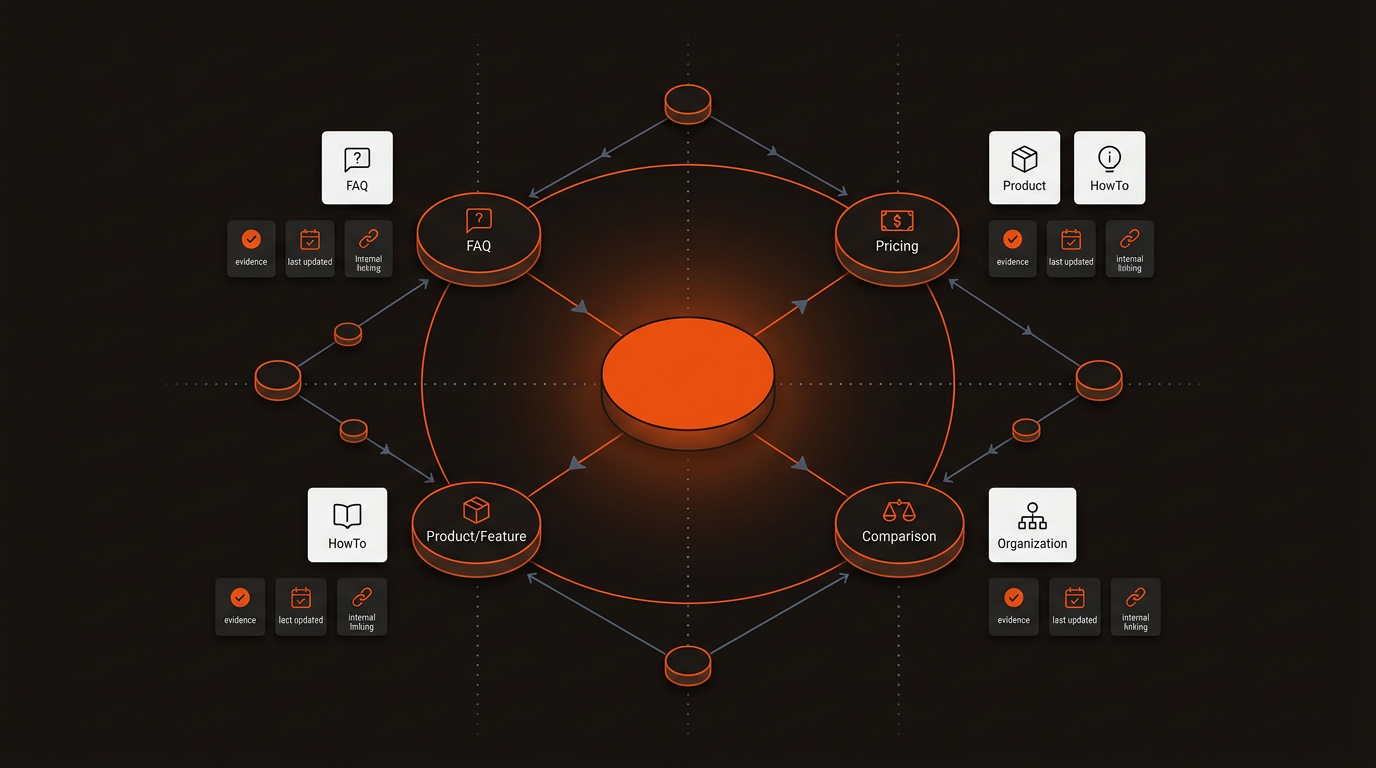
Ship entity-led, evidence-backed utility pages; stop shipping unstructured thought pieces. These assets earn citations when built with clear entities, schema, and refresh discipline.
caption
Run prompt audits across ChatGPT, Perplexity, Gemini, Copilot, and Google AI Overviews to see which asset types appear and which brands get named. Then close gaps with targeted pages. For structured planning, see Capgemini’s entity-first approach to AEO content mapping. Capgemini
For deeper context, see AI Search Visibility Platform For Lean Teams.
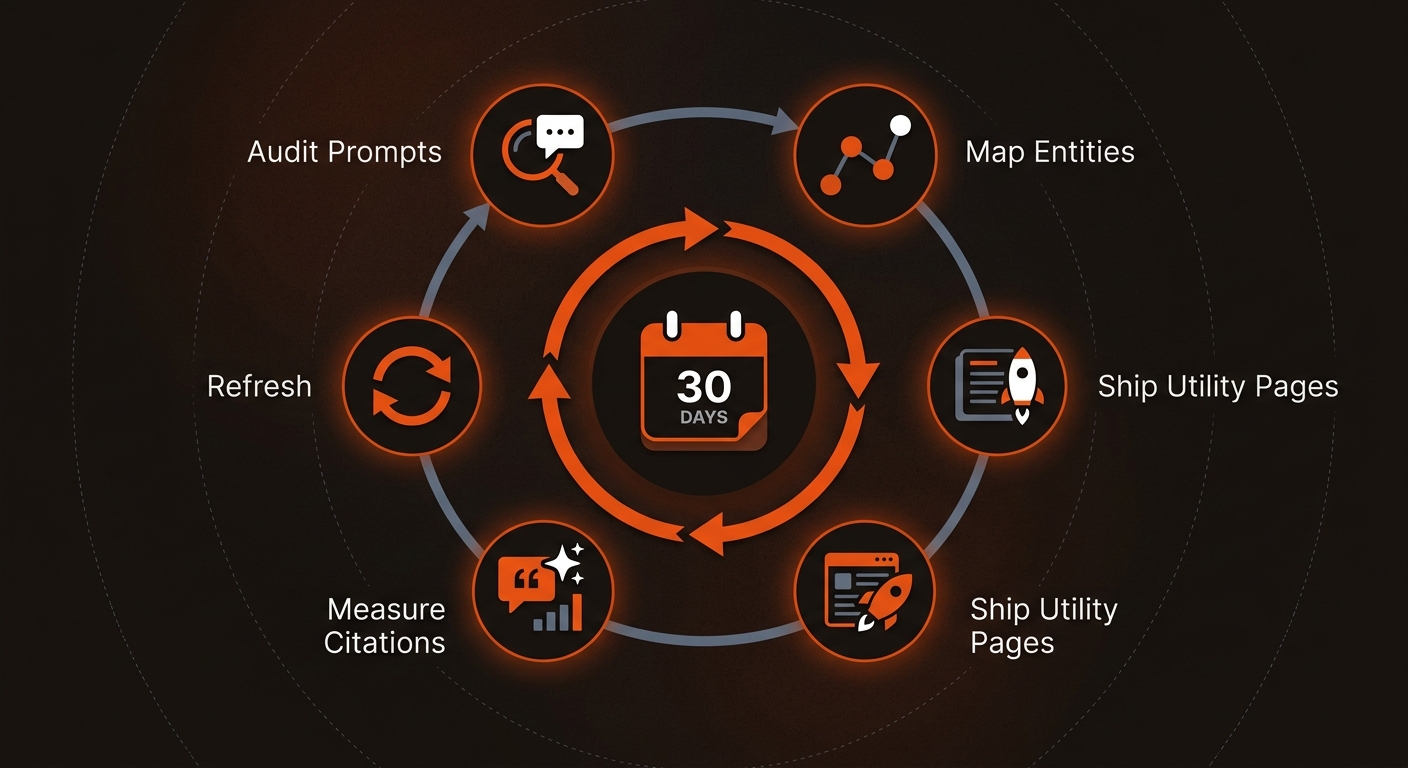
Use a 30-day loop: audit prompts, map entities, ship utility pages, measure citations, refresh. Start with 10-15 buyer questions per product area. Cluster in Ahrefs or SEMrush, validate demand in GSC, and assign each cluster a canonical entity page plus FAQ, pricing, comparisons, and one data-backed case study.
Implement schema (FAQPage, Product, HowTo, Organization), author and reviewer bios with credentials, and internal links that form a tight cluster. Track mentions and links inside AI answers weekly; expand where you are absent, deepen where you show up but are not linked. For measurement guidance, review our take on AI visibility tracking tools to measure and grow share.
A 3-person growth team with a 2-3k monthly content budget can ship a 12-15 page cluster in 30 days using a brief-first workflow and a weekly QA gate. The tradeoff: higher throughput strains editorial review; cut volume if you cannot maintain evidence, schema, and dateModified. This discipline is how to increase AI search visibility fast without bloating low-signal content.
Keep assets fresh. Update pricing tables on change, refresh FAQs monthly, and revisit comparisons quarterly as competitors ship features. Staleness degrades assistant trust and can drop you from AI Overviews even if rankings hold.
Start with a two-week audit you can ship against: extract the top 200 queries by impressions, cluster them, and map each to canonical entities. For each cluster, measure three gaps: missing entity pages, unsupported evidence, and weak structure. Write answer units of 120 to 220 words that resolve the target query and cite two internal sources. Add FAQ pairs and HowTo or Product schema where it fits. Validate 95 percent schema and link integrity before PR. In preflight, target 80 percent answer containment under 200 tokens and 60 percent exact-match question coverage. Bias to coverage over polish in v1, then deepen evidence on winners in v2. Ship behind a flag.
Operators need shipping muscle. Mergeflo executes the workflow end to end: Autonomous SEO + AEO content engine: research to published, AI-citable pages in the customer's CMS, with schema, internal links, and ongoing refresh. This means your plan becomes pages that assistants can quote, cite, and link in weeks.
Mergeflo turns the audit into changes you can merge. It ingests your sitemap and analytics, builds an entity map, and auto-suggests brief outlines and schema fields per URL. Editors approve drafts in-line, attach evidence links, and push a PR that adds copy, FAQs, and structured data. A test harness runs templated prompts against each draft and reports containment, citation presence, and broken reference rates. Gates block shipping if containment falls below 0.8, schema validity below 0.95, or broken links above zero. After deploy, Mergeflo tracks crawl status, structured data validity, and regressions, and opens follow-up tickets so the next sprint tightens coverage.
Answer real buyer prompts, prove claims, and keep entities fresh: that is the playbook.
Track brand mentions, links, and citations across ChatGPT, Perplexity, Gemini, Copilot, and Google AI Overviews using a weekly prompt set. Log assistant, prompt, returned brands, link presence, and position. Tie these to conversions with tagged landing pages and GSC. Visibility without links signals content quality gaps or missing schema.
If you ship a 12-15 page cluster in 30 days (FAQ, pricing, 3 comparisons, 4 product/feature pages, 2 case studies), you can see first citations in 3-6 weeks. Assistants adopt new sources quickly when evidence and structure are strong. Indexing and brand unfamiliarity can slow Google AI Overviews; freshness helps.
Prioritize Organization, Person (experts), Product, FAQPage, and HowTo where applicable. Add datePublished/dateModified, sameAs links, and author/reviewer roles. Mark tables and key facts with clean HTML. Schema clarifies entities and reduces ambiguity for LLMs parsing your pages.
Yes, but quality outweighs quantity. Authoritative citations, named experts, and first-party data often move the needle faster than generic link drops. Build links that reflect expertise: data studies, methodology pages, and guest contributions. Weak or irrelevant links do little for assistant inclusion.
