
Short answer: To turn website traffic into sales, route every visit by intent to a matching offer, remove friction on the path-to-value, and instrument pass-through to pipeline. Map queries to purpose-built pages, align CTAs to stage, and measure session-to-opportunity in GA4 and CRM. Then fix the biggest leaks first with tests.
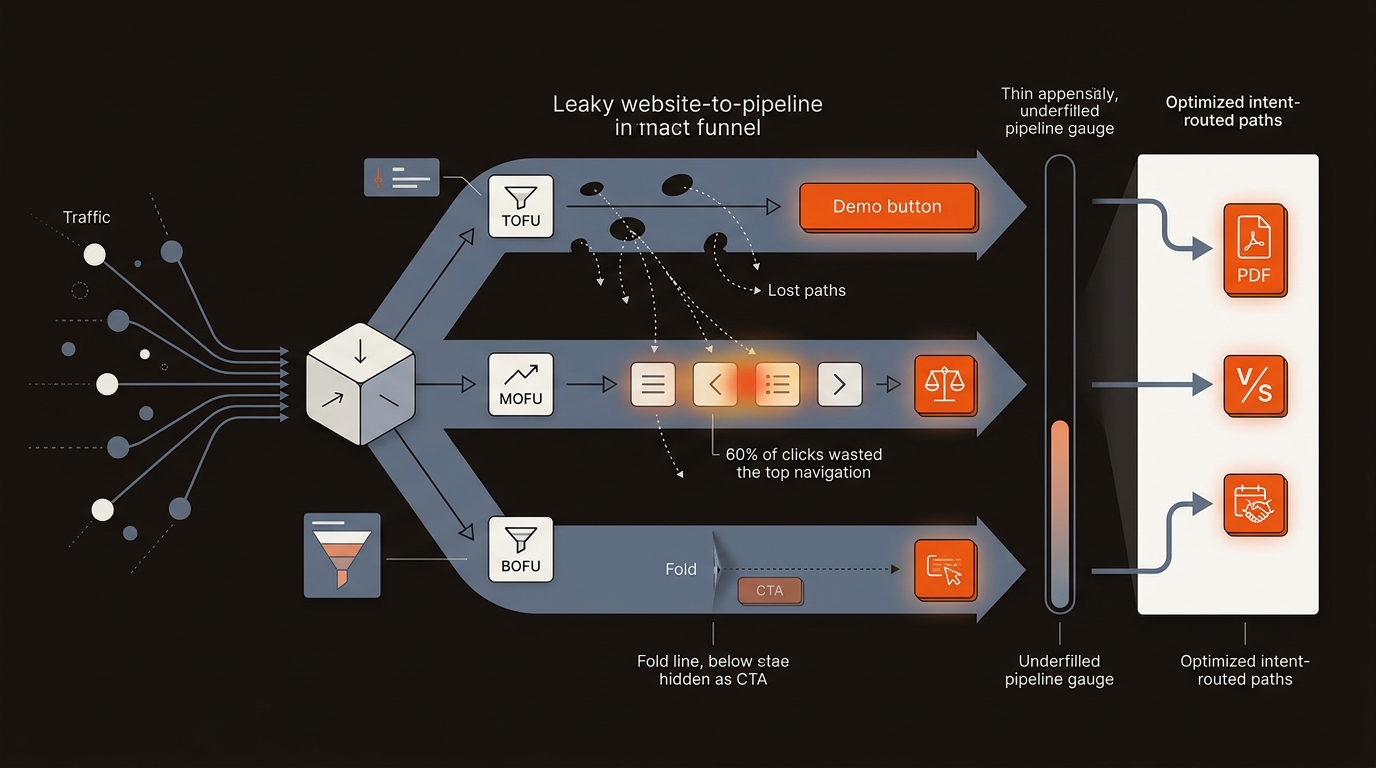
Most traffic fails to convert because sessions hit generic pages and vague CTAs, then fall into untracked dead-ends.
A small growth team cannot brute-force this. You need intent-based routing and fast experiments. Use GSC to cluster queries by intent (problem, solution, brand, comparison), then send each to a tuned page with one goal and one next step. Measure click-through to that step in GA4 as an event, and tie it to pipeline via HubSpot or Salesforce.
Operationally, expect tradeoffs. For example, adding a demo wall can lift qualified pipeline but cut total form fills. Decide by data: track session-to-opportunity, win rate, and payback, not just MQL volume.
Route by intent. Each cluster needs a matching offer, a clear next step, and instrumentation back to revenue.
Traffic-to-Sales Routing Approaches Compared
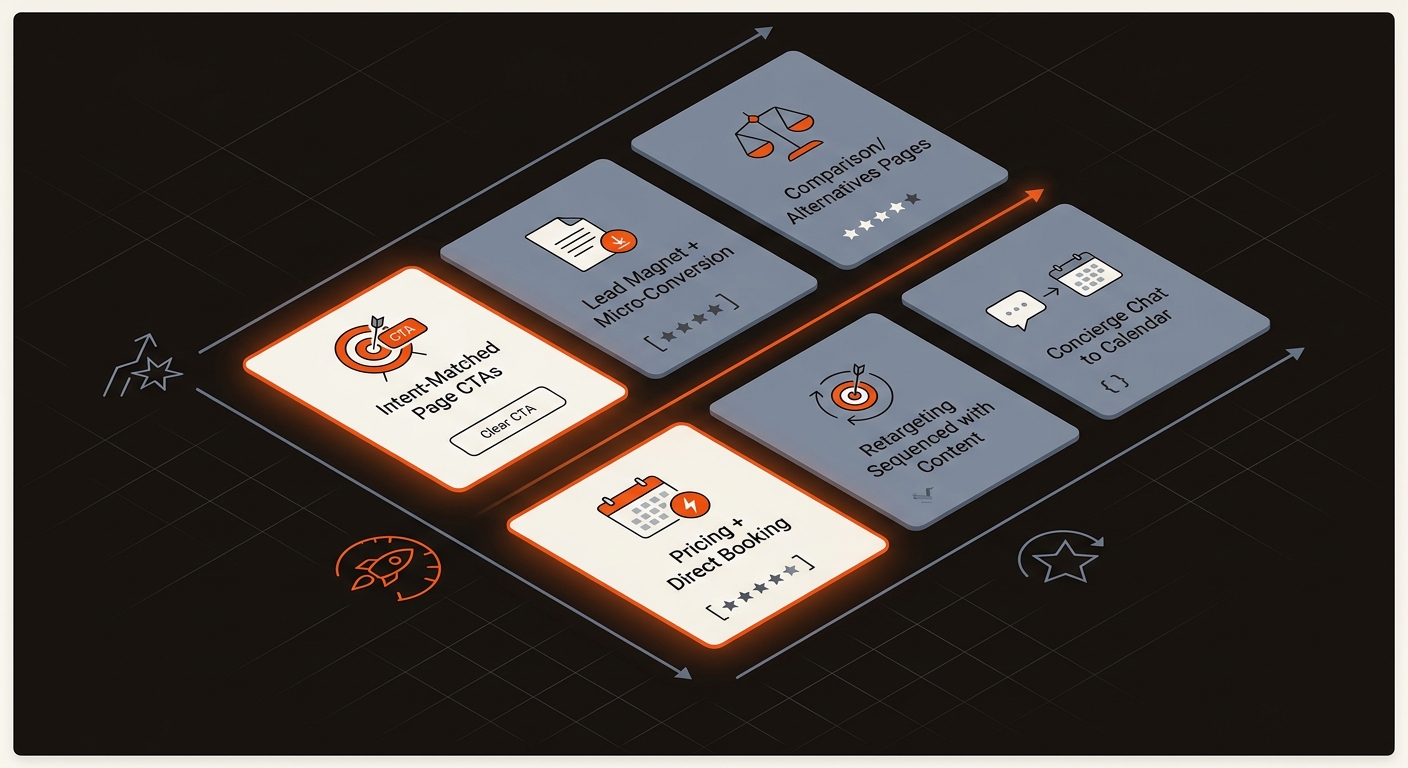
There is no reliable public benchmark for session-to-lead rates, so compare against your own baseline. The goal is to improve one specific step at a time in short sprints.
Add GEO optimization early. Localize pricing and compliance copy by region, add hreflang for language variants, and split GSC performance by country to confirm fit. AI answers now surface regional context; if your offer is US-only but your traffic is EMEA-heavy, conversion will stall.
AI visibility matters for conversion volume. Ship AEO elements on your pages: tight Short Answer blocks, comparison tables, and FAQ schema. These drive citations in AI Overviews and ChatGPT, which send mid-funnel visitors that already understand the problem: higher intent, fewer steps to purchase.
Mergeflo drafts the pages you need for your review, adds FAQ schema, and measures sign-ups per article.
Our autonomous SEO + AEO content engine finds gaps, drafts articles with FAQ schema and suggested internal links, and publishes the ones you approve to Webflow. It tracks your Google positions and AI mentions, and publishes the articles you approve to Webflow. Startup-priced, built for lean teams shipping weekly.
Tackle the practical blockers: instrumentation, intent mapping, AI traffic, and testing cadence.
Set GA4 events for primary CTAs (clicks and form submits). Pass UTM parameters and a session_id into hidden form fields and map them to HubSpot/Salesforce. Use Google Tag Manager to deploy without code. In CRM, create reports that join session_id to opportunity records to calculate session-to-opportunity and cluster-level ROI.
Export queries from GSC for the last 90 days. Tag each term manually for 3 intents: problem, solution, comparison. Use Ahrefs to confirm volume and parent topics. Create one dedicated page per intent cluster with a single CTA, and add internal links from related blogs to concentrate authority and route traffic cleanly.
AI Overviews and chat engines compress discovery. Visitors arrive warmer, often from “how-to” or “vs” queries summarized by AI. To convert them, include liftable Short Answer blocks, comparison tables, and precise FAQs with schema. These elements increase the odds you’re cited and that incoming traffic lands on the right page with the right CTA.
Gate only when you deliver immediate value that justifies the ask (e.g., ROI calculators, templates). Keep problem and solution pages open; use light gates like email courses for ongoing intent capture. Track the tradeoff: if gating raises MQLs but drops session-to-SQL, it’s hurting sales even if top-of-funnel looks bigger.
