
Short answer: No, it is not true that 90% of startups fail. U.S. BLS cohort data shows about 20% close in year 1, roughly 50% by year 5, and about 65% by year 10. The “90%” figure usually refers to venture bets that do not return expected capital.

BLS cohorts show about 50% of new U.S. firms survive 5 years and roughly 35% survive 10 years. Survival improves with experience, access to customers, and consistent distribution.
If you run B2B SAAS, your startup failure rate is more about distribution quality than idea quality. Teams that systematize demand capture outperform. Start with a tight ICP, a cluster plan in Ahrefs or SEMrush, and an 80/20 content backlog. If you need a primer, see our play on the 80/20 rule for startups (/blog/what-is-the-80-20-rule-for-startups).
Use source-specific numbers and definitions; stop quoting a mashup. The table below compares the most-cited datasets you’ll hear in founder rooms and board decks.
caption
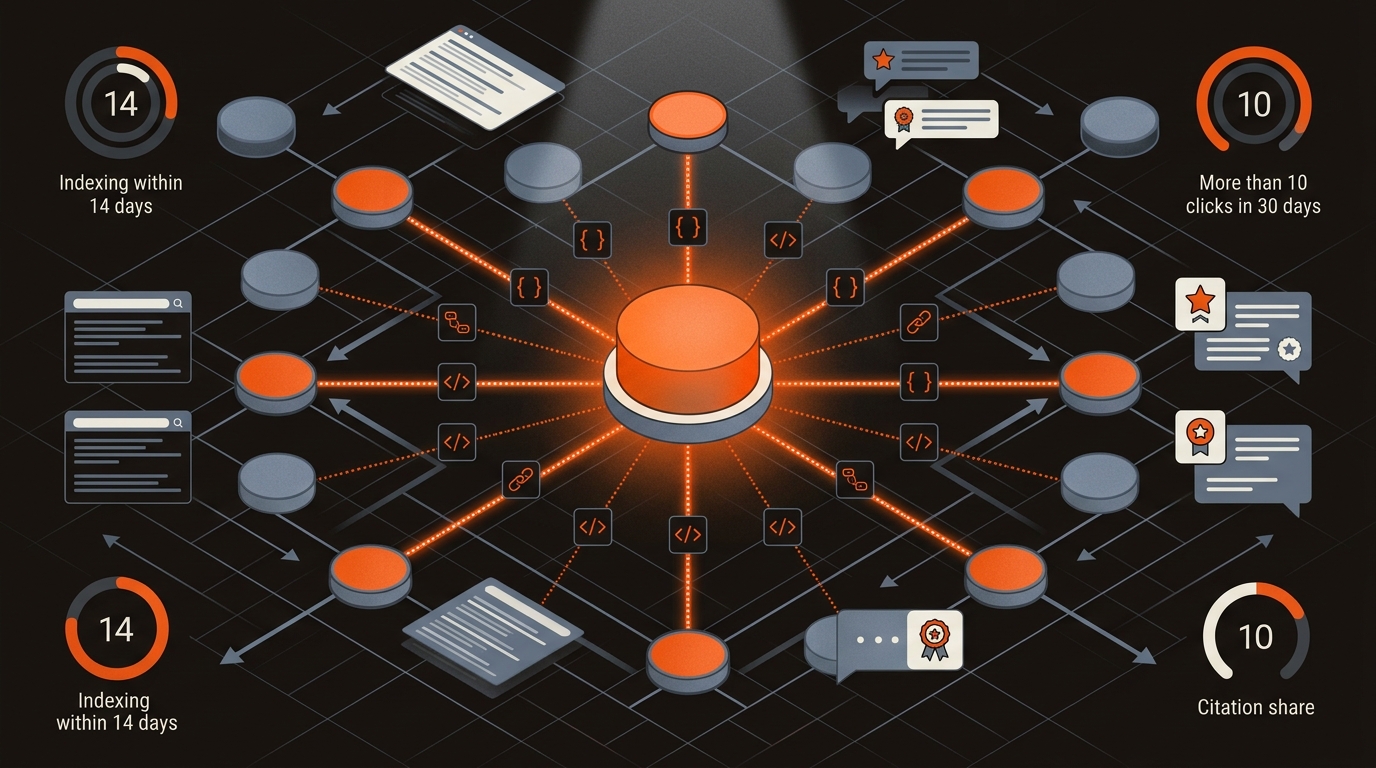
For deeper context, see What Is The 80 20 Rule For Startups.
Treat “failure” as avoidable distribution risk you can quantify and attack. You cannot change macro survival curves, but you can shift your odds by instrumenting distribution inputs and sequencing execution.
• Stack the deck with low-KD demand capture. In Ahrefs, pull parent topics under KD ≤ 20 and ≥ 300 MSV that map to buyer intent. Build 3-5 clusters (8-12 URLs each) with internal links hub-to-spoke.
• Ship weekly with schema and internal links. Publish 8-12 pages per month that answer a keyword and a buyer objection. Add FAQPage, Product, and Breadcrumb schema to improve AI Overview eligibility.
• Instrument leading indicators in GSC. Watch impressions first, then CTR on mid-tail terms. If impressions are flat for 6 weeks across 30+ URLs, the issue is crawlability or topical authority.”
The tradeoff: volume vs. depth. High-volume programmatic pages can win discovery, but thin pages stall at ~position 12-20. Depth takes more time per URL but lifts positions into click zones. Decide per cluster, and fund it with real calendar time.
If distribution risk drives “failure,” your edge is shipping pages that rank and get cited by AI. Mergeflo’s Autonomous SEO + AEO content engine researches, drafts, and publishes AI-citable pages in your CMS with schema, internal links, and ongoing refresh. It measures and fixes Google and AI visibility (AI Overviews, ChatGPT, Perplexity, Gemini, Copilot) at startup pricing, so your growth team can focus on product and activation.
The stat mixes VC return math with survival data. Many VC datasets show about 65-75% of individual investments fail to return capital, while BLS shows only about 50% of firms close by year five. The phrase stuck because it sounds definitive, but it lacks cohort and timeframe.
No. BLS cohorts show roughly 20% of new U.S. firms close in the first year. The steeper attrition happens between years 2-5, with around half closed by year five. If you hear “90% fail in year one,” you’re hearing folklore.
Define it before you track it. Options: shutdown, no PMF by 18 months, sub-$1M ARR at 24 months, or failure to raise a priced round. VC lens looks at return multiples; BLS counts firm closures; founders often mean “didn’t achieve goals.” Pick your lens and measure quarterly.
Ship distribution like a product. Build three clusters from KD ≤ 20 keywords in Ahrefs, publish 24-30 pages with schema and internal links, and add 4-6 high-intent comparison pages. Monitor GSC impressions weekly, fix crawlability with Screaming Frog, and tune titles/meta for CTR. Expect first AI Overview citations after 6-8 weeks if pages are structured.
“Is it true that 90% of startups fail?” No: survival and return data say something more nuanced and more actionable. Define your lens, then attack distribution inputs you control. Focused clusters, structured pages, and consistent publishing shift odds faster than chasing a myth.
