
Short answer: The 80/20 rule for startups means finding the few inputs that create most results and cutting the rest. In practice, map revenue, activation, and search clicks, then double down on the top 20% pages, segments, and features. Run it as a weekly, data-driven prioritization loop.
Focus fails when you cannot see where output concentrates. Most teams spray effort across channels and pages because everything looks equally urgent in Slack, Notion, and standups.
Treat the 80/20 rule for startups as an operating ritual. Each week, rank pages by clicks from Google Search Console (GSC), features by activation lift, and customers by gross margin. Pause the bottom half of tasks. Reallocate time into the proven few. Use the Pareto Principle as a heuristic rather than a law.
A realistic scenario: a small growth team with a limited content budget and little engineering time. You cannot cover every channel or keyword. The tradeoff is clear: fewer, better pages and flows ship faster; exploration budgets stay small but constant (10-20%) to avoid stagnation.
80/20 turns toxic when teams use it to justify mediocrity across the board instead of precision focus. Example: a billing MVP that handles 80% of plans but omits proration, refunds, and tax receipts. Support volume spikes, finance cannot reconcile, and the one missing compliance artifact stalls procurement. Another: shipping onboarding that cuts setup from 40 to 12 minutes but skips SSO and SCIM. You save two weeks of build time yet add 6 to 8 weeks of security review and lose enterprise cycles. The rule is pick a few levers, then execute those to a completeness standard.
Find concentration with simple weekly slices, then move resources the same day. Use data slices that expose concentration. Then act immediately: consolidate, enrich, or expand only the proven veins.
How Teams Identify and Act on the Top 20%
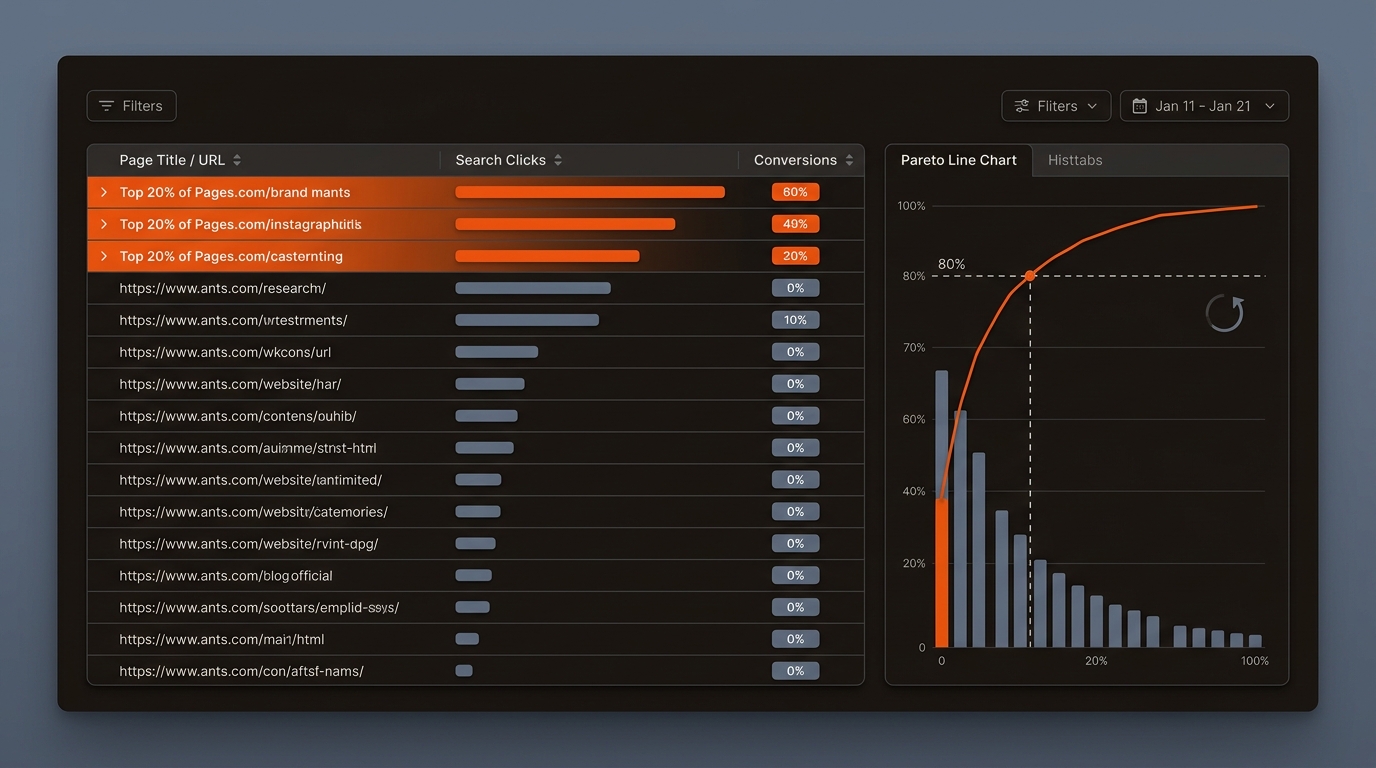
Use Google Search Console to pull click distributions, and Ahrefs to validate cluster potential before doubling output. For speed, export GSC to Sheets, compute a cumulative click curve, and mark the 20% cutoff. Repeat monthly with 90-day windows to catch seasonal shifts.
Operational tradeoff: over-rotating to winners can stall discovery. Protect a small exploration lane (1 new cluster, 1 new channel test per month) while routing 70-80% of effort to compounding winners. This balance keeps ranking momentum without starving future bets.
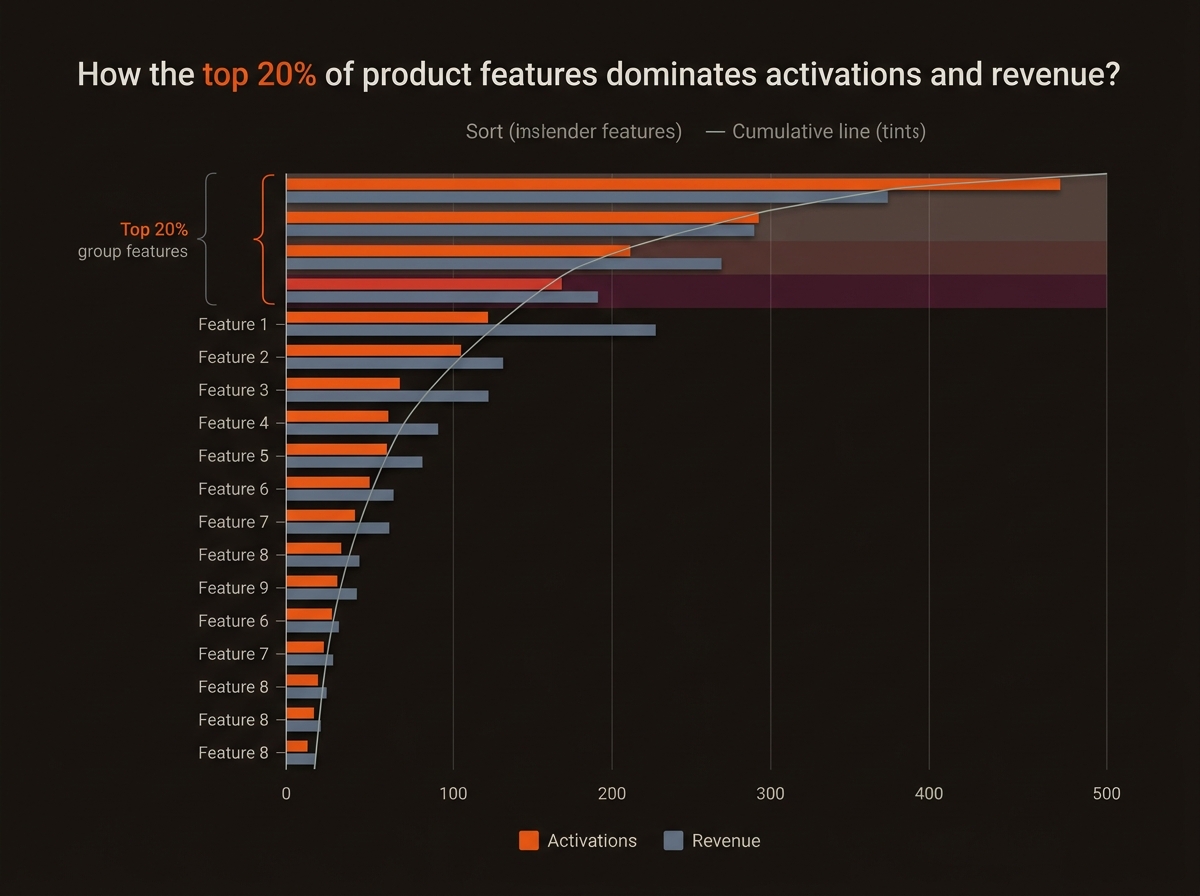
80/20 works in search when your system promotes winners and retires laggards on a schedule. 80/20 in search means producing fewer, better pages and routing authority into winners. That requires clean clusters, schema, and refresh scheduling. Mergeflo is an autonomous SEO + AEO content engine: it finds gaps, drafts articles with FAQ schema and suggested internal links, and publishes what you approve to Webflow.
Because it tracks your Google positions and flags pages losing impressions, you get a weekly view of which pages to expand and which to retire. For metric-minded operators, pair 80/20 thinking with disciplined benchmarks like the Rule of 40 for SAAS to keep growth efficient.
Turn insight into motion with a tight loop. Step 1: export 12 months of Search Console, strip brand, group top 200 queries into 40 intents using product language. Step 2: score intents by clicks times a conversion proxy like demo requests, keep the 15 that cover about 80 percent of assisted pipeline. Step 3: for each intent, ship one main page, one 40 to 60 word answer block, schema, and 2 to 3 internal links from product pages. Step 4: instrument rank, snippet capture rate, and assisted deals. Operate in two week sprints, review weekly, prune ruthlessly.
These are the operational edge cases teams ask during weekly reviews.
Export page clicks from GSC for the last 28 and 90 days. If 20% of pages generate 70-90% of clicks, those are your priority. Refresh those pages first: improve titles, expand sections that already rank, add internal links from related pages, and implement schema. Confirm gains week over week.
Weekly for decisioning, monthly for structural changes. A 30-minute weekly review keeps resources flowing to winners. A monthly review is when you merge cannibal pages, expand high-potential clusters, and deprecate content that fails to index or convert. Keep one lane for exploration to avoid saturation.
Teams chase new keywords before saturating a winning cluster, or they refresh everything equally. They also respect editorial calendars more than data. Start by saturating the top 3-5 clusters that already send traffic. Only add new clusters after you see compounding wins from the current ones.
Concentration usually increases as you publish more. Expect a small share of pages to drive most of your clicks as the site grows. This is good news: you can route links into winners and prune the long tail. Ensure crawl budget is clean and internal links flow to the pages that earn citations and clicks.
