
Short answer: Yes, links are still relevant to SEO because they aid discovery and remain a ranking signal, but their weight has declined and quality now beats quantity. Earn a few relevant referring domains, keep anchors descriptive, and build strong internal links. Qualify paid placements with rel="sponsored" and focus on topical authority to win.
Most teams overpay for link volume while ignoring internal links and topical structure. A small growth team cannot outbuy link networks. Spend it on crawlable clusters. Over-optimized anchors, irrelevant domains, and sitewide footers get discounted and rarely move the page you care about.
Google treats rel="nofollow", rel="sponsored", and rel="ugc" as hints. Paid placements must be qualified. Routine disavows waste time; only act on clear large-scale patterns or a manual action. The question is link still relevant to SEO is really about allocation: earn a few high-relevance domains, and route equity through a strong internal link map.
Ahrefs found that 96.55% of the pages in its index get no traffic from Google, and lists missing backlinks, low search demand and mismatched intent among the reasons. Source: Ahrefs search traffic study.
Weak internal architecture starves pages of crawl and context.
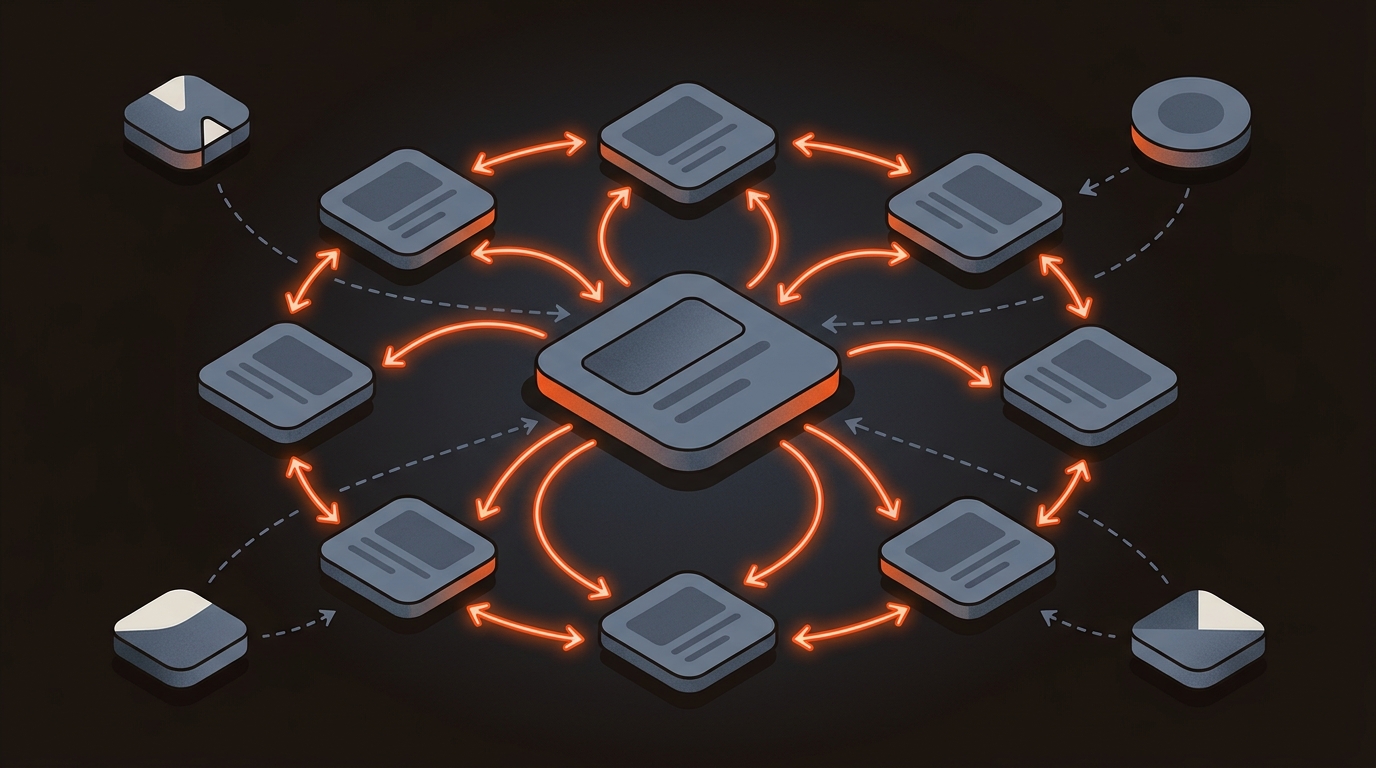
Volume chasing looks productive but adds drag: prospecting hundreds of mediocre blogs takes research, pitching and writing hours, plus fees, and produces low-relevance links with generic anchors. Contrast that with a short list of publications your buyers actually read. Fewer wins there, each paired with an on-page refresh and internal links, are more likely to move the pages you care about, with less risk and rework.
Evaluate links by relevance, page-level quality, and how they fit your cluster map. Count referring domains at the page and cluster level. Prioritize pages that already get traffic and match your topic. Fix internal linking first; then add a small number of high-quality referring domains to the hub or a top spoke.
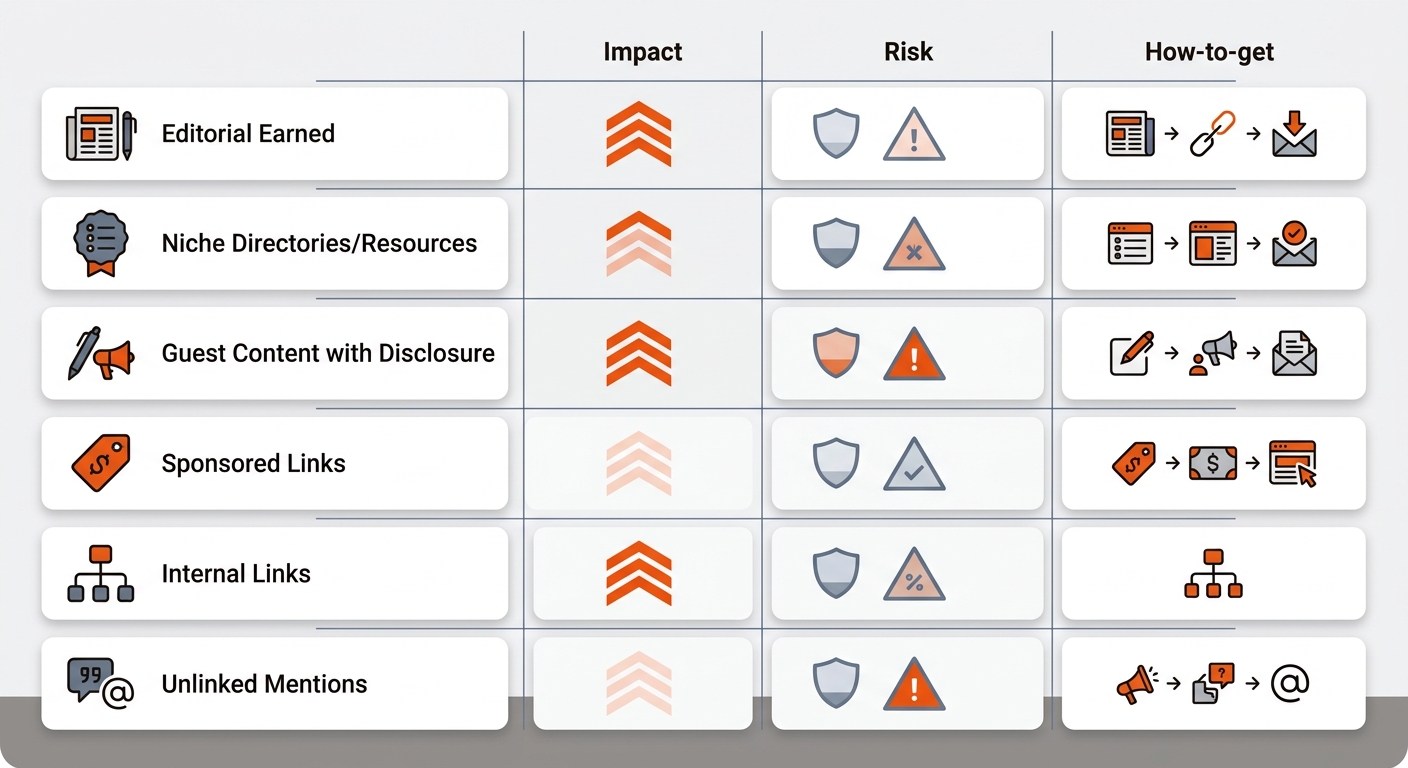
Comparison: Link Types, Impact, Risk, and Startup-Friendly Tactics
Link attributes and qualification guidance: Google Search Central (https://developers.google.com/search/docs/crawling-indexing/qualify-outbound-links)
Cluster fit matters. For a low-difficulty query, a couple of editorial links to the hub and the spoke can beat many random homepage links from high-authority sites. The operational tradeoff: buying DR is fast but decays; building topical authority is slower to start but compounds across every new page you publish. Is link still relevant to SEO? Yes, when it reinforces a coherent topical cluster and accelerates crawl.
For deeper context, see What Does Link Building Mean.
Editorial in-content links on relevant articles move the needle more reliably than sidebar or footer placements. We prioritize targets with 5k to 50k estimated organic visits, topical overlap, and pages that send referral traffic. Low risk, moderate impact: industry directories, vendor listings, podcast show notes, resource pages. Moderate risk, high variance: guest posts on genuine publications and digital PR features; value depends on audience fit and where the link sits. High risk, low durability: syndicated posts, coupon sites, expired domains. Practical stack: secure 2 to 4 defensible brand links each month, plus 1 to 2 authority placements that map to commercial pages.
Winning teams productize internal linking, schema, and link earning around clusters. Ship pages that deserve links, then make sure crawlers can find and interpret them with schema and descriptive anchors. This is where most teams unlock results without scaling risky placements that do not map to revenue pages.
Mergeflo is an AI search visibility platform that finds search gaps, drafts content for your review, and tracks your Google positions and AI mentions. Our autonomous SEO + AEO content engine finds gaps, drafts articles with FAQ schema and suggested internal links, and publishes the ones you approve to Webflow. It tracks your Google positions and AI mentions; current plans are on the pricing page. If you’re calibrating expectations with leadership, this explainer on what link building means (https://mergeflo.com/blog/what-does-link-building-mean) helps frame scope, channels, and realistic outcomes.
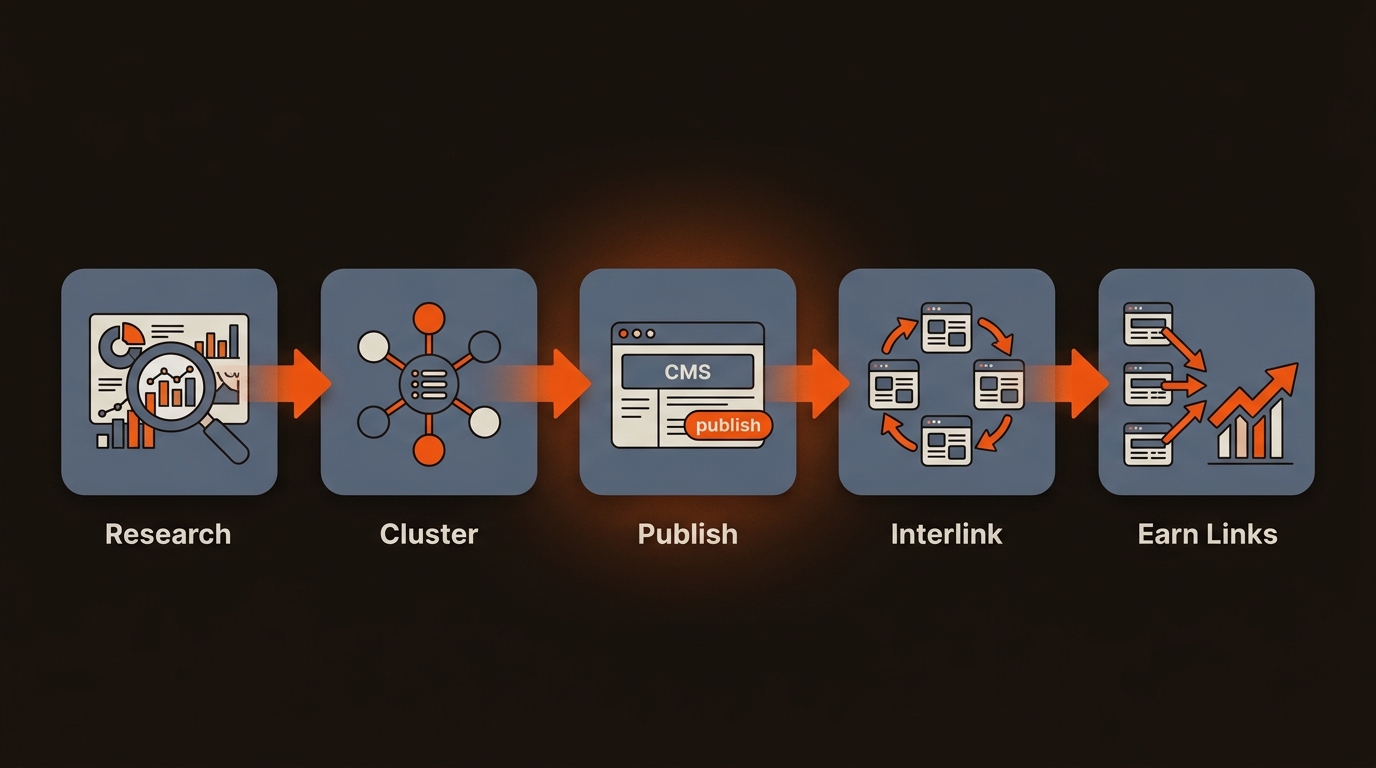
Focus on actions that move rankings quickly and reduce risk for lean teams.
There is no fixed number. For mid-tail targets, a few relevant referring domains pointing at the page’s cluster matter more than many unrelated ones, and solid internal links and crawlability come first. Track referring domains in Ahrefs or SEMrush, impressions in GSC, and watch for faster indexing of linked spokes.
You can sponsor placements for reach, but qualify them with rel="sponsored" and avoid exact-match anchors. Treat them as distribution. Invest most effort in link-earning assets that map to your cluster: benchmarks, teardown posts, or lightweight tools that attract editorial links.
Use disavow only for clear, large-scale unnatural patterns or after a manual action. Random spam links are typically ignored by Google’s systems. Spend your time improving internal links, content quality, and relevant mentions that you can convert to links with targeted outreach.
Watch crawl stats and indexation of deep pages, growth in unique referring domains, and click curves on target URLs. Page groups tied to a hub should lift together if interlinking works. Validate with Screaming Frog crawls, GSC’s Page Indexing report, and Ahrefs’ Referring Domains trend.
