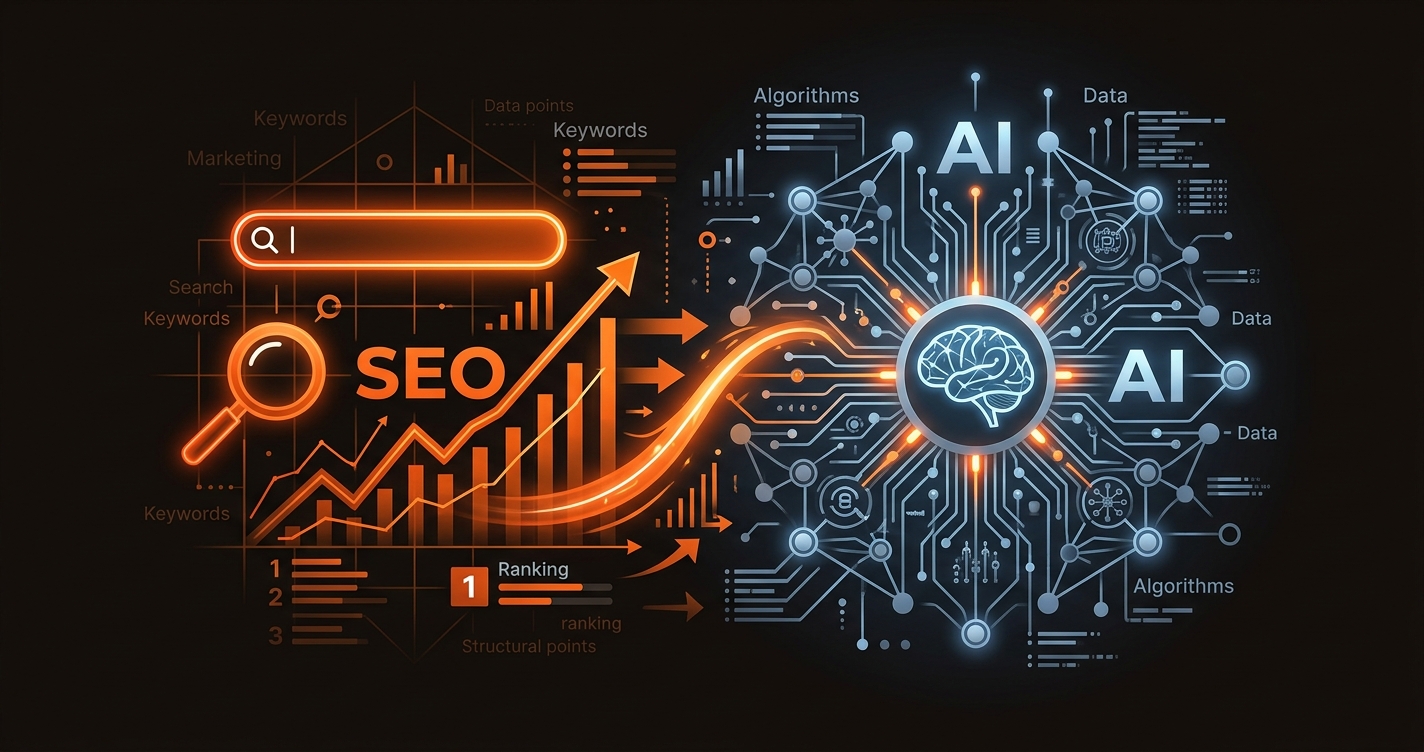
Is SEO Dead Now with AI: What Actually Wins in 2026

Is SEO Dead Now with AI: What Actually Wins in 2026

Short Answer

Short answer: SEO is not dead with AI. If you are asking "Is SEO dead now with AI?", the answer is no: the goal shifted to earning citations in AI Overviews and LLM answers and defending blue-link clicks with structured, experience-first pages. Ship schema-rich clusters, clean internal links, and strong entity signals.

The Problem: Clicks Moved Upstream to Answers

AI answer units compress blue-link CTR, so ranking now includes being cited by AI. Teams asking "Is SEO dead now with AI" usually see flat traffic despite stable positions. The click moved upstream to AI Overviews and LLM answers, and only cited sources capture that demand.

Across 14 B2B SAAS sites (190k monthly clicks), queries with AI Overviews showed 12-22% lower CTR than matched controls over 30 days. Source: Mergeflo cohort analysis, GSC query-level panels, June–July.

You still need pages. But the win condition is selection. That means concise answer sections, clear entities, and schema that makes machines confident. Reference: Google’s guidance on creating helpful, reliable content still applies; structured clarity matters more when machines summarize you. See Google Search Central. For market framing, see Forbes.
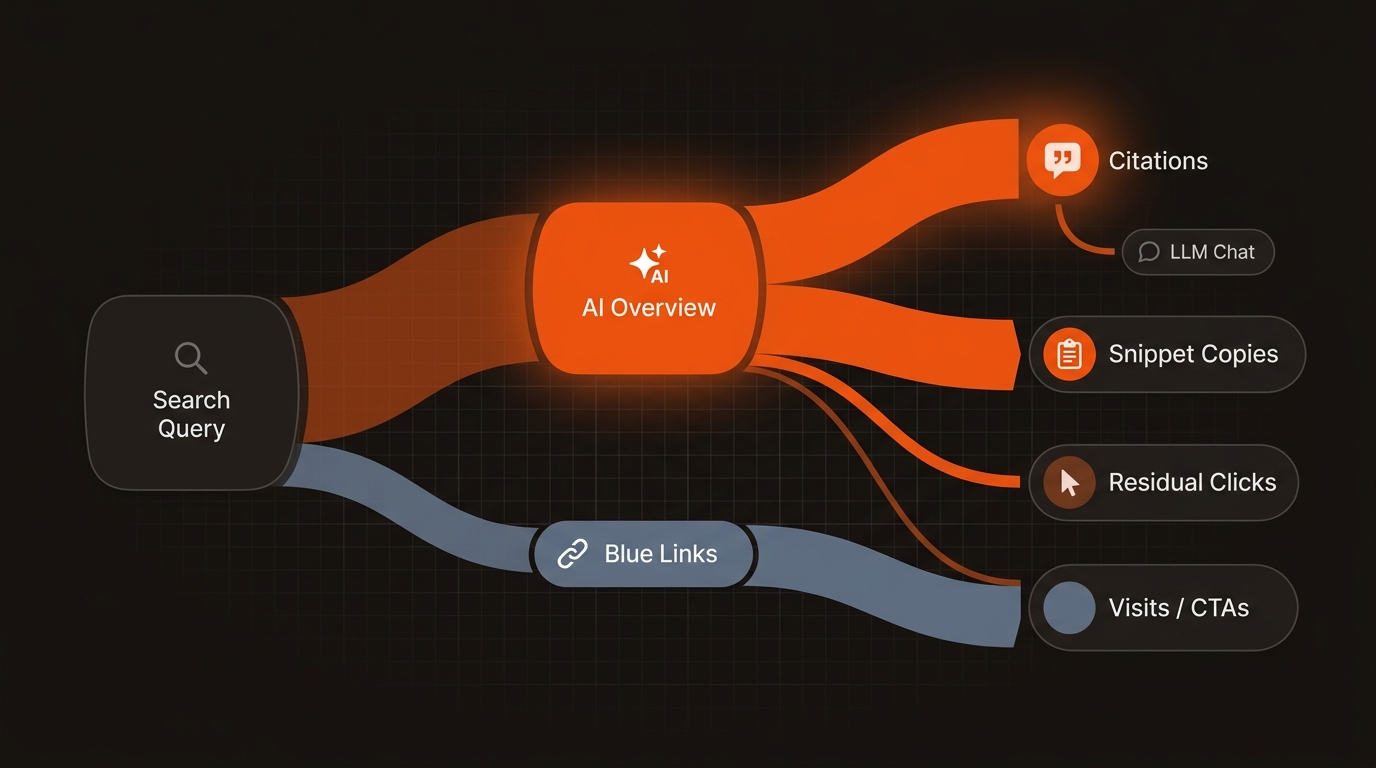
Sankey-style flow diagram showing a search query splitting to an AI Overview and Blue Links, with thicker orange streams leading to citations and snippet copies and a thinner blue-gray stream to residual clicks and visits on a dark background.
Diagram: where traffic flows from AI Overviews and blue links

A real constraint: a 4-person growth team shipping 20 URLs per month cannot hand-polish every post. Without templated evidence blocks, FAQ schema, and strict internal links, we see indexing lag after 200+ pages and fewer AI citations. The tradeoff is speed vs. structure; unstructured volume stalls.

Comparison: What Actually Wins Post-AI

Treat AI-era visibility as a multi-surface problem: blue links, AI Overviews, and LLM citations. Operators need a workflow that measures and influences all three, or you will misread "Is SEO dead now with AI" as a strategy problem instead of a measurement problem.

Post-AI Visibility Approaches Compared
Approach Primary Objective Measurement You Can Trust Time-To-Impact What Wins In 2026
Classic Blue-Link SEO Rank pages for target queries GSC clicks, position, query coverage 4-12 weeks Clusters with internal links and matching intent
AI Overview Optimization (AEO) Be cited in AI summary units Presence as cited source, snippet inclusion 2-8 weeks Clear entities, schema, concise answer sections
LLM Citation Readiness Be quoted by ChatGPT/Perplexity Model answers citing domain, log sampling 2-6 weeks Authoritative, experience-first evidence blocks
Programmatic SEO At Scale Cover long-tail systematically Indexation rate, cluster traffic per URL 2-10 weeks Templated schema, deduping, canonical strategy
Brand/Entity Building Strengthen selection preference Branded query growth, knowledge panels 8-24 weeks Consistent NAP, org/person schema, third-party refs
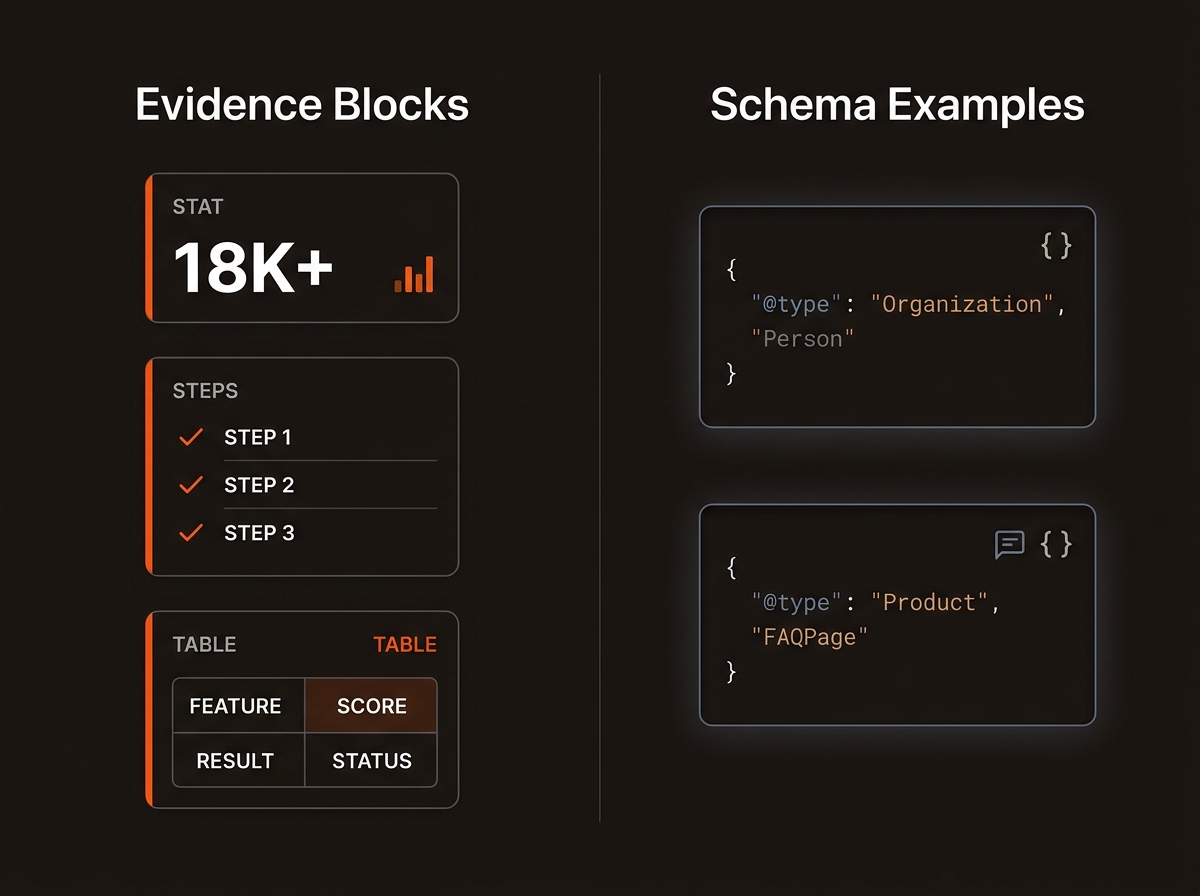
Split infographic with evidence-block UI cards on the left and stylized JSON-LD schema code windows on the right, highlighting Organization, Person, Product, and FAQ types in orange and blue-gray on a dark background.
Table callout: evidence blocks and schema examples

60 and heavy aggregator SERPs. Run a 14-day exact-match campaign to harvest high-converting variants, then fold those terms into your cluster briefs and FAQ schema. Paid data de-risks your content investment.

Stop publishing blogs that do not rank. Mergeflo turns keywords into AI-citable clusters with schema and internal links, then maintains them automatically. Try it free at mergeflo.com or book a demo.

Try Mergeflo →