
Short answer: Yes, SEO is worth it for small businesses when there is clear search demand, local intent, and patience for traction, with returns that compound over time. It underperforms when demand is near-zero, budgets face entrenched national competitors, or your site cannot convert visitors into leads.
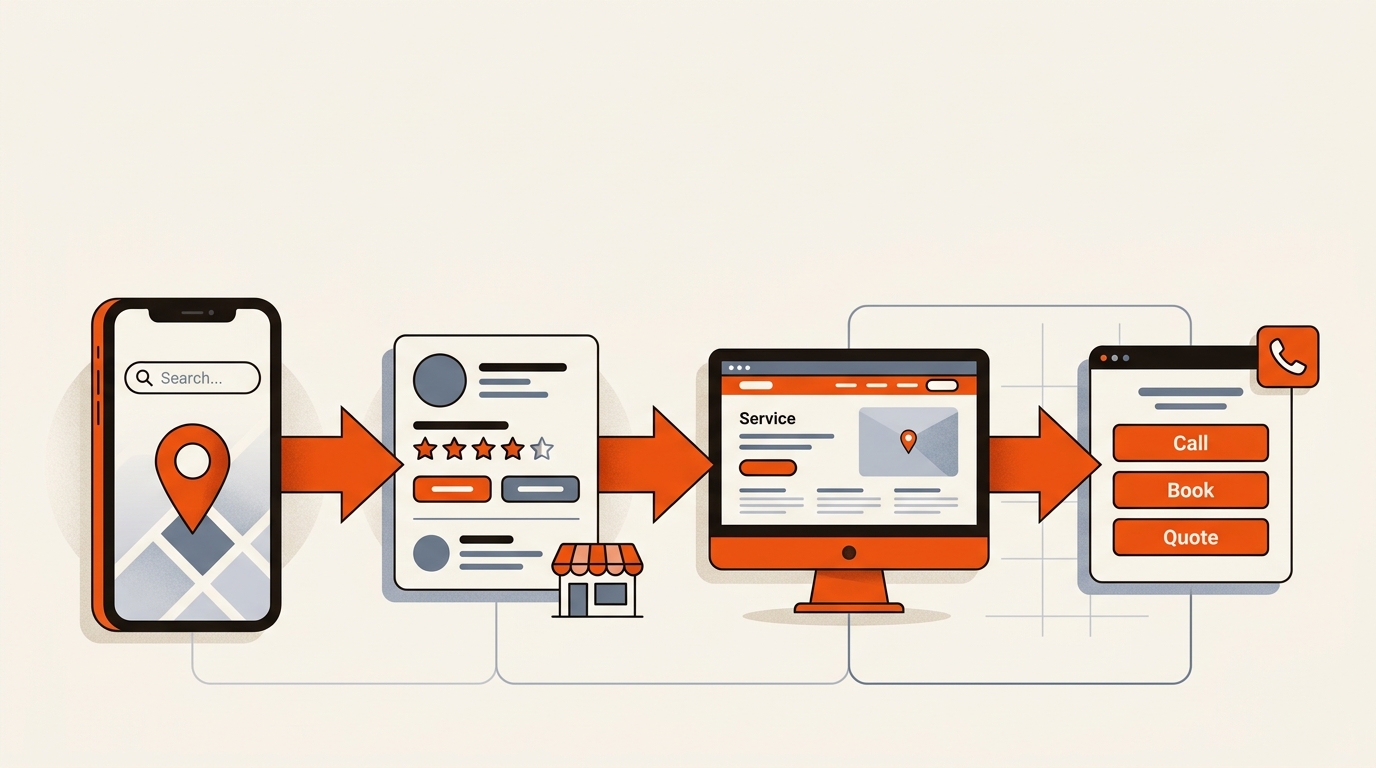
Most small businesses burn budget on generic blogs instead of building intent-matched pages and conversion paths. You do not need 100 posts. You need service and location pages mapped to how people search, a tuned Google Business Profile (GBP), and proof-of-service: reviews, photos, and FAQs that answer buying questions.
Pair this with conversion-ready CTAs, tracked calls, and forms. Check GBP Insights and Google Search Console (GSC) weekly. If calls, direction requests, and service-page form fills are flat for 30 days, adjust. Stop writing top-of-funnel pieces until bottom-funnel pages produce leads.
76% of people who search for something nearby on smartphones visit a business within a day. Source: Think with Google
Treat SEO as a compounding channel; use paid for coverage while organic ramps. Search demand and competition set the clock. Local intent queries move fastest. National head terms with entrenched competitors require multi-quarter plans. Ahrefs data shows only a minority of pages reach the top 10 within 12 months, which requires patience and a system.
Channel Benchmarks
Local SEO wins when buyers include a city, neighborhood, or service in the query. PPC fills near-term pipeline but stops when spend pauses. Content SEO compounds when you publish tightly scoped, interlinked clusters targeting mid and bottom-funnel queries.
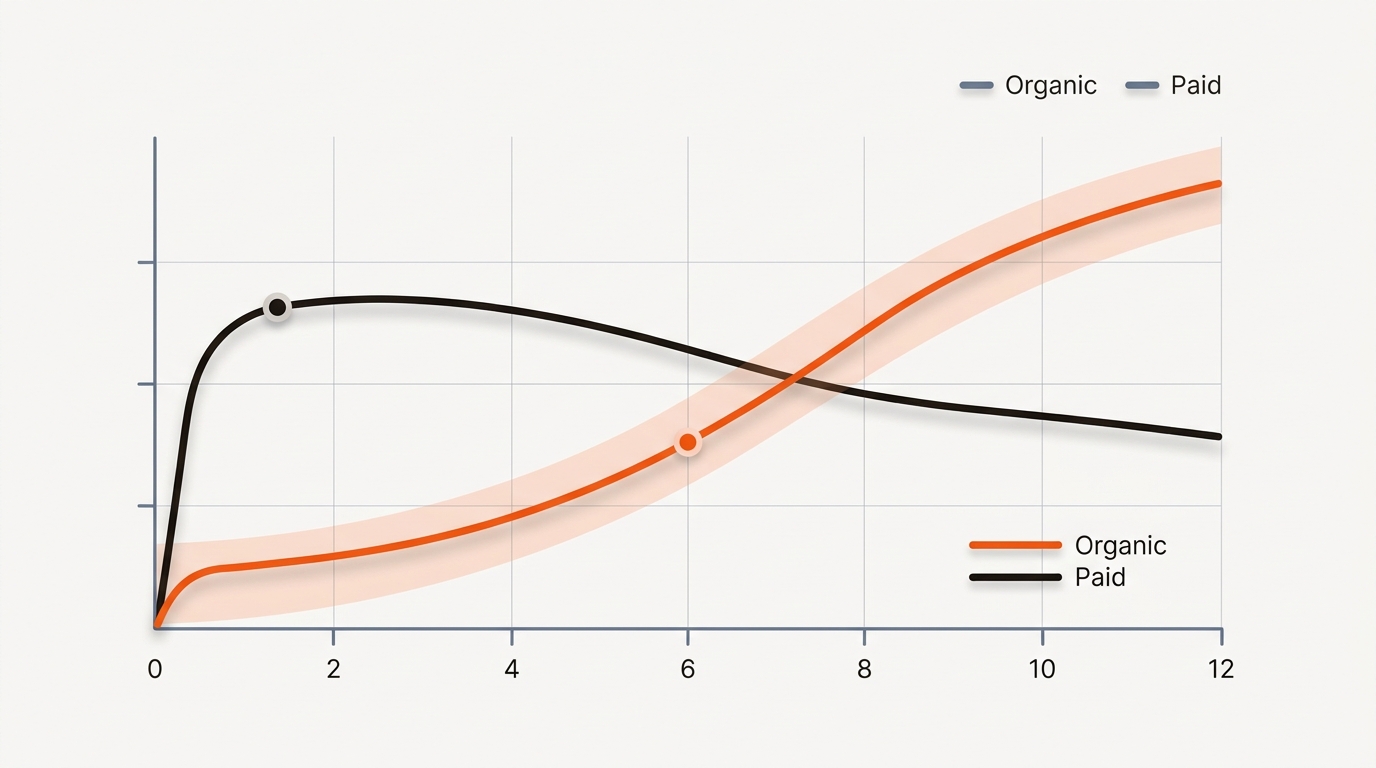
If queries exist and you can wait a few months, systematize Local SEO and content clusters so ranking becomes predictable. Start with query-mapped service/location pages, a fully built GBP, review ops, and intent-driven FAQs. Then add a weekly cadence of targeted articles that internally link to your money pages. Use this process with our guide on How To Bring Organic Traffic To Your Website.
For B2B SAAS with a small growth team, pick a single pain cluster (e.g., "SOC 2 automation templates"). Publish a few bottom- and mid-funnel posts, each linking to a product page and a comparison page you control. Track GSC queries weekly. First sign-ups are most likely on low-difficulty queries with thin competition.
Tradeoff: this approach strains when you scale to many locations without unique content and fresh photos per location. Review ops and photo collection become the bottleneck. Solve with a monthly review cadence and a shared photo drive tied to field staff.
You need a system that finds visibility gaps across Google and AI assistants and drafts content for your review. Mergeflo helps with the research and drafting. Autonomous SEO + AEO content engine: it finds gaps, drafts articles with FAQ schema and suggested internal links, and publishes the ones you approve to Webflow. It tracks your Google positions and, on paid plans, checks whether ChatGPT, Gemini and Claude mention your brand.
Scope, timelines, budgets, and when to skip SEO: answered fast.
There is no fixed timeline. Local queries can produce calls and forms sooner once your Google Business Profile, reviews, and location/service pages are live; non-local B2B topics usually take longer, and durable rankings take longer still. Track weekly in GSC and GBP.
We found no reliable benchmark, so we give no range. Local businesses can keep costs low by doing the basics themselves and buying targeted help for content and reviews; B2B SAAS usually spends more across tools, content, and technical support. Compare your organic cost per lead with paid search, and keep investing while organic wins.
Watch qualified actions, not just traffic: GBP calls and direction requests, service-page form fills, demo signups, and assisted conversions. In GSC, monitor impressions and clicks for target queries, plus time-to-index. In analytics, compare CPL and close rate by channel over a rolling 90 days.
Skip or pause if search demand for your offer is negligible, you must fill pipeline inside 30 days, or you only compete on national head terms with a tiny budget. In these cases, run PPC, Local Service Ads, partnerships, or marketplaces first, then re-introduce SEO once cash flow stabilizes.
