
Short answer: Yes, structured data is good for SEO because it increases eligibility for rich results and typically lifts CTR, even though it is not a direct ranking signal. It also helps AI systems interpret your entities for citations. Implement schema where Google supports the intent and measure impact in GSC by template.
Schema only pays when it maps to queries with supported rich results and visible on-page fields.
Most teams spray Article schema everywhere or skip markup entirely. The win comes from Product, FAQ, HowTo, Organization, and Breadcrumb on pages where SERP features exist and influence clicks. Tie markup to what is actually visible and query-aligned.
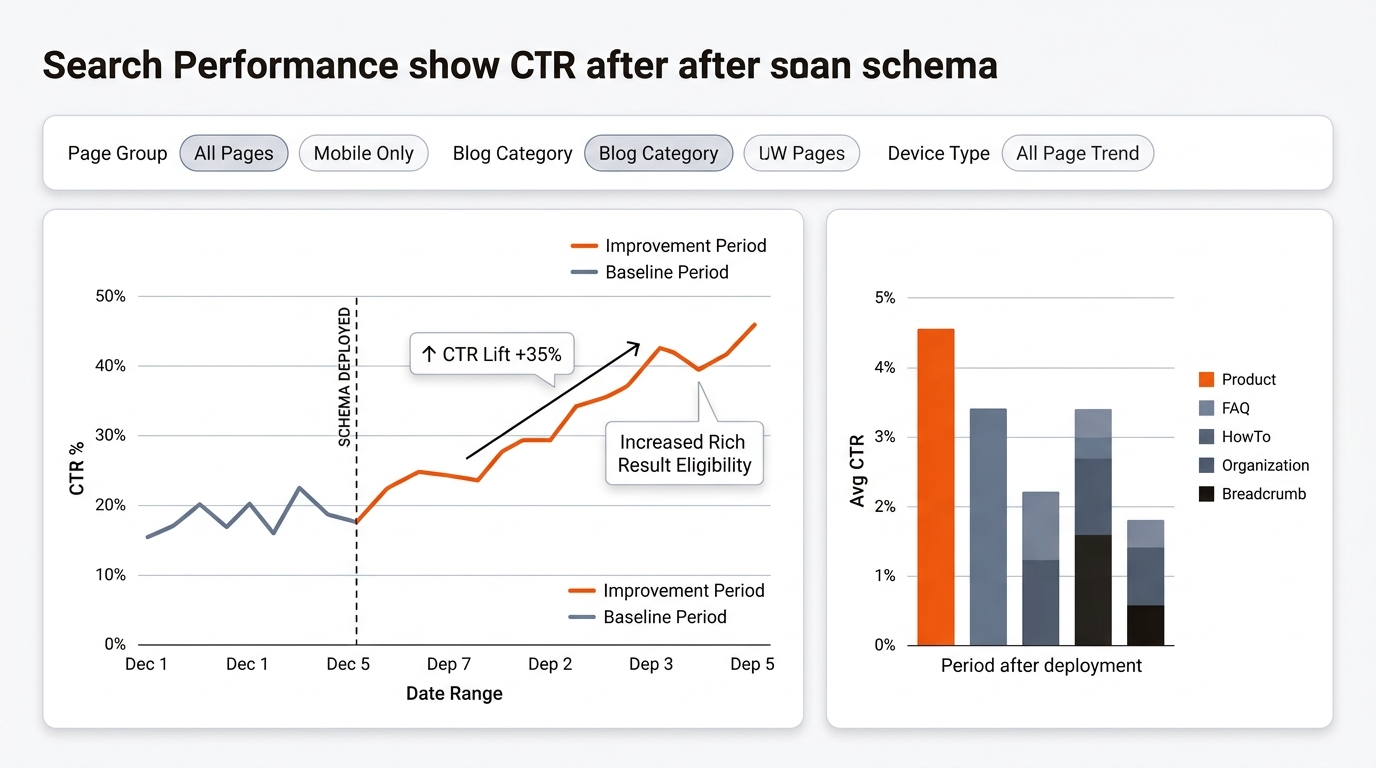
Google states structured data does not directly boost rankings, but it changes presentation. That matters because CTR moves traffic at the same rank.
Nestle reported an 82% higher CTR on pages that surfaced as rich results vs. non-rich results.
Source: Google Developers
A practical rule: wire schema into page templates. Add required and recommended fields. Validate pre-deploy and spot-check in production. One pass of dev work beats a year of manual markup.
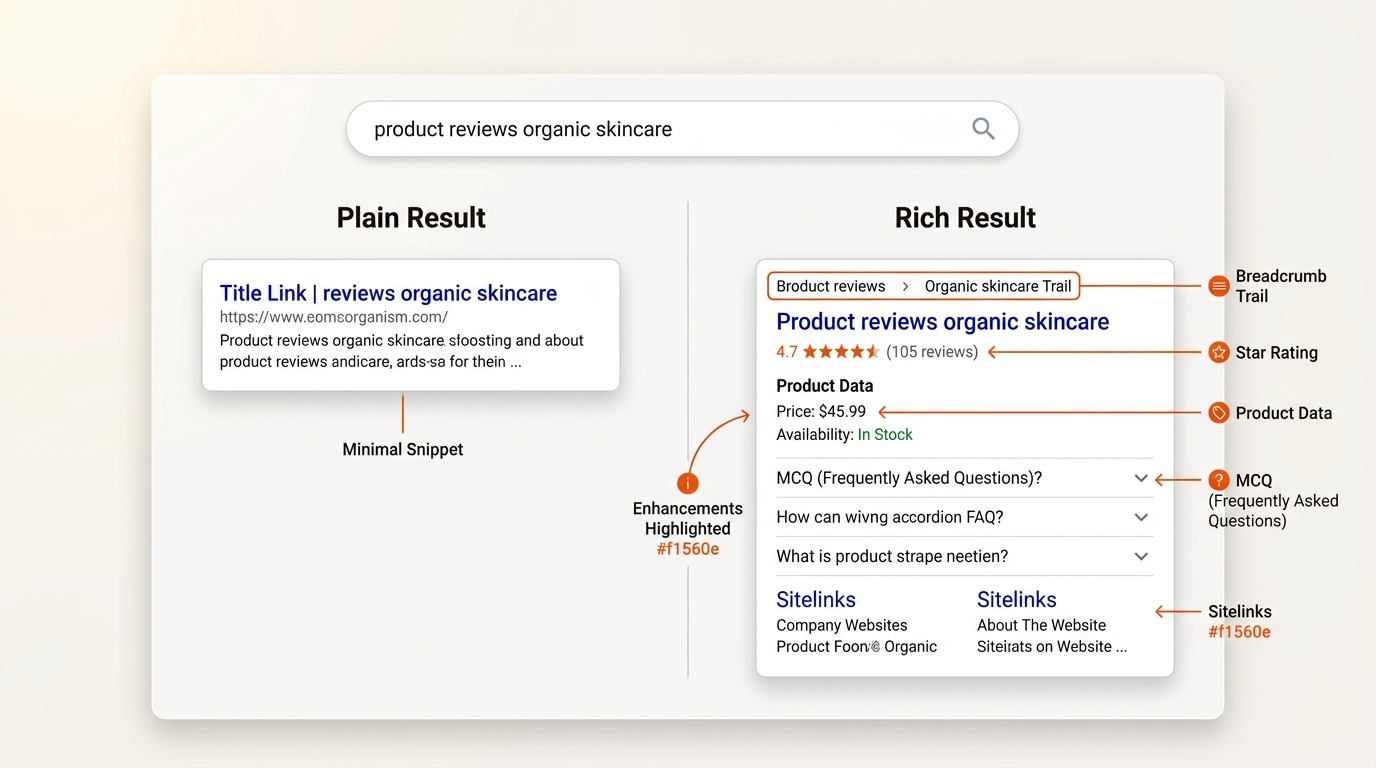
Use schema where it unlocks a richer SERP module; avoid adding markup on pages without supported enhancements.
Start with JSON-LD that exactly reflects on-page content. Validate with Google’s Rich Results Test and monitor impressions and CTR by schema type in Google Search Console Performance. If a page is eligible but not triggering, fix required fields, value consistency, and match between visible content and markup.
A real scenario: a 3-person growth team at a B2B SAAS added FAQ and Breadcrumb to 14 support pages and SoftwareApplication to 6 product pages. Over 45 days, average position held at 6.2, but CTR rose from 2.4% to 3.3% on FAQ pages (21k impressions) and from 1.8% to 2.6% on product pages (9k impressions). No other layout changes shipped in that window.
The operational tradeoff: at scale, schema QA can bottleneck. Plugins often output conflicting markup. Budget 1-2 days to template JSON-LD, then 30 minutes per template for QA in CI. Re-validate after any theme or CMS component update.
External reference: Google’s Rich Results Test
For deeper context, see Is Nofollow Good For SEO.
Schema improves eligibility, clarity, and CTR; it takes real implementation and QA but returns fastest on commercial and support content.
caption
You need schema tied to clusters and intents, wired into a publishing system that ships and refreshes automatically.
Mergeflo is an autonomous SEO + AEO content engine: research to published, AI-citable pages in the customer's CMS, with schema, internal links, and ongoing refresh. We model each page’s intent, attach the correct schema (FAQ, Product, Article, Organization, Breadcrumb), validate for rich-result eligibility, and ship updates into your CMS. If you are assessing technical signals holistically, see our take on Is Nofollow Good For SEO to align link attributes with your schema and internal linking plan.
Focus on eligibility, template fit, and measurement discipline to turn schema into ranking and CTR gains.
No. Google has repeated that schema is not a direct ranking signal. The upside is indirect but material: eligibility for rich results, better SERP presentation, and clearer entity understanding. Measure by comparing CTR at the same average position before and after deployment, using GSC filters by page template and query intent.
Prioritize Organization for brand trust, Article on editorial hubs, FAQ for support and feature pages, Breadcrumb for site comprehension, and Product or SoftwareApplication where pricing and features are explicit. Add HowTo for setup guides. Only mark up fields visible on the page and keep values accurate.
Create page sets by schema-bearing templates vs. non-schema templates. Track impressions, average position, and CTR for 28 to 90 days. Add an annotation on the deployment date. Wins usually show as flat position with rising CTR. If impressions spike but CTR stalls, re-check required and recommended fields.
Common blockers are missing required fields, mismatched values vs. visible content, duplicated or conflicting markup from plugins, and templated spam like FAQ on every page. Validate JSON-LD with the Rich Results Test, remove duplicates, and ensure content quality aligns with the schema. Re-test after each release.
