
Short answer: Nofollow is good for SEO when you use it to mark paid, UGC, and untrusted outbound links; avoid using it to sculpt internal PageRank. Google treats nofollow as a hint (since 2019), so it may still crawl for discovery. Use it for compliance and risk control.
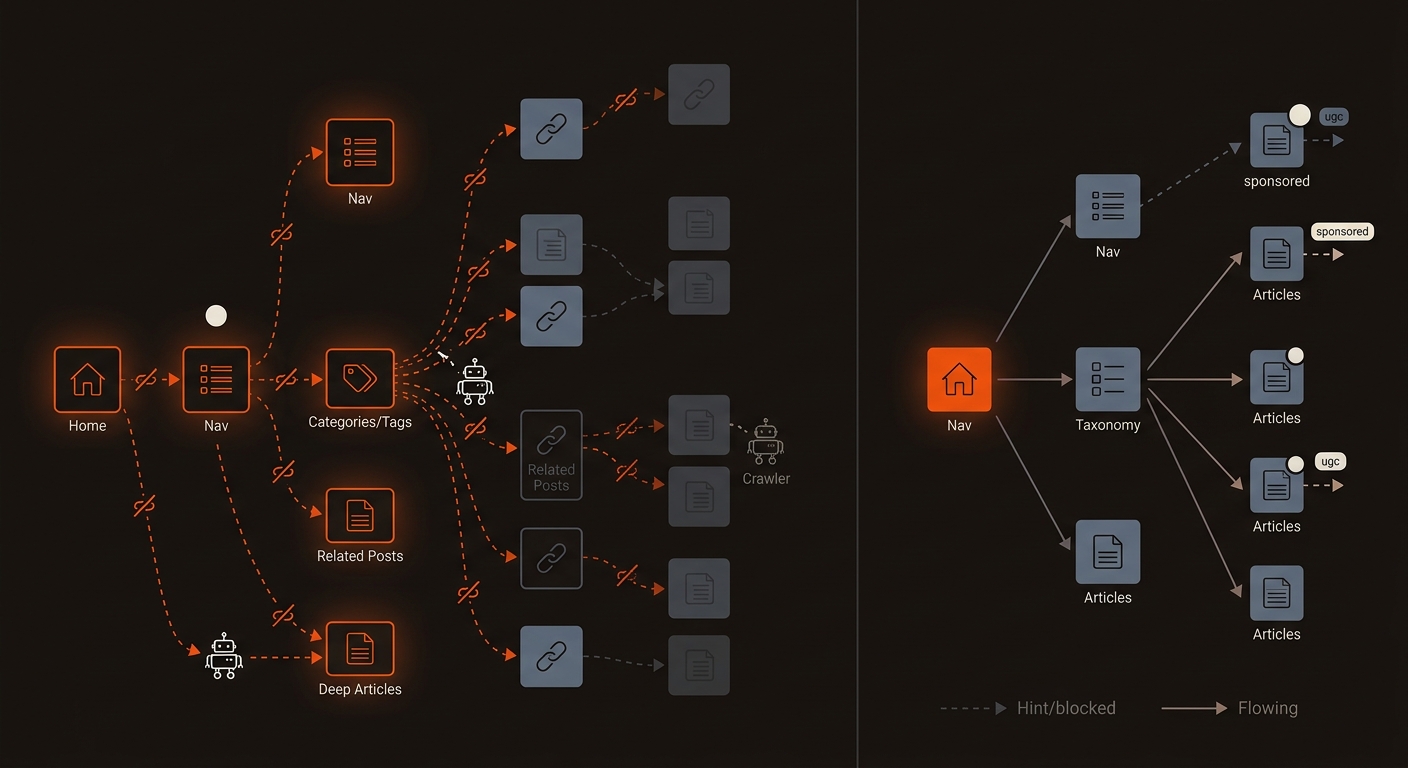
Teams also slap nofollow on every outbound link. That signals nothing useful. Editorial outbound links to credible sources help context and can correlate with better topical clarity. Reserve nofollow for sponsored, affiliate, and comment links.
Use nofollow to communicate link intent (paid/UGC/untrusted); fix crawl and hierarchy with architecture.
A small growth team publishing every month needs guardrails:
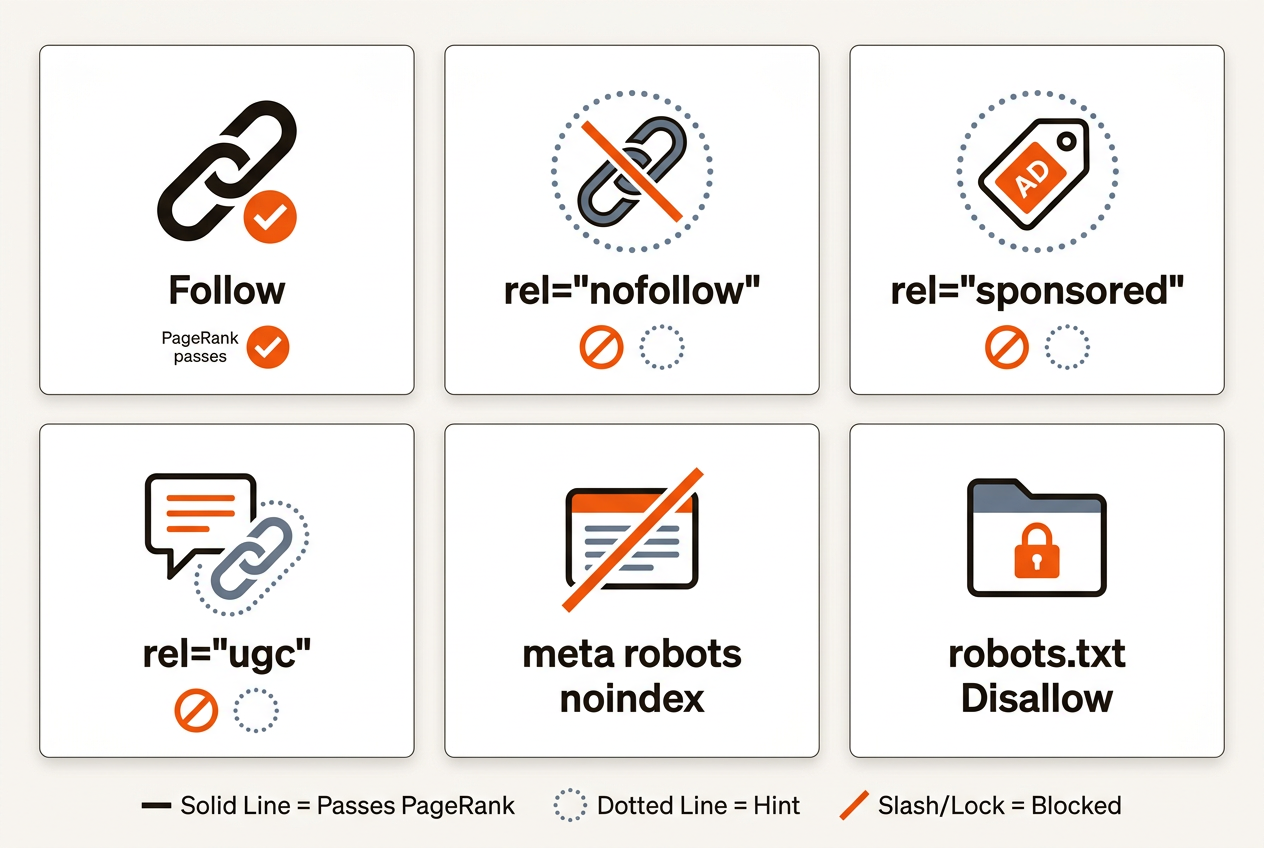
• Add rel="sponsored" or rel="nofollow sponsored" to paid placements and affiliate links. That prevents manual actions without second-guessing intent.
• Add rel="ugc" to forum/comment links by default. Many CMS plugins miss this; verify.
• Keep internal links followable. If a URL shouldn’t rank, use noindex/canonical or remove the link from templates. Don’t rely on nofollow.
Tradeoff: If you add nofollow to every external link, you reduce risk from accidental paid linking but also look unnatural and miss context signaling. If you noindex thin pages instead of nofollowing links to them, you fix the source. Choose structural fixes first; attributes are last-mile metadata.
For deeper context, see How To Rank Without Backlinks.
Pick the right directive for the job; don’t use nofollow as a multi-tool.
caption
Audit attributes, fix templates, and verify with GSC and Ahrefs before shipping more content.
• Crawl your site with Screaming Frog. Extract rel attributes on all links. Flag any internal nofollow. Fix at the template level in your CMS so nav, related posts, and taxonomies are followable.
• In Ahrefs or SEMrush, filter your backlink profile by nofollow, sponsored, and UGC. Check that paid/affiliate partners are labeled; request rel="sponsored" if missing.
• In Google Search Console, compare “Pages crawled per day” and “Discovered, currently not indexed” before and after removing internal nofollow.
Mergeflo drafts articles with suggested internal links for your review, and publishes the ones you approve to Webflow.
Mergeflo is an AI search visibility platform for startups. Our autonomous SEO + AEO content engine finds gaps, drafts articles with FAQ schema and suggested internal links, and publishes the ones you approve to Webflow. We tag sponsored and UGC links correctly, keep internal link graphs clean, and optimize for both Google and AI engines (AI Overviews, ChatGPT, Perplexity, Gemini, Copilot). You get measurement and fixes, not just an audit.
Answer the operational edge cases cleanly to avoid ranking drag.
Nofollow links don’t pass PageRank directly. Since 2019, Google treats them as hints, which means they may still use them for URL discovery or contextual signals. They can still drive referral traffic and brand mentions that correlate with future natural links, but they won’t lift rankings on their own.
No. Keep internal links followable and control indexing with meta robots noindex, canonical tags, or by removing low-value pages from templates. Internal nofollow can break crawl paths and reduce discovery. Use architecture and templating to fix thin or duplicate areas at the source.
Use rel="sponsored" on affiliate links. Many programs also recommend adding nofollow alongside sponsored. This communicates paid intent clearly and reduces risk of manual actions.
Indirectly at best. AI Overviews and LLM answer engines draw primarily from Google’s index and high-authority sources. Nofollow on outbound links won’t boost your chance of being cited. Focus on publishing AI-citable pages with structured data, clear topical depth, and clean internal links.
Use nofollow for compliance and UGC hygiene; fix discovery and ranking with structure, content depth, and clean internal links.
Is nofollow good for SEO? Yes, when it keeps you compliant and your link graph honest. It’s not a growth lever. Treat it as metadata, then put your effort into clusters, schema, and internal links that actually move rankings and citations.
