
You can treat AI answers as a channel with measurable share-of-voice and predictable lifts. Most teams split efforts by engine and end up with scattered experiments and no compounding gains. Unify your approach: baseline queries, harden entities, earn citations, structure your site, and instrument change tracking. Your ChatGPT Perplexity AI Overview visibility becomes a weekly KPI.
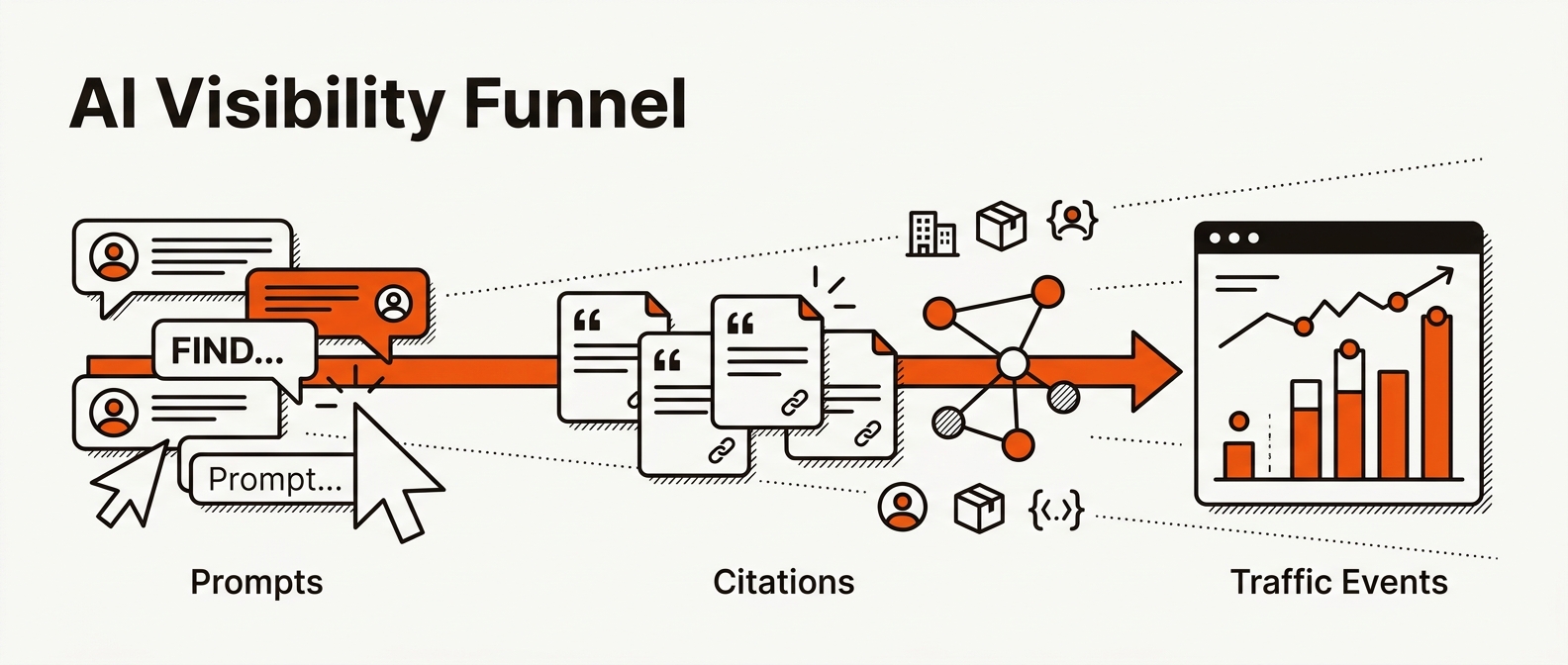
Instrument once, optimize everywhere.
1. Define 50-80 money-relevant prompts across 3 engines; track weekly mentions and linked citations.
2. Harden entities (Organization, Product, Person) via schema, About and FAQ consolidation, and authoritative profiles.
3. Earn citations on niche sites and comparison pages that LLMs trust.
4. Ship structured formats and clean source hierarchies that answer engines prefer.
5. Automate reporting.
Start with a fixed prompt panel. In Ahrefs, pull use-case and comparison modifiers, then normalize them into task prompts, best-of prompts, and how-tos. Run each in ChatGPT, Perplexity, and Google and log brand mentions and citation URLs weekly.
Harden entities in parallel. Add Organization, Product, and Person schema using JSON-LD. Centralize your About and FAQ so answers are consistent and scannable. Sync profiles on Crunchbase, LinkedIn, and GitHub for corroboration. This combination lifts ChatGPT Perplexity AI Overview visibility without splitting teams by engine.
For a small growth team, the constraint is time. Assign one owner to the prompt panel, one to entity and schema updates, and one to earned citations. Keep the weekly cycle short by template-izing prompts, schema diffs, and outreach targets.
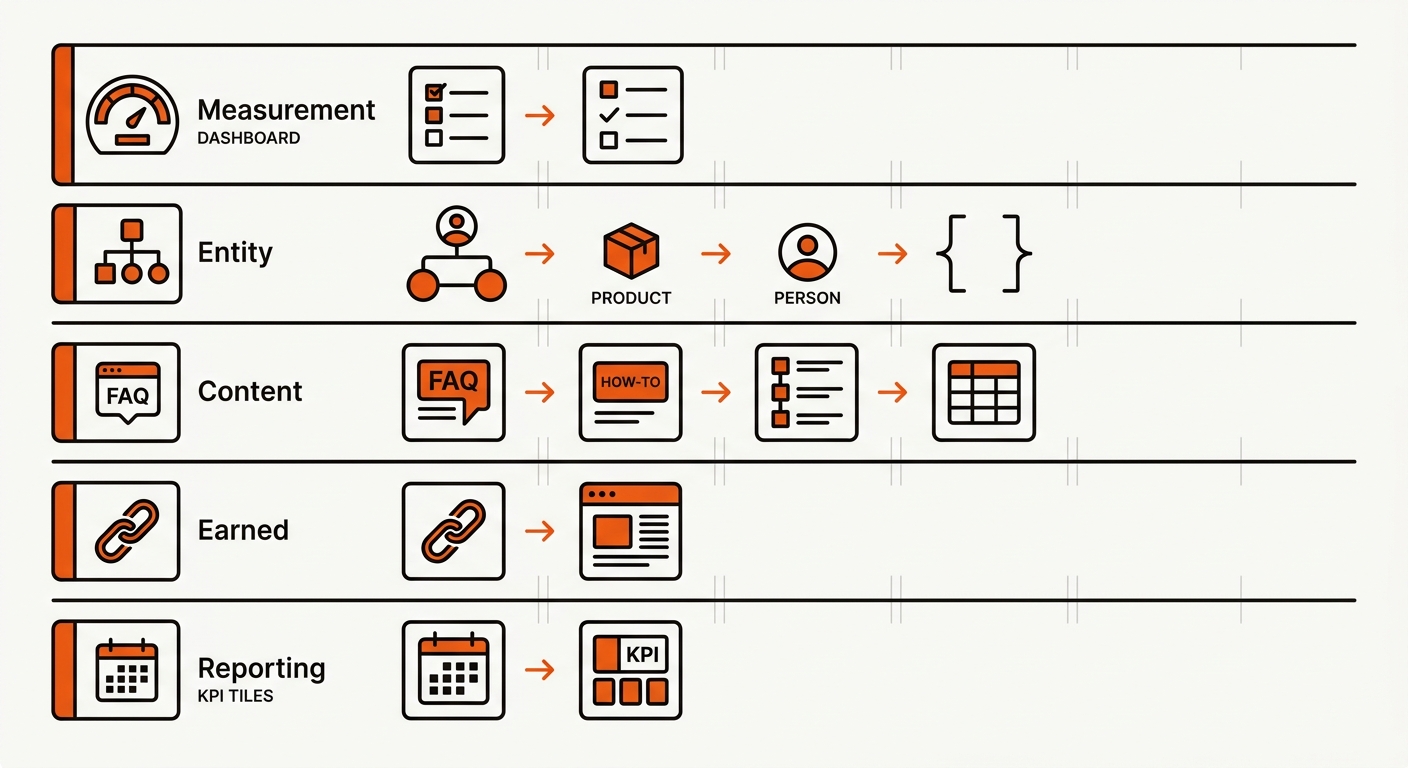
ECHO makes AI visibility compounding by design. ECHO is a four-part operating model that turns scattered AI experiments into a repeatable growth loop. You enumerate a fixed prompt panel and never chase moving targets. You consolidate and strengthen entities until engines treat your site as a canonical source. You harden citations on domains LLMs favor. You orchestrate weekly, small updates to trigger frequent rescoring and inclusion. ECHO trades breadth for durability and exposes failure modes quickly when profiles, FAQs, or links are weak.
• Enumerate: Build a fixed prompt panel per engine mapped to products and use cases. Include task, comparison, best of, and how-to patterns.
• Consolidate: Strengthen entities with schema.org, Wikidata or Crunchbase profiles, and a single source-of-truth About and FAQ.
• Harden: Pursue citations from high-trust domains, category primers, and X vs Y pages LLMs cite often.
• Orchestrate: Tie updates to a weekly change log so engines re-crawl fresh, structured sources.
Tradeoffs: pushing volume before entity hardening yields noisy gains and short-lived mentions. Failure modes: thin brand profiles, fragmented FAQs, and earned links on low-trust sites stall inclusion.
Answer engines weight sources differently; format for their biases.
Cite consistently and structure pages so each section can be quoted cleanly. Use H2 and H3 headings, short paragraphs, and explicit answers near the top of sections. That small reformatting is enough to tip marginal queries into inclusion.
For Google AI Overviews, read how to check where you are cited in Google AI Overviews.
External sources: Frase, YouTube explainer on AI Overview citations
Track the prompt panel weekly. Record citations, AI Overview inclusion, and linking domains for each engine, then compare each week against your baseline.
Check for lift in GSC by segmenting page groups tied to entity and comparison work.
Track trends. Use a simple sheet or warehouse table keyed by prompt_id, engine, week, cited_brand, cited_url, and domain_trust. Add a citations_count field and a binary included_in_aio flag. This gives you trendlines per query class and by engine without bloating the stack.
Join this with GSC page groups for pages tagged entity-hardening and comparison-links. That is causal enough for operators to invest more.
Report three numbers weekly:
• Panel coverage, the percent of prompts with at least one brand mention or link.
• Citations per 10 prompts, the density of inclusion.
• Unique citing domains, a measure LLMs reuse across queries.
External source: Pedowitz Group
Prompts should mirror buying and implementation tasks. Pull queries from your CRM notes, live chat, and sales call transcripts. If your ICP asks for vendor comparisons, add those prompts. If onboarding asks for step-by-steps, add how-to prompts that mirror your docs.
In Ahrefs or SEMrush, mark which keywords tie to those prompts and tag them by use case. This ensures your ChatGPT Perplexity AI Overview visibility is anchored to revenue. You will see higher demo conversion from AI surfaces when prompts align to purchase intent.
The tradeoff is breadth vs focus. A 200-prompt panel looks thorough but burns hours. A 50-80 prompt core hits the 80-20 and stabilizes measurement. Expand only when coverage and citation density plateau for 2-3 weeks.
Engines cite stable, well-described entities with consistent facts and roles. Add Organization, Product, and Person schema on every relevant page using JSON-LD. Include legal name, sameAs links, founding date, and leadership. Keep this data synchronized with Crunchbase, LinkedIn, and a public Notion or GitHub profile for credibility.
Keep reading: AI search visibility and how to rank in ChatGPT.
Chatgpt perplexity AI overview visibility covers the structural work of the article above: the page inventory, the workflow that keeps it shipping, and the measurement loop that confirms it's working. The sections preceding this FAQ describe each part in detail.
There is no fixed timeline. Google does not promise when, or whether, a page will rank. Watch Search Console impressions for the questions the page targets each week, because impressions move before clicks. A page with no impressions after a few months usually needs a sharper angle or more internal links.
Cost depends on who does the work: your own team's time, a freelancer, an agency or a software tool. Mergeflo has a free plan, and paid plans are listed on the pricing page.
Mergeflo researches topics, writes briefs and drafts in your brand voice, adds FAQ schema and suggests internal links. You choose the topics and approve each article, and it publishes to Webflow only when you press Publish. For pages losing reach, Mergeflo flags them, and when you press Refresh it writes a refresh brief for you to review.
