Short answer: The 4 types of keywords are informational, navigational, commercial, and transactional. Classify queries by modifiers (how/what vs brand vs best/compare vs buy/price), validate the SERP’s dominant page types, then build matching assets with fitting CTAs. You rank faster when intent, page type, and schema align: not just volume or difficulty.
Once you know the intent, our main keyword research guide shows how to find profitable keywords with low competition.
Intent-page mismatch is the fastest way to stall rankings and conversions. Publishing a blog for a transactional query or forcing a product page to rank for an informational query kills CTR, dwell time, and AI citations. If you need an AI search visibility platform that helps you plan clusters by intent, use the Mergeflo AI search visibility platform.
A common scenario: a small growth team ships posts steadily, but some target mixed SERPs with a single page. They open Ahrefs or SEMrush, see guides in the top results, but still push a feature page.
Use Ahrefs or SEMrush to scan the SERP: identify whether product/pricing pages, comparisons, or guides dominate. Match it 1:1. Add FAQPage/HowTo/Product schema as appropriate and a CTA that fits the stage. This is how you win the query and the AI Overview citation.
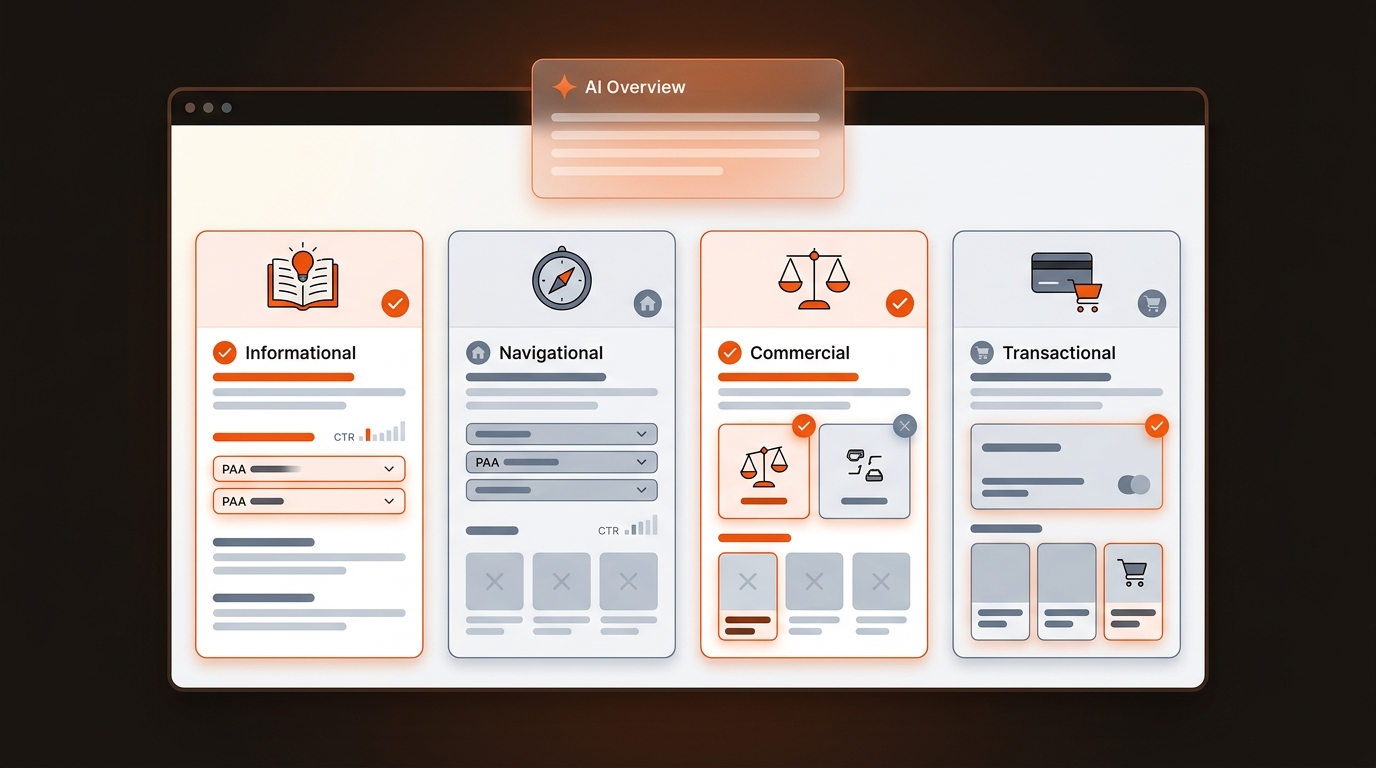
Teams miss when they chase volume or difficulty filters and ignore modifiers that flip intent. Example: they target 'project management' with a product page while a rival owns 'project management tutorials.' Or they send 'Trello login' traffic to a homepage. Another miss is bundling 'best CRM' and 'CRM pricing' into one URL, creating weak comparisons and soft pricing. Fixes: split clusters by modifier families, cap each page to one primary intent, deindex near duplicates, and route internal links by intent. Sanity check outputs so title tags, CTAs, and above-the-fold elements mirror the query verbs.
Classify intent with modifiers and SERP features, then assign each to a page type and CTA. If your team still asks “what are the 4 types of keywords,” use the table below as your routing map. It translates live SERPs and tool signals into a concrete publishing decision. For deeper context on intent, see Ahrefs' primer on search intent (Ahrefs).
caption
| Intent Type | Typical Modifiers | Dominant SERP Features | Best Page Types | Primary CTA | |---------------|----------------------------------------|-------------------------------------------|------------------------------------------|----------------------------| | Informational | how, what, why, guide, tutorial, examples | Featured snippets, PAA, blog/how-to pages | In-depth guides, tutorials, FAQs, glossaries | Subscribe, download, next guide | | Navigational | brand, login, pricing, docs, dashboard | Site links, knowledge panel, brand pages | Homepage, pricing, login, docs, support | Start trial, view pricing | | Commercial | best, vs, compare, alternatives, reviews | Comparisons, listicles, category pages | Comparison pages, category hubs, solution pages | Book demo, compare plans | | Transactional | buy, price, coupon, sign up, free trial | Product pages, PLP, shopping carousels | Product/pricing pages, checkout, signup | Buy now, start free trial | | Mixed/Blended | combo of above; ambiguous head terms | Hybrid of guides + product/comparison | Hub + spokes: guide links to product/comparison | Explore product, see pricing |Operational tradeoff: mixed-intent queries often require a hub-and-spoke, which increases page count and maintenance. Splitting intent reduces cannibalization risk and improves CTR, but only if internal anchors reinforce the primary page. Monitor in GSC (query vs page) and adjust anchors when two pages swap positions.
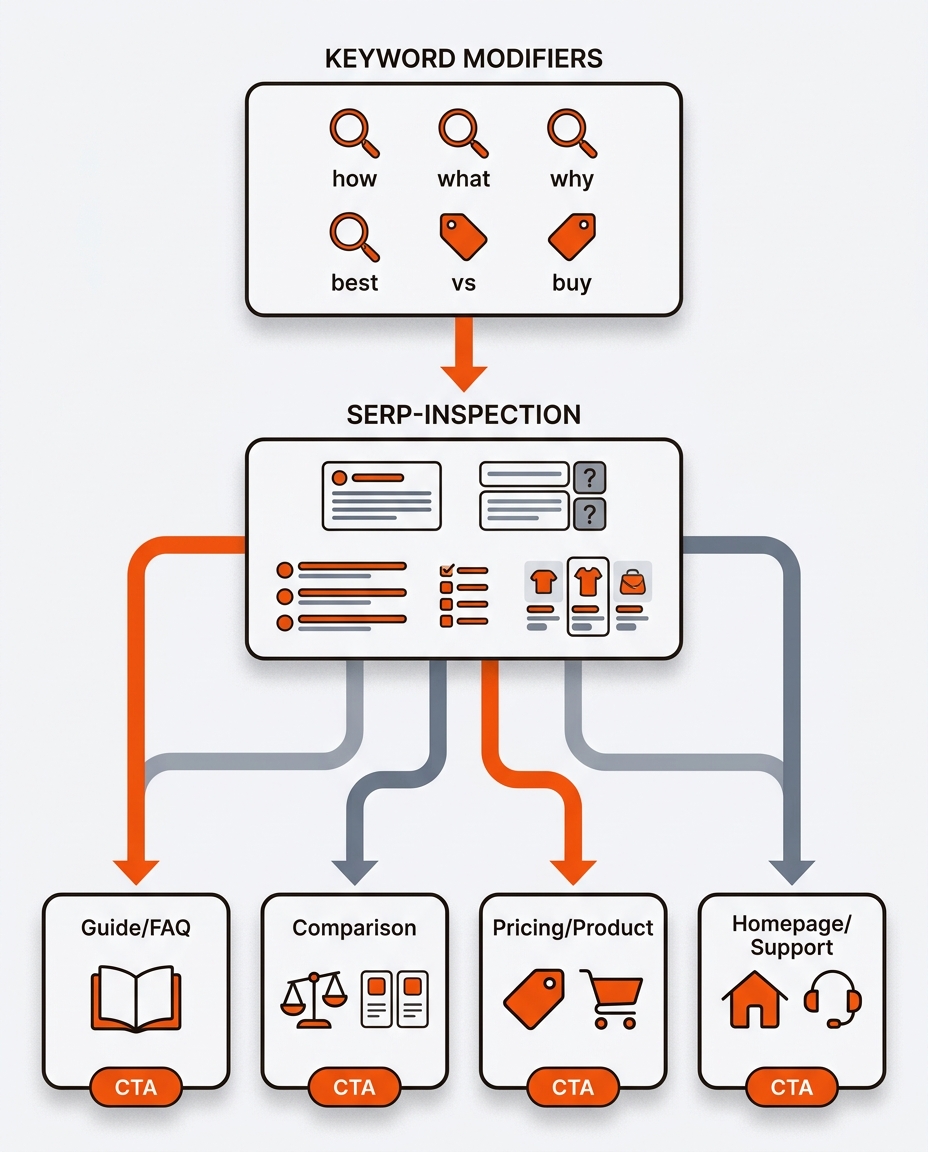
Start by labeling queries with lightweight rules: informational uses 'how to', 'what is', 'guide'; navigational includes brand names and 'login'; commercial investigation carries 'best', 'vs', 'reviews'; transactional includes 'buy', 'pricing', 'download', 'coupon', 'demo'. Map each label to a page type and CTA. Examples: informational maps to glossary or how-to with next-step links; navigational maps to a brand resource; commercial maps to comparison hubs and ranked lists with filters; transactional maps to pricing, product, or signup. Build clusters of 3 to 8 closely related queries per page, define one primary CTA, and set internal links to escalate intent.
Turn intent classification into briefs and drafts you review and publish to Webflow. Mergeflo is an AI search visibility platform that builds topic clusters and drafts the articles for your review. Autonomous SEO + AEO content engine: it finds gaps, drafts articles with FAQ schema and suggested internal links, and publishes the ones you approve to Webflow. Startup-priced.
It groups keywords into topic clusters and suggests internal links for you to approve, so informational posts can hand readers to commercial and transactional pages. If you need seed terms, start with long-tails your competitors ignore using our take on low-competition discovery in How To Find Low Competition Long Tail Keywords. For helpful-content alignment, see Google’s guidance (Google Search Central).
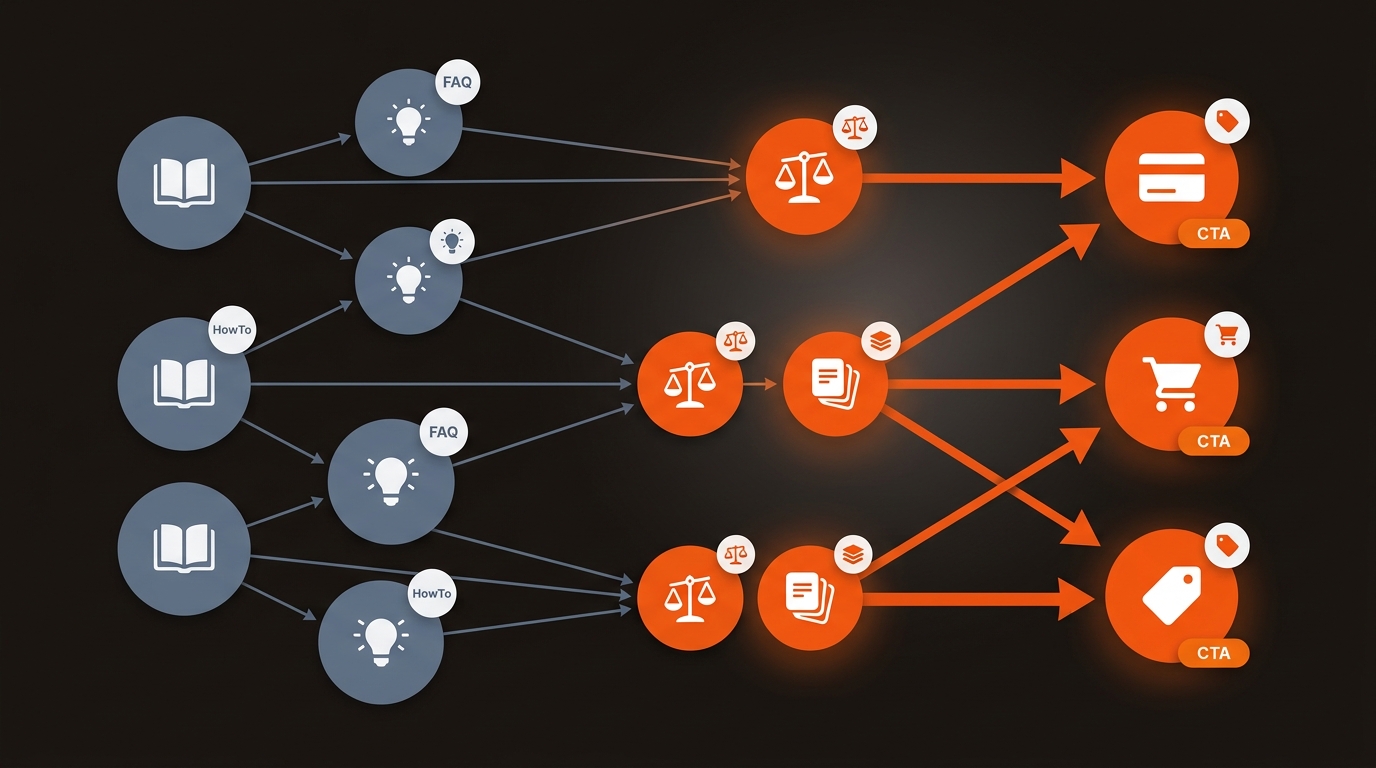
Map intent in minutes, then ship the matching page type with the right CTA.
Scan modifiers first, then open the SERP. If top results are product/pricing pages, it’s transactional. If they’re guides and FAQs, it’s informational. Confirm with SERP features in Ahrefs/SEMrush, then pick a matching page type and CTA. Log the decision so it’s consistent across the cluster.
Ship a hub-and-spoke: one complete informational hub that links to a focused comparison (commercial) and a product/pricing page (transactional). Optimize each for its sub-intent rather than forcing one page to rank for all. Measure cannibalization in GSC and adjust internal anchors to reinforce the primary page.
You can win some “competitor + alternatives” (commercial) pages, but pure navigational brand terms mostly belong to the brand itself. Focus on “competitor alternatives” or “competitor vs you” where the SERP expects comparisons. Use transparent, side-by-side content and schema to qualify for AI citations.
Track CTR, average position, and conversions per page type in GSC and analytics. Compare these metrics over equal windows before and after you change a page, and annotate your edits so you can attribute any change to the mapping. If CTR lags, check that titles and content match intent. If conversions lag, check that internal links route users from informational to commercial or transactional pages.
