
Short answer: At the bottom of the sales funnel, qualified buyers finalize their vendor choice. They pressure-test pricing, implementation, ROI, and risk, surface last objections, and ask for proof. Your job is to remove friction with transparent pricing, concrete deployment plans, credible social proof, and direct CTAs that shorten the path to a signed order.
Deals stall when buyers lack pricing clarity, implementation certainty, or credible risk reduction. Hiding pricing, fuzzy timelines, or thin proof sends high-intent traffic back to research. That bleeds win rate and drags time-to-close, even when the product is a fit.
Treat BOFU as buyer enablement. Give exact numbers, next steps, and proof. HubSpot frames BOFU as the decision stage where buyers compare and choose the solution. See: HubSpot and Mailchimp for decision-focused content and incentives. If you want to rank and get cited for what happens at the bottom of the sales funnel, your decision assets must be findable and explicit.
"At BOFU, prospects actively compare pricing, implementation, and risk, then choose.", HubSpot
When you plan what happens at the bottom of the sales funnel, assume every page visit is a live deal. Publish the number, the timeline, the proof, and the order path. Anything missing adds back-and-forth and loses momentum.
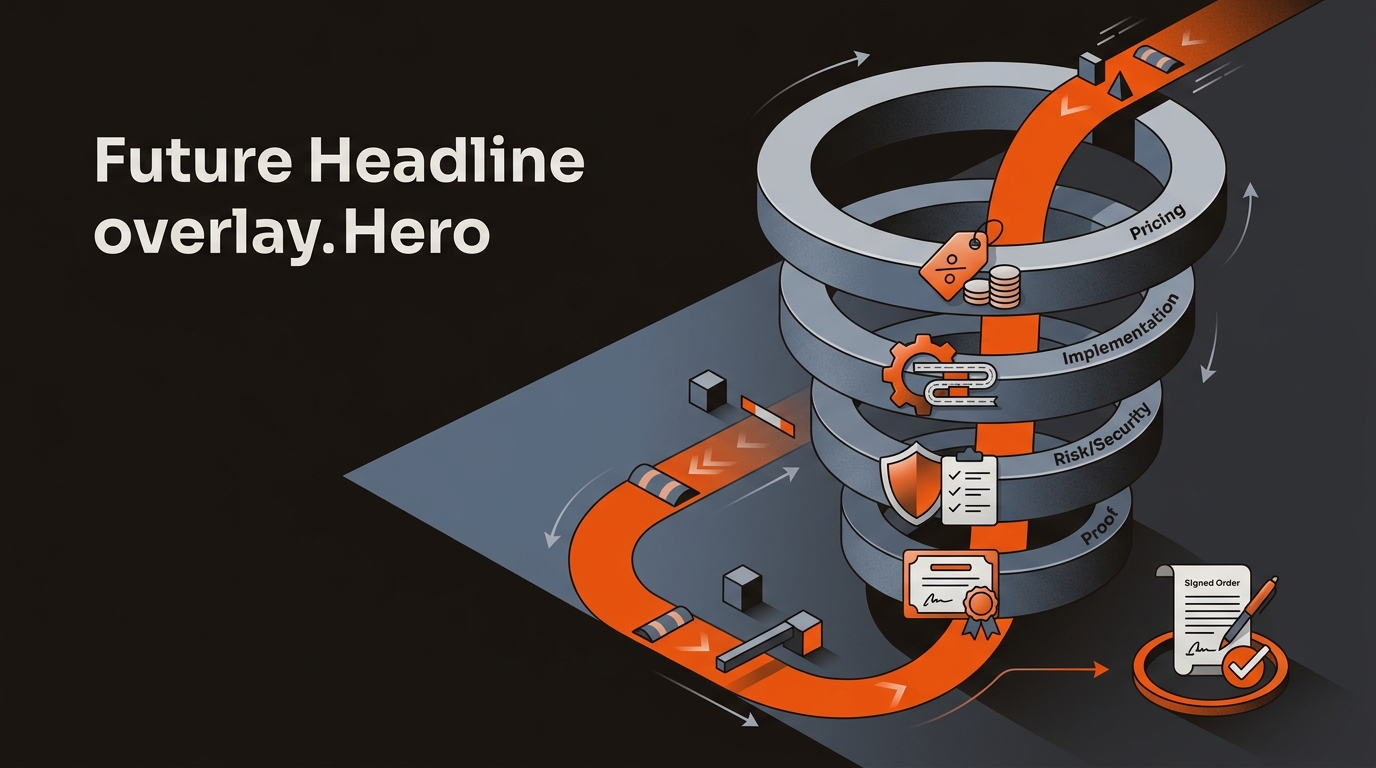
Most stalls are process gaps, not intent changes. Examples: a 3-page MSA lands on legal with no pre-approved redlines, adding 10 days. Security drops a 250-question CAIQ after pricing is sent, burning two weeks. The champion cannot route vendor setup because tax forms and bank letters are missing. Preventable. Before pricing, confirm the buying team and procurement path. Share a one-page checklist, your standard terms, a SOC report index, and a draft mutual action plan with dates. Set a 24-hour SLA on proposal edits, 48 hours on legal triage, and auto escalate any 72-hour silence across email, calendar, or doc views. Balance speed with buyer effort by limiting asks.
Use BOFU intent signals to route buyers into decision assets and remove friction fast. Track signals that move win rate and time-to-close. Align assets to the exit paths buyers actually take.
caption
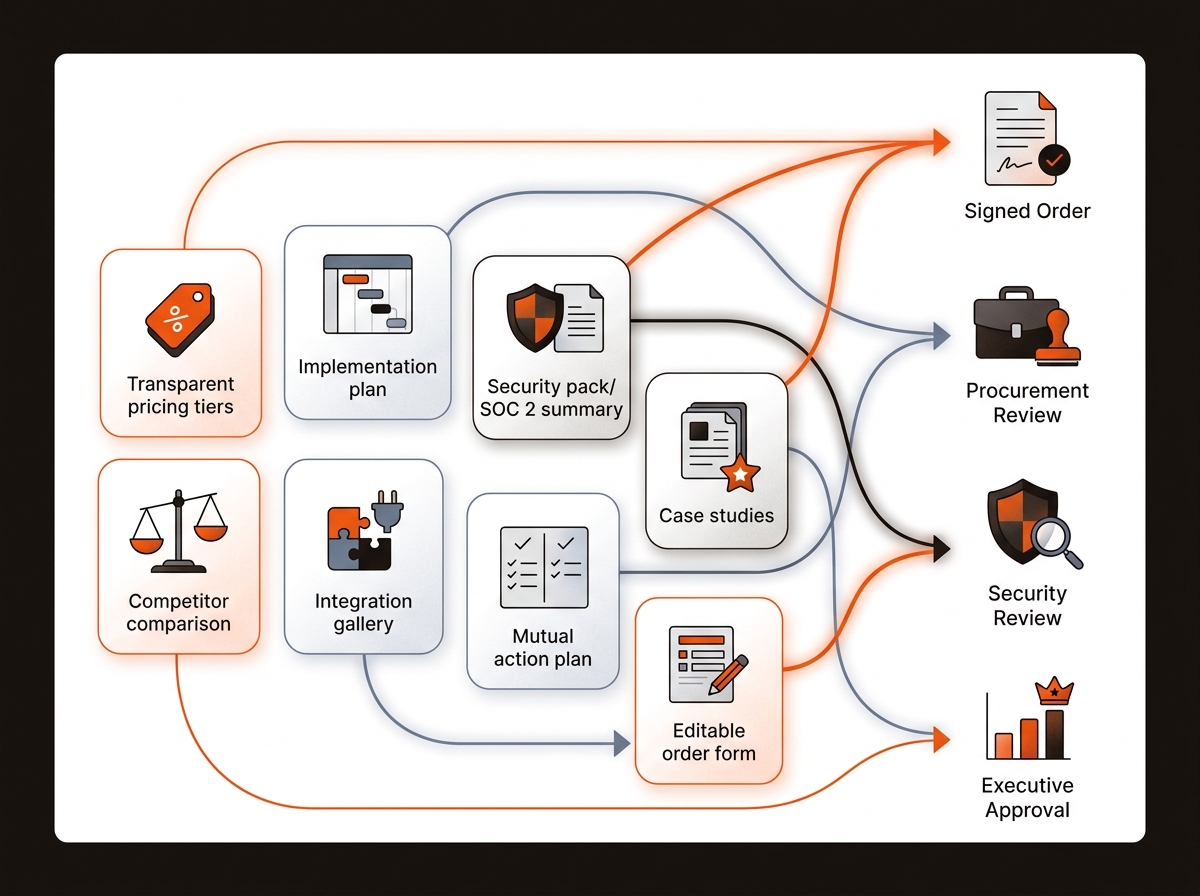
Winning BOFU depends on findable, citable decision assets that answer pricing, proof, and implementation in one click. If those assets do not rank or show in AI answers, high-intent buyers never see them when it counts.
Mergeflo is an AI search visibility platform for startups. Our autonomous SEO + AEO content engine finds gaps, drafts articles with FAQ schema and suggested internal links, and publishes the ones you approve to Webflow. We build pricing, comparison, implementation, and proof pages as a cluster so your BOFU answers rank on Google and get cited in AI Overviews, ChatGPT, Perplexity, Gemini, and Copilot. If you are still converting traffic to revenue, read our sibling post on how to turn website traffic into sales. It shows how to align CTAs, proof, and UX to close the last mile.
Operationalize as signals, routes, and clocks. Signals to ingest: CRM stage to Commit, proposal created or opened count, pricing page visits over 3 in 48 hours, security packet requested, new attendee with Legal or Procurement title, calendar holds added, e-sign declined, mutual plan slip. Routes: who does what within 1 hour, which channel, which template. Clocks: per step SLA and auto reminders. Tag every BOFU touch with a reason code so stall patterns surface in dashboards and weekly deal reviews. Prevent alert fatigue by batching and snoozing.
Pricing pages with transparent tiers, ROI calculators, comparison pages, implementation timelines, security or IT one-pagers, and ICP-matched case studies. Each asset should remove a known objection and end with a direct CTA: trial, demo, or order form. Use schema and internal links so these pages win for what happens at the bottom of the sales funnel.
Use win rate by source, demo-to-close rate, time-to-close, and stage-age in procurement. Tie page-level assists to opportunities by stitching GA4 sessions to CRM records in HubSpot or Salesforce. Track proof asset consumption before close. Traffic is secondary; decision velocity is the signal.
Ship two pages first: a pricing page with FAQs and 2-3 case snippets, and a week-by-week implementation plan. Add a one-page security brief in plain English with SOC 2 and data flow notes. These three assets resolve most last-mile friction for B2B SAAS and can be shipped in a week using your CMS.
They can if used broadly. Use targeted urgency such as an annual plan credit tied to clear value. Measure impact on win rate, time-to-close, and payback period by segment over a 30-60 day window. If discount requests spike, tighten qualification and move value to onboarding or service credits.
