
Short answer: What is replacing SAAS? Buyers are shifting from fixed subscriptions to usage-based APIs, AI agent workflows, and open-source cores with managed cloud. Teams want faster time-to-value and variable costs. For vendors, the winning motion pairs productized building blocks with search-visible, AI-citable content that captures bottom-funnel intent.
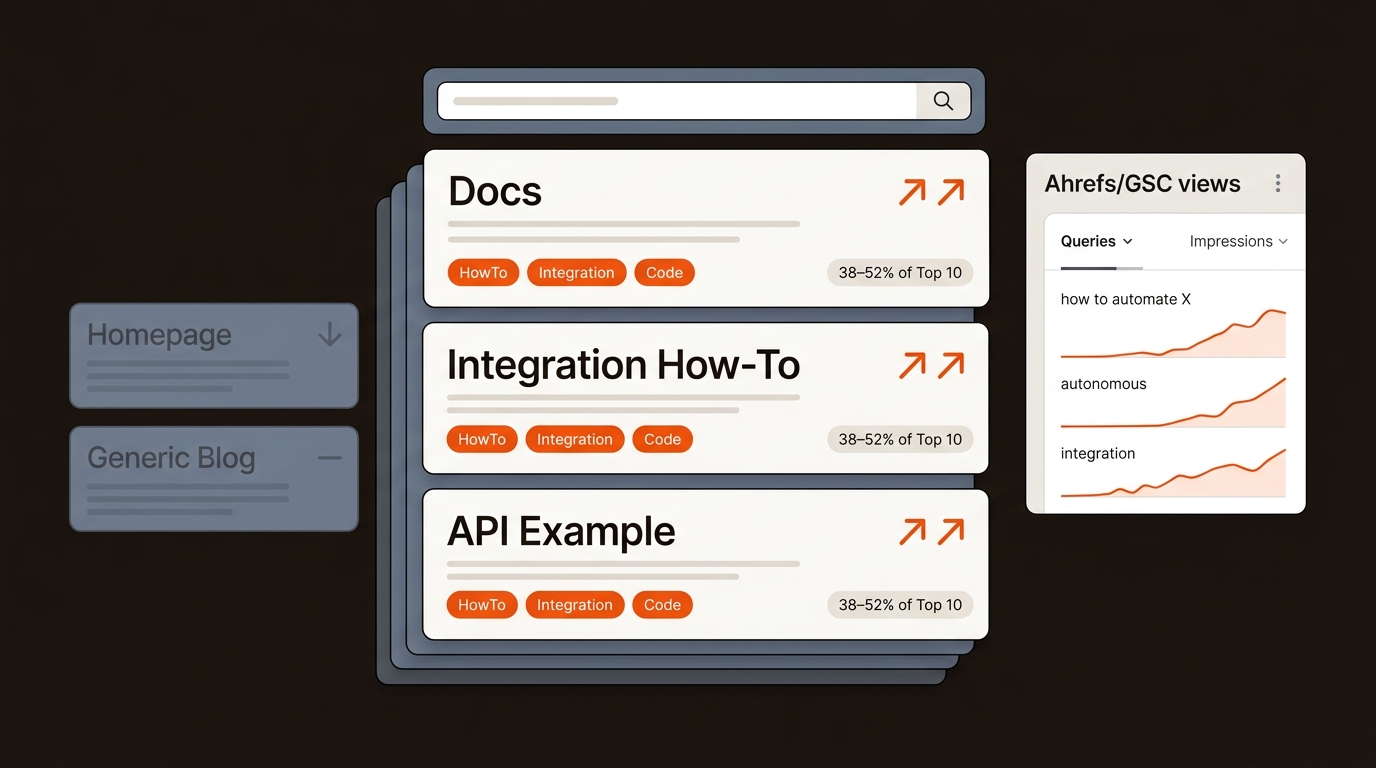
OpenView’s 2023 data showed ~61% of SAAS companies use some form of usage-based pricing. That change cascades into search: more “per unit,” “API quota,” and “cost calculator” intent that classic SAAS pages miss.
Buyers adopt primitives and vertical workflows; vendors who map content to usage win ranking and AI citations.
caption
For deeper context, see What Is The Best Website Builder For SAAS.
Structure content around jobs, units, and integration contexts that mirror buying triggers. Stop pitching “platforms” broadly; cover atomic outcomes buyers test in under 10 minutes.
• Capture unit-based intent: publish “price per 1k events,” “API rate limits,” and “quota calculators” with JSON examples and SDK snippets.
• Ship runbooks: “Route LLM output to CRM” with steps, inputs, outputs, time-to-first-value, and error states. Include schema markup for HowTo and Product.
• Own integration surfaces: “Works with HubSpot,” “Stripe Webhooks to BigQuery,” and “PostgreSQL CDC to S3.” These long-tails stack high-intent traffic.
A practical flow: mine Ahrefs and GSC for “API,” “per request,” “limits,” “calculator,” “HowTo,” and “works with” patterns; build 15-30 spoke pages that each answer a single job, include usage pricing, and link to a template. We’ve seen teams get first citations in Perplexity inside 3 weeks when they publish exact, schema-rich answers with clean headings and a comparison table.
Treating “What is replacing SAAS?” as a think-piece wastes the query; operators need implementation detail. Pages that summarize trends without pricing math, SDK specifics, or step-by-step workflows get skipped by buyers and ignored by AI Overviews.
The cost: thin thought-leadership inflates impressions with near-zero clicks and no citations. Worse, it delays the pages that would compound: calculators, integration guides, and vertical templates tied to usage.
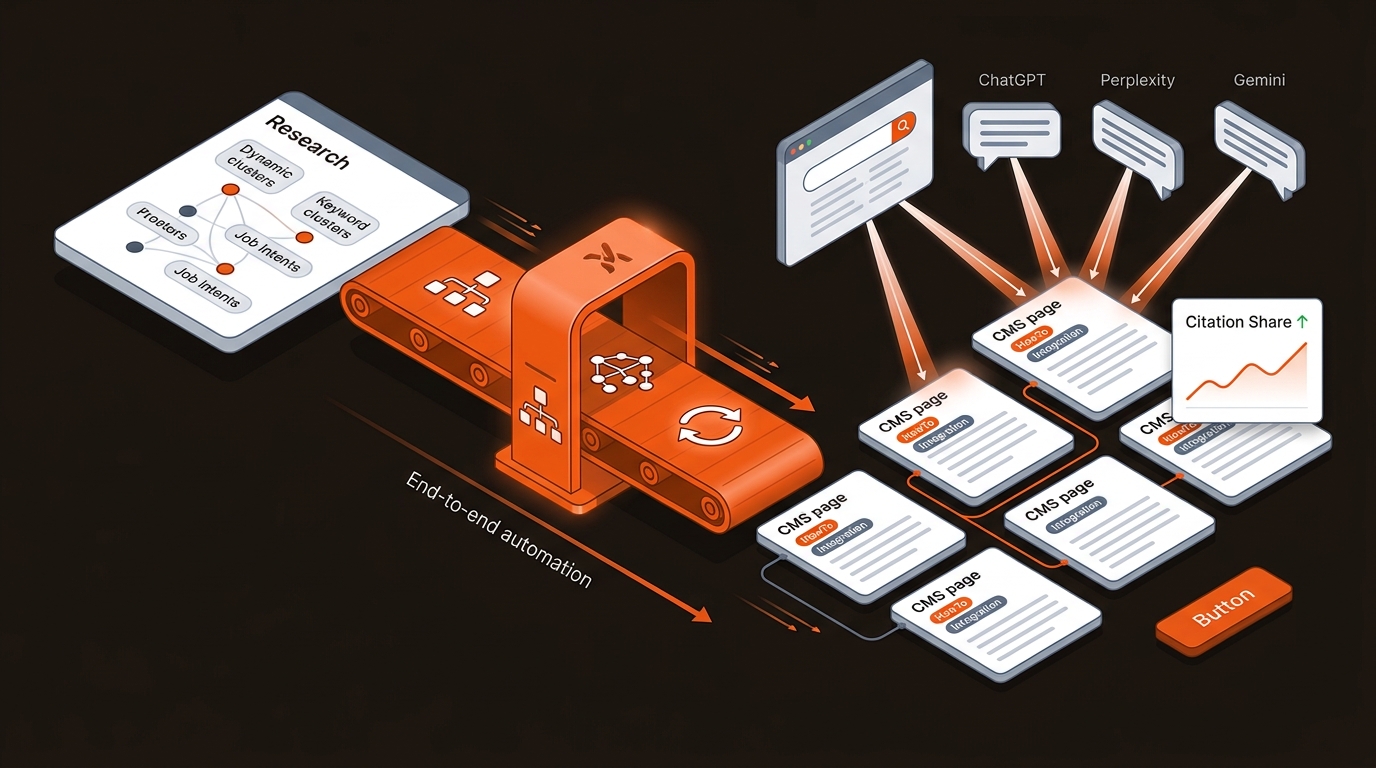
You need AEO-ready pages that map to jobs, units, and integrations — shipped weekly. Mergeflo is an autonomous SEO + AEO content engine: research to published, AI-citable pages in your CMS, with schema, internal links, and ongoing refresh. We measure Google and AI citation share, then ship fixes, so your usage-based and workflow content actually ranks.
SAAS is evolving. Fixed-seat bundles are giving ground to usage-based APIs, AI agents, and open-source plus managed cloud. The opportunity is to package your product as primitives and workflows, then publish content that targets units, runbooks, and integrations. That is where ranking and AI citations now cluster.
Anchor alternatives to jobs. Example: “PDF data extraction: SAAS vs API vs Agent vs Self-host” with a cost table per 10k pages and latency benchmarks. Use neutral comparison language and show when each path wins. You’ll rank for SAAS alternatives while staying credible.
Exact answers with structure: pricing per unit, quotas, step-by-step HowTo, inputs/outputs, and clean H2/H3 scaffolding. Include one dense comparison table and schema (HowTo, Product, FAQ). We see citations land when answers resolve the query in under 60 words, then expand with concrete steps and numbers.
You’ll face margin variability, support for edge cases, and documentation debt. Usage models demand clearer limits, calculators, and SDK stability. AI workflows need latency and accuracy disclosures. Plan for this in content and product; otherwise, your pages rank but trials stall on implementation friction.
A 4-person B2B SAAS team publishing 20 posts/month wasn’t ranking; they pivoted to job pages and usage math. They built 18 pages: quota calculator, “works with” integrations, and three agent runbooks. Within 30 days, GSC showed 180 clicks from 40 long-tail queries; Perplexity cited two runbooks in answers about CRM deduping.
They cut two low-intent pillars to fund six more calculators. Tradeoff: fewer brand narratives, more bottom-funnel answers. Result: trials from “API pricing per 1k events” and “HubSpot webhook to warehouse” doubled, with clear attribution.
Map your product to primitives and workflows, then publish AEO-shaped answers that match how buyers evaluate today. If your backlog isn’t producing citations or bottom-funnel clicks, you’re speaking platform while buyers are searching units and jobs. Ship the pages that usage-based buyers actually query. Mergeflo can run that pipeline end-to-end.
