
Short answer: Bottom of the funnel SEO targets decision-stage searches with commercial or transactional intent and turns them into trials, demos, bookings, or purchases. It focuses on pricing, product, comparison vs, alternatives, integration, and case study pages with tight CTAs, schema, fast UX, and internal links, and measures success by revenue over visits.
Intent-to-page mismatch and thin decision content kill conversion even when rankings look fine. Most small growth teams overproduce TOFU blogs while pricing, comparison, and integration pages stay shallow or missing.
Aggregator-heavy SERPs compound this. Review sites outrank vendors for "best" and "alternatives" terms, while "vs" queries favor crisp, vendor-authored comparisons. Fix the IA, ship dedicated decision pages, and route internal authority from MOFU guides and nav. Validate intent with SERP features and modifiers (Ahrefs search intent guide: https://ahrefs.com/blog/search-intent/).
Aim for Core Web Vitals that support conversion. Keep LCP under 2.5s and keep interactivity tight to reduce abandonment. See Web Vitals guidance at web.dev.
A realistic scenario: a small growth team publishes many posts a month from a freelancer pool. Traffic grows, but demo volume flatlines because the pricing page hides tiers, there are only two "X vs Y" posts, and zero integration pages. Moving a large share of production to BoFu pages within existing templates is the first fix to test.
Operational tradeoff: bottom of the funnel SEO scales slower than TOFU. Each page takes more product input, legal review, and sales alignment. You will ship fewer URLs per sprint. The payoff is higher intent and trackable revenue, but resourcing must reflect that.
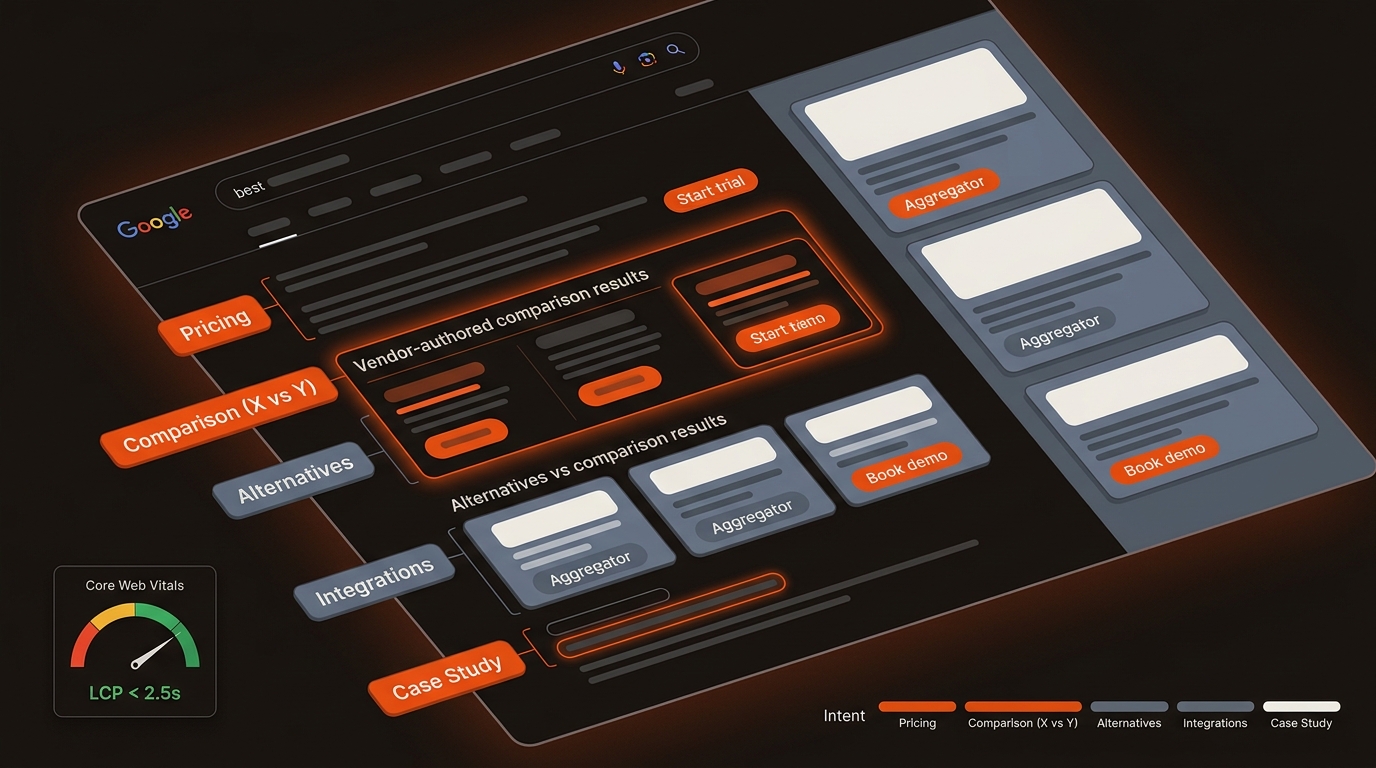
Each decision query deserves its own page with the right CTA, schema, and risk reducers. Separate pricing, comparisons, alternatives, and integrations to avoid cannibalization. Add FAQs and review markup where allowed to earn rich results and sitelinks (Google structured data primer: https://developers.google.com/search/docs/appearance/structured-data/intro-structured-data).
Comparison of Core BoFu Page Types, Intent, and Must-Haves
For bottom of the funnel SEO, wire internal links from category, solution, and MOFU guides into each decision page with descriptive anchors. Add Organization, Product, FAQ, and Review schema where applicable. Keep page weight lean. Compress images. Ship fast.
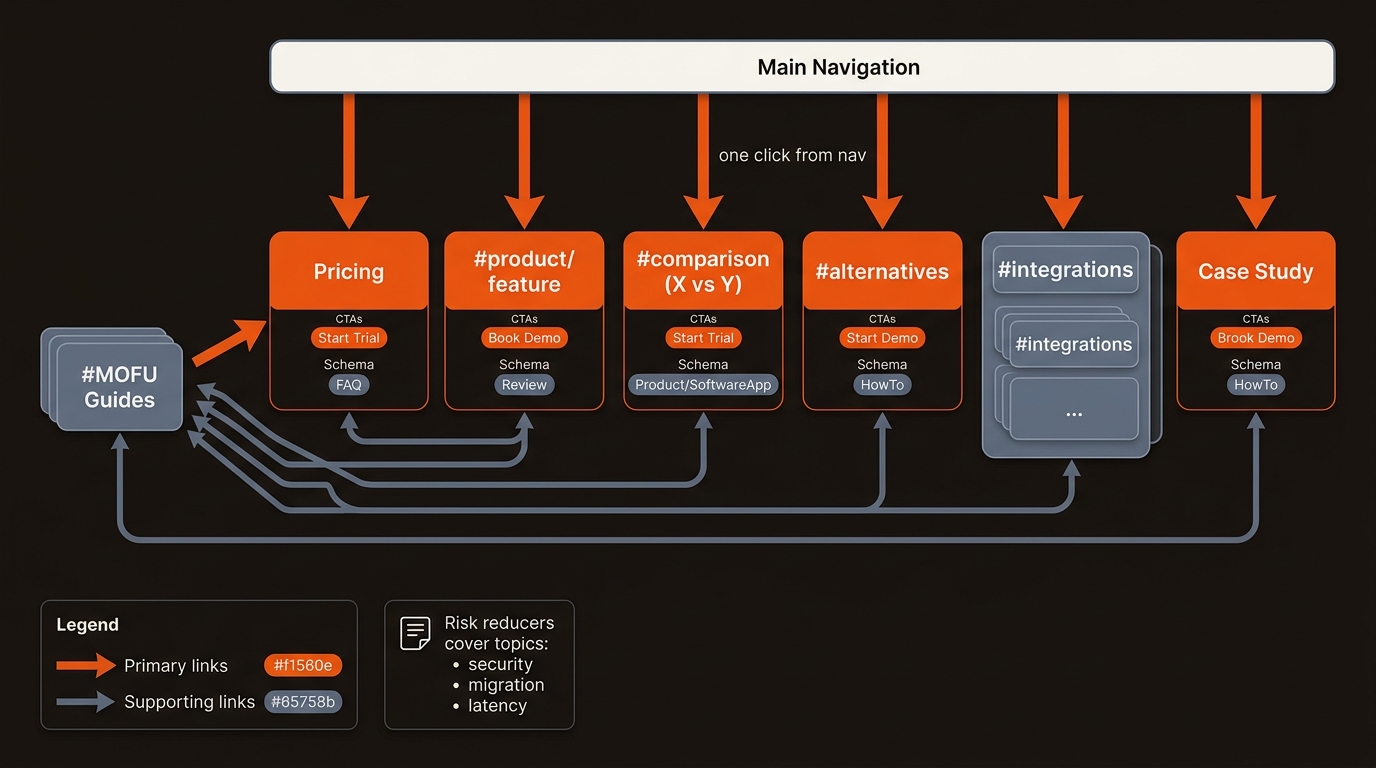
Match each late-stage asset to the question a buyer still has. Pricing, product, comparison, and case study pages cover most decisions. Several more asset types close gaps that stall deals, and each serves a different role in the buying group:
Implementation guides and independent review listings add proof from outside your own pages. Keep all of these assets one click from the primary CTA: persistent header links for Pricing and Demo, footer links for Pricing, Security, and Comparisons, and in-line modules on high-intent blog posts, such as a demo clip, an ROI teaser, and a case study from the same customer segment. Use your analytics path reports to confirm the modules shorten the route to conversion.
Operationalize bottom of the funnel SEO with a decision map, templates, and programmatic publishing into your CMS. Start with a decision map: pricing, 5-8 "X vs Y" against top competitors, one "best alternatives", top 20 integrations, and 3-5 case studies. Assign owners. Lock templates with CTAs, schema blocks, and comparison tables. Define acceptance criteria: LCP under 2.5s, above-the-fold CTA, FAQ section, and 2-3 internal links in and out.
Measurement is binary: did it create signed trials, demo requests, and qualified pipeline. Use GSC for queries and CTR, analytics for assisted conversions and time-to-first-action, and connect to CRM for opportunity attribution. Report by page type so you can double down on what closes.
Mergeflo helps with the research and writing. It finds the buyer questions people ask before they buy, drafts pages in your brand voice for your review, and publishes the ones you approve to Webflow. It also tracks your Google positions and checks whether ChatGPT, Gemini and Claude mention you (weekly on paid plans, one check on the free plan).
If you need a quick refresher on how BoFu fits into the broader types of SEO, read our view on the four types of SEO, then ship the decision layer first. Commit two sprints to BoFu before adding more TOFU blogs.
These are the operational questions teams hit in their first BoFu sprint.
Check SERP intent and modifiers. Pricing, vs, alternatives, integration, demo, and buy language signal BoFu SEO. If the SERP shows product pages, comparison posts, Shopping, or review boxes, it is decision-stage. Validate with GSC post-launch by tracking demo or trial conversions tied to the specific URL.
For a SAAS with a small growth team, ship a minimum set: pricing, 5-8 "X vs Y", one "best alternatives", 10-20 integration pages, and 3-5 case studies. Keep quality high over volume.
Own vendor-favored intents like "vs" and integration queries where first-party relevance is strong. For "best" and "[category] alternatives", publish a high-quality vendor page and also partner on 1-2 credible aggregator placements to capture blended clickshare. Track lead quality by source in your CRM to justify spend.
Tie pages to primary conversions: signed trials, demo requests, and qualified pipeline. Use GSC for queries and CTR, analytics for assisted conversions and time-to-first-action, and connect to CRM to attribute revenue. Report by page type and prune or rewrite pages that fail to generate first actions within 30-45 days.
Review recent lost opportunities and tag the reason each deal stalled, such as price, integration, security, or ROI. Build one asset per tag and route it to product pages and sales sequences. A lean team can start with pricing, a competitor comparison, and a case study that matches the ideal customer profile.
Gate only when there is a clear value exchange that advances the deal, such as exporting an ROI model or requesting a security pack. Leave pricing, comparison pages, and basic implementation guides open. Gating can capture emails, but it can also reduce discovery and citation in AI systems and Google.
