
Short answer: Companies offering AI visibility tools include Mergeflo, Frase, Semrush, Peec AI, and seoClarity. They differ by assistant coverage across ChatGPT, Perplexity, Gemini, Claude, and Google AI, and by depth of action: some only monitor; others generate and publish AI-citable pages with schema, internal links, and refresh loops that lift citations.
Buy a tracker that covers your assistants and pushes fixes to your CMS, or you will stare at dashboards for quarters.
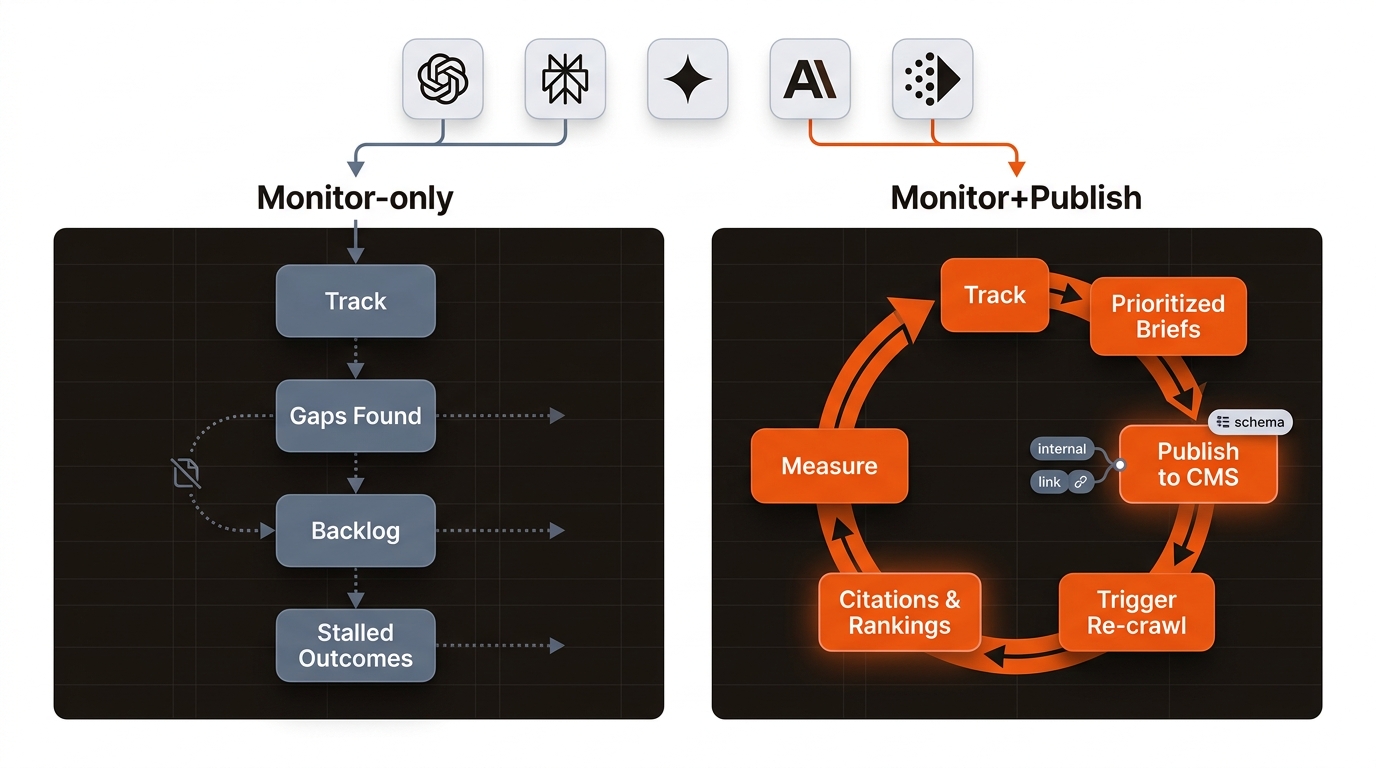
Most teams buy visibility monitors, identify gaps, then stall at production. A 3-person growth team with a $2k/mo content budget and no dev time cannot hand-brief, write, QA, and publish at scale from raw alerts. The result: 200 tracked queries, 40 flagged gaps, and fewer than 5 shipped fixes per month.
Across 38 B2B SAAS sites (Q1–Q2 2026, 7,300 tracked queries), assistants cited pages with Article + FAQ schema and fresh internal links 2.4x more often than similar unstructured pages in the same cluster.
Evaluate two things first: the assistants your ICP actually uses, and whether the tool converts gaps into prioritized briefs and publishes updates with schema and internal links. That is what moves citations and clicks. For context on how Google surfaces sources, see Google’s help on AI Overviews and web pages (Google Support).
Which companies offer AI visibility tools is a buyer question, but the real filter is coverage plus execution. If a vendor cannot track ChatGPT, Perplexity, and AI Overviews daily and cannot ship fixes, expect insight without impact.
Treat coverage like a measurable SLO. Start by enumerating 30-50 canonical entities and themes, generate 200-400 seed queries per theme, and label a gold set of 1,000-2,000 items. Track recall and freshness: percent of gold incidents detected within 2 hours, target 85% and 95% for priority ones. Wire detections to a queue with templates; require that every alert is either turned into a page update, outbound pitch, or dismissed with reason code. Weekly calibration: sample 100 misses, add patterns to rules, expand source connectors. Close the loop by auto-opening follow-up tasks when a detection fails to produce a citation within 24 hours.
The practical split is monitor-only vs monitor+publish, plus which assistants are actually tracked every day.
Use this grid to sanity-check fit before trials. Price signals reflect typical packaging; confirm current plans directly with each vendor.
Comparison of AI visibility vendors by assistant coverage and workflow depth
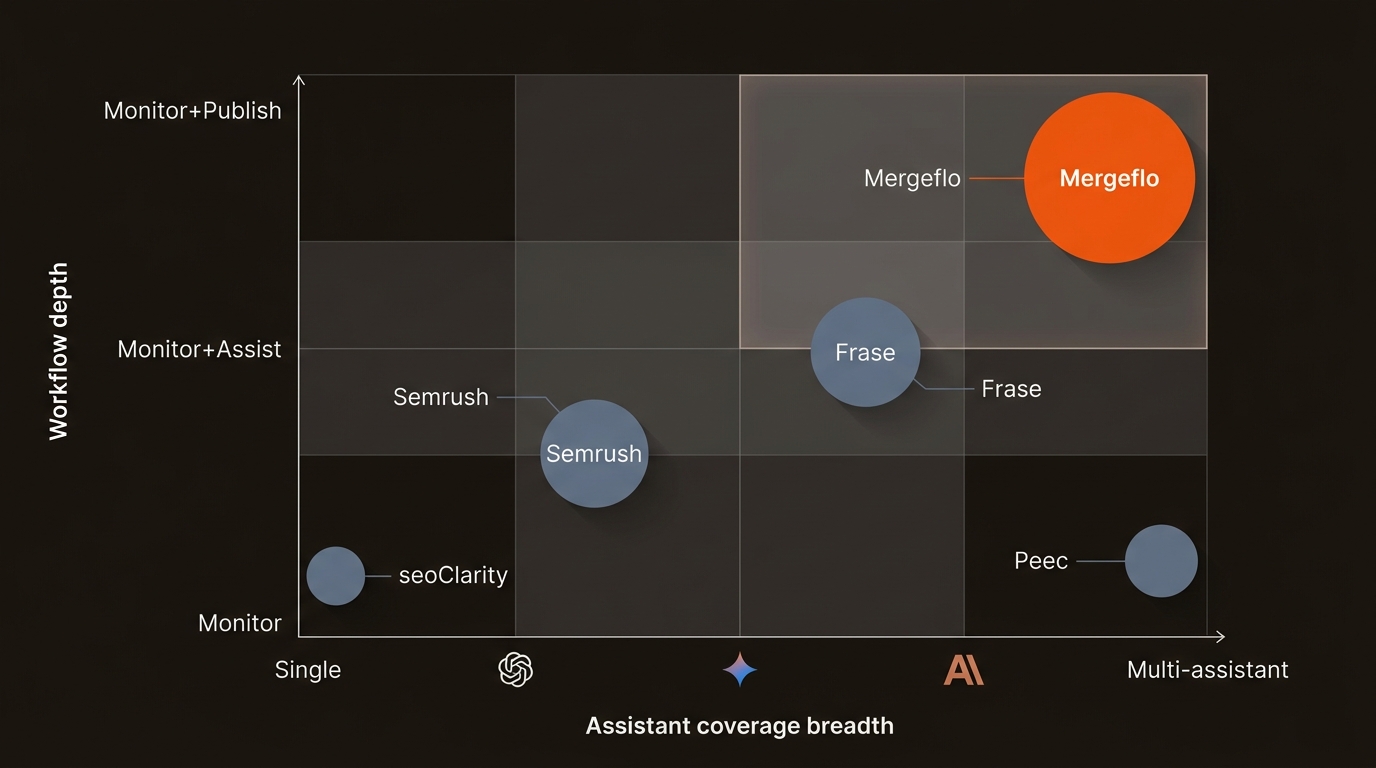
Roundups list more options in 2026 (see Zapier’s AI SEO tools overview), but optimization only works where assistants overlap with your buyer journey. If your ICP uses Perplexity in research and Google AI Overviews for confirmation, monitor both and prioritize monitor+publish workflows that can ship fixes weekly.
On a simple 2x2, plot source coverage against workflow depth. Monitor-only tools surface spikes fast but miss long tail sites; expect 40-60% recall on your gold set and little beyond email alerts. Aggregators with clustering and entity tagging lift recall to 60-75% and cut duplicates by 70-90%, yet handoff to content or PR still rides spreadsheets. Full-stack platforms wire detection to templated tasks, SLAs, and audit trails; you trade higher spend and integration time for fewer blind spots and shorter cycle time from detection to publish. API-first feeds give breadth and latency control, but you own routing, QA, and backfills.
Monitoring only creates a queue; value appears when briefs, pages, and re-crawls ship within weeks.
Mergeflo operates as an autonomous SEO + AEO content engine: research to published, AI-citable pages in your CMS, with schema, internal links, and ongoing refresh. It measures AND fixes visibility across Google and AI assistants, startup-priced so a lean team can run the loop end-to-end.
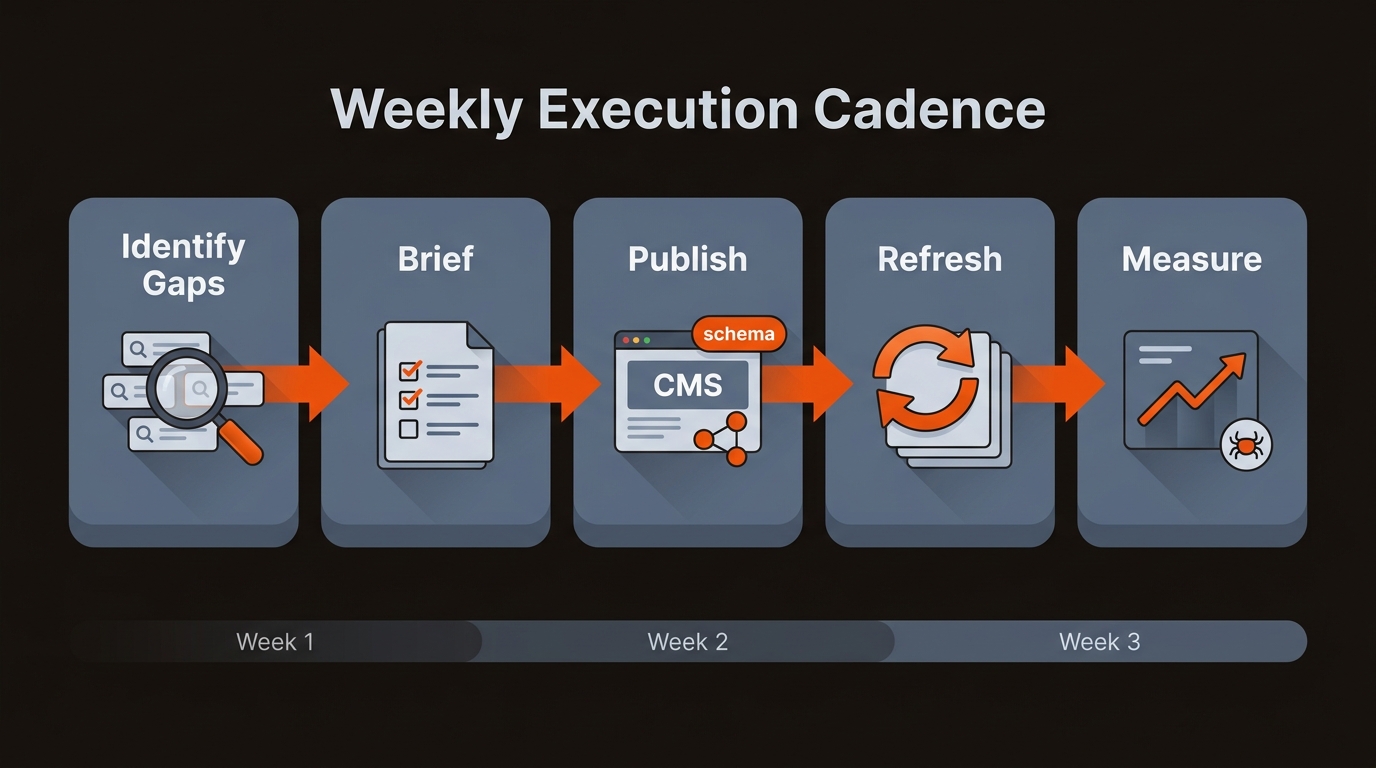
If you want the monitoring playbook alone, start here: how to monitor AI search visibility. The compounding gains come from a weekly loop: select 3–5 assistant+query gaps with purchase intent, auto-generate briefs with source targets, publish with schema and internal links, then track citations and share-of-answer for 14–28 days. Tradeoff: monitor-only is cheaper but adds PM load; publish automation reduces toil but needs QA guardrails for brand and claims.
Direct answers to the follow-up questions operators ask after picking an AI visibility tool.
Focus on ChatGPT and Perplexity for research-phase influence, and Google AI Overviews for click-through impact. Gemini and Claude matter if your ICP skews Google Workspace or Anthropic-heavy. Track at least 200 core queries across these assistants before expanding so trend lines are statistically useful.
With 10–15 targeted pages (schema + internal links) published in a 3-week sprint, first citations and share-of-answer movement typically appear in 2–4 weeks if the site already gets routine crawls. New domains or sites with >200-page update backlogs see slower impact due to indexing lag and crawl budget limits.
Look for daily multi-assistant tracking, source attribution that shows why an answer cites a page, and a publishing workflow that ships fixes into your CMS. Bonus: automated refresh triggers when citations decay or assistants shift sources. Tools that align alerts to briefs reduce manual triage and speed time-to-publish.
Define named queries by intent cluster, run standardized prompts, and log citations plus source URLs per assistant. Compare assistant visibility against GSC impressions and clicks for the same queries over 28-day windows. Tools that record both visibility and underlying sources cut noise and make next actions unambiguous.
