
Short answer: Google skips indexing when a URL fails at discovery (no links/sitemap), crawling (blocked, slow, or unrenderable), or index selection (duplicate, thin, or wrong canonical). Inspect URL in GSC, confirm 200 status and render, fix robots/noindex, strengthen internal links and sitemaps, resolve duplicates, then Request Indexing for exceptions only.
Indexing stalls because Google can't find it, can't fetch it, or doesn't think it's worth storing. The Page indexing report names which step broke: Discovered, Crawled, or Indexed. Each implies a different fix and timeline.
A 3-person growth team shipping 20 pages per week often hits Discovered - currently not indexed because new pages sit 4+ clicks deep and the sitemap updates late. GSC also highlights gaps when Indexed pages lag far behind total valid URLs. See Google guidance on coverage states via the Page indexing report (Google Search Console Help).
We see indexing jump from 42% to 78% in 21 days on sub-10k URL sites after reducing click depth to <3 and re-submitting clean sitemaps (sample: 412 URLs; GSC + server logs).
Use Screaming Frog to measure click depth and renderability, Ahrefs to validate internal link hubs, and server logs to confirm crawl hits. Slow TTFB or flaky 5xx spikes reduce crawl frequency and depth.
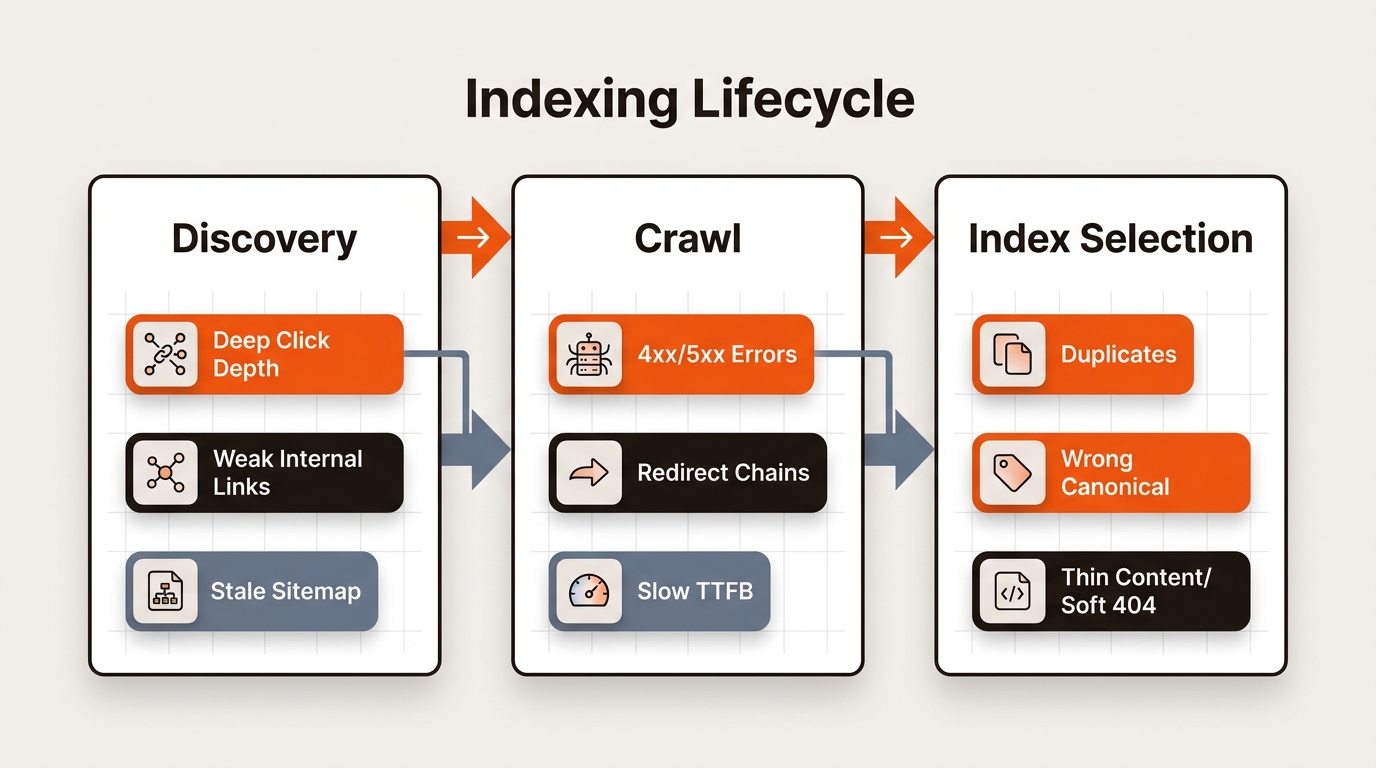
Start by quantifying where pages stall. Discovery: check internal link depth and orphan rate; aim to keep key URLs within three clicks, with orphaned URLs below 2%. Compare XML sitemap submitted vs indexed; a coverage ratio below 70% signals gaps. Crawl: sample 3-7 days of logs. If unique URLs fetched are less than 60% of discoverable URLs, reduce parameterized variants and merge thin filters. Keep average HTML response under 500 ms and 5xx below 0.1%. Selection: spot clusters with identical titles or near-duplicate templates. Consolidate with 301s, enforce a single canonical, and noindex facets you cannot consolidate.
Map the status to the fix and validate with URL Inspection, Live Test, and logs before scaling.
GSC Status-to-Fix Map (for fast triage)
Use Onely's plain-English breakdown of Discovered - currently not indexed to set realistic expectations on timing (Onely).
Two practical checks most teams skip:
• Run Live Test and view HTML to confirm primary content is server-rendered. If JS hides content, ship a prerender or move key copy server-side.
• Compare GSC Indexed count to your CMS's published count weekly. A widening gap signals discovery or selection issues, not just "Google is slow."
Discovered currently not indexed often points to discovery outpacing crawl. Action: cut URL churn from session IDs or facets, split sitemaps by type, and strengthen internal links to the 100 most valuable URLs. Crawled currently not indexed is usually selection. Compare rendered HTML to the chosen canonical; add 120 to 200 words of unique copy, fix duplicate titles, and link from a hub. Duplicate without user-selected canonical: add rel=canonical, align internal links and sitemap to that URL, and 301 the variants. Soft 404: enrich or 410. Blocked by robots.txt or noindex: remove the block and request indexing only after templates are corrected.
Sustained indexing comes from a publishing system that enforces links, canonicals, schema, and freshness at creation time. Manual patching breaks once you cross 200 pages.
Mergeflo is an Autonomous SEO + AEO content engine: research to published, AI-citable pages in the customer's CMS, with schema, internal links, and ongoing refresh. It's end-to-end and autonomous — measures AND fixes visibility, not just an audit/tracking tool. It also covers Google AND AI engines (AI Overviews, ChatGPT, Perplexity, Gemini, Copilot) and is startup-priced.
For hands-on triage while you evaluate workflows, use our playbook on How To Fix Not Indexed Pages to prioritize high-ROI fixes first. That sequence focuses on click depth, canonical alignment, and rendering checks before you touch content volume.
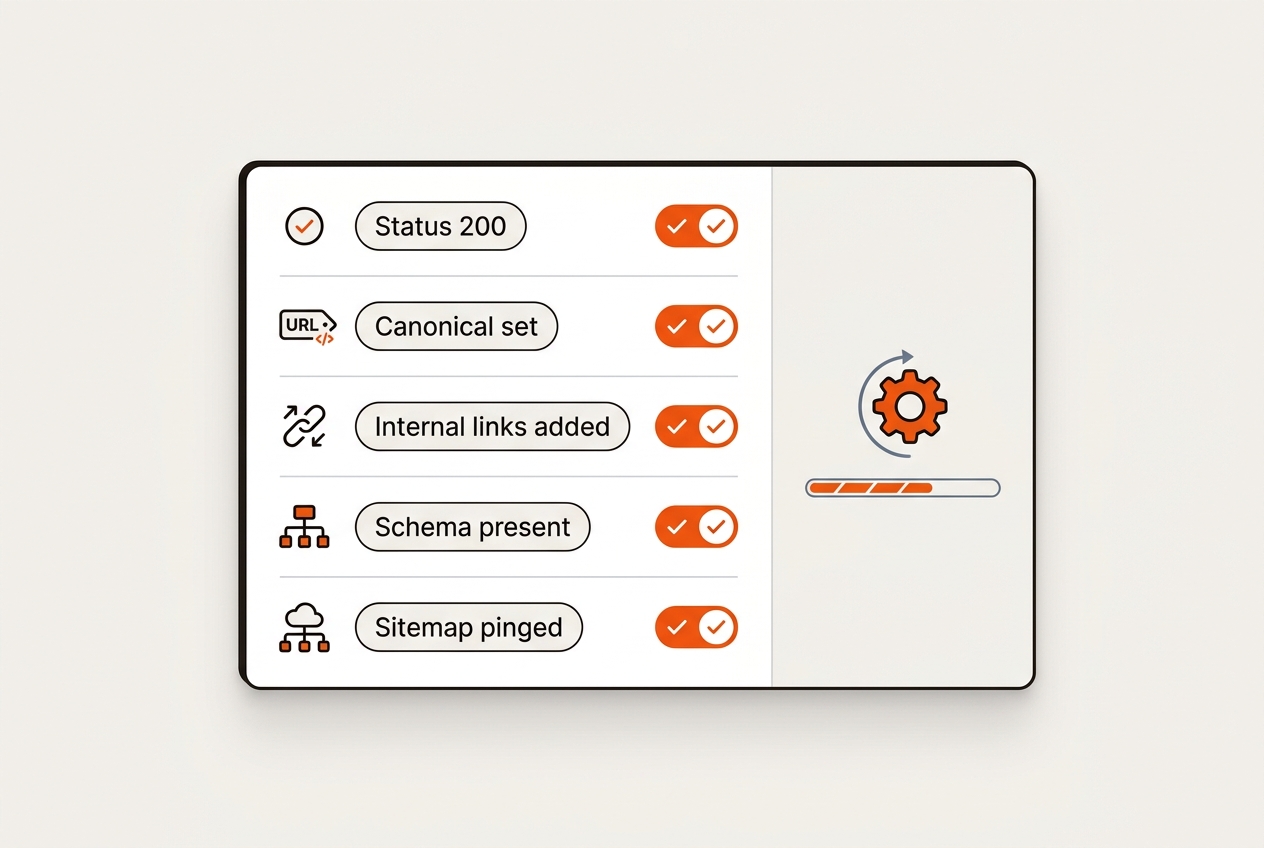
Time windows and constraints shape how fast you index; prioritize system fixes over button clicks.
Most clean URLs index within a few hours to a few days if discovery and renderability are solid. If a page lingers for 7+ days, check Live Test fetch/render, canonical selection, and click depth. For large batches, rely on internal links and sitemaps; the button is for exceptions.
Sitemaps declare existence; they don't create crawl budget. If the page lacks internal links or sits behind slow responses, Google defers crawl. Add contextual links from already-indexed hubs, keep depth under 3 clicks, and keep sitemaps fresh and under 50k URLs or 50MB per file.
Yes. If Google picks a different canonical, your URL may be crawled but excluded. Inspect URL to see Selected canonical. Align declared and selected canonicals, consolidate near-duplicates, and add distinct value (unique data, schema, or angle) to earn selection.
They do. If the HTML lacks primary content and hydration fails, Google may crawl but skip indexing. Use Live Test to confirm rendered HTML contains copy and links. Stabilize TTFB under 500ms and avoid 5xx spikes; unstable servers reduce crawl frequency and depth.
