
Short answer: Fix not indexed pages by matching the Google Search Console exclusion reason to a targeted remedy: verify eligibility (200 status, no robots or noindex, correct canonical), improve internal links and XML sitemaps, prune low-value URLs, make the page uniquely valuable, and request indexing. New pages may index after a short delay.
On small sites (<500 pages), Google suggests you can spot-check with site: searches while you verify basics. Source: Google Search Console Help.
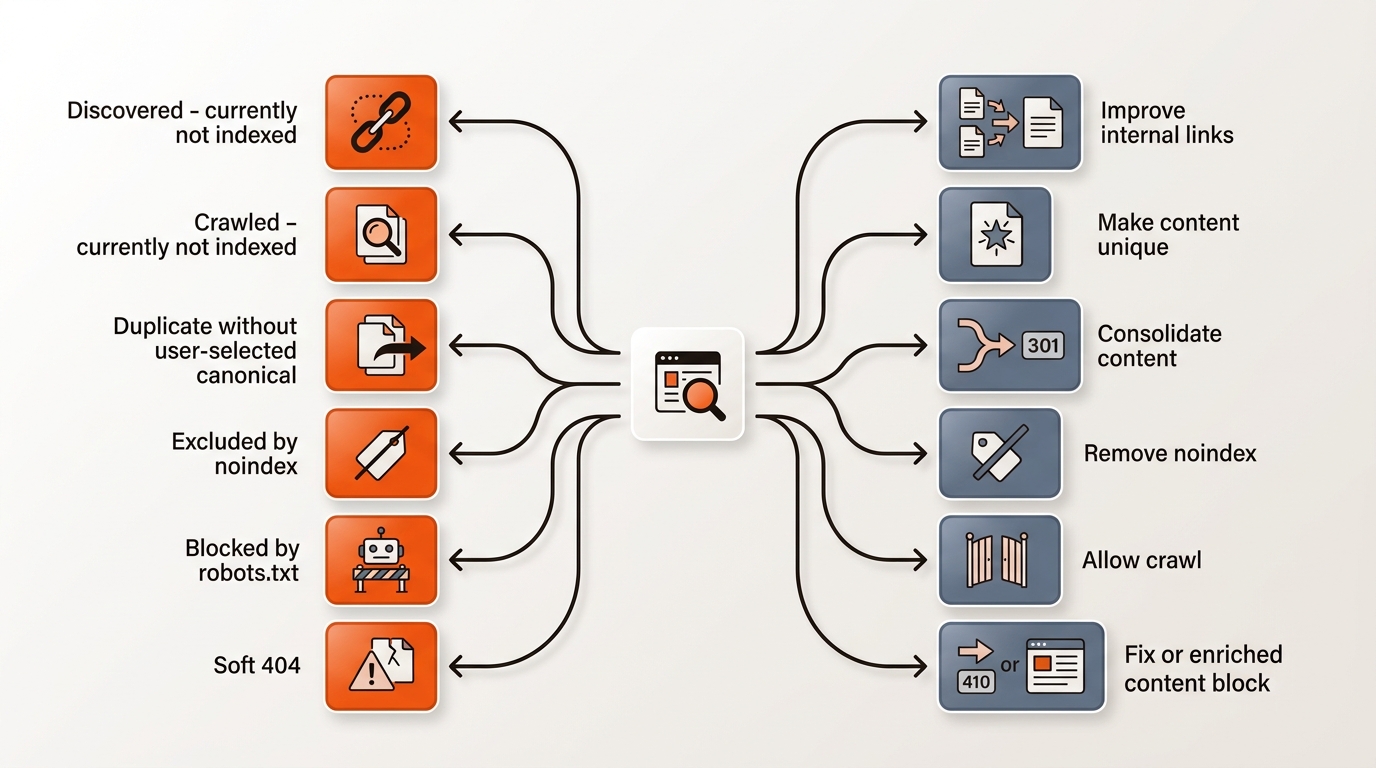
For Discovered - currently not indexed, you have discovery or crawl allocation issues. For Crawled - currently not indexed, you have quality, duplication, or canonical noise. Each demands a different path. Scope matters. A 3-person growth team publishing 20 posts/month may have 50+ low-value tags bloating crawl, while a 2,000-URL site hits duplication clusters from programmatic templates.
In practice, run URL Inspection for the exact URL, then validate: HTTP 200, no meta robots noindex.txt, expected canonical, in the primary XML sitemap, and at least 2 contextual internal links. Use Screaming Frog to surface inlinks and canonicals at scale; confirm crawl hits in server logs (e.g., BigQuery + Cloud Logging) or Logflare.
• Reference: Page indexing report - Search Console Help
• Deep dive: Onely on Discovered - currently not indexed
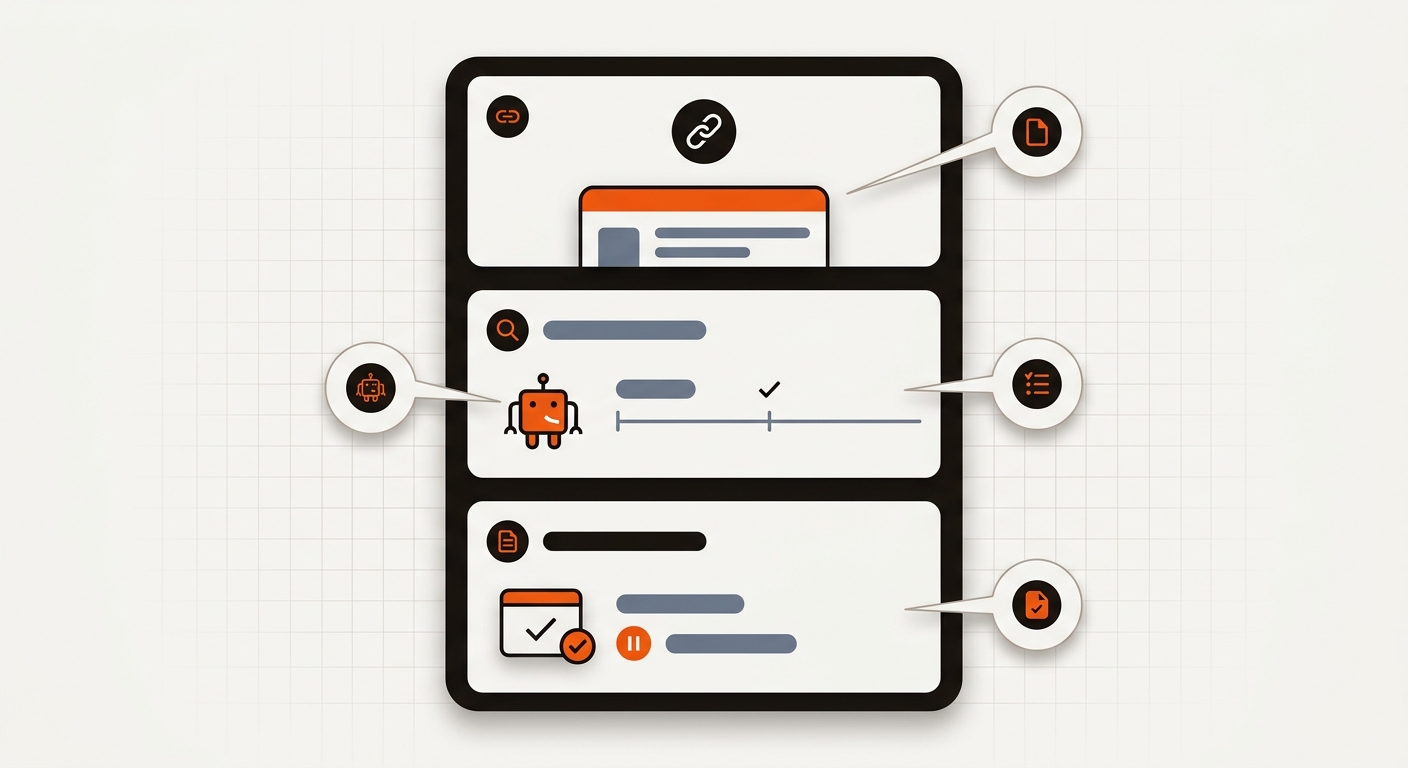
Teams burn cycles when they apply content rewrites or blanket resubmits to statuses that point to crawl and canonical problems. Example: Discovered currently not indexed is a crawl signal gap. Fix by adding 3 to 5 in-context internal links from your top 50 pages, placing the URL in the primary XML sitemap with accurate lastmod, and keeping TTFB under 500 ms. By contrast, Crawled currently not indexed is usually duplication or weak signals. Pick a single canonical, align internal links and hreflang to it, remove conflicting parameters, and make the page visibly distinct with unique summaries, media, and specs. Verify with URL Inspection.
Map the GSC reason to a concrete check and a fix with an expected timeline. Use this table for Monday-morning triage that actually moves pages into the index.
caption
For deeper context, see How To Fix Crawl Errors In Google Search Console.
Map status to action. Discovered currently not indexed: strengthen internal links, ensure the URL is in the main sitemap, fix slow responses, correct lastmod. Crawled currently not indexed: consolidate near duplicates, set rel=canonical, remove stray noindex, add structured data only when it clarifies meaning, and make the page meaningfully different. Duplicate without user-selected canonical: add a canonical that 200s, update internal links to the chosen URL, keep parameters crawlable until consolidation sticks. Soft 404: use 410 for dead items or 301 to the best replacement; enrich thin survivors with real inventory, specs, and FAQs. Page with redirect: collapse to a single 301 hop and refresh links and sitemaps.
Indexing issues recur when internal links, canonicals, and sitemaps drift; automate the hygiene in your CMS workflow. After you clear today’s queue, ship safeguards: required inlinks on publish, canonical validation, thin-URL pruning, and periodic refresh for pages stuck at Crawled - currently not indexed. The tradeoff: strict gates slow publishing by minutes, but you avoid weeks of index lag.
Mergeflo is an AI search visibility platform for startups. It delivers an autonomous SEO + AEO content engine: research to published, AI-citable pages in your CMS, with schema, internal links, and ongoing refresh. It measures and fixes visibility across Google and AI engines at startup pricing.
Most teams only find half the problem. If you are wrestling with Crawled but not indexed, read our deeper breakdown: Why Is My Website Crawled But Not Indexed In Search Console. It pairs well with a triage runbook and stops ghost-publishing.
• Authority context: new pages can sit in Discovered briefly; sometimes waiting while improving discoverability is correct. Source: ZipTie.dev.
You can move stuck URLs by pairing indexing requests with real signals: internal links, sitemaps, and clean canonicals.
Give new pages 3-7 days if they have solid internal links and are in your XML sitemap. After 7 days, run URL Inspection, add 2-4 contextual inlinks from indexed pages with impressions, and request indexing. If it remains Crawled - currently not indexed after a refresh, check duplication and canonicals.
Requesting indexing is fine for important URLs, but it does not override quality and crawl allocation. If discovery is weak or the page is duplicative, requests stall. Pair requests with inlinks from pages that already receive impressions and a clear self-referencing canonical for consistent results.
Add contextual internal links from pages that already receive impressions, and include the URL in the primary sitemap. If you run many thin filters or facets, remove them from sitemaps and consider noindex. This rebalances crawl budget and usually moves pages within 1-14 days based on GSC status updates.
Bake checks into your CMS: block publish without at least two internal links, enforce self-referential canonicals, auto-include in the right sitemap, and flag thin content. Monitor cohorts in GSC weekly by status. A 2-5 person growth team can run this in under one hour/week using Screaming Frog and GSC exports.
