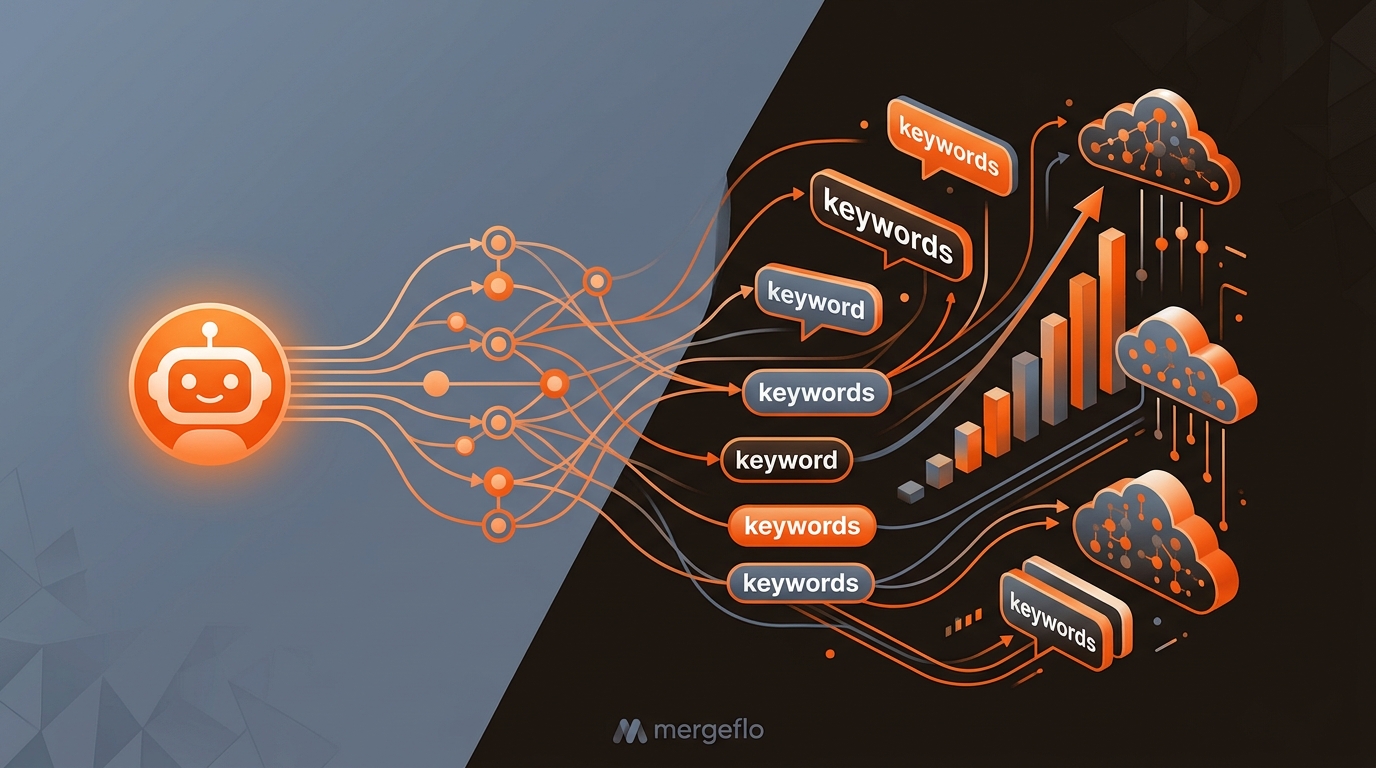
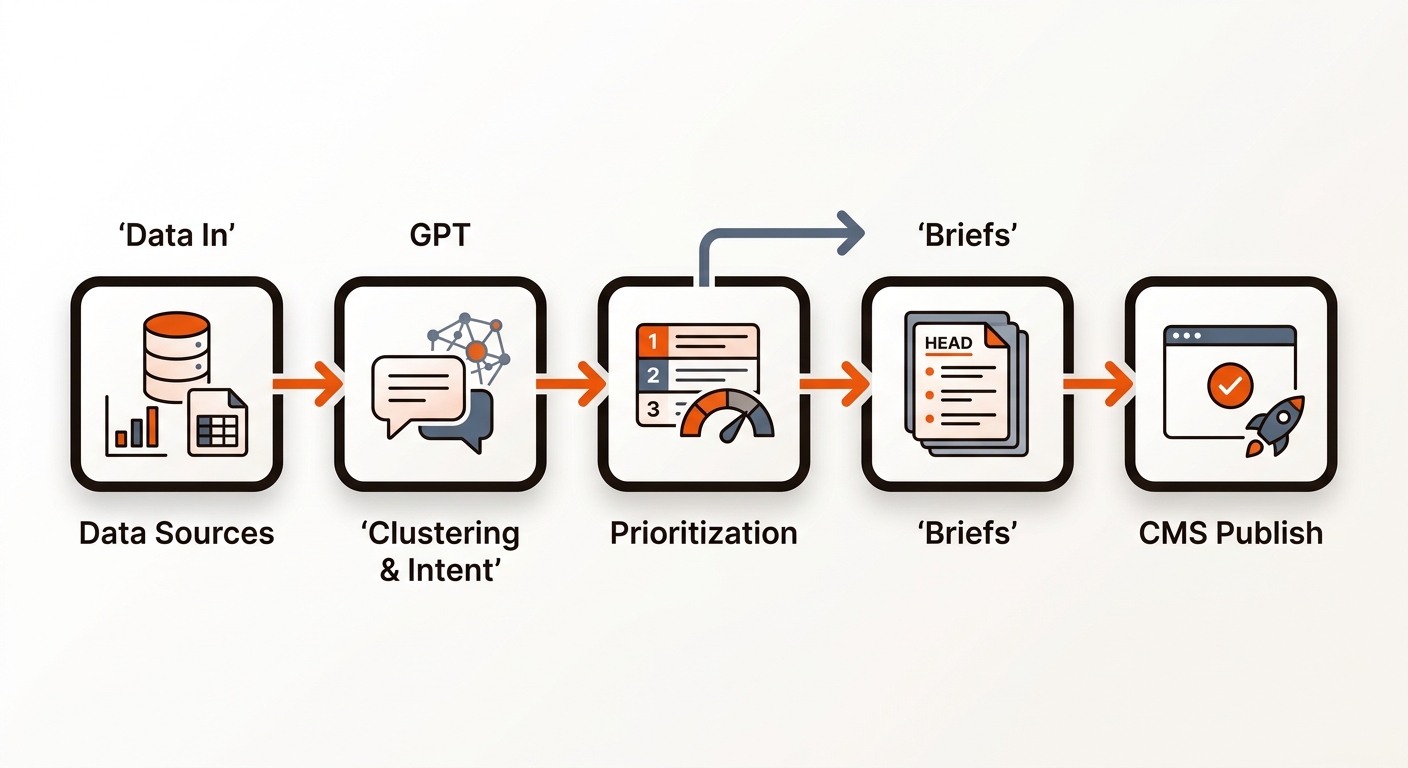
Short answer: Yes, you can use ChatGPT for keyword research to ideate, cluster, and map intent, but never for volumes or KD. Upload exports from Ahrefs, Semrush, or Google Keyword Planner, then have GPT group by topic, label intent, and draft briefs. Prioritize with tool metrics and sampled SERPs, then ship.
ChatGPT is great at structure and weak at truth. It invents volumes and KD, lacks live SERP context, and overproduces duplicative variants. Teams that ask it for 200 keywords with volume end up with noise that cannot be prioritized or defended in planning.
Treat GPT as an analyst.
ChatGPT accelerates thinking. Data tools arbitrate truth. Blend them or you will publish fast and miss traffic for months.
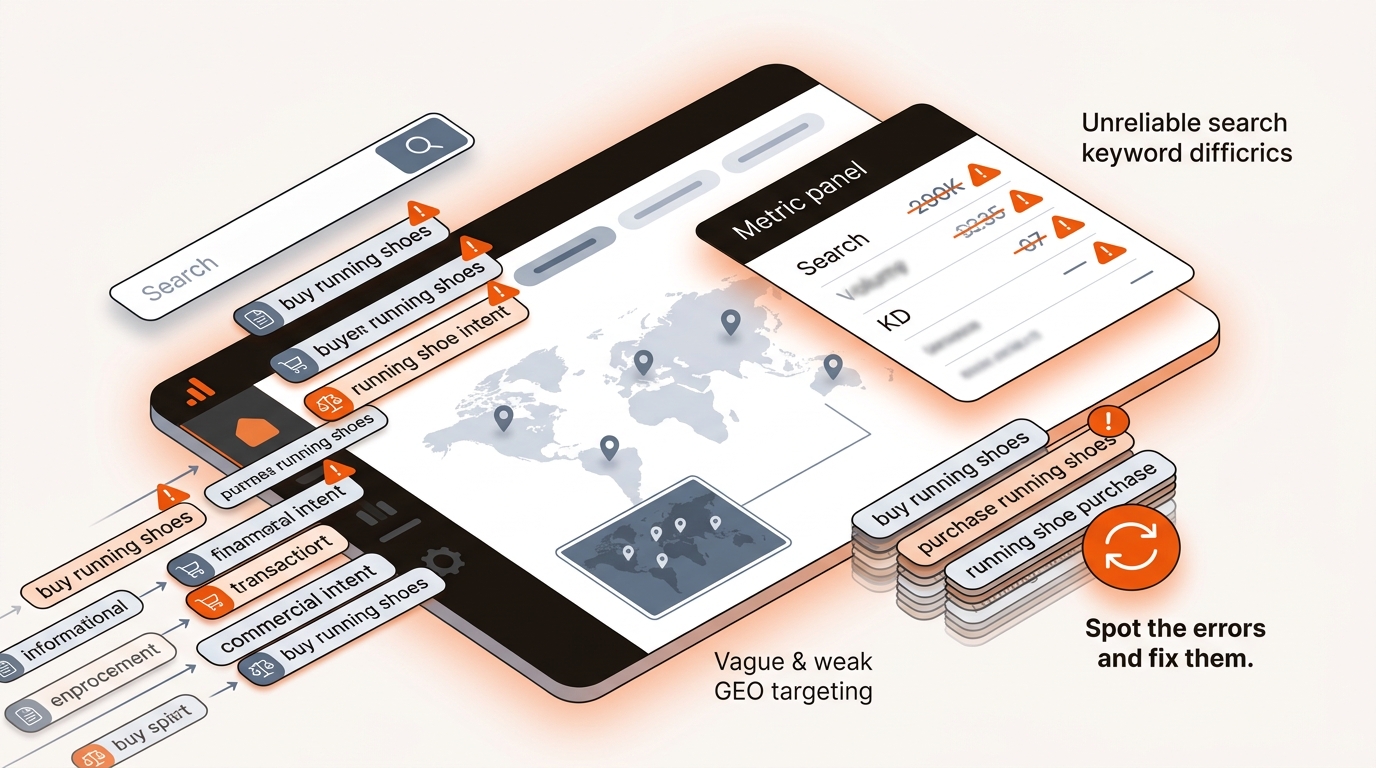
Teams trip up by asking for 100 ideas from a broad seed and trusting the list. ChatGPT will happily mix navigational, informational, and transactional intent, plus merge audiences. Example: from email marketing it returns platform reviews, how-to guides, and developer API terms in one batch. Without constraints, you get duplicates like best free email marketing apps and top free email marketing tools. Fix with narrow prompts that force audience, job-to-be-done, and lifecycle stage, then validate five candidates per segment against the live SERP to confirm format fit, dominant intent, and realistic competition.
Pair GPT language modeling with trusted datasets and a lightweight ops loop. The win is speed-to-structure plus data-backed prioritization.
Comparison: Use GPT for structure, tools for metrics, workflow for shipping
Cite your data sources when presenting a plan. Pull metrics from Google Keyword Planner and your core tool (Ahrefs or Semrush), then let GPT do the synthesis. If you use the OpenAI API, standardize outputs in JSON to slot into sheets or your CMS. See OpenAI Docs.
For deeper context, see How Do I Find Competitor Keywords.
Ideas do not rank; shipped clusters with schema and links do. A small team needs a pipeline that turns exports into clusters, briefs, publishing, and refreshes while tracking Google visibility and AI citations.
Mergeflo runs an autonomous SEO + AEO content engine: keyword research, drafts with FAQ schema and suggested internal links, and publishing to Webflow when you approve. It tracks your Google positions and, on paid plans, checks whether ChatGPT, Gemini and Claude mention your brand. If you are chasing opportunity pockets, pair GPT clustering with a framework for finding high volume low competition keywords. Then turn those clusters into briefs and drafts your team reviews.
Turn ideas into output you can ship by templating the prompt and the handoffs. Define variables for seed, audience, job-to-be-done, lifecycle stage, and content type, then force a CSV with columns keyword, intent, format, angle, H1. Batch 50 seeds per run with a low temperature to reduce drift. Normalize results to lowercase, trim to 6 to 14 tokens, and dedupe with fuzzy matching at 90 similarity. Spot check the top 20 against SERPs, tag the winning format, then push rows to your brief generator and issue tracker with owner and due date.
Use GPT for structure and speed, keep decisions tied to tool metrics and live SERPs.
No. Treat ChatGPT for keyword research as an analyst that structures ideas. Use Ahrefs or Semrush for volumes, KD, and competitors, then feed those exports to GPT for clustering and intent labeling. Prioritization decisions should always reference trusted metrics and sampled SERPs.
Upload a CSV with columns for keyword, volume, KD, country, and seed. Ask for 3-7 topic clusters per seed, intent labels (informational, commercial, transactional), and canonical targets per cluster, returned as JSON. Cap variants per cluster at 10 to avoid duplicate noise, and request draft Title and H1 suggestions.
Only if you provide it. Add locale, audience, and product constraints to the prompt, plus 5-10 example queries per region or vertical. Then validate outputs against local SERPs and Google Keyword Planner location settings. Without these guardrails, GPT generalizes and misses regional search behavior.
Manual prompting stalls as the page count grows and indexing lag and refresh needs compound. You need a system that tracks cluster health, automates internal links, and refreshes decaying pages. That is why operators wire GPT steps into a pipeline that publishes directly to the CMS with schema and AEO coverage.
