
Short answer: Yes, link building still works when links are editorial, topically relevant, and pointed at the exact subpage in your cluster. Bulk low-quality placements rarely move rankings or AI citations. Treat links as a supporting signal and prioritize placements that drive real referral clicks and match your target search intent.
Chasing volume over relevance burns budget and adds risk without moving target pages.
Most teams still report link count and DR, then ask does link building still work when rankings stay flat. The signal that lands is editorial relevance: links from pages covering your topic, targeting the exact subtopic URL, and sending real clicks. Anchor variety helps, but topical fit beats raw DR.
Google’s link-spam policies keep tightening, and AI engines weigh source quality for citation. Read the official Google link schemes guidance and current tactics analysis from Semrush. Anchor manipulation and paid placements without editorial review are detection-prone and short-lived.
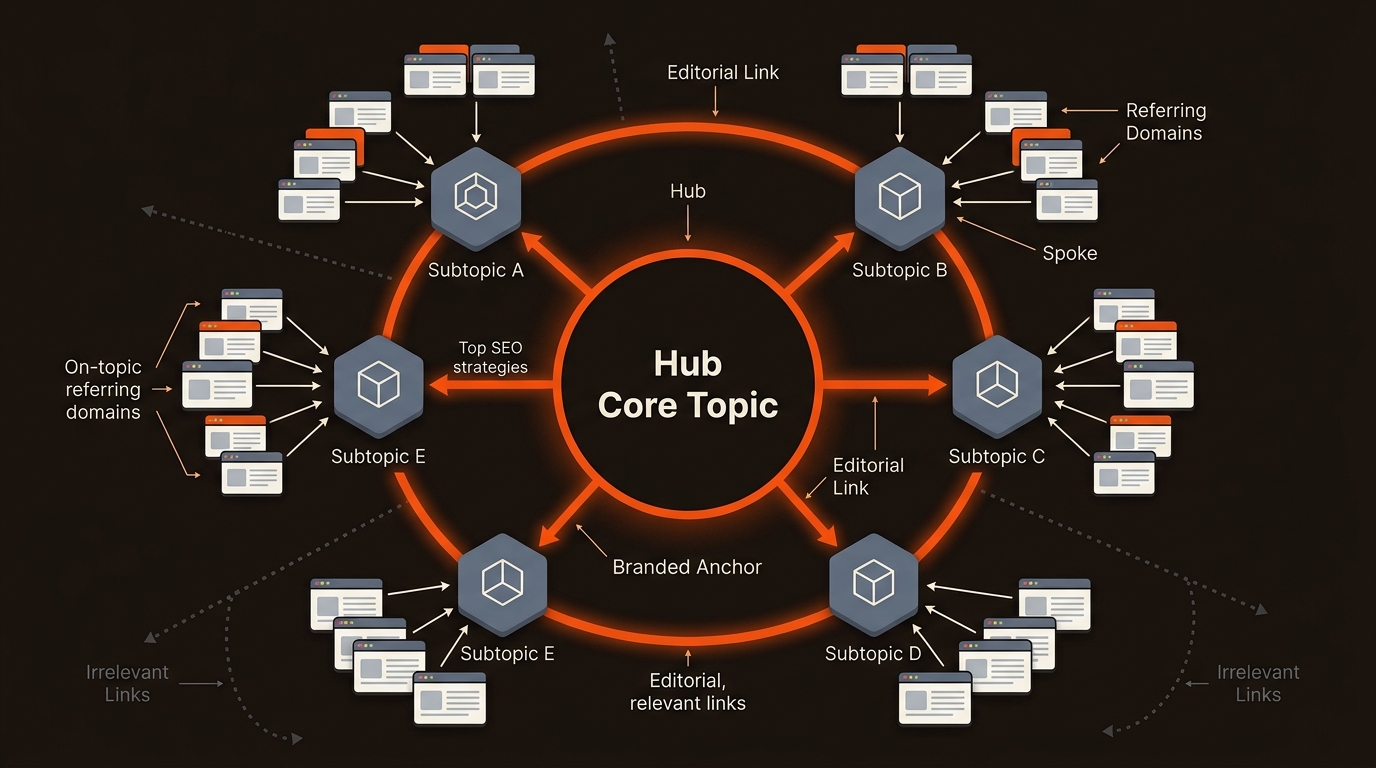
Evaluate link tactics by editorial control, topical fit, and click potential, not just DR.
Use this table to pick tactics that move rankings and citations on a startup timeline.
caption
Ship pages that solve the exact job behind a query, then wire them into a deliberate internal link graph. Build topic hubs, put primary pages one click from the hub, and seed secondary pages with 3 to 5 contextual links back up. Pair this with compact link magnets that fit your ICP: a calculator, a benchmark table, a changelog feed. Avoid brittle tactics like anchor-stuffed guest posts, link wheels, or paid insertions on stale domains. Plan timelines by lever: technical cleanup and internal links 2 to 4 weeks, refreshes 4 to 8, net-new clusters 6 to 12, durable data assets compounding over quarters.
Link earning works when your cluster, schema, and internal links already signal authority.
Most lift happens when links point to the right subpage inside a clean cluster with strong on-page, schema, and internal anchors. Mergeflo is an AI search visibility platform for startups. It tracks Google search and, on paid plans, AI answers from ChatGPT, Gemini and Claude. It’s startup-priced.
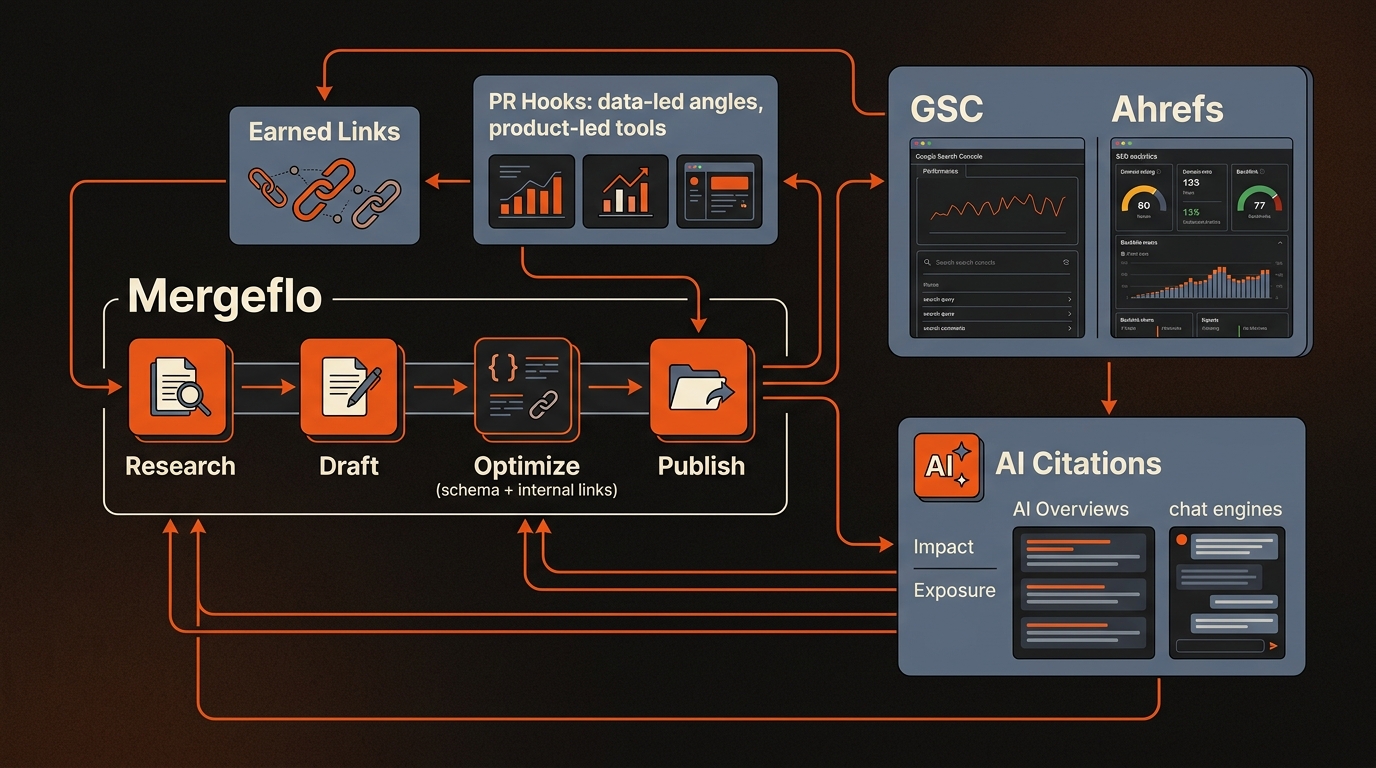
Mergeflo is an autonomous SEO platform that finds search gaps, drafts articles with FAQ schema for your review, and publishes the ones you approve to Webflow. Pair that with PR-ready assets and a weekly expert-commentary cadence, and you compound authority. For outreach playbooks, see What Are Your Top 3 Link Building Strategies.
• Prioritize targets: money pages and hub pages already sitting between positions 5-20 for mid-difficulty terms.
• Validate fit: only pursue placements whose page titles and headings match your subtopic and ICP.
• Measure causality: annotate in GSC, track new referring domains in Ahrefs, and compare to matched control pages.
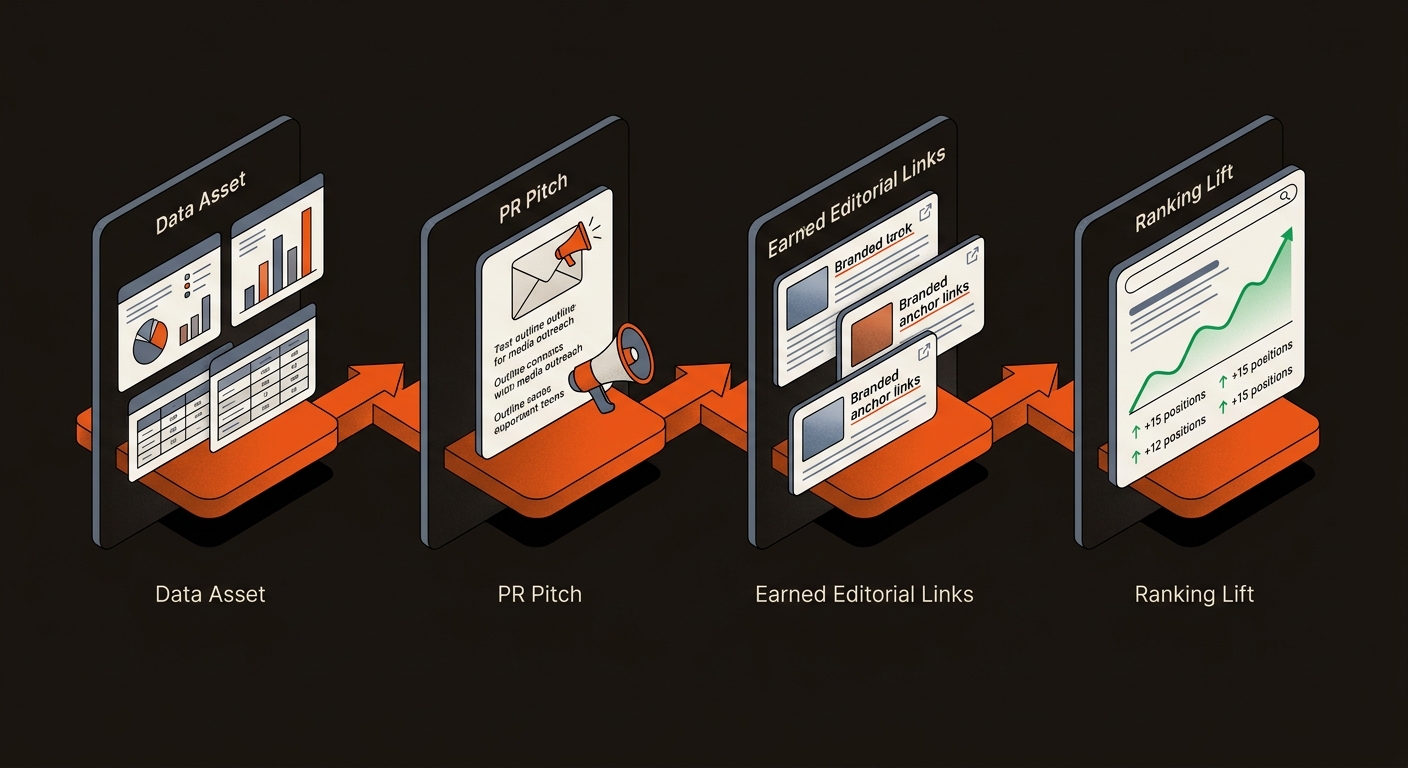
Treat link earning as the top of a content operations loop. For each priority topic, produce a canonical guide plus two linkable sidecars: a one-screen checklist and a 10 to 20 row dataset with a chart. Stamp each artifact with a unique stat, a clear definition, and a quotable line from a subject matter expert. Publish the raw data and a short methods note. Build a rolling outreach roster with beats, angles, and last-contact dates, then run weekly pitches in small batches. Track trailing indicators like unprompted links per page after 90 days and the share of branded mentions.
Direct answers operators can use this week.
Run page-level annotations in GSC, track net-new referring domains in Ahrefs, and hold back 3-5 similar pages as controls. Compare rank deltas over the same window and normalize for impressions. If linked pages outpace controls by 3+ positions over 4-6 weeks, links likely contributed.
Aim for 4-12 editorial links per month distributed across a cluster of 8-15 pages. Concentrate 1-3 links on priority pages while maintaining natural anchor variation. Spiky bursts to a single URL look off; steady, topic-aligned acquisition indexes and endures.
They help coverage and brand discovery and can support entity signals. Use them for completeness and a trickle of referral traffic. The ranking move comes from editorially placed, topic-relevant links that mention your brand and point to the right subpage.
Links don’t directly force citations, but they strengthen source authority and discovery. Combine consistent editorial links with schema, clear author credentials, and on-topic hubs.
