
Short answer: Guest posting on vetted, niche-relevant sites, relationship-driven digital PR (expert quotes, press mentions), and broken link plus unlinked-mention reclamation are the top 3 link building strategies. They deliver contextual placements, controllable anchors, and repeatable lists, and can scale with tight QA and CRM discipline.
The failure is chasing volume without relevance, process, or assets worth citing. When founders ask what are your top 3 link building strategies, the winning answer starts with fit. Editors reject pitches when topics mismatch their readers, when you pitch DR instead of audience, or when your asset lacks data and clear takeaways they can cite.
Track outreach like a funnel. A small team sending targeted pitches through BuzzStream or HubSpot CRM should track acceptance by tactic from month one. Use Ahrefs to qualify by topical pages and traffic trend, Hunter or Apollo for correct contacts, and GSC to confirm target pages that need authority.
"Guest posting is the most scalable link building tactic available to businesses at any size or stage." - Marketing Illumination
Quality links compound from predictable pipelines. Measure acceptance rate, average emails per placement, and cost per link. Build one linkable asset with fresh numbers or integration detail, then pitch it for months with variants and publisher-specific angles.

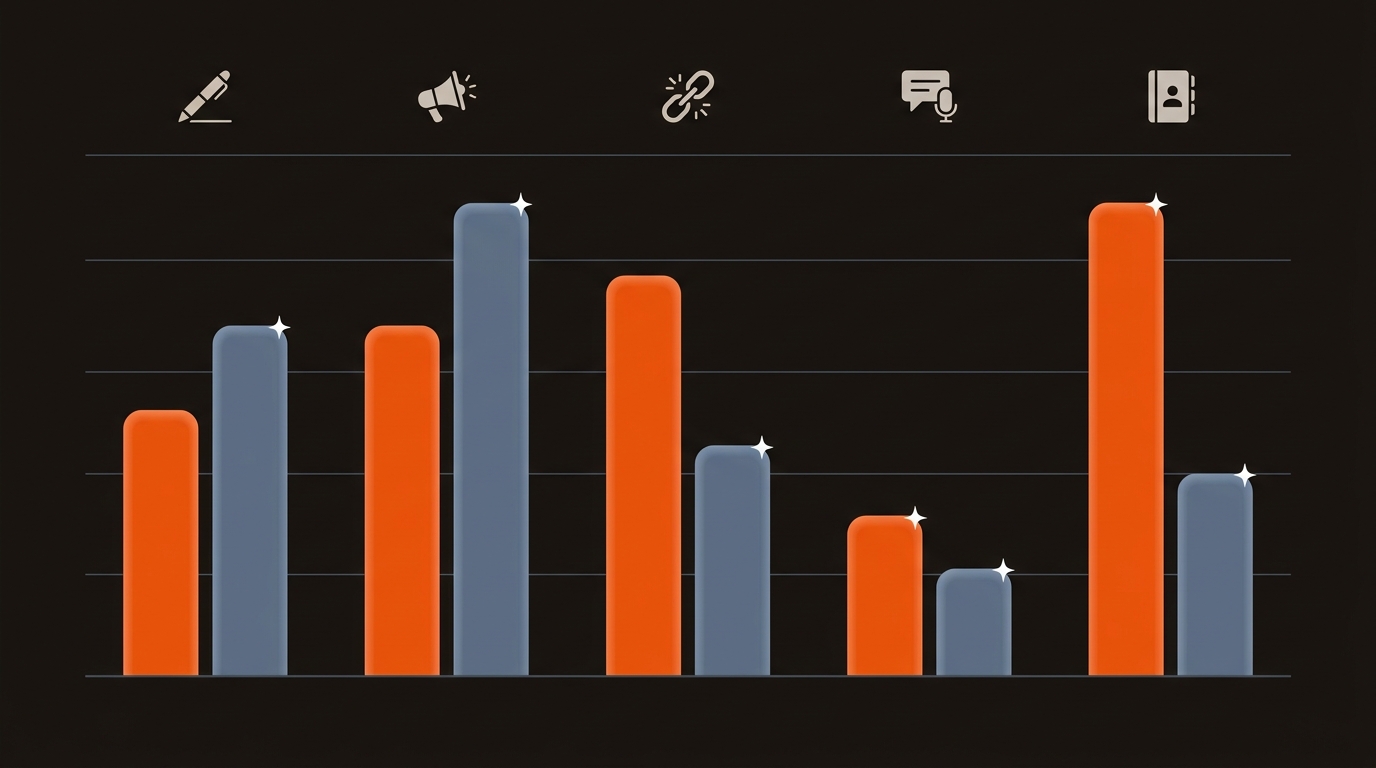
Use the tactic that matches your assets, niche, and deadline for the fastest path to safe, contextual links. The top 3 link building strategies perform differently: guest posts land steady context, PR lands higher DR but slower, and reclamation wins quick, low-cost fixes where you already have mentions or replacements. These ranges are rough planning assumptions; check them against your own analytics.
Planning Ranges: Acceptance, Cost, and Speed by Tactic (B2B SAAS)
These are rough comparisons, not benchmarks. Calibrate for your niche and authority.
Operational tradeoff: digital PR delivers higher DR and brand reach, but lower acceptance and slower cycles; guest posts scale predictably but require editor-ready outlines; reclamation depends on a steady feed of 404s and unlinked mentions you can replace with credible content.
Use content led outreach when a page already sits in positions 6 to 20. Plan a handful of contextual placements from topically aligned, mid authority sites. Keep most anchors branded or URL, with few exact match, to avoid over optimization. Expect a much lower link yield from cold lists than from partner or integration lists. For net new pages, lead with PR style hooks or ecosystem swaps to land a few high authority placements, then layer resource page links for durability. PR moves fast; guest content is slower but gives anchor control.
Turn link tactics into a weekly plan of drafted articles and outreach sequences you run yourself. Mergeflo finds content gaps, drafts articles for your review, and drafts outreach sequences that send only when you run them. Mergeflo is an autonomous SEO platform that finds search gaps, drafts articles with FAQ schema for your review, and publishes the ones you approve to Webflow. If you are weighing link value this year, our take on are backlinks still important in 2026 adds context on where links move the needle fastest.
In Mergeflo, draft an outreach sequence for each campaign: partner, reclamation, content outreach. Find and enrich the right contacts, dedupe by root domain, and use a 3 touch cadence; messages send only when you run the sequence. Use snippets that pair a reason to care with a specific page title and placement suggestion. Track links per 100 contacts, response to link rate, and anchor mix. Review weekly, kill underperforming segments, and reallocate volume.
It depends on your niche, your authority and how many qualified pitches you send; we found no benchmark we trust. Month two improves as editor relationships and your outline library compound. Track acceptance by tactic weekly to reallocate toward the strongest verticals.
Prioritize topical relevance, category traffic, and outlink patterns. In Ahrefs, check Top Pages for your target topic, 6-12 month traffic trend, and outbound link velocity. Confirm index stability with site: searches and GSC. Avoid sites with AI-spam footprints, thin guidelines, or aggressive outbound linking in recent posts.
Earn editorial placements with original value, use branded and partial-match anchors, and keep exact-match sparse on deep pages. Avoid PBNs, sitewide links, and paid insertions that leave footprints. Document anchor mix and referring page context in your CRM so you can course-correct before patterns look manipulative.
Data briefings with proprietary numbers, integration guides with partner ecosystems, teardown case studies, and expert roundups convert best. Include 1-2 figures and a clear takeaway an editor can feature. Tie digital PR to timely hooks like product launches or fresh benchmarks to lift acceptance into the 5-8 percent range.
Most teams asking what are your top 3 link building strategies do not need more tactics. They need a weekly pipeline, asset-first pitches, and a CRM view of acceptance and anchors that routes authority to revenue pages. Build that, then scale volume.
