
Short answer: Yes, schema matters for SEO by enabling rich results that raise CTR and improve parsing. Use it to clarify entities, prices, ratings, FAQs, video, and authorship so Google and AI systems extract you cleanly. Prioritize high-intent page templates and validate in Search Console’s Enhancements.
Use schema to win eligibility and CTR, then prove lift with GSC. Most teams ship only Organization and Breadcrumb and stop. That rarely moves outcomes. You win when markup unlocks richer SERP units tied to intent (FAQ, Product, HowTo) and when it cleanly disambiguates brand, author, and entities for AI surfaces.
Incorrect or generic markup wastes cycles. Using the wrong type, missing required properties, or failing validation kills eligibility. Confirm with Google’s Rich Results Test and track the Enhancements report in GSC. Google frames structured data as a feature enabler. See Google Search Central and Search Engine Journal for specifications and scope.
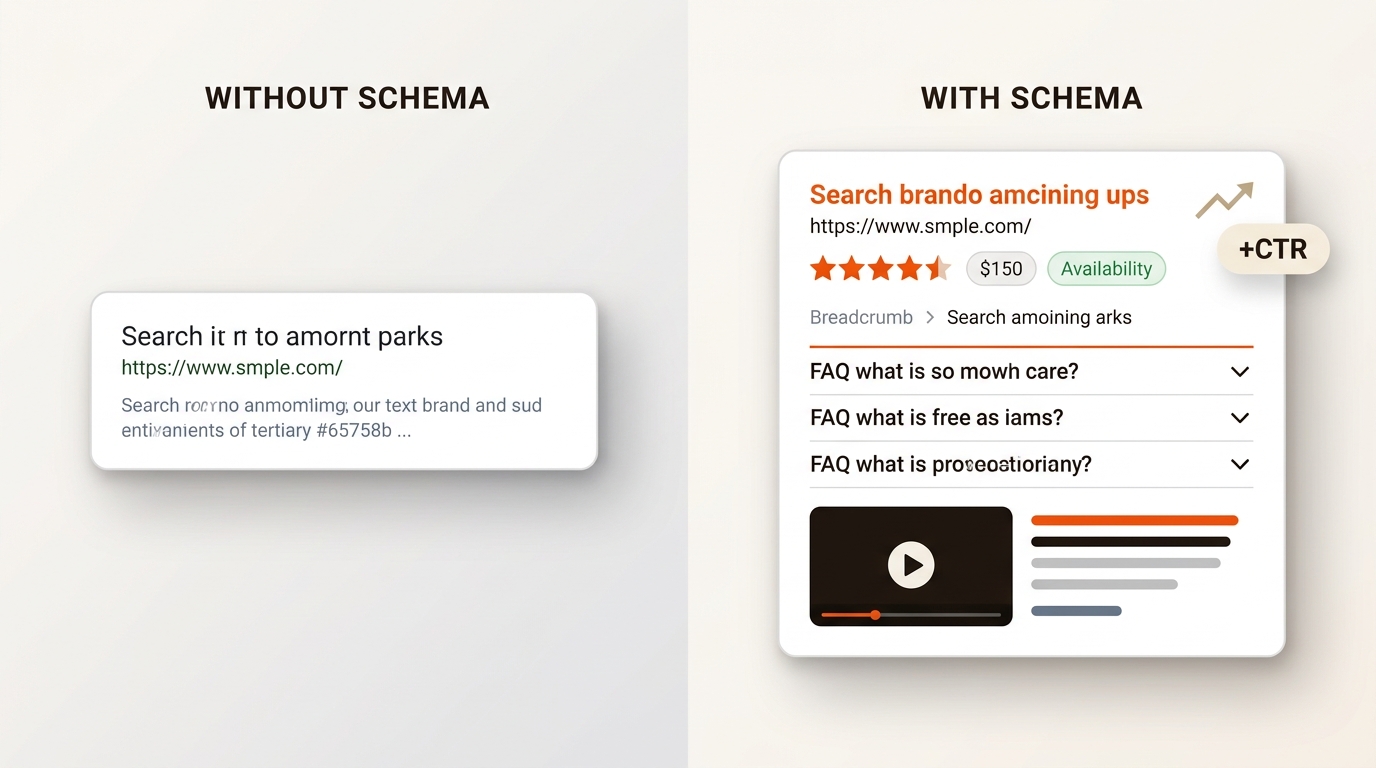
Google uses structured data to understand content and enable special features; it is not a stand-alone ranking factor for blue links.
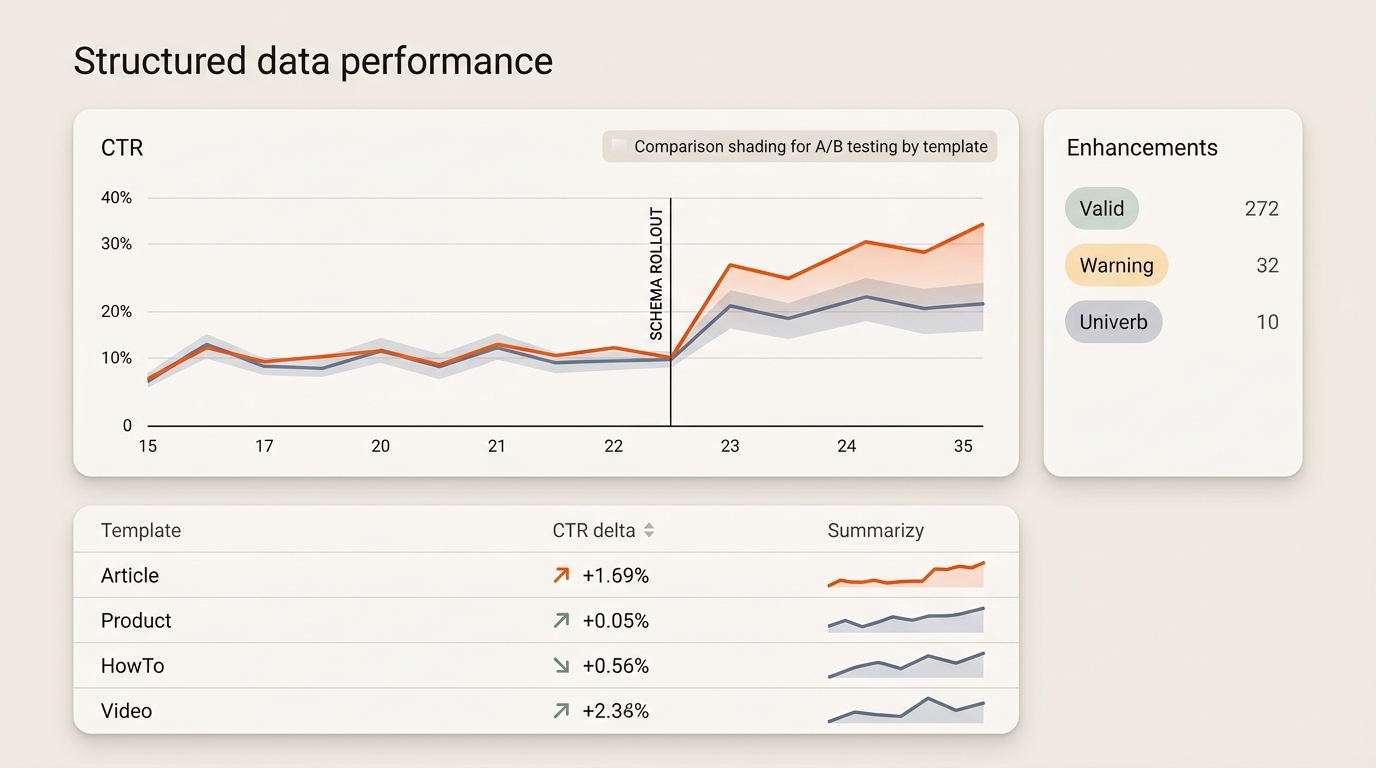
A 3-person growth team scenario: A B2B SAAS team shipping 20 Webflow posts/month added FAQPage to 12 articles and Product to 4 pricing/comparison pages. Over the next 28 days, matched-query CTR rose from 2.1% to 3.0% on FAQ posts and from 3.4% to 4.6% on Product pages (GSC filtered by page + query). Impressions were stable, so lift mapped to presentation.
Operational tradeoff: Hand-coding JSON-LD per post breaks beyond ~50 URLs. You will miss required fields and drift from on-page content. Programmatic injection at the template level is the only durable path if you want repeatable CTR lift you can measure.
If your team is asking, does schema matter for SEO, treat it as a CTR and eligibility system inside your publishing pipeline. Roll it out by template, measure pre/post CTR on matched queries, and cut any markup that does not produce visible SERP units within 21-35 days.
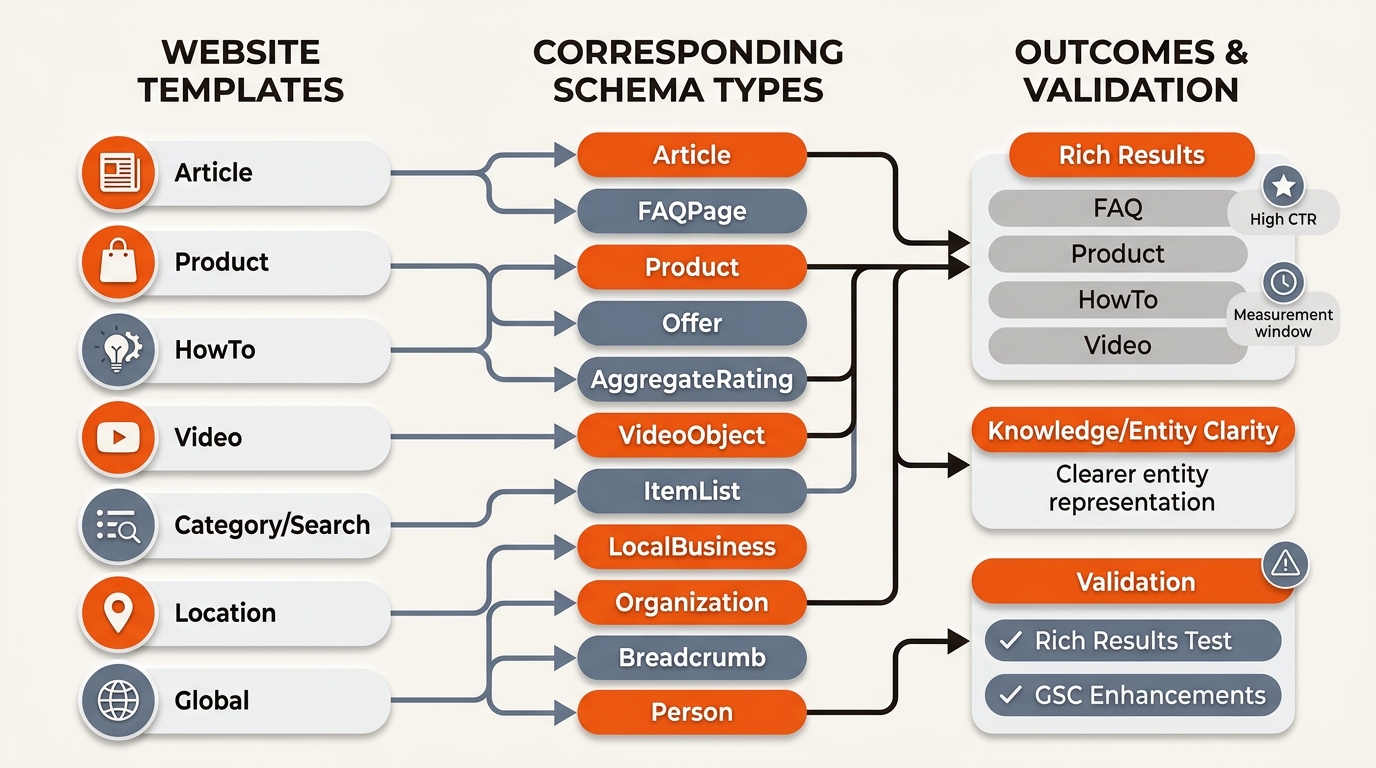
Prioritize templates that unlock richer SERP units for your highest-intent queries. Roll out programmatically per template so you can attribute CTR deltas and AI citations at scale.
caption
| Template Type | When To Implement | Expected Impact (CTR) | Eligibility/Risk Notes | Measurement Window | |----------------------|--------------------------------------------------|-------------------------------|-------------------------------------------------|--------------------| | FAQPage on Articles | You answer discrete FAQs tied to the topic | Moderate to high on queries with FAQs | Must reflect visible on-page FAQs; avoid overuse | 14-28 days | | Product + Ratings | Feature pages, pricing, comparison content | High on commercial queries | Requires accurate offers, ratings, and org data | 14-28 days | | HowTo | Step-by-step guides with clear steps | Moderate; can trigger rich HowTo | Mobile SERP variability; steps must be visible | 21-35 days | | Organization + Person| Brand and author disambiguation | Indirect; supports knowledge panels | Keep consistent across site and external profiles | 30-60 days | | VideoObject | Posts with embedded videos | Moderate where video carousels appear | Needs thumbnails, duration, and transcripts | 14-28 days | | Breadcrumb + Article | All blogs and docs | Low direct impact; aids parsing | Baseline hygiene for consistency and parsing | 14-28 days |Focus on pages that map to revenue or signups. Product on pricing/comparison, FAQPage on articles targeting question keywords, and VideoObject where you already have engagement from video are the usual first wins. Keep Organization and Person consistent across the site and external profiles to stabilize knowledge graph understanding.
For deeper context, see Is SEO Dead Now With AI.
Ship schema as part of a repeatable publishing pipeline and track CTR lift per template. The operational loop: define eligible templates, auto-generate JSON-LD server-side, validate pre-publish, ship, then read GSC Enhancements and query-level CTR weekly. Pause templates that do not earn eligibility or display after two reporting cycles.
Mergeflo is an AI search visibility platform that runs this for you: Autonomous SEO + AEO content engine: research to published, AI-citable pages in the customer's CMS, with schema, internal links, and ongoing refresh. It also targets AI surfaces, which goes beyond schema alone. For the AI angle, see our take: Is AEO Better Than SEO.
Operators ask these schema questions when tying markup to outcomes.
Not directly. Google treats structured data as a way to qualify for special results and better parsing. The lift shows up as richer SERP presentation and CTR improvements. Validate markup and watch CTR and impressions in GSC to confirm impact.
FAQPage on posts with real Q&A is usually the quickest visible change. If you have comparison or pricing pages, Product (with Offer/AggregateRating when eligible) tends to produce larger commercial-impact gains. Ensure the content exists on-page and matches the markup to avoid ineligibility.
Roll out by template, and keep a control cohort. Use GSC to compare CTR and impressions 28 days pre vs. 28 days post on matched queries. Avoid overlapping changes (title rewrites, new internal links) during the window, and confirm eligibility in the Enhancements report.
It helps by clarifying entities, authorship, and facts, making extraction cleaner. But AI visibility also depends on topical authority, internal linking, and answer quality. Schema is necessary hygiene but will not deliver consistent citations by itself. Pair it with cluster depth and answer-first content for durable gains.
