
Short answer: You can't force Google to reindex. You can request a recrawl with Search Console's URL Inspection -> Request Indexing, update your XML sitemap (accurate lastmod), and add prominent internal links to the changed URL. None guarantee timing or inclusion. Fix indexability (200 status, no noindex, correct canonicals) before you request.
Crawl signals drive reindexing speed; gimmicks do nothing. Teams spam Request Indexing while robots, canonicals, or weak internal links quietly block or down-rank the page. Treat this like a system with three inputs: discoverability, indexability, and demand signals.
"Requesting a crawl does not guarantee that inclusion in search results will happen instantly or even at all." (Google Search Central)
Two checks prevent most delays: confirm a 200 status and indexability in URL Inspection, then add links from strong internal hubs. For scaled edits, keep sitemaps fresh with truthful lastmod so Google can prioritize change sets over stale URLs. See Google docs for URL Inspection and Sitemaps. Asking "how do I force Google to reindex" misses this system view.
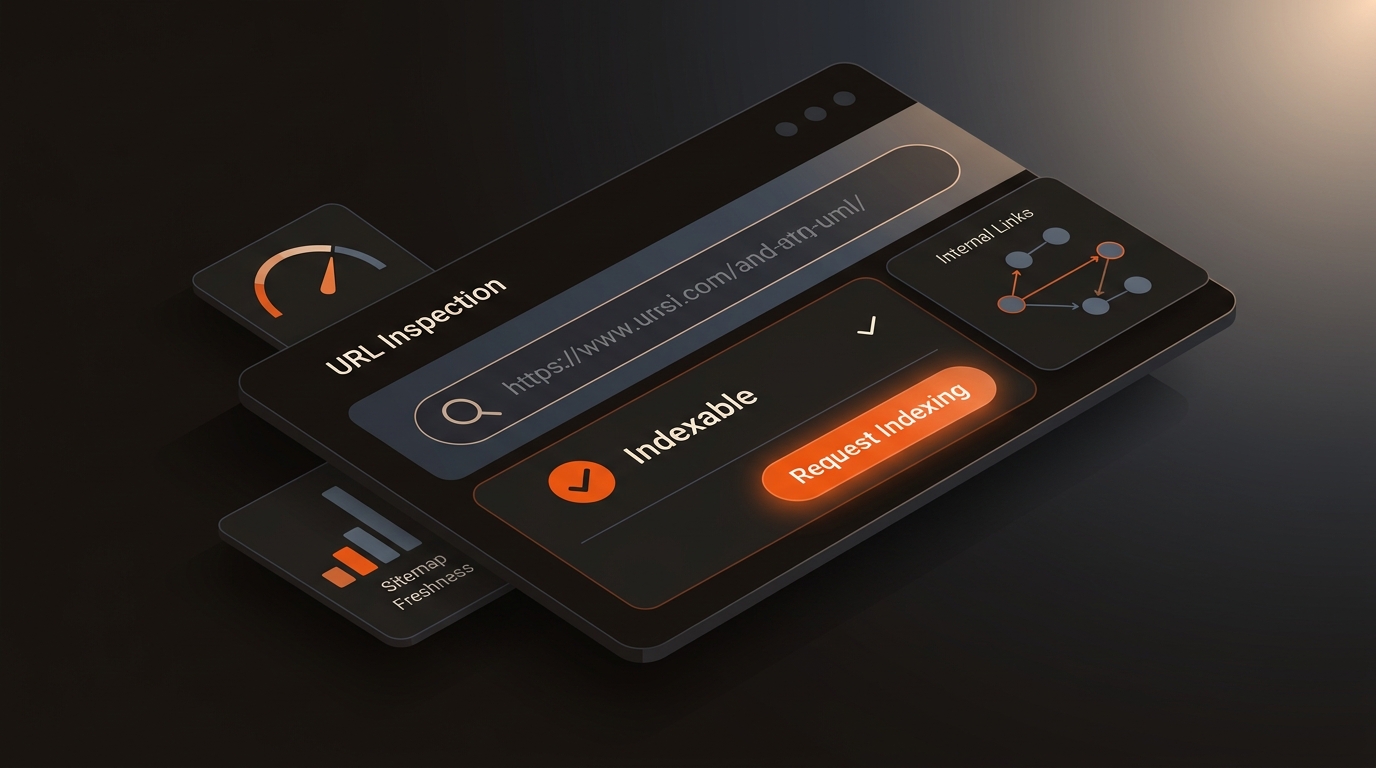
Use supported prompts with realistic windows and clean prerequisites. Unsupported hacks waste cycles and risk spam flags.
caption
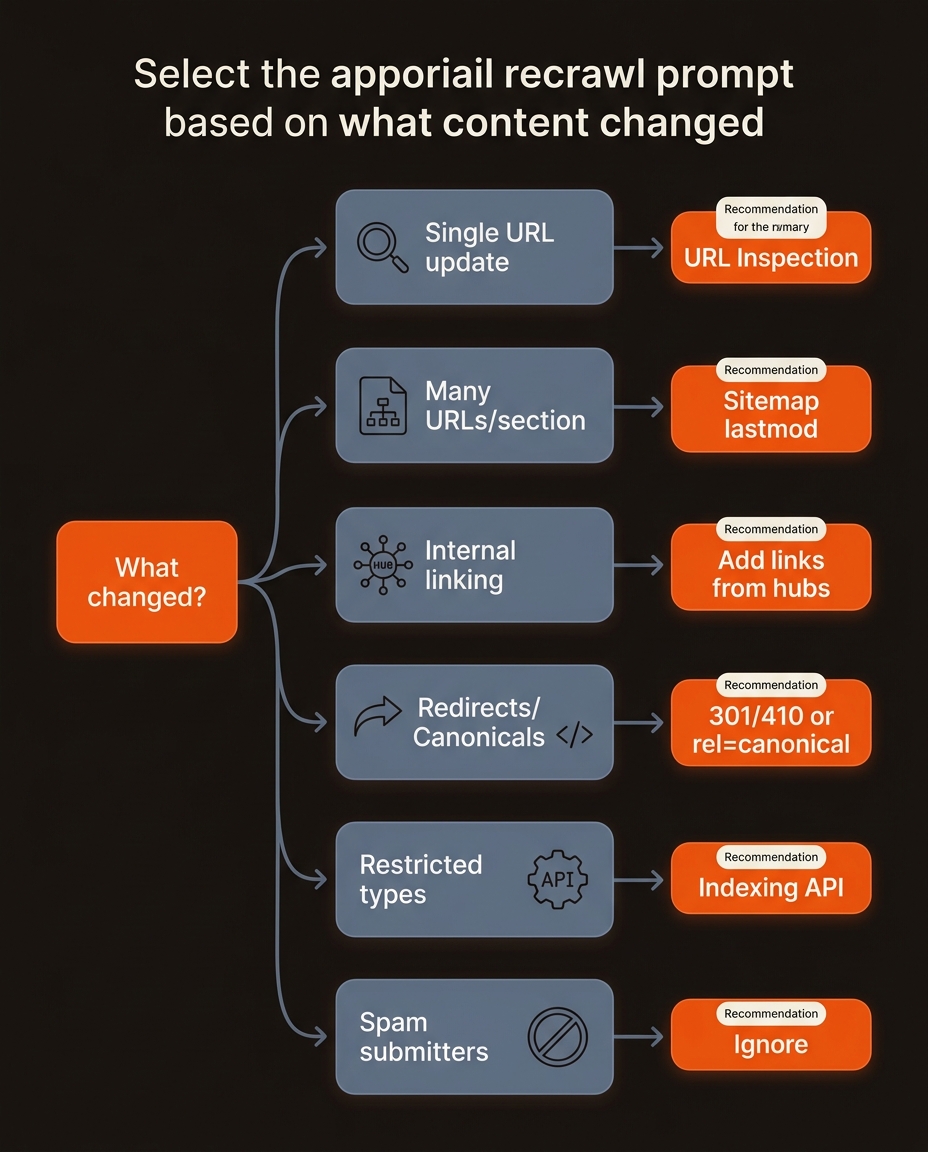
Operational tradeoff: refreshing lastmod across thousands of URLs every day can flatten priority and slow crawls to the pages that actually changed. Batch meaningful updates weekly, keep section-level sitemaps small and accurate, and concentrate internal links on updated URLs.
Practical workflow for Monday morning:
• Crawl your site with Screaming Frog to catch non-200s, accidental noindex, wrong canonicals, and orphaning.
• In GSC, run URL Inspection on the target URL, then Request Indexing only after fixes.
• Update the XML sitemap with truthful lastmod and resubmit the sitemap index in GSC.
• Add 1-3 internal links from authoritative hubs (docs home, features, pricing, category hubs).
• Track Coverage and Performance in GSC. If nothing changes after a few weeks, repeat internal linking and check duplicates with Ahrefs or SEMrush.
Fast recrawls follow clean structure, fresh sitemaps, and strong internal linking. If you publish in clusters with hub pages, schema, and consistent lastmod, you won't chase reindexing. Google revisits on a cadence that matches your change velocity.
Mergeflo is an AI search visibility platform for startups. It is an autonomous SEO + AEO content engine that finds gaps, drafts articles with FAQ schema and suggested internal links, and publishes the ones you approve to Webflow. Sitemaps, lastmod and indexability checks stay in your own stack; Mergeflo suggests internal links that a person approves. If you're fixing an ongoing coverage problem, start with how to resolve an indexing issue.
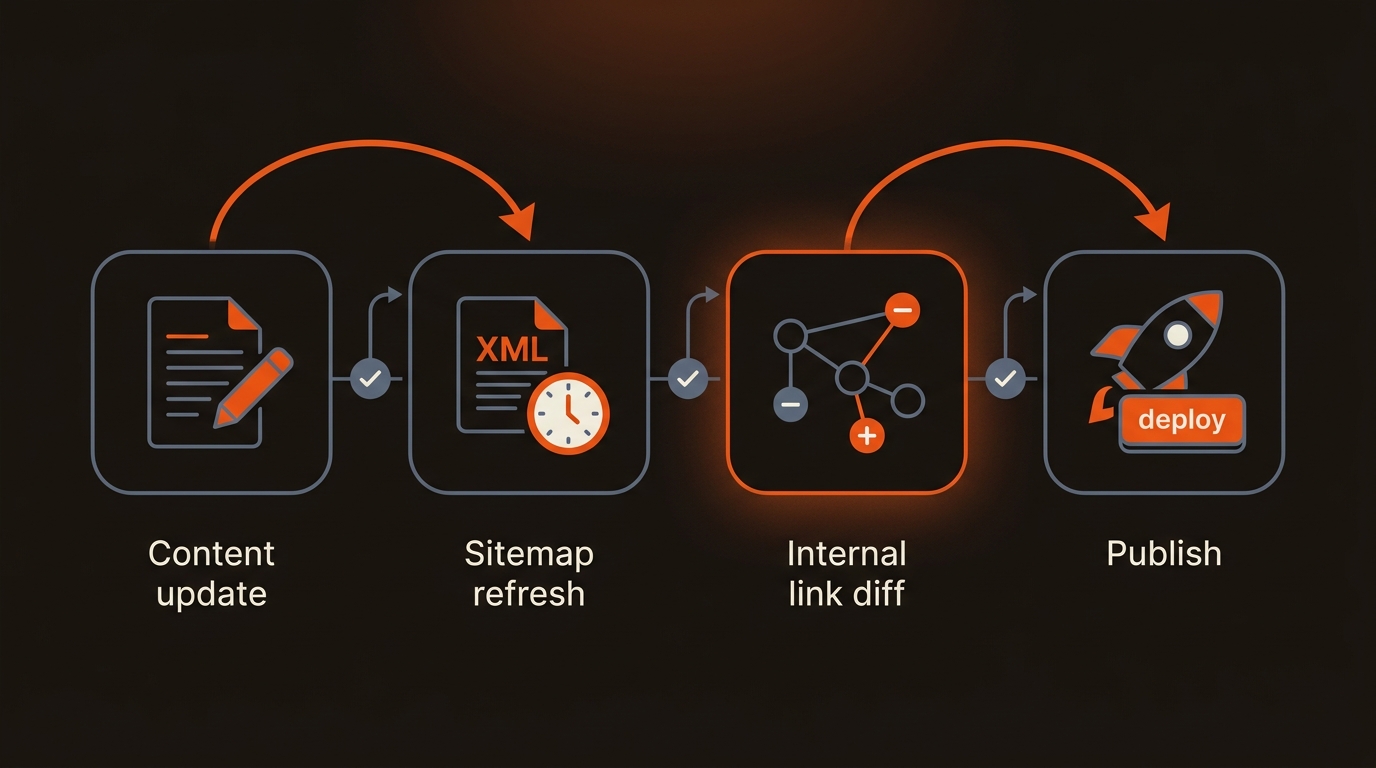
Before you request another crawl, systematize the inputs Google responds to. Ship in clusters, keep lastmod truthful, and route links from hubs to updates. That scales across many pages without manual retries.
These cover timing, common blockers, restricted APIs, and date-change myths.
Timing varies, and Google does not guarantee when a requested URL will be crawled. Request Indexing only queues a crawl; inclusion depends on quality and demand. If nothing moves after a week, recheck indexability and strengthen internal links from high-traffic hubs.
Common blockers: non-200 status, accidental noindex, blocked in robots.txt, incorrect canonical, or duplicate/thin content. Also check orphaning: if nothing links to the page, priority drops. Fix these in URL Inspection, update sitemap lastmod, and add links from relevant hubs.
No. The Indexing API officially supports JobPosting and BroadcastEvent in specific contexts. Using it for general pages isn't supported and can cause issues. Stick to Request Indexing, sitemaps, and internal links for standard content.
Changing dates without real content changes doesn't help. Google looks for meaningful diffs, crawlable access, internal link signals, and accurate lastmod in your sitemap. Make substantive updates, then connect the page from hubs so it earns a revisit.
Final word: fix indexability, show real changes, and push authority through internal links. Ask "how do I force Google to reindex" less; build a system Google wants to crawl.
