
Short answer: Earn free backlinks by publishing one or two cite-worthy resources, claiming high-quality directories and profiles, activating partner or supplier mentions, and running targeted outreach to resource pages, broken links, and journalists. Skip generators. If you’re asking “how do I get free backlinks for my new website,” ship structured pages with schema so humans and AI cite you.
Free backlinks cost time instead of cash; consistent, context-rich links compound when you run them as a weekly workflow.
A small growth team can start landing early links by batching the work: ship a couple of evergreen resources, claim relevant citations and profiles, ask partners you already work with, and send targeted emails. Automated backlink makers add noise and risk with little ranking impact.
"Google treats manipulative link patterns as spam; automated link schemes rarely help and can hurt." https://developers.google.com/search/docs/essentials/spam-policies/link-spam
Prioritize links that drive real discovery. Curated directories users actually browse, partner pages that refer customers, and resource-page placements tend to be indexed, clicked, and resilient. If you typed “how do I get free backlinks for my new website” into Google, expect traction from quality curation.
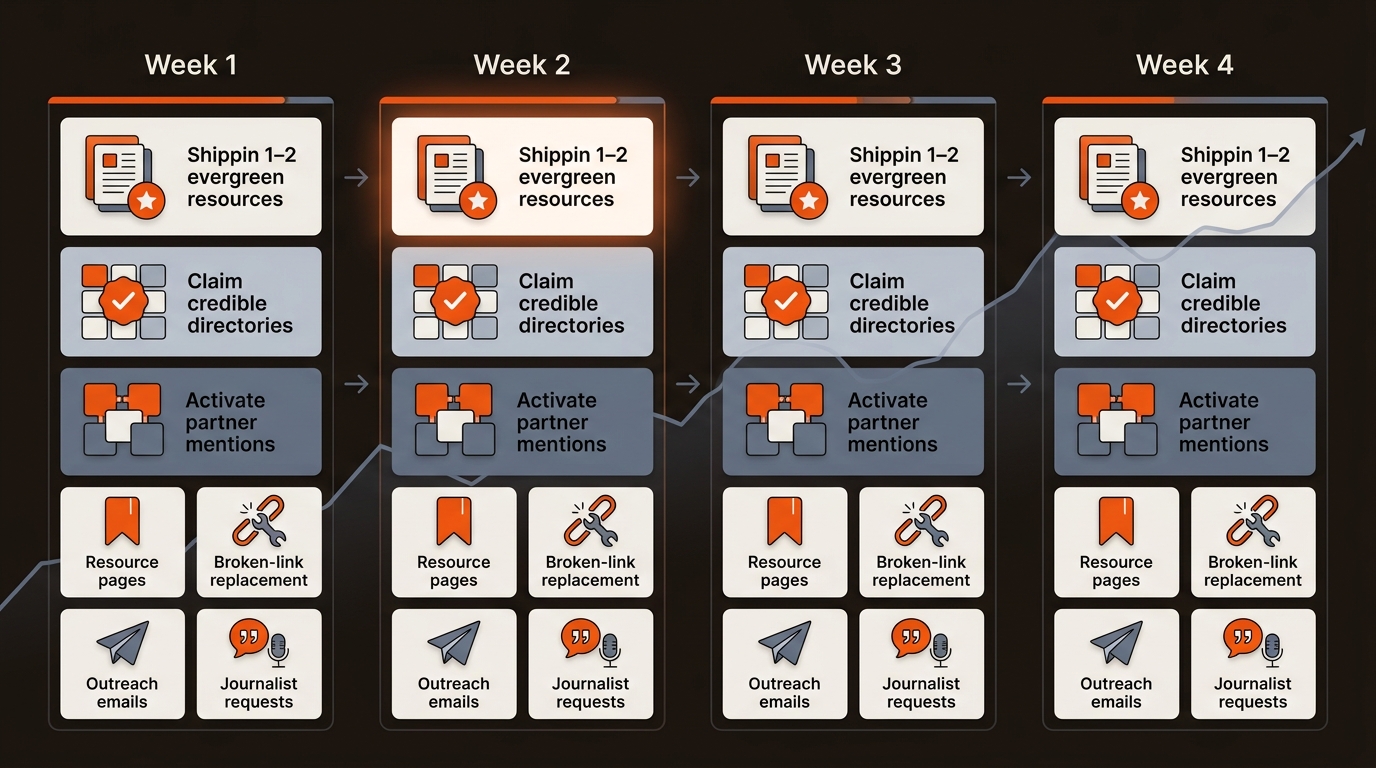
Use repeatable, low-risk tactics that compound: credible directories, partners, resource pages, broken-link replacements, and fast journalist responses.
caption
Validate every link. Crawl targets with Screaming Frog to confirm indexability, check rel=nofollow vs dofollow, and log referring pages. Track outcomes in Ahrefs or SEMrush plus GSC weekly to see which links correlate with impressions and query expansion. Ahrefs’ large-sample studies show pages with more quality referring domains capture more organic traffic over time; noise links rarely move rankings at scale.
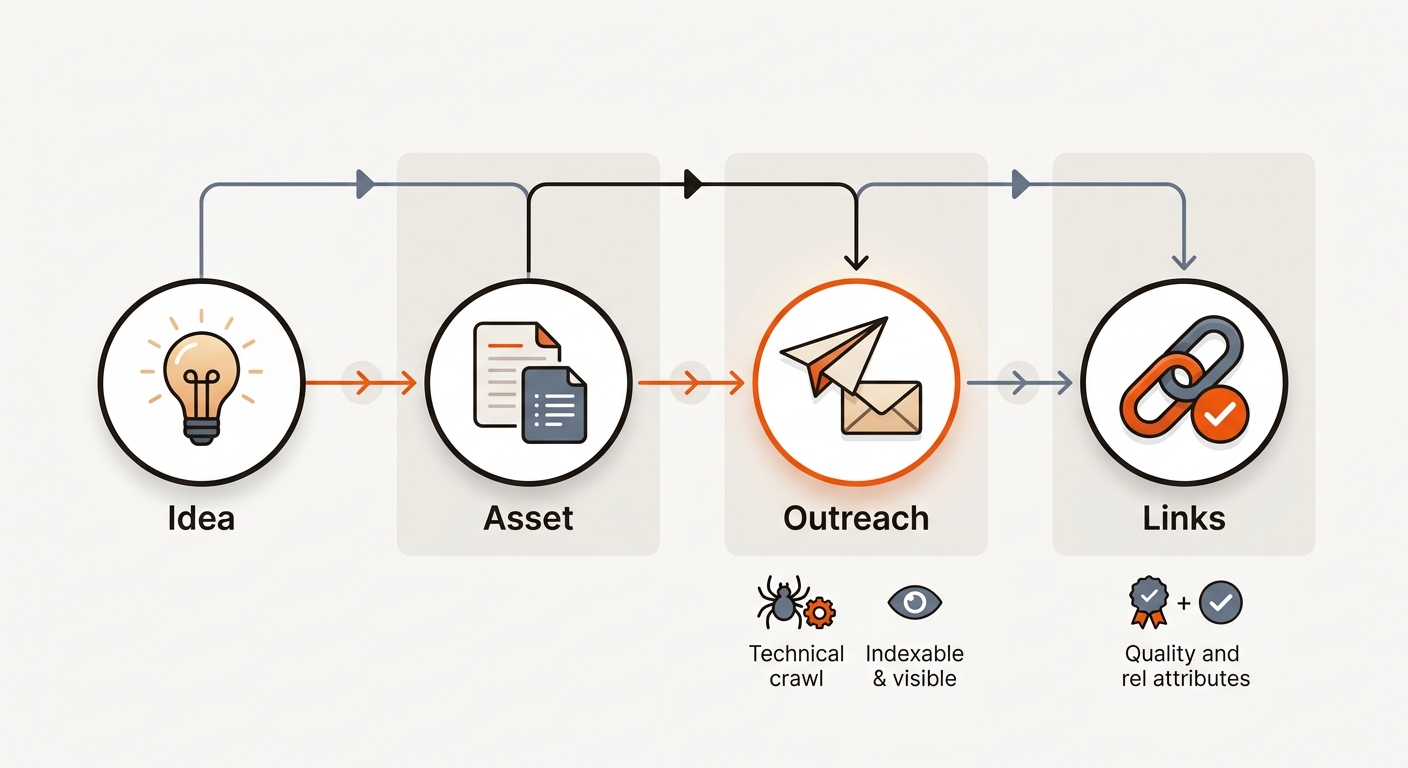
Prioritize tactics by control and payoff. Example sequence: 1) Partners and tools you actually use: offer a two-sentence testimonial with headshot and get listed on their customers or case study page. Conversion is often higher due to the relationship. 2) Resource page curation: find pages that list tools or guides in your niche, map your strongest evergreen URL to each, then pitch a one line value and anchor suggestion. Track your own reply and link rates so you can plan the next round. 3) Unlinked mentions: set alerts for your brand and founders, request a link where you are already cited.
Free backlinks compound when your assets are inherently citable and your outreach runs from a living inventory.
Ship cite-worthy assets first (data studies, calculators, API docs, comparison explainers, and integration pages), then route asks to partners and curators; build clusters designed to earn links by design, like our view on how to create topical authority. Mergeflo’s autonomous SEO + AEO content engine handles research and drafts, adds FAQ schema and suggested internal links, and publishes the articles you approve to Webflow. It tracks your Google positions and AI mentions, and drafts articles for your review. See the pricing page for current plans.
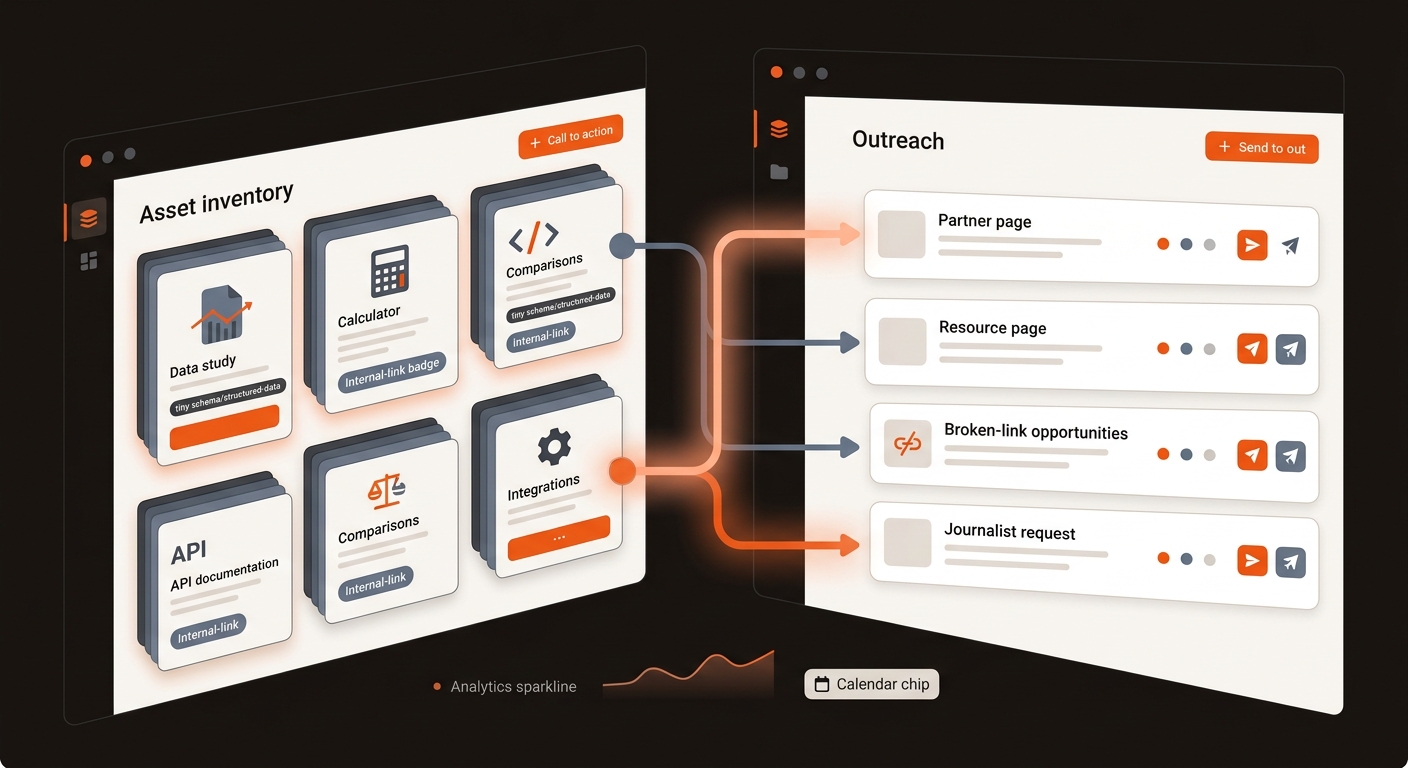
Make it rhythmic. Weekly cadence: Monday prospect new targets with filters: topical match, English content, recent posts in the last 6 months, no casino or crypto. Score 0 to 5 for relevance and 0 to 5 for quality. Tuesday align assets and draft two pitch variants. Wednesday send the emails, personalized first line and clear ask with one suggested anchor. Thursday follow up within 48 hours on opens and replies, offer a short quote if needed. Friday update a tracker and metrics. Measure how many prospects turn into links, and plan with your own rate.
Teams ask these after they start shipping assets and outreach.
There is no fixed number; it depends on the pages already ranking for your terms. Look at the referring domains of the top results in Ahrefs or Semrush to see what you are up against. Track branded and non-branded queries in GSC weekly. Movement often starts on long-tail variations before broader terms.
Yes, when curated, relevant, and indexable. Start with industry associations, integration marketplaces, and credible local directories. Avoid bulk submission sites that flip to nofollow or block indexing. Treat these as foundation links that establish presence and trust signals; growth usually comes from partners, resources, and journalist wins.
Ship or update one linkable asset weekly, claim a few vetted directories or profiles, and send personalized resource or broken-link emails. Add partner asks and journalist responses as they come up. Review in Ahrefs/SEMrush plus GSC every Friday, prune what stalls, and double down where replies land and links index.
Batch research with footprints like intitle:resources + your topic, build reusable but tight templates, and track contacts in a simple CRM or spreadsheet. Cap yourself to a 90-minute daily block. The constraint forces focus on high-fit prospects and prevents spray-and-pray. If you wonder “how do I get free backlinks for my new website,” this cadence holds you to the work that compounds.
