
Short answer: Create topical authority by mapping a cluster around one parent theme, publishing complete intent coverage (how, what, why, compare, do), and interlinking every page with clear schema and refresh cadence. Ship a set of tightly scoped pages per cluster, measure gaps, add missing intents, and prune overlaps so Google and AI engines can cite you confidently.
Most teams publish topics, so coverage, links, and schema stay fragmented. You ship good posts but cover only a few intents of the cluster; cannibalization and thin interlinks keep you off page one. A small growth team cannot afford meandering coverage.
Use intent-first clustering. Consolidate duplicates, assign one primary query per URL, and wire internal links to a hub with descriptive anchors. Add Product, How-To, and FAQ schema where relevant to aid AI Overviews and improve citation odds in ChatGPT and Perplexity.
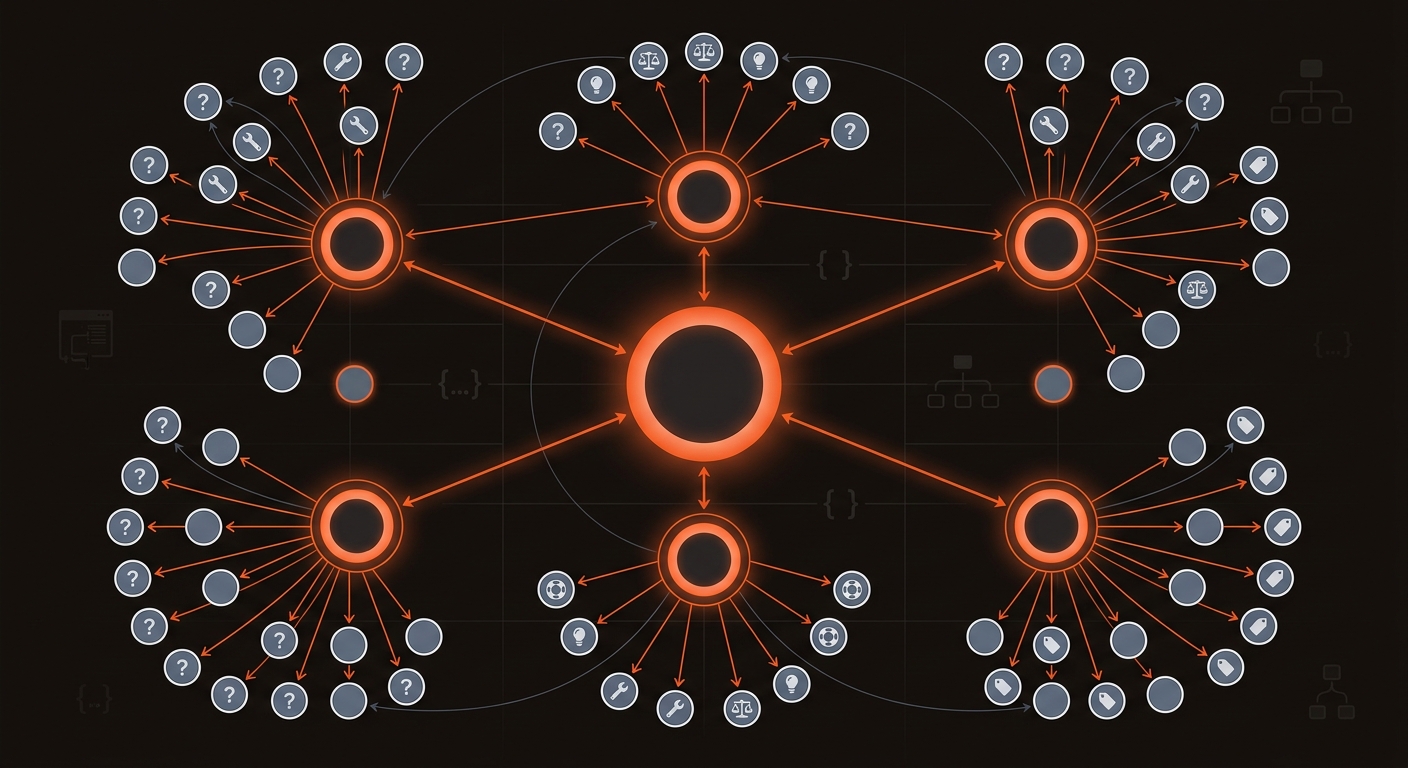
• Reference: Ahrefs on topic clusters and intent coverage Ahrefs.
• Reference: Semrush on mapping subtopics and questions Semrush.
Pick a system that sustains complete coverage and avoids one-off posts. The comparison below shows speed, cost, and operational rigor when your goal is ranking and AI citation, not just publishing volume.
Authority-building approaches benchmarked for lean SAAS teams
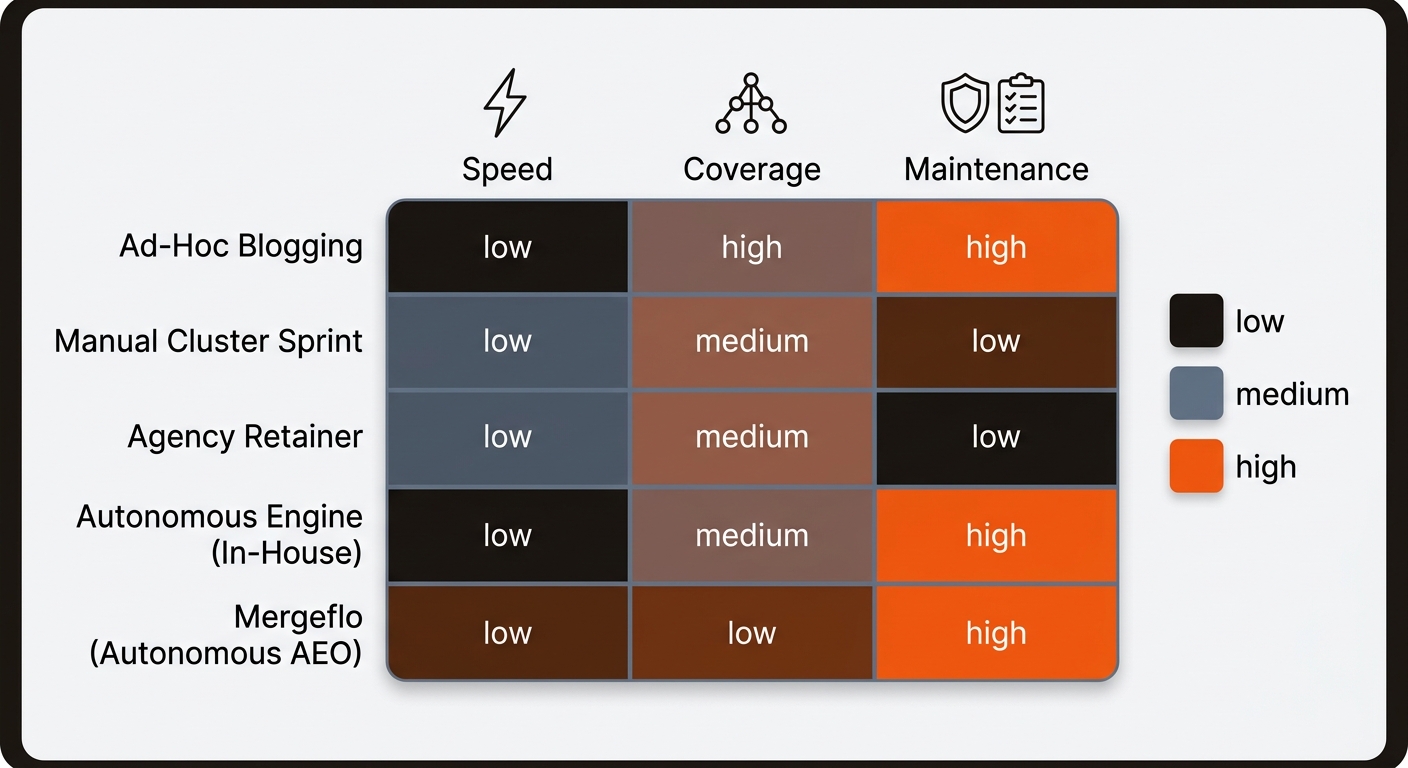
Hygiene matters as much as content count. You need page-type templates, canonicalization rules, anchor taxonomies, and a refresh SLA. That is the difference between a cluster and a pile of URLs. The tradeoff: stricter governance adds setup time, but it pays back with fewer rewrites and higher internal link equity.
Stack three common plays side by side. Volume-first content hits speed but thins distinctiveness; expect little time per page and a heavy refresh load as topics drift. Link-first campaigns win spikes but often leave gaps across subtopics. A cluster-led model maps the queries in one cluster, ships one pillar and its supporting pages, and bakes in proof: screenshots, calculations, or short case notes. Give the pillar the most time and each support a set budget, with a short SME review on each. Link every support to the pillar and to its closest siblings.
Operationalize the cluster lifecycle: research, generate, publish, wire, refresh. Mergeflo offers an autonomous SEO + AEO content engine: topic clusters, drafts with FAQ schema and suggested internal links, and publishing to Webflow when you approve. It tracks your Google positions and, on paid plans, checks whether ChatGPT, Gemini and Claude mention your brand.
Workflow: import your seed topics, generate intent maps, approve briefs, publish pages with enforced schema and hub-spoke links, then auto-refresh off GSC impressions and citation deltas. If you are new to demand capture, start with our take on how to bring organic traffic to your website to set expectations.
Before you scale a second cluster, run a consolidation pass to merge any overlapping URLs and reassign anchors. This keeps authority concentrated and avoids cannibalization drift. Plan your intents with transactional, informational, navigational, and commercial types using this context: what are the 4 types of keywords.
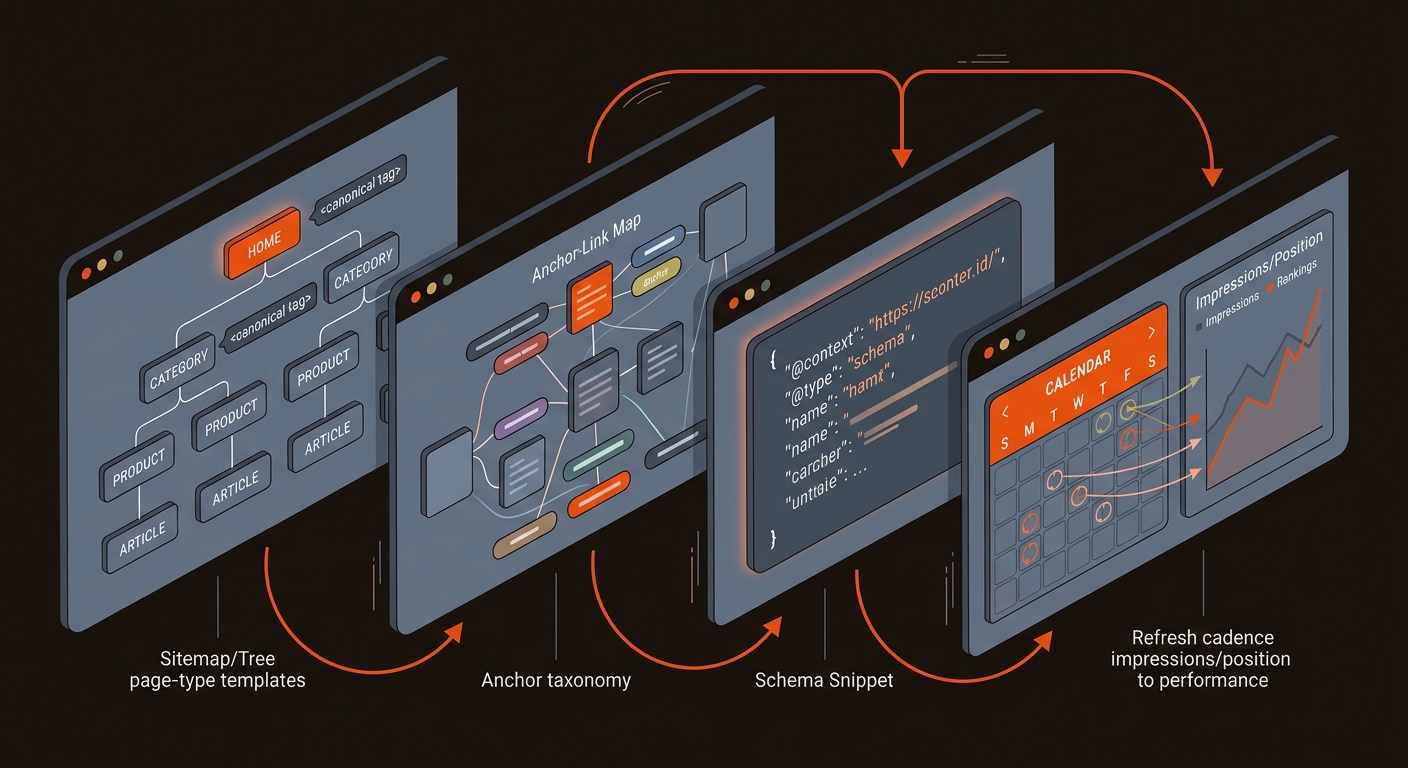
Run a five-day rhythm. Day 1 scope a cluster: confirm intents, pick the target queries, list internal linking sources. Day 2 draft outlines with evidence asks and pull data, screenshots, or SQL before writing. Day 3 block a 45 minute SME call to validate steps and add pitfall notes. Day 4 write, fact check, and complete a QA pass: title matches intent, H2s cover subtopics, 3 internal links out, 1 to the pillar, 1 external canonical source. Day 5 publish, interlink in both directions, add schema, submit for indexing. Review the cluster quarterly and update or prune by status.
There is no fixed number. Plan one hub, a page for each core intent, and FAQs or how-tos for the long tail. Too few pages under-cover the topic; too many without governance create overlap. Validate coverage using GSC query buckets and Ahrefs Content Gap.
There is no fixed timeline. Google decides when to crawl and index new pages, and impressions usually show before clicks. Publishing the core pages together, with links in place, makes the cluster easier to understand as a whole.
As the site grows, indexing lag and internal link decay compound. Orphan risks rise as you publish sprints without re-crawling links. Solve with sitemap partitioning, periodic recrawls, and automated link audits; enforce anchor taxonomies so new pages inherit connections. Budget time for consolidation each quarter.
Assign one primary query per URL, set title and slug guards, and add a consolidation rule: if two URLs rank for the same head term for 30 days, merge into the stronger page and 301 the weaker. Update internal links to the survivor and refresh the hub to reflect the change. This is how to create topical authority that compounds.
