
Short answer: You can't delete backlinks on other people's sites. Your options are: ask the site owner to remove the link, file abuse/DMCA with the host or registrar if the page is unlawful or impersonating, or neutralize the link's impact in Google with a targeted disavow file. Audit first and act only on clearly manipulative links.
Most "bad links" don't need removal; only manipulative patterns do. Google states most sites shouldn't use disavow because its systems ignore obvious spam. Reserve action for manual actions or clear schemes: paid links without proper attributes, PBNs, hacked domains, mass exact-match anchors, or irrelevant sitewide/footer links. See Google guidance and syntax in Google Search Console Help: https://support.google.com/webmasters/answer/2648487.
Google: "Most sites don't need to use this tool; use it with caution."
Treat this like risk management. Pull links from Search Console, enrich with Ahrefs or SEMrush, dedupe by domain, and classify by patterns and anchor over-optimization. Prioritize domains with sitewide placements or manipulative anchors hitting money pages. Track outreach, host abuse reports, and disavow entries with evidence and dates so you can show sustained cleanup if needed.
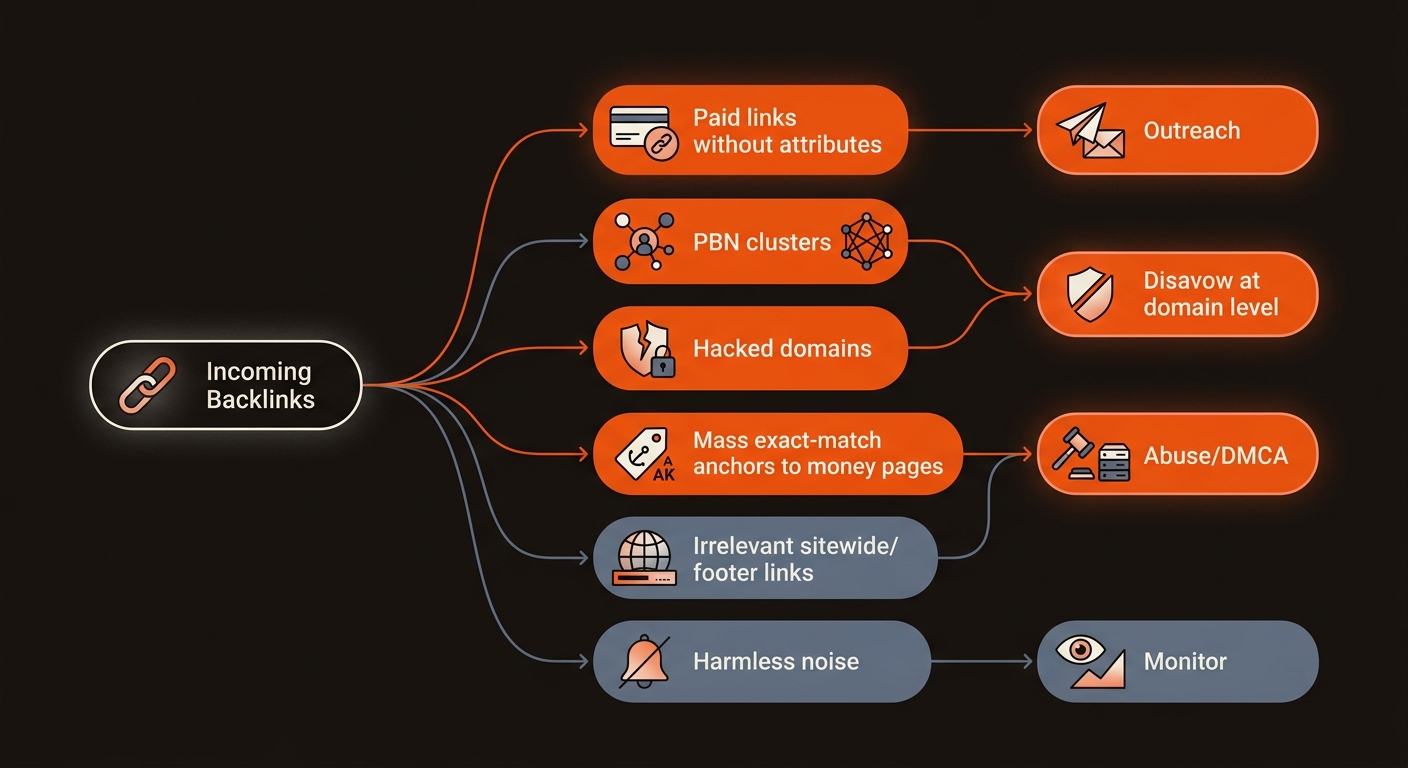
Pick the lightest-weight method that neutralizes risk without burning equity. If the source is reachable and legit, ask for removal. If it's spammy or unreachable, disavow at domain level. If it's illegal or impersonation, escalate to host or registrar. Use ICANN Lookup to find registrar or host contacts: https://lookup.icann.org/en.
caption
For deeper context, see How Do I Get Free Backlinks For My New Website.
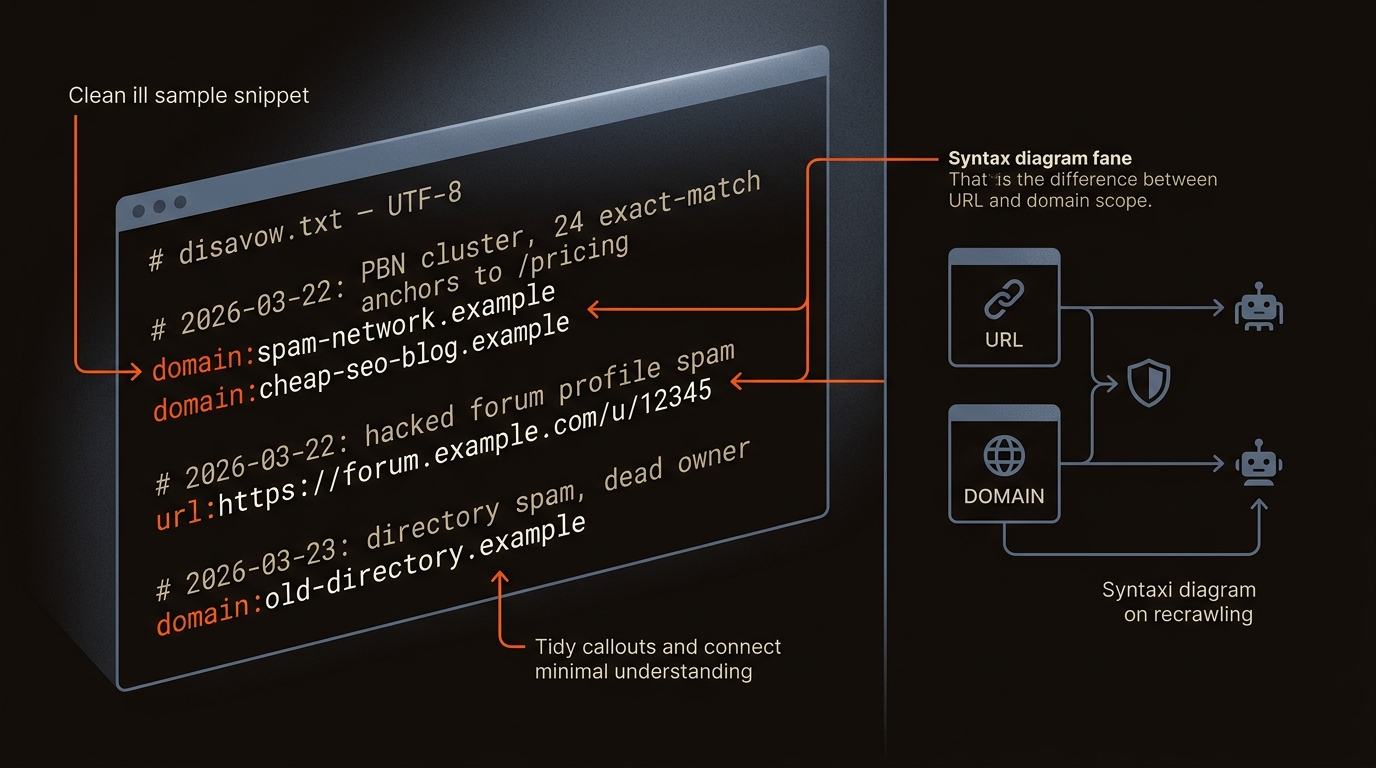
Codify a repeatable audit-outreach-disavow workflow so you don't fight fires. Build a monthly job: export links from Search Console, enrich with Ahrefs or SEMrush, label patterns, queue outreach, escalate abuse cases, and batch-update a clean disavow.txt (UTF-8, max 2 MB). Log each action with evidence, timestamps, and anchor distributions so changes to rankings and manual actions map to your work.
For a small growth team, a short monthly cycle is enough: refresh the exports, label new domains and anchors, send outreach emails, and update the disavow file and notes. That keeps you focused on building authority.
Tradeoff: Over-aggressive disavow can suppress neutral citations and slow net authority growth, while under-action can prolong a manual action. Solve with documentation. Only add domains when you can point to manipulative anchors, PBN footprints, or hacked networks. For everything else, monitor.
Mergeflo turns this from ad hoc into a tracked review and disavow process. Mergeflo is an AI search visibility platform for startups that tracks visibility across Google and AI engines and drafts content for the gaps it finds. Our autonomous SEO + AEO content engine finds gaps, drafts articles with FAQ schema and suggested internal links, and publishes the ones you approve to Webflow. While you stabilize link risk, we build authority with durable clusters. If you're starting from zero, pair cleanup with a compounding acquisition motion via contextually relevant citations and links; see our guide on getting free backlinks for a new website: https://mergeflo.com/blog/how-do-i-get-free-backlinks-for-my-new-website.
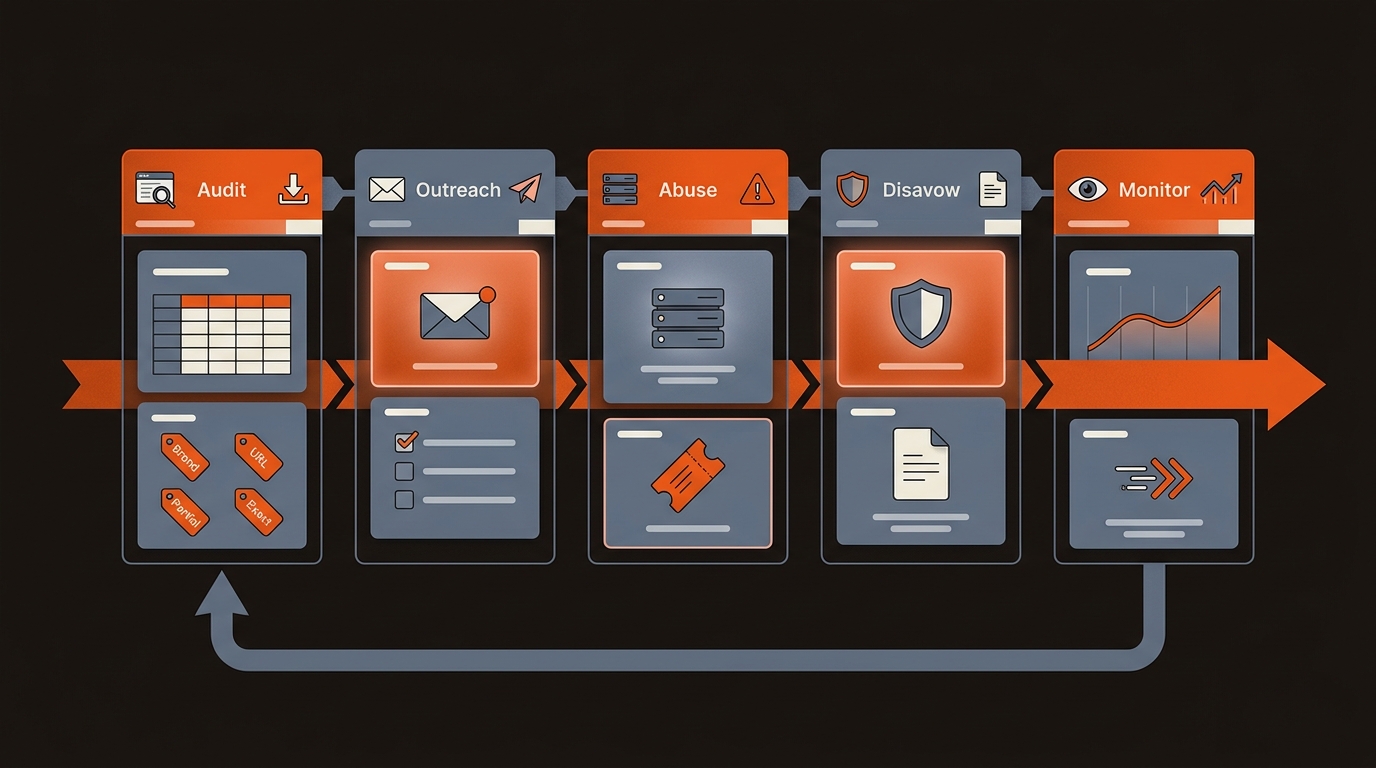
Act only when patterns point to manipulation, document everything, and measure impact in Search Console.
If your link profile only shows background spam, skip disavow. Use it when you see clear manipulative patterns you can't remove or you received a manual action for unnatural links. Keep the file surgical and documented, and prefer domain-level entries for spam networks. Overuse can slow authority growth.
Expect weeks to months. Google must recrawl the linking pages and reprocess signals. Track key pages' anchors, impressions, and average position in Search Console weekly for several weeks. For manual actions, complete cleanup and submit a reconsideration request only after documenting outreach and disavow with dates and examples.
Keep screenshots of the linking pages, full URLs, dates, copies of outreach emails, bounce notices, abuse tickets, and your disavow.txt with comments explaining each domain. Organize by domain in a shared folder. This evidence shows sustained cleanup effort and accelerates host responses and reconsideration reviews.
Google ignores most junk, but patterns can matter at small scales. A burst of exact-match anchors from hacked blogs to a money page can move thresholds. Monitor anchor text ratios monthly, set alerts for link velocity spikes in Ahrefs or SEMrush, and act when patterns emerge rather than one-off links.
