
Short answer: There is no fixed number; it depends on the pages already ranking. Benchmark against the weakest URL in the top 3 on Ahrefs or SEMrush, then close the page-level gap with targeted links and internal links.
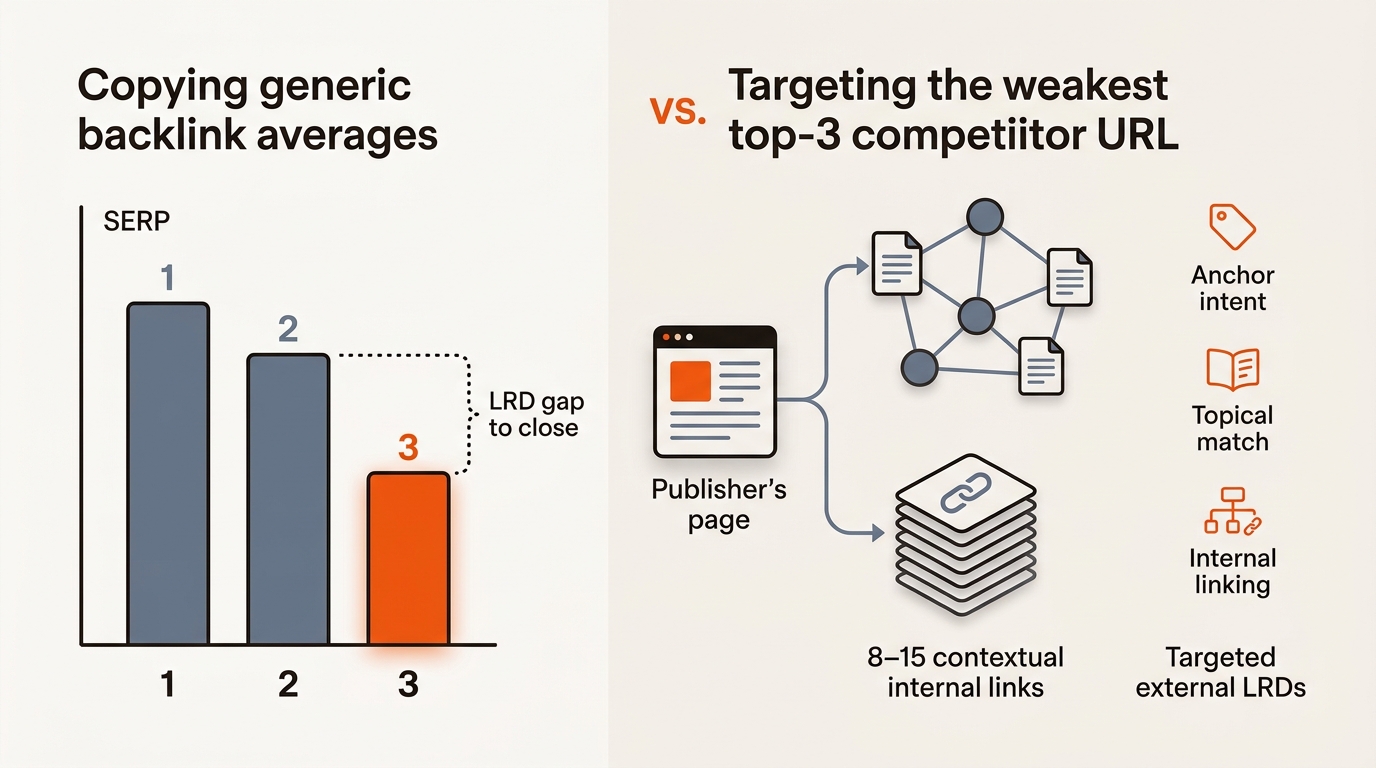
Use a 3-variable model: page gap, domain cushion, and internal link boost. Pull your keyword in Ahrefs or SEMrush, open the SERP Overview, and capture for the top 3: referring domains to the ranking URL, DR/Authority, and content depth.
• Page gap: use the referring domains of the weakest top-3 URL as your page target. For example, if #3 has 14, aim for about that many.
• Domain cushion: if your domain is much weaker than theirs, plan for more links; if it is stronger, you may need fewer.
• Internal link boost: add contextual internal links from relevant cluster pages.
Run this for each priority keyword in your cluster. Store targets in a sheet. Assign tactics per page: net new LRDs, internal links, or content upgrades. Track movement weekly in GSC and Ahrefs. If the page stalls after Google has recrawled it, add referring domains or expand content depth to close intent gaps.
For deeper context, see Is Link Still Relevant To SEO.
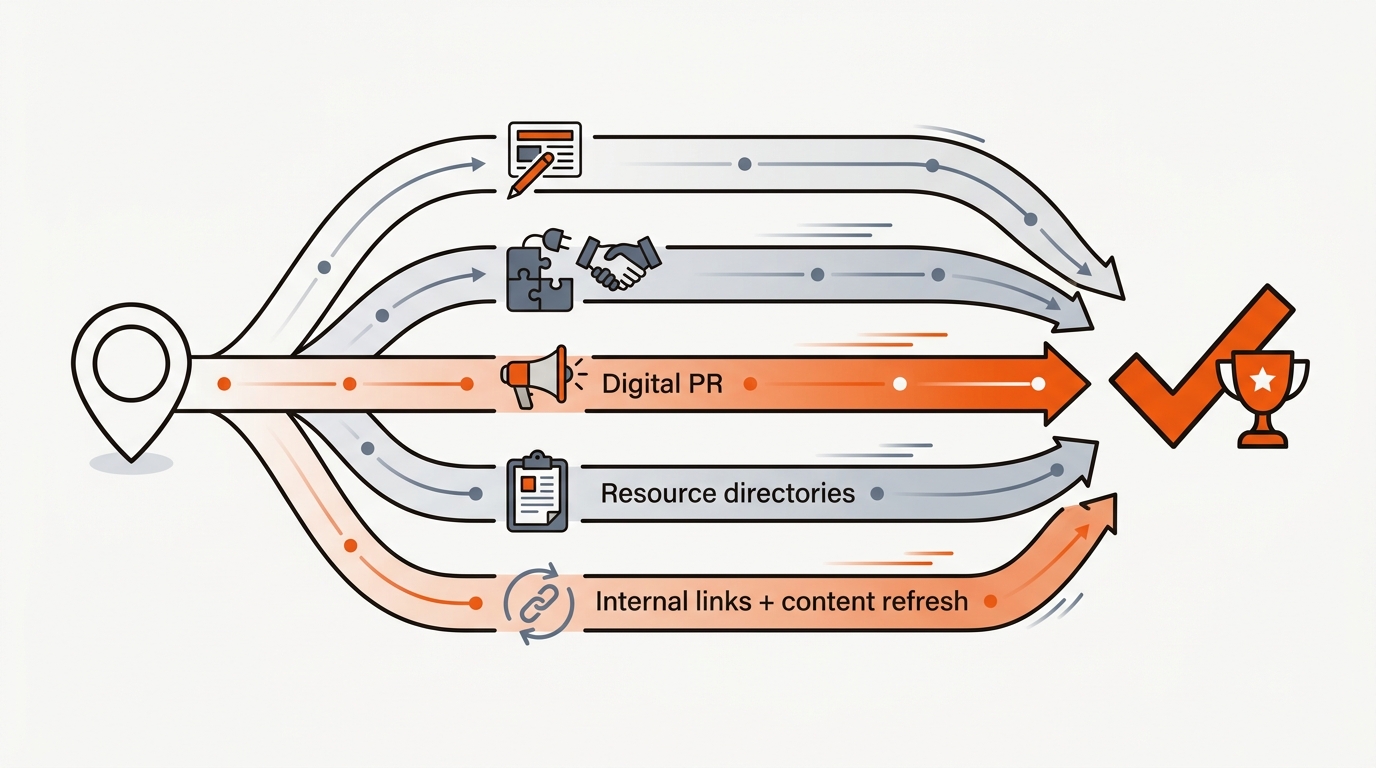
Pick tactics by throughput, control, and risk: not just price. The right mix depends on how fast you must close the identified LRD gap.
caption
The tradeoff: outreach time vs. fast internal link wins. If you need results fast, ship internal links and a PR micro-angle first, then backfill with guest posts.
Aim for unique referring domains with precise anchors and topical adjacency. A few high-quality referring domains with anchors that describe the page’s sub-intent beat many low-context links to your homepage.
• Use Ahrefs’ Anchors report to keep most anchors branded or URL, some partial match, and few exact match.
• Build internal links from semantically close pages; crawl with Screaming Frog to confirm indexable, followed links and descriptive anchors.
• Add schema (FAQPage, HowTo, Product) where relevant so structured data clarifies answers.
Mergeflo tracks your referring domains and drafts articles for your content gaps. Our autonomous SEO + AEO content engine finds gaps, drafts articles with FAQ schema and suggested internal links, and publishes the ones you approve to Webflow. It prioritizes keywords by fastest path to citations, maps internal links across your cluster, and recommends link targets to match the weakest top-3 URL: across Google and AI engines.
Yes. Always validate against the weakest top-3 URL.
No. Internal links amplify topical authority and help indexing, but they rarely replace all external signals on competitive terms. On competitive terms, you still need net-new referring domains to the target URL.
Quality reduces the count but does not erase it on active SERPs. On competitive terms, even superior content still needs links due to entrenched authority and brand signals.
Keep most anchors branded or URL, some partial match, and few exact match. We found no published ratio we trust. Use contextual sentences around the link that mirror sub-intent.
Strong opinion: stop chasing arbitrary link quotas. Set page-specific targets from SERP gaps, stack high-context LRDs with internal links, and measure weekly. That is how you rank on Google and get cited in AI Overviews.
