Short answer: How to find SEO friendly keywords: expand seed topics, then filter candidates for clear intent, KD under 20-30, and an allintitle ratio under 0.2 (our starting points, not industry standards). Group survivors into tight clusters and map one query class per page.
For the full method, start with our main keyword research guide: how to find profitable keywords with low competition.
Most teams chase head terms with fuzzy intent and ignore attainability signals. That ships pages Google will not rank and AI systems will not cite. If you ask how to find SEO friendly keywords, use a scoring workflow: intent match, tool KD, and a quick allintitle ratio to gauge supply.
Two fast validators change results: KD from Ahrefs or Semrush to estimate difficulty and allintitle to measure competing supply. Pair those with explicit modifiers like pricing, alternatives, or vs to lock intent. Long-tail queries with clear tasks are usually less competitive than broad keywords, as Semrush notes.
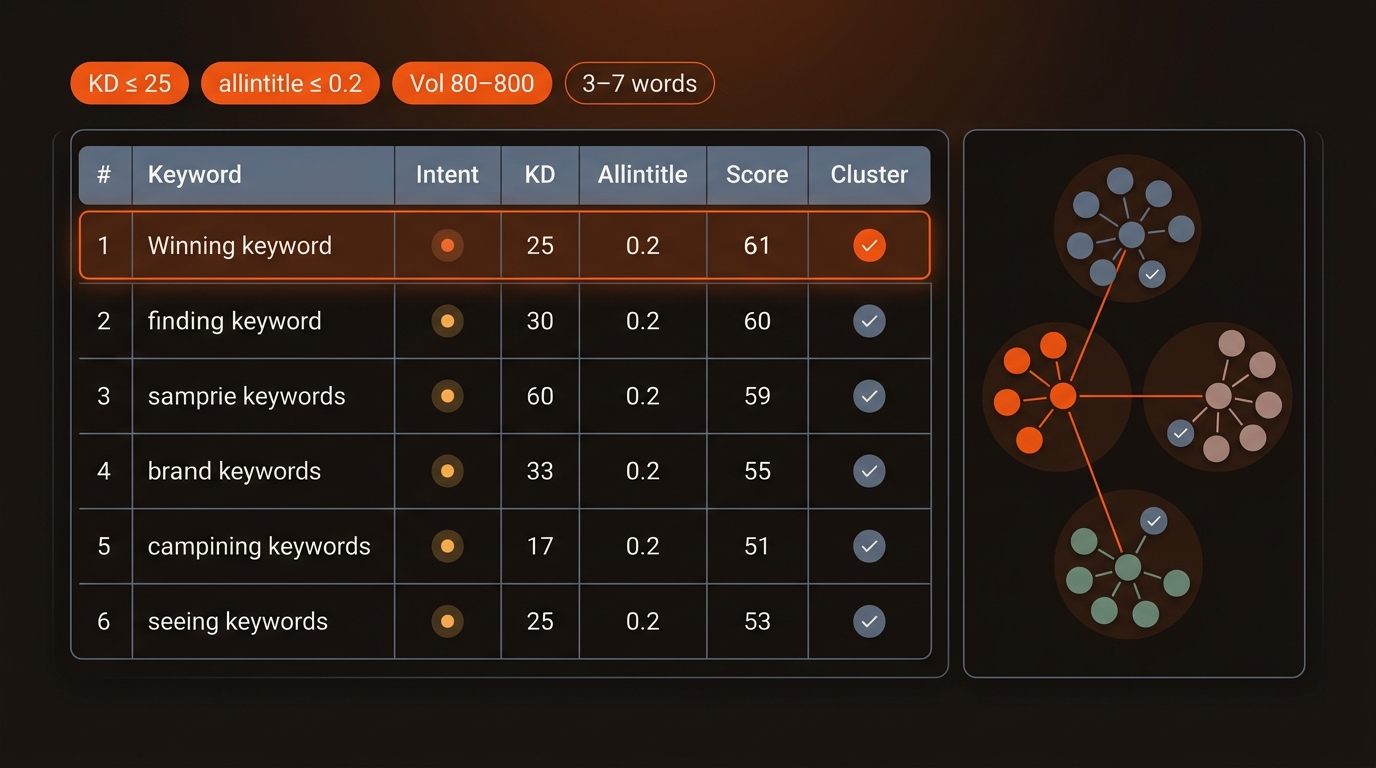
Blend discovery streams, then score on intent, KD, and allintitle before clustering. One tool rarely covers demand, intent, and competition together. Use autocomplete for phrasing, competitor SERPs for proof, then filter with KD and an allintitle check to avoid unrankable targets.
Operator comparison of keyword discovery methods
Tie-breakers: pick the clearest intent and the lower supply. KD is directional; the live SERP decides. Cross-check SERP anatomy and top formats before committing content type. For a deeper seed-expansion walkthrough, see Ahrefs’ keyword research guide.
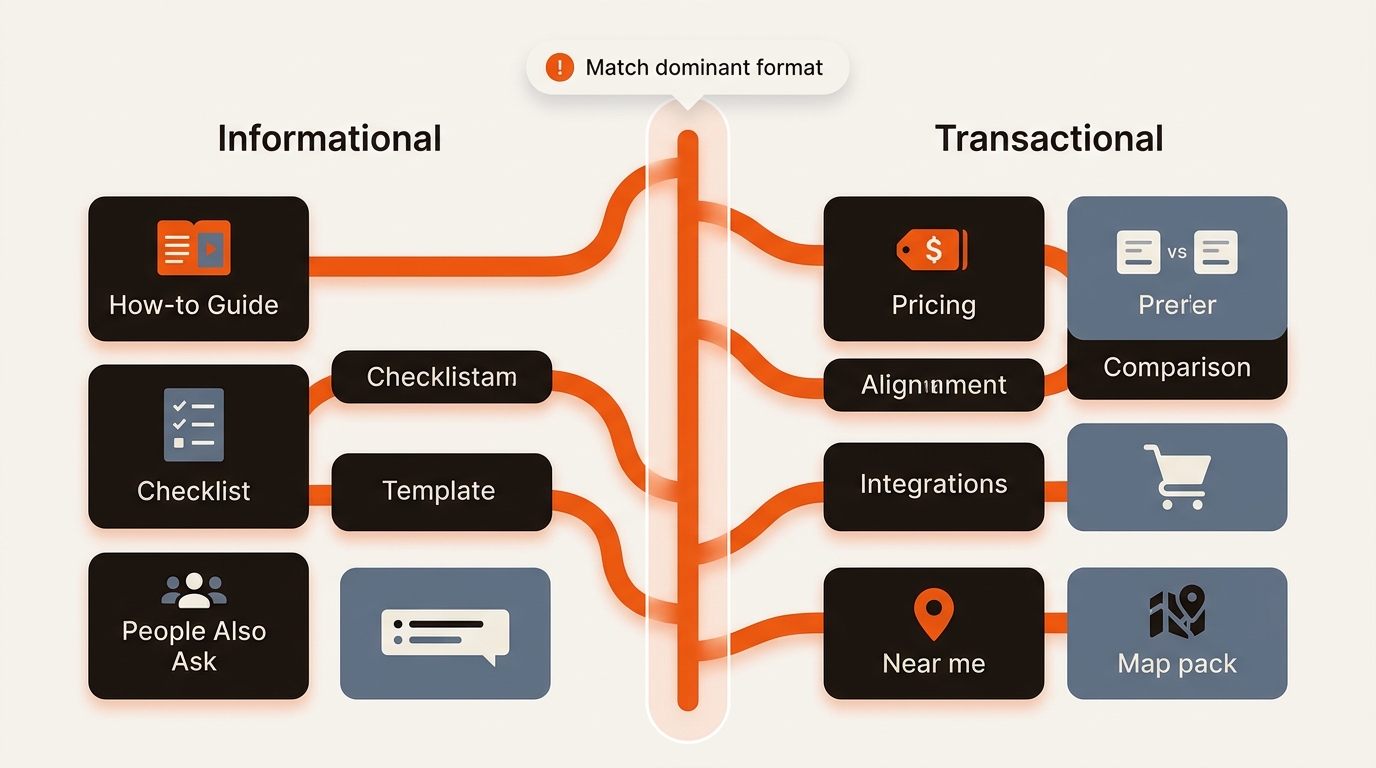
For a new or low-authority site, prioritize SERP-feasibility discovery. As starting points, not standards, target 4-6 word modifiers with monthly volume 20-200, Keyword Difficulty ≤ 15, and results pages showing at least two forums or niche blogs. Build 5-8 page topical clusters and ship comparison, checklist, and how-to formats first. For established domains, lean on competitor-gap and GSC expansion. Mine queries with average position 8-20 and 200+ impressions in 28 days, then add missing subtopics and a 40-60 word definition box to chase snippets. Local services win with city plus service terms and a single focused landing page that mirrors the pack.
Turn keyword scoring into briefs and drafts you review and publish to Webflow. After shortlisting, cluster by parent topic, map one primary plus 3-5 FAQs, add FAQPage and HowTo schema, interlink across the cluster, and schedule 60-90 day refreshes using GSC position, impressions, and CTR deltas.
Mergeflo is an AI search visibility platform for startups. It tracks Google search and, on paid plans, AI answers from ChatGPT, Gemini and Claude. It has a free plan, and paid plans are listed on the pricing page. Our autonomous SEO + AEO content engine finds gaps, drafts articles with FAQ schema and suggested internal links, and publishes the ones you approve to Webflow.
There is a tradeoff: allintitle can undercount when titles omit the exact phrase or when synonyms dominate. Mitigate with a manual SERP skim for each short list item and prefer intents where you can produce the dominant format. If you still wonder how to find SEO friendly keywords at scale, bake this check into your intake worksheet and lock it before briefs.
If you are upskilling your team, this primer on how to learn SEO as a beginner helps enforce on-page and internal linking habits while you scale clusters.
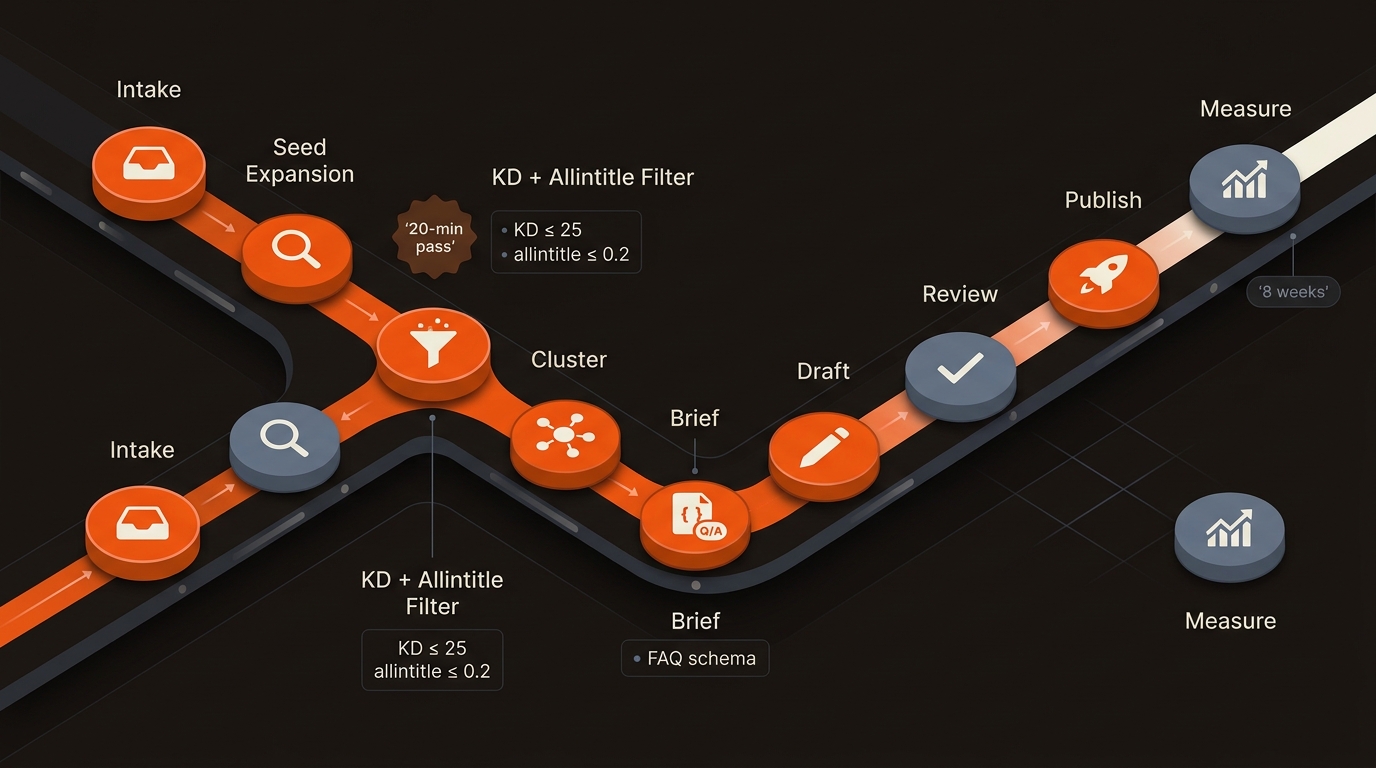
In Mergeflo, run keyword research and review the topics it finds. It works from your seed terms, your Search Console queries and live results-page pulls, groups keywords into topic clusters, and writes a brief for the topics you pick. A person reviews every brief and draft, and Mergeflo flags published pages that lose impressions so you can decide what to refresh.
Target one primary query class per page, supported by 2-4 closely related entities and variations. Add 3-5 FAQs that mirror People Also Ask phrasing. This keeps topical focus tight for Google and produces Q&A blocks that AI systems can quote.
For DR under 40-50, a rule of thumb is to start with KD 20-30 or lower and an allintitle ratio at or below 0.2. Example: if a keyword has 500 monthly searches and 80 allintitle results, the ratio is 0.16, which is viable. Recheck SERP intent and page format before committing.
Favor questions, how-tos, and specific modifiers that imply a concrete answer. Plan content with FAQPage and HowTo schema, define key entities early, and include short, quotable answers. This increases citation eligibility for the exact queries you target.
Audit at 60-90 days. If GSC shows impressions rising but CTR lagging, align title and meta with the exact query phrasing. If impressions are flat and positions worse than 30, reassess intent fit or switch to an easier sibling keyword in the same cluster.
