
Short answer: To fix “Discovered – currently not indexed,” prioritize URLs worth indexing, add contextual internal links from crawled pages, ensure the URL is in an XML sitemap, and check GSC Crawl Stats and URL Inspection for crawl/render issues. Consolidate thin/duplicate pages and resubmit via URL Inspection only after changes.
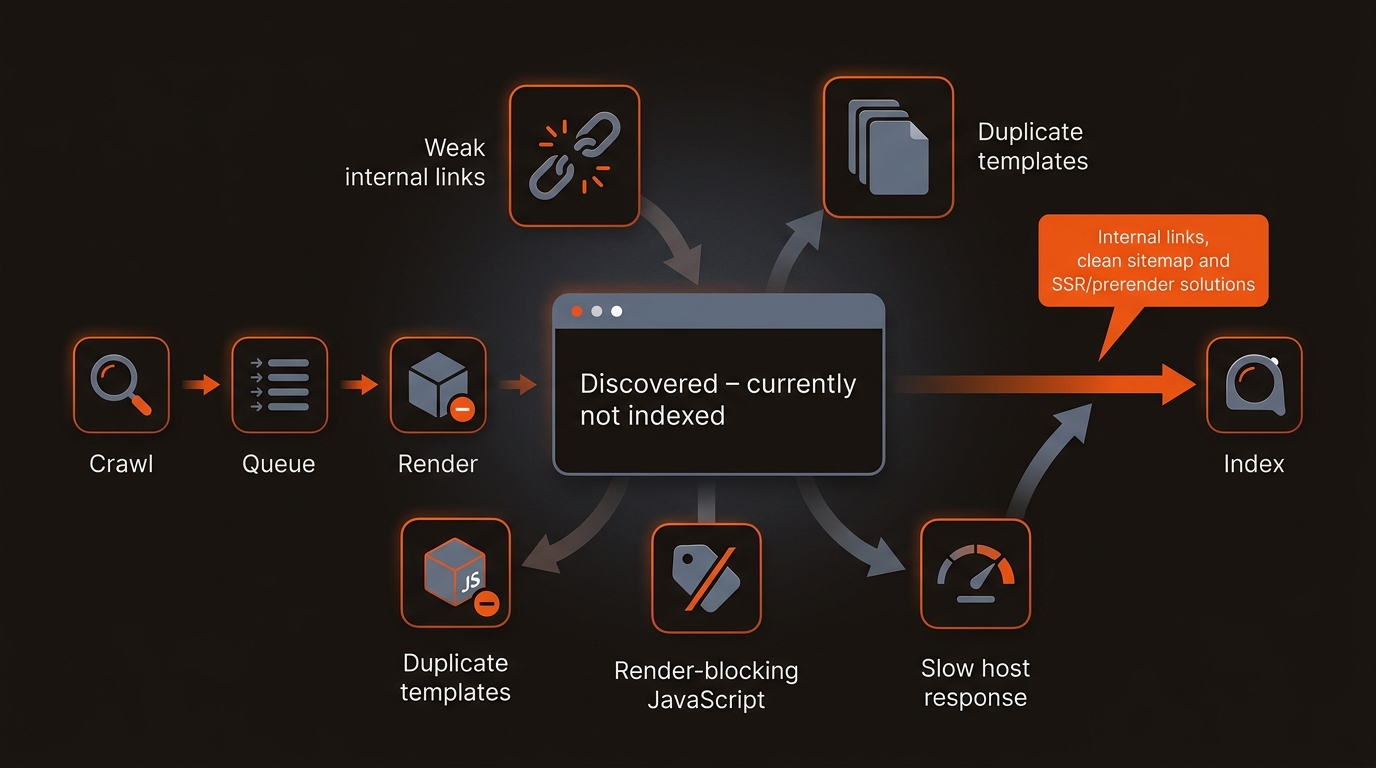
Request in small batches. If you request before fixing signals, you waste crawl attempts.
Operational tradeoff: consolidating thin pages boosts crawl efficiency but may sacrifice some fringe long-tail terms. For early-stage teams, indexation speed often beats marginal long-tail coverage.
For deeper context, see Why Is My Google Search Console Page Not Indexed.
Pull the Excluded report, filter Discovered currently not indexed, and export the list. For each URL, verify 200 OK, canonical to self, and inclusion in a fresh XML sitemap updated today. Add contextual internal links from already indexed pages with traffic, placing some in body copy near the top. Reduce crawl depth by adding a nav or hub link. Trim payload and keep TTFB low (web.dev rates 0.8 seconds or less as good). Update lastmod and reping sitemaps. Request indexing after changes, then recheck server logs for Googlebot hits over the following days.
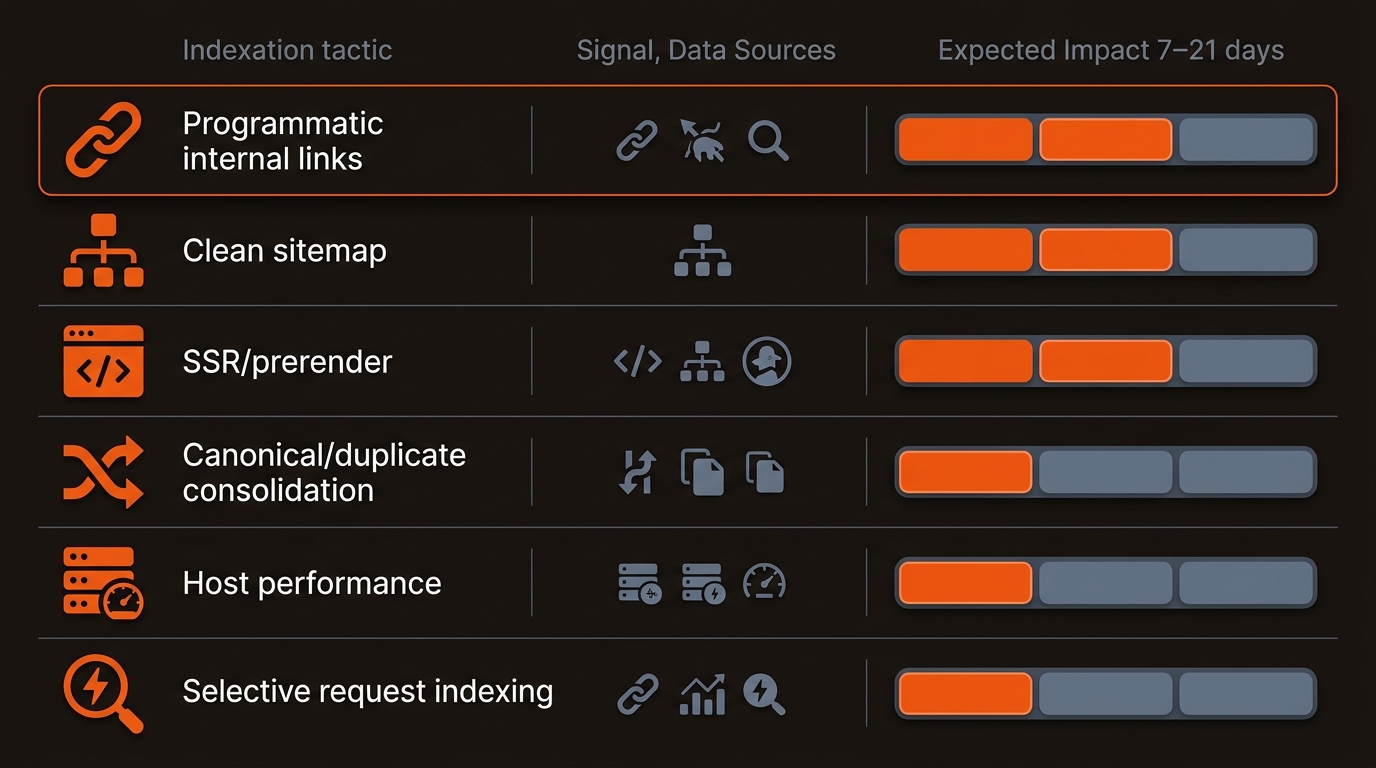
Pick the smallest change that increases crawl priority without adding crawl waste.
caption
Teams ship fixes that add crawl waste: thin archives, bloated sitemaps, and nav-only links.
• Nav/footer links barely move the needle; Google discounts boilerplate sections. Use body-context links inside related posts and hubs.
• Sitemaps full of low-value URLs (tags, filters) dilute discovery. Keep sitemaps to canonical, index-worthy pages.
• Schedule spikes (many posts in a day) without internal links or sitemaps. Google will discover titles but defer crawling the body. Stagger releases or pre-wire internal links.
If “Discovered currently not indexed” persists several weeks after the fix, your render path or duplication is still off. Re-run URL Inspection live, fetch the HTML, and compare to what users see.
Mergeflo tracks Bing indexing status, submits URLs through IndexNow, and flags pages losing impressions.
Mergeflo finds search gaps, drafts articles with FAQ schema for your review, and publishes the ones you approve to Webflow. It prioritizes stuck URLs, adds programmatic internal links across clusters, updates sitemaps and lastmod, and validates render with live checks so pages index and get cited in AI answers.
Common blockers: duplicate URL sets from filters and UTMs, for example ?color=red or ?utm_source=email, creating many near clones with weak unique signals. Canonical tags that point to a different template, or noindex on paginated or faceted pages that still get linked internally. Heavy JS that gates primary content or links, so Googlebot sees a shell. Sitemaps listing non 200 URLs or stale lastmod dates. Parameterized internal links in navs that inflate crawl queues. Fix by enforcing clean linking, disallowing noisy parameters, collapsing canonicals to the preferred path, and removing dead entries from sitemaps.
Wait until you’ve added contextual internal links, verified sitemap inclusion, and fixed render issues. Then request indexing; Google says crawling can take anywhere from a few days to a few weeks (Google Search Central). Re-request only after a material change. Repeated submits without changes do not help and can waste crawl attempts.
It helps only if the sitemap meaningfully changed. If you just ping the same stale file, nothing changes. Add the missing URL, ensure correct lastmod, keep each file within Google's limit of 50,000 URLs or 50 MB uncompressed (Google Search Central), and reference it in robots.txt. Monitor GSC Sitemaps for “Success” and discovered counts.
There is no published number. Add contextual links from already-crawled articles in the same cluster until the page is no longer orphaned. Prioritize links from pages with proven crawl activity in GSC. Anchor text should match the search intent but avoid spammy exact-match repetition.
Speed helps crawl allocation but doesn’t create priority by itself. If the page has no internal links or is a duplicate, improving TTFB won’t get it indexed. Pair hosting fixes with link routing and consolidation. Check average response time in Crawl Stats.
“How to fix discovered currently not indexed in Google Search Console?” boils down to: route crawl signals, prove uniqueness, and remove render friction.
Use GSC Crawl Stats, URL Inspection, and your sitemaps as the control panel. Strengthen contextual links, consolidate duplicates, and only then request indexing. Do this for your highest-value URLs first. The rankings you want start with getting crawled today.
