
Short answer: To get your business to show up in AI search, establish your entity with Organization/LocalBusiness schema and sameAs links, publish answer-formatted pages with FAQ/HowTo schema, enable GPTBot and PerplexityBot, and create corroboration across profiles. Then measure citations weekly and refresh pages with dateModified plus IndexNow pings.
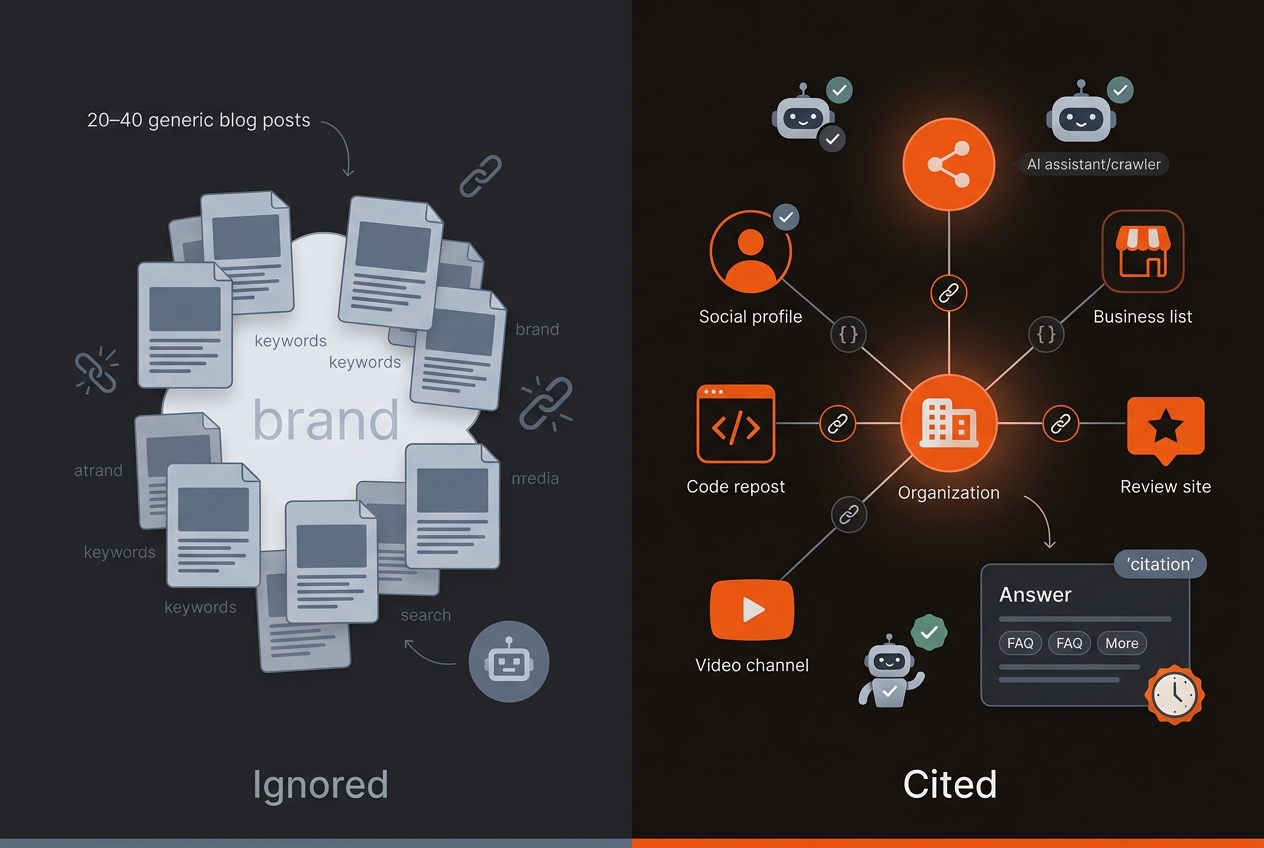
AI assistants quote sources that are easy to corroborate across the web. Make your entity unambiguous, then publish answers it can lift verbatim.
Ship an entity-first stack: explicit graph, answer pages, open crawlers, and freshness signals. You can do this in a week with a lean team.
• Entity graph: Add Organization or LocalBusiness schema on every page. Include name, URL, logo, sameAs (LinkedIn, Crunchbase, GitHub, Product Hunt, G2/Capterra, YouTube). If you serve a region, add areaServed and address. If you’re local, use LocalBusiness with GEO coordinates.
• Answer surfaces: Publish short answer blocks (45-60 words), followed by 2-3 supporting paragraphs. Add FAQ schema for 3-5 adjacent questions. Use HowTo schema for procedural tasks. See why markup matters in this guide on what schema markup is.
• Crawler access: Allow GPTBot and PerplexityBot in robots.txt. Do not gate your docs and pricing behind bot blocks. Perplexity relies heavily on live crawling; blocking it removes you from many answers.
• Freshness: Include datePublished and dateModified on pages. After updates, ping IndexNow via Bing or your CDN integration. Fresh signals help assistants prefer your page when multiple sources have similar answers.
• Corroboration: Mirror answers on docs/help center. Link your social profiles and company listings back to your site. Keep consistent naming. Discrepancies (LLC vs Inc vs brand) reduce confidence.
• Internal links: Route authority to answer pages from your top traffic pages and your homepage footer. Use descriptive anchors that match question intent.
• Measurement: Track assistant referrals in server logs by user-agent (ChatGPT-User, GPTBot, PerplexityBot). Run weekly spot checks on 10 target questions and log if/where you’re cited. If citations decay, refresh the page and expand FAQs. If you’re new to markup, start here: does schema matter for SEO.
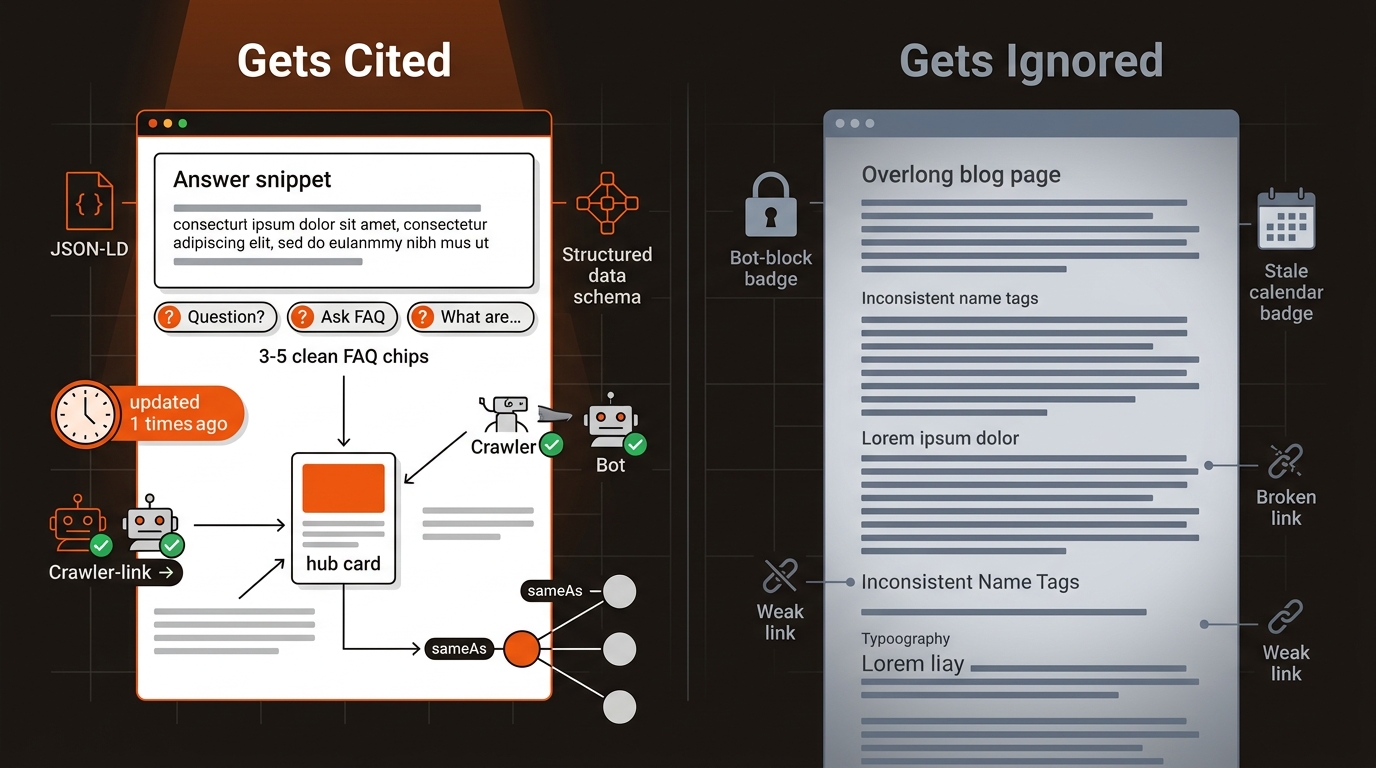
AI engines prefer precise, corroborated, and fresh answers over generic blogs. Build the signals assistants reward.
caption
You can ship this without hiring an agency. Mergeflo is an autonomous SEO + AEO content engine: research to published, AI-citable pages in the customer's CMS, with schema, internal links, and ongoing refresh. It also measures citation share across ChatGPT, Perplexity, and Gemini, opens assistant crawlers, and pushes IndexNow pings. Startup-priced, built for lean teams.
Four pragmatic questions operators ask once they start shipping AEO.
Most teams see first citations in 10-21 days after shipping entity schema, opening crawlers, and publishing answer-formatted pages. We’ve recorded initial ChatGPT and Perplexity citations within 14 days across 3-5 target questions for new SAAS brands. Volume and competition can extend timelines.
If you sell in specific regions or have a physical office customers visit, add LocalBusiness with GEO and address. Purely remote SAAS can stick with Organization. The goal is consistent entity data across schema and profiles. Mismatched details create ambiguity and reduce citation likelihood.
Yes, if you want to be cited. GPTBot powers indexing for ChatGPT browsing; PerplexityBot fetches sources for live answers. Blocking them removes you from consideration. If you have sensitive areas, restrict those directories only, and keep docs, FAQs, and product pages open.
Start with 10-20 answer pages mapped to real questions, plus 1-2 hubs. Each page needs a short answer, 3-5 FAQs, schema, and corroboration links. Scale after you see citations. Thin, high-volume publishing stalls. If you’re aiming for how to show up in AI Overviews, focus on entity clarity and answer structure before quantity.
Two patterns block citations even with good content. First, shipping long editorials without a 45-60 word short answer and FAQ schema. Assistants skip walls of text. Second, no corroboration: your brand exists on your site only. Fix it with sameAs graphs and consistent profiles.
Use tools you already have and timebox the work. Crawl with Screaming Frog to find pages missing schema. Track bots and assistant hits in server logs or with a lightweight ELK stack. Use GSC for query coverage, Ahrefs or SEMrush for question discovery, and a CMS plugin to add FAQ/HowTo schema. For freshness, automate IndexNow via your CDN.
High-competition questions and brand-new domains need extra signals. If you’re under 90 days old with few mentions, assistants may favor established vendors. Triage to lower-difficulty questions, ship case-study style answers, and pursue a handful of high-signal listings (G2, Product Hunt, Crunchbase). The cost is slower coverage, but you start accruing citations that compound.
One week to first citations. Day 1-2: entity schema and sameAs. Day 3-4: publish 10 answer pages with FAQs and internal links. Day 5: open GPTBot/PerplexityBot and index with IndexNow. Day 6-7: corroborate profiles and run manual assistant checks. Keep going until assistants lift your answers on core queries.
