
Short answer: To redesign your website without losing SEO rankings, keep your URL structure intact; if URLs change, implement a 1:1 redirect map to the closest-match pages. Copy titles, meta descriptions, H1s, and structured data to the new templates. Ship from a noindexed staging site, validate internal links and sitemaps, then monitor Google Search Console and logs daily for 14 days to catch regressions.
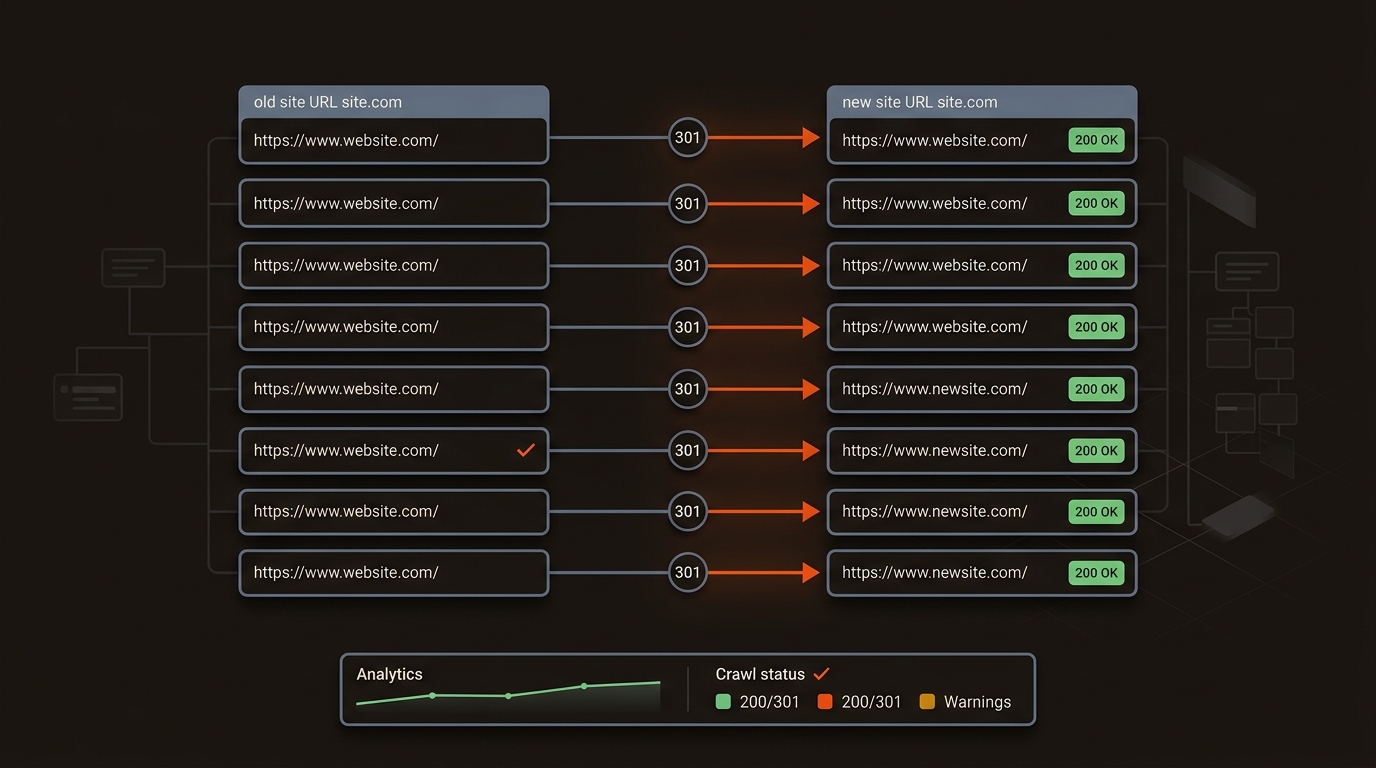
"Keep redirects in place for at least one year after a site move.". Google Search Central
Benchmarks are your safety net before any redesign touches production. Snapshot current rankings, CTR, crawl stats, and top linked pages. Pull GSC Performance + Indexing, export Ahrefs Top Pages and Best By Links, crawl with Screaming Frog, and capture server logs for 404/500 baselines. Without a baseline, you cannot prove you redesigned your website without losing SEO rankings: you are guessing.
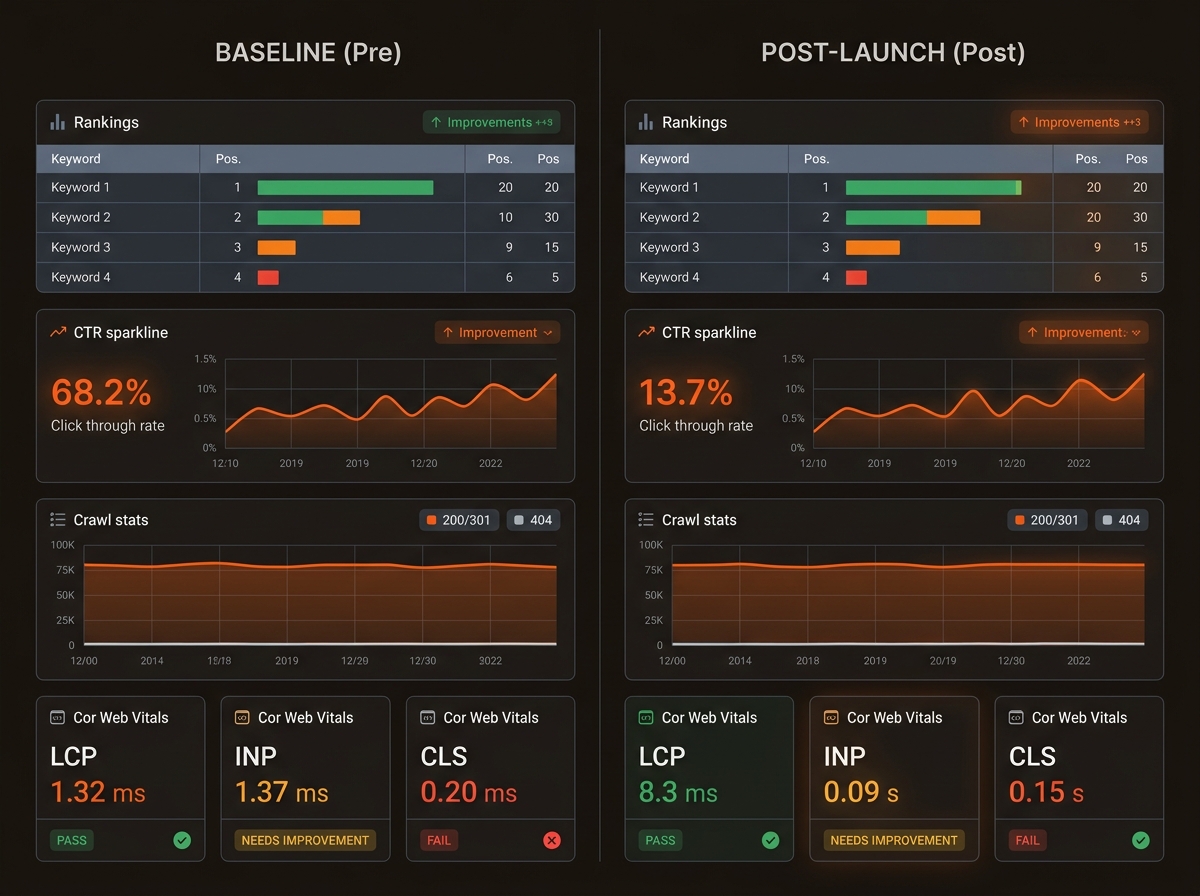
Ranking loss shows up when the redesign ships a different URL graph or render than what Google previously indexed. Typical failure chain: paths change, 301 rules miss edge cases, top crawled URLs return 404 or 302, JS routing delays content, and canonicals or noindex flip unintentionally. You can predict this. Crawl the current site and export a list of the top 1,000 URLs by clicks and impressions. For each, record status code, canonical, title, H1, word count, primary template, and inbound internal links. On staging, replay those URLs and diff headers and DOM. Gaps there become post-launch losses.
Treat SEO tasks as a parallel migration track with explicit sign-off gates. Assign owners, require parity checks per template, and block launch if redirects, schema, or sitemaps fail validation.
Redesign Risk Comparison: What To Keep vs What Breaks Rankings
Cite sources when aligning stakeholders. Google’s migration guidance is explicit on redirects and timelines: https://developers.google.com/search/docs/crawling-indexing/site-move-with-url-changes. A practical pre/post checklist: https://huemor.rocks/blog/how-to-redesign-a-website-without-losing-seo/.
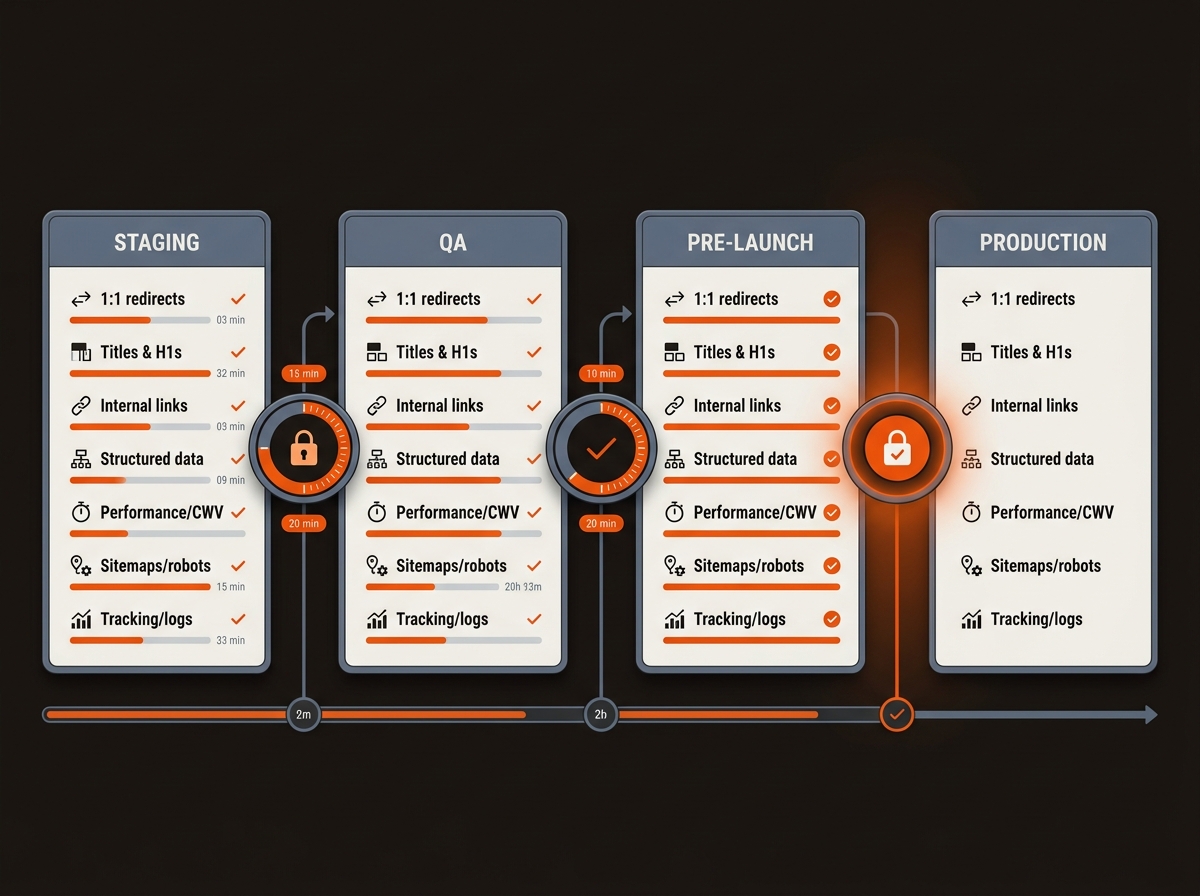
Safe teams separate brand work from migration risk. They first freeze the URL map and ship HTML that preserves crawlable elements, then layer in visual changes. Build a 1:1 redirect table before code freeze. If 10,000 legacy URLs exist, you should be able to click any one and see a single 301 to a 200, no chains. Target content parity on launch within plus or minus 10 percent words per key page and identical H1 and title intent. Phase rollout to 10 percent of traffic, validate 404 rate under 0.5 percent and 301 hit rate over 95 percent, then expand.
Mergeflo tracks your Google positions and flags pages that lose impressions. Mergeflo is an AI search visibility platform for startups that tracks visibility across Google and AI engines and drafts content for the gaps it finds. It is an autonomous SEO + AEO content engine that finds gaps, drafts articles with FAQ schema and suggested internal links, and publishes the ones you approve to Webflow.
In practice, Mergeflo tracks your Search Console clicks and positions and flags pages that lose impressions after launch. It also tracks AI Overview coverage and citations while your new design settles. If you are carrying over schema, this primer on structured data for SEO helps you avoid deprecations that break rich results.
These are the four launch-week decisions that keep rankings stable.
Expect 7-21 days of movement if redirects and content parity are tight. Larger IA changes or content rewrites can extend recovery to 4-8 weeks. Keep redirects for at least a year and watch GSC’s Indexing and Performance reports daily in the first two weeks.
No. If the URL is identical and status is 200, no redirect is needed. If you consolidated pages, point each legacy URL to the single best-match destination and update internal links to avoid redirect hops.
Run a diff crawl of old URLs to confirm 200s, validate XML sitemaps, and check server logs for 404 spikes. In GSC, compare last 7 vs prior 7 days for top queries and pages, and inspect any URLs with sudden impressions or CTR collapse.
Always block staging with authentication and a noindex header/meta. Verify robots.txt disallows plus x-robots-tag noindex on all responses. Before launch, remove noindex from production and confirm with a live URL inspection in GSC.
