
Short answer: Yes, SEO is still worth it in 2026 when you build intent-led clusters with schema, tight internal links, and pages designed to earn AI citations. It is rarely worth it for generic listicles or scattered posts. There is no fixed timeline for first signals or payback; watch Search Console impressions to see whether it is working.
Old SEO lost easy clicks; systems that earn citations and coverage win. Teams publish every month, but the posts are unclustered, light on schema, and lack internal links. AI Overviews and answer engines siphon quick-win traffic, so orphan posts stall indexing and never build authority by topic.
We found no reliable benchmark for when a new cluster breaks even; it depends on competition, your site's authority and how you measure value.
If you are not shipping structured data, FAQ/HowTo blocks, and citation-friendly references, you will miss AI surfaces. Start by aligning each cluster to a commercial job, validate KD and SERP format in Ahrefs/SEMrush, then publish as a package with schema. See Google’s guidance on structured data and the evolving role of AI in Search. If you are asking, "is SEO still worth it in 2026?", the answer is yes when clusters, schema, and citations are part of the plan.
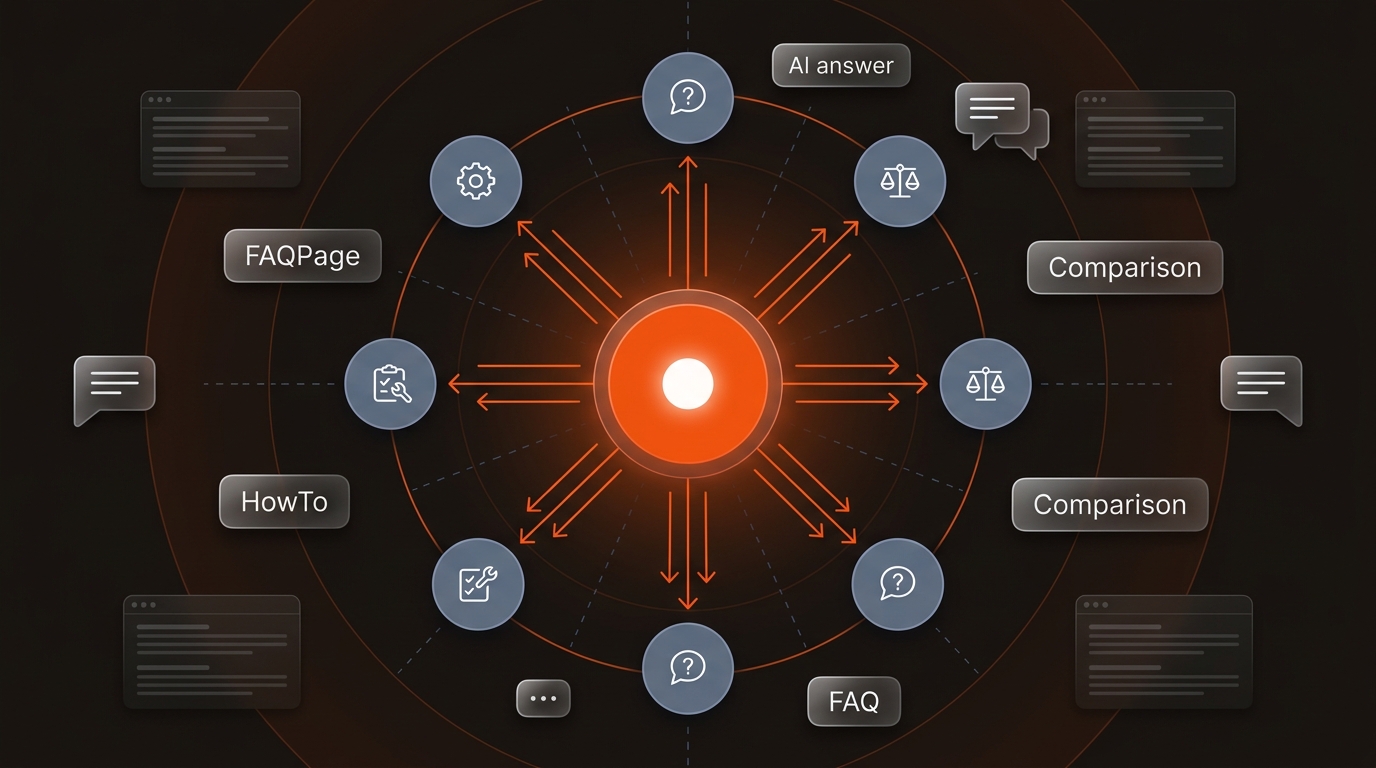
Most teams chase head terms and pump out listicles without mapping to buying steps. Technical debt compounds: duplicate title tags, noindex left on staging, orphan clusters with zero internal links, and blogs shipped without a single conversion path. Reporting then fixates on average position.
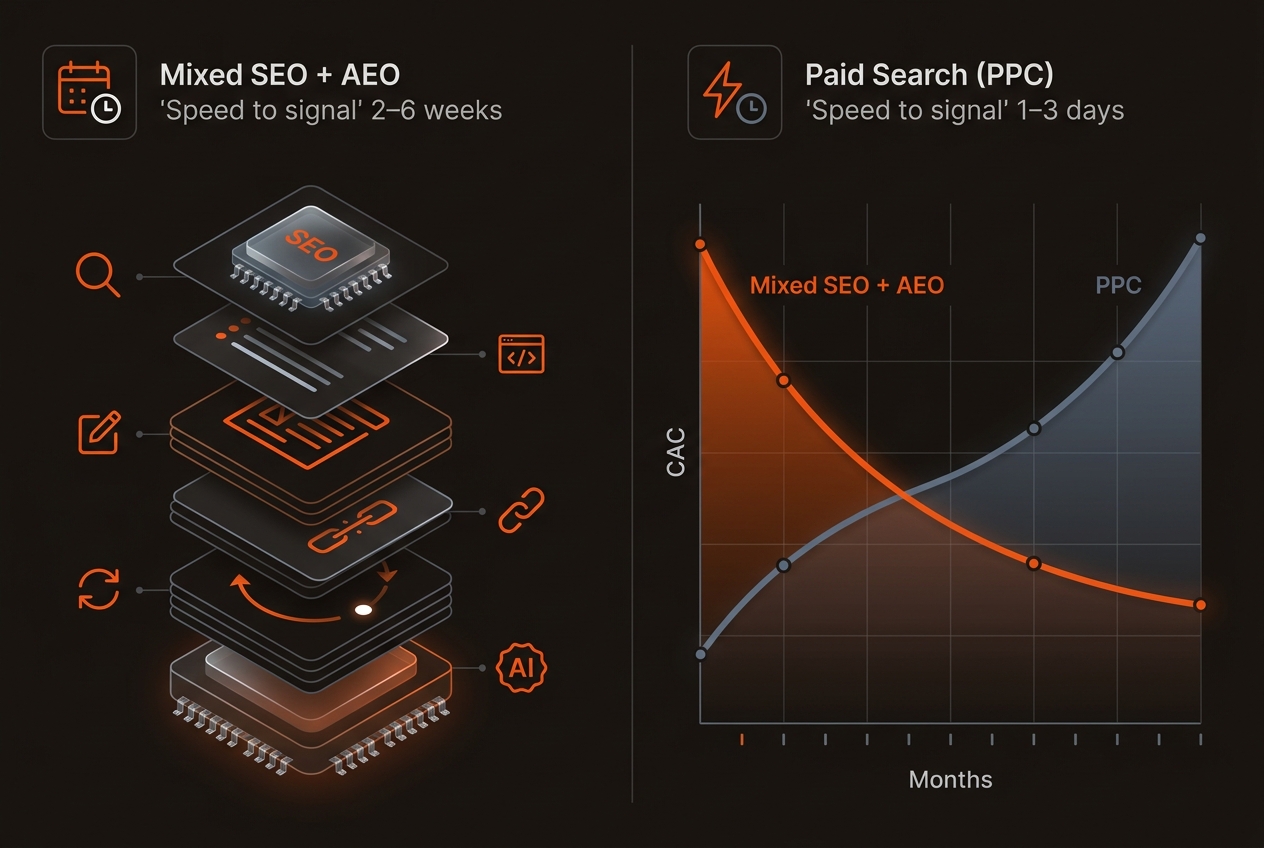
Match channel to your time horizon: PPC buys days; mixed SEO + AEO earns compounding coverage in weeks. Paid search covers bottom-funnel demand but compresses margin. SEO in 2026 pays when you cluster topics, add schema, and publish AEO-ready pages that answer engines can cite.
caption
Use mixed SEO + AEO for defensibility. Cluster your topics, add FAQ/HowTo/Product schema, embed citations, and publish in batches so Google sees topical depth. Measure leading indicators by cluster in GSC: how many pages are indexed, whether impressions rise week over week, and whether AI tools start citing you, before chasing last-click attribution.
Operational tradeoff: programmatic clusters move fast but require QA on titles, deduped entities, and internal links. At high volume, weak QA creates cannibalization and slows indexing. Use Screaming Frog for crawl checks and enforce hub-to-spoke linking on every publish.
For deeper context, see Is SEO Worth It For Small Businesses.
You need a tool that tracks your visibility across Google and AI assistants and drafts content for your review. Mergeflo is an AI search visibility platform for startups. It tracks your Google positions and AI mentions; current plans are on the pricing page. It drafts answer-ready articles and flags pages that need a refresh.
Autonomous SEO + AEO content engine: it finds gaps, drafts articles with FAQ schema and suggested internal links, and publishes the ones you approve to Webflow. That means clusters mapped from KD and intent, internal links auto-wired, schema shipped, and refreshes triggered by impression decay. For funnel alignment, read what part of the funnel is SEO and map clusters to jobs-to-be-done before publish.
We start with a joint backlog from CRM, Search Console, and log files. Each URL gets a click delta score: impressions from the last 28 days times an attainable CTR uplift, capped by current rank. Prioritization favours pages that already earn impressions, then supporting pages, then net new pages. Sprint 1 fixes crawl waste and linking: consolidate duplicates, add 3 to 5 internal links per target, repair nav depth to under three clicks. Sprint 2 ships briefs with query families, H2 outlines, and CTAs mapped to stage. Measurement gates are non brand clicks, assisted demos, and time to first lift.
These answers remove scope, timing, and execution ambiguity so you can act Monday.
Watch leading indicators by cluster: indexation rate, impressions, CTR in GSC, and answer-engine citations. Look for most pages indexed, impressions growing week over week, and first AI citations for the cluster. If signals stall, tighten titles/meta, add internal links from the hub, and ship FAQ/HowTo schema.
Pick one or two clusters tied to revenue jobs. Build programmatic templates with tables, comparisons, and FAQs, and wire hub-to-spoke links on every page. Publish in small weekly batches. Review GSC by cluster every 14 days; refresh pages with flat impressions or a click-through rate well below your site average.
Prioritize content that earns citations: definitional anchors with sources, comparison pages with structured data, and FAQs that mirror query fragments. Keep entity names precise and consistent across pages. Add citation-friendly sentences with clear attributions and data tables so answer engines can lift text cleanly.
If your TAM is tiny, SERPs are walled-garden (docs packs, marketplaces), you lack authority for YMYL, or you have very little runway, favor PPC and partners. Revisit SEO when you can commit to building out full clusters, maintain schema and internal links, and sustain refreshes for two quarters.
