
Perplexity shows its sources, so focused, answer-shaped pages can earn citations before big-brand authority compounds. For perplexity citations startups, the window is open: Perplexity pulls multiple sources per answer, prefers recent, extractable claims, and rewards tight structure. That means small teams can grab source slots with pages built for quoting instead of long essays.
Fast-loading pages with claim-first headings, short proofs, and visible update stamps get pulled into the answer box. Ship them weekly. Track which queries trigger your slots and tighten structure where extraction lags. Speed and clarity beat scale here.
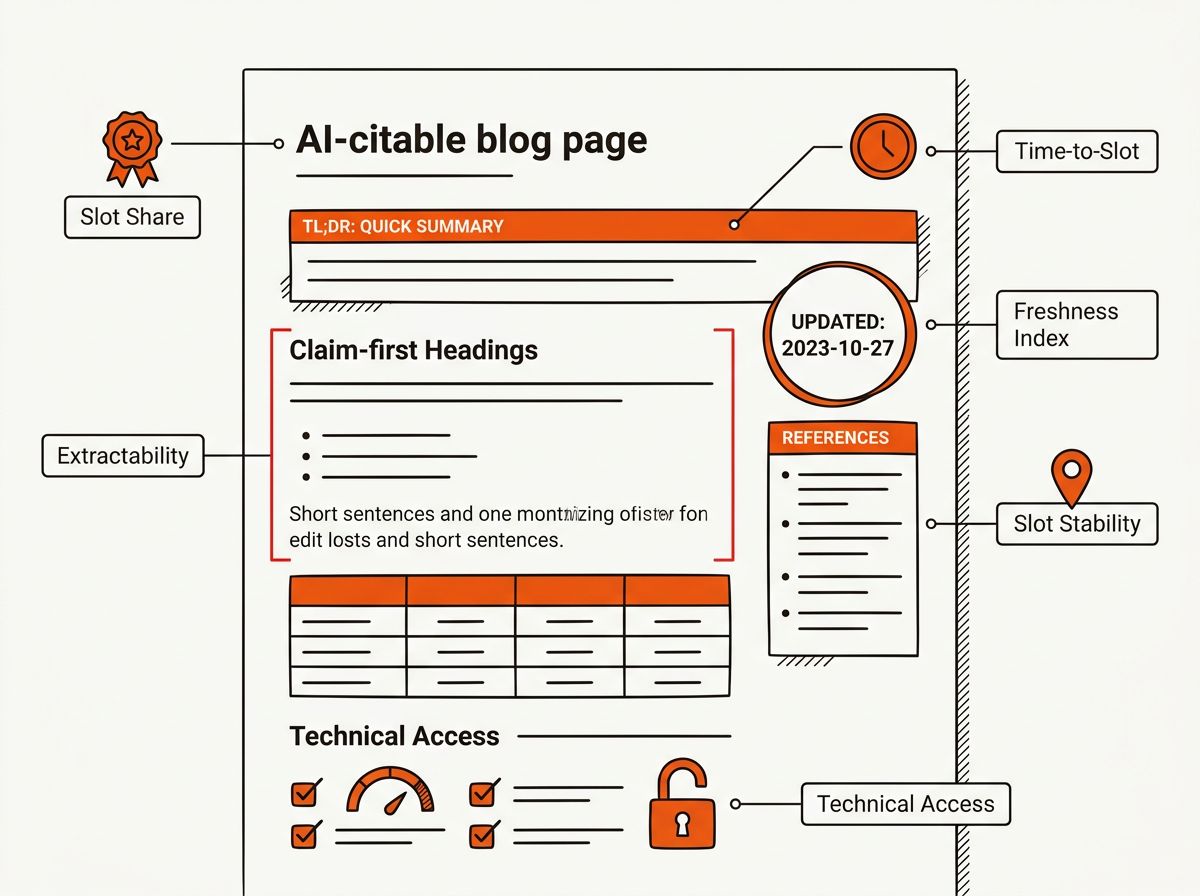
• Slot Share: percent of tracked queries where you appear in any citation slot.
• Extractability: how easily a claim can be quoted from your page based on headings, lists, and concise sentences.
• Freshness Index: days since last update; include a visible Updated date.
• Time-to-Slot: days from publish to first citation observed.
• Slot Stability: weeks you retain any slot for a query.
• Technical Access: fast load, no JS gating; confirm crawlability via Perplexity Help and the basics on Perplexity About.
This is also a GEO advantage. AI assistants weigh recency and extractability more than PageRank-era link math. If your page carries a timestamp, quantifies its claims, and cites primary data, it is a clean candidate for a slot even with modest DR.
Source slots are winnable with focused pages; start with how to get cited in Perplexity. Back it with AI search visibility tracking and the answer engine optimization platform.
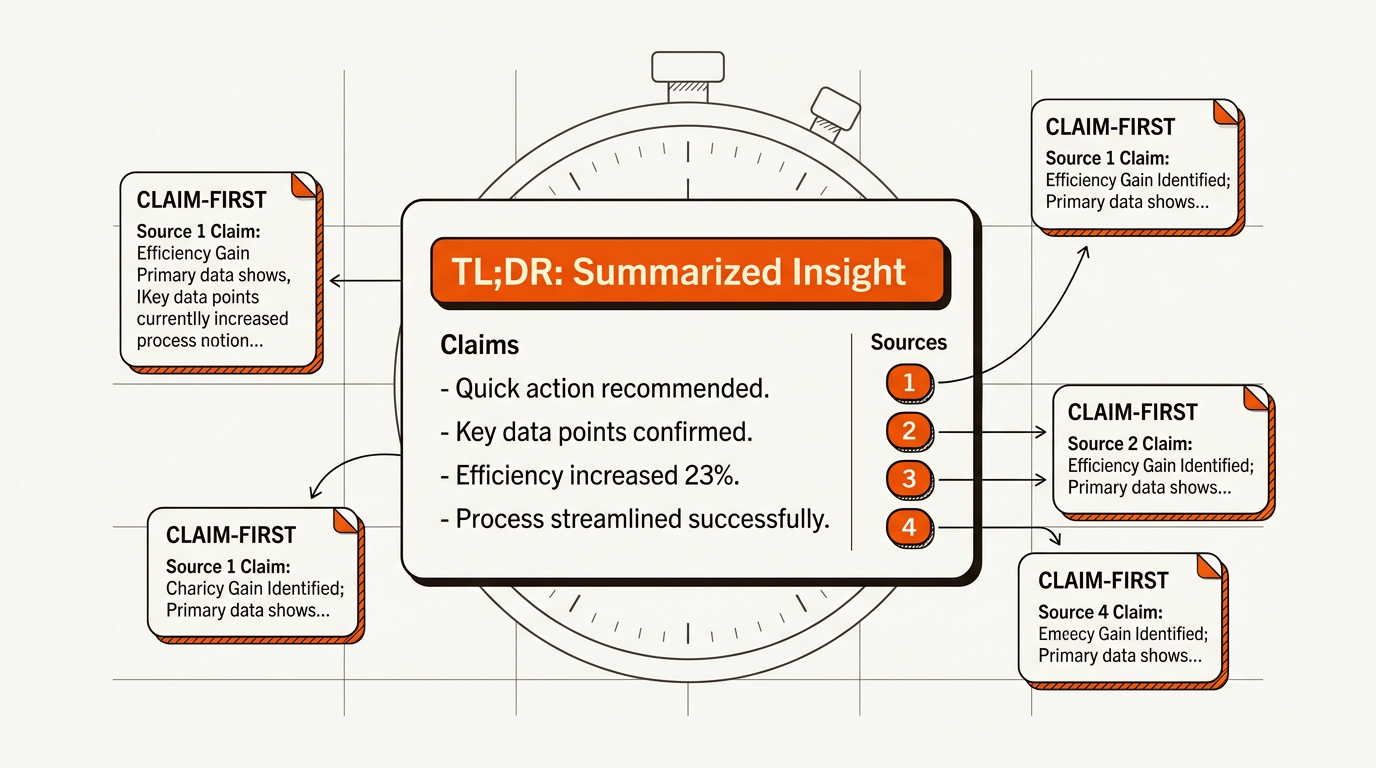
CITE-FAST makes pages quotable on day one and maintainable weekly. CITE is structure: Claim-first H2s, Inline proof within 1-2 sentences, Table or list with numbers, Explicit sources with dates and links. This makes extraction deterministic and fast.
FAST is cadence: Freshen weekly with a datestamp and minor updates, Add primary data (survey, small benchmark, or log-based metric), Ship variants for sub-intents where answers differ meaningfully, Track slot share across a fixed query set. The loop is continuous and light.
Tradeoffs: ultra-focused pages can fragment if you slice every micro-variant. Keep a tight cluster and consolidate where answers overlap. Failure modes: burying claims in narrative, hiding updated dates below the fold, shipping heavy JS or interstitials that block fetch.
Operationally, this works for a small team running a CMS. It gets harder as you scale without automation for update stamps and list or table generation. At that volume, monitoring slot churn across queries becomes manual toil unless you centralize metrics.
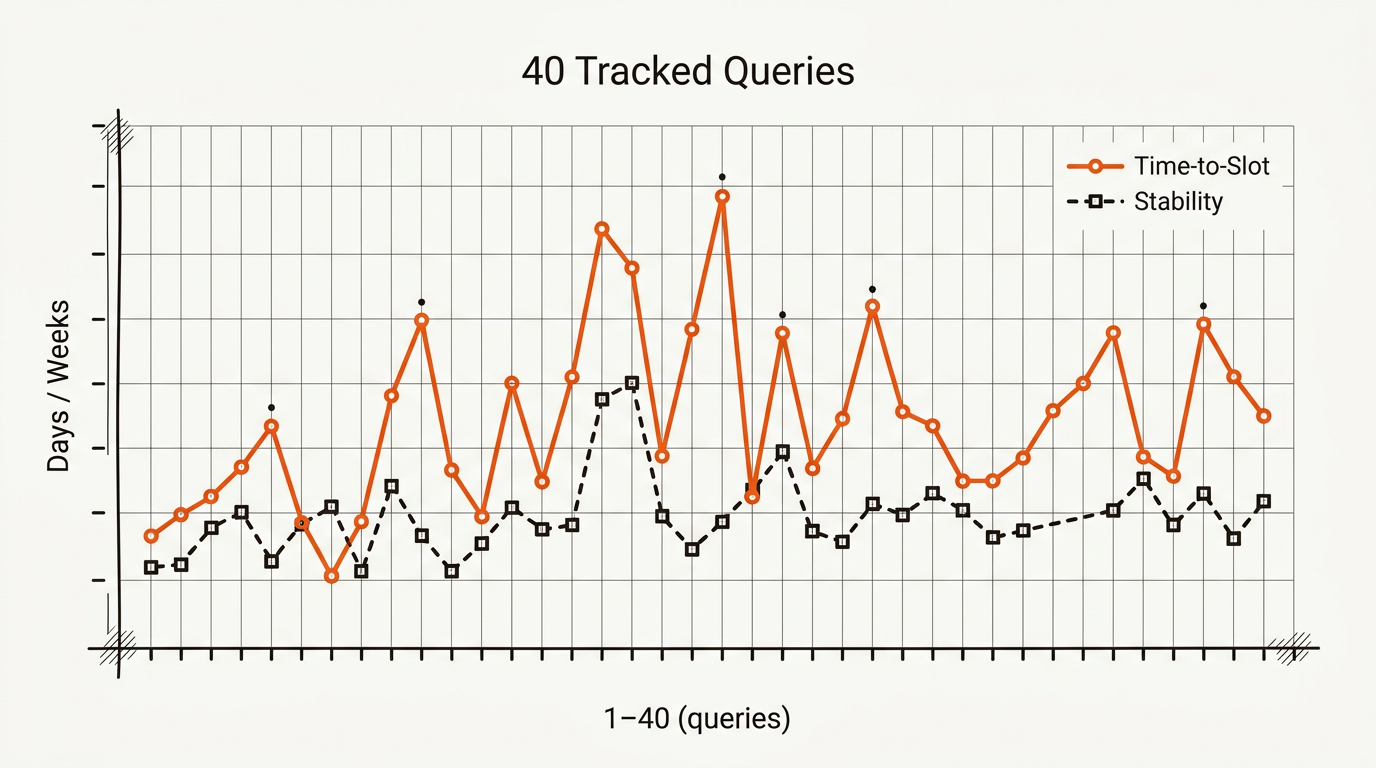
Here is how to measure it. Track a fixed set of mid-tail queries around your niche. After you publish answer-shaped pages, count how many tracked queries show at least one citation to your domain: that share is your Slot Share. Also record how many days each page took to earn its first citation (Time-to-Slot) and how many weeks it kept it (Stability).
To estimate visits, multiply the queries where you hold a slot by the answer views you expect per query and by a click rate on the sources. We found no published click rate for Perplexity sources, so treat any number you use as an assumption and replace it with your own referral data.
A small growth team can test this by templatizing TL;DRs, adding 1-2 charts or small tables, and running a lightweight citation audit weekly. The constraint is editorial time. Use Ahrefs to source mid-tail intents, then ship.
• Use daily checks and archived screenshots to timestamp first-slot events.
• Tie slots to sessions in analytics via referrer annotations; exact referrers may be obscured, so triangulate with time windows and brand mentions.
Build pages for extraction: clear claims, visible numbers, and source trails. Start each page with a one-paragraph TL;DR containing a single quantified answer. Follow with H2s that each present one claim, then prove it in 1-2 sentences. Add a small table or list with numbers so the assistant can lift structured facts.
• Use a visible Updated date near the title and in the schema. Perplexity weighs recency in multi-source threads.
• Keep paragraphs short and declarative. Avoid burying claims behind long context.
• Cite sources inline with anchor text and a parenthetical date. If you reference a dataset, link to the CSV or methodology.
Technical hygiene matters. Ensure pages resolve with 200 status, no JS walls, and fast CLS/LCP. Use Screaming Frog to confirm headings are present server-side and that your TL;DR appears early in the DOM. Keep image alt text descriptive.
Pick mid-tail queries where answer consensus is fluid and freshness wins. Use Ahrefs or SEMrush to pull terms with KD under 20-30, search volume 50-500, and SERPs filled with recent blog posts and docs. These pockets tend to produce multi-source Perplexity answers.
Cluster by intent. If three queries ask for the same metric in different ways, answer them with one page plus a short FAQ. If they ask for different metrics or contexts, ship variants. Keep clusters tight so internal linking is natural and page updates propagate across related intents.
For GEO, write answers that clarify the who and the when. Assistants reward precise scope. Example format: “As of [quarter and year], [metric] in [segment] is [value] ([sample size and source]).” That sentence is extractable, dated, and cites a cohort. It earns trust in AI contexts faster than generic advice.
Weekly micro-updates keep you visible while bigger brands catch up slowly. Change one data point, add a new chart, or append a short FAQ. Update the date. Assistants pick up recent changes faster than Google’s full recalculations of authority.
Treat tables as living objects. Add a row when the market shifts. Mark methodologies clearly. Keep sentences crisp so assistants can choose your phrasing over softer summaries. Stability tends to improve when your page maintains a steady cadence of small, visible improvements.
Operational tradeoff: many thin updates across many pages are weaker than a few strong updates on the most visible ones. Prioritize pages already holding slots or those with fastest Time-to-Slot. Track Stability in weeks and invest where it moves.
Most missed slots trace back to structure. The patterns are predictable and easy to fix.
Claims buried in long paragraphs with no scannable sentence to extract. No Updated date, so a competitor with a fresher stamp gets picked. Tables without explicit units, making facts ambiguous in the answer. Headlines that summarize, but do not claim: write a headline that states your actual finding instead of a label like “Q1 2026 Benchmarks”.
Perplexity citations startups covers the structural work of the article above: the page inventory, the workflow that keeps it shipping, and the measurement loop that confirms it's working. The sections preceding this FAQ describe each part in detail.
There is no fixed timeline. Google does not promise when, or whether, a page will rank. Watch Search Console impressions for the questions the page targets each week, because impressions move before clicks. A page with no impressions after a few months usually needs a sharper angle or more internal links.
Cost depends on who does the work: your own team's time, a freelancer, an agency or a software tool. Mergeflo has a free plan, and paid plans are listed on the pricing page.
Mergeflo researches topics, writes briefs and drafts in your brand voice, adds FAQ schema and suggests internal links. You choose the topics and approve each article, and it publishes to Webflow only when you press Publish. For pages losing reach, Mergeflo flags them, and when you press Refresh it writes a refresh brief for you to review.
