
Short answer: The best SEO strategies for SAAS companies are to map keywords to buyer journeys, build hub-and-spoke clusters, and ship high-intent libraries (integrations, use cases, alternatives vs) with real information gain. Add Product and FAQ schema, Q&A blocks, and sub-200 ms INP. Optimize docs and pricing. Design for AI Overviews with concise summaries and internal links.
Volume without intent alignment and weak internal links kills rankings. Publishing every week fails when topics don’t connect to product paths. Threads are loose. Hubs are unfinished. In Ahrefs, you see impressions but no movement past position 20 because pages cannibalize or lack a clear hub.
Post-2024, scaled thin content loses; information gain wins. Programmatic pages must add unique value: product data, setup nuances, real screenshots, and FAQs sourced from support tickets.
Good INP is 200 ms or less. That’s now a Core Web Vital threshold teams should hit across marketing pages for visibility and conversions.
https://web.dev/inp/
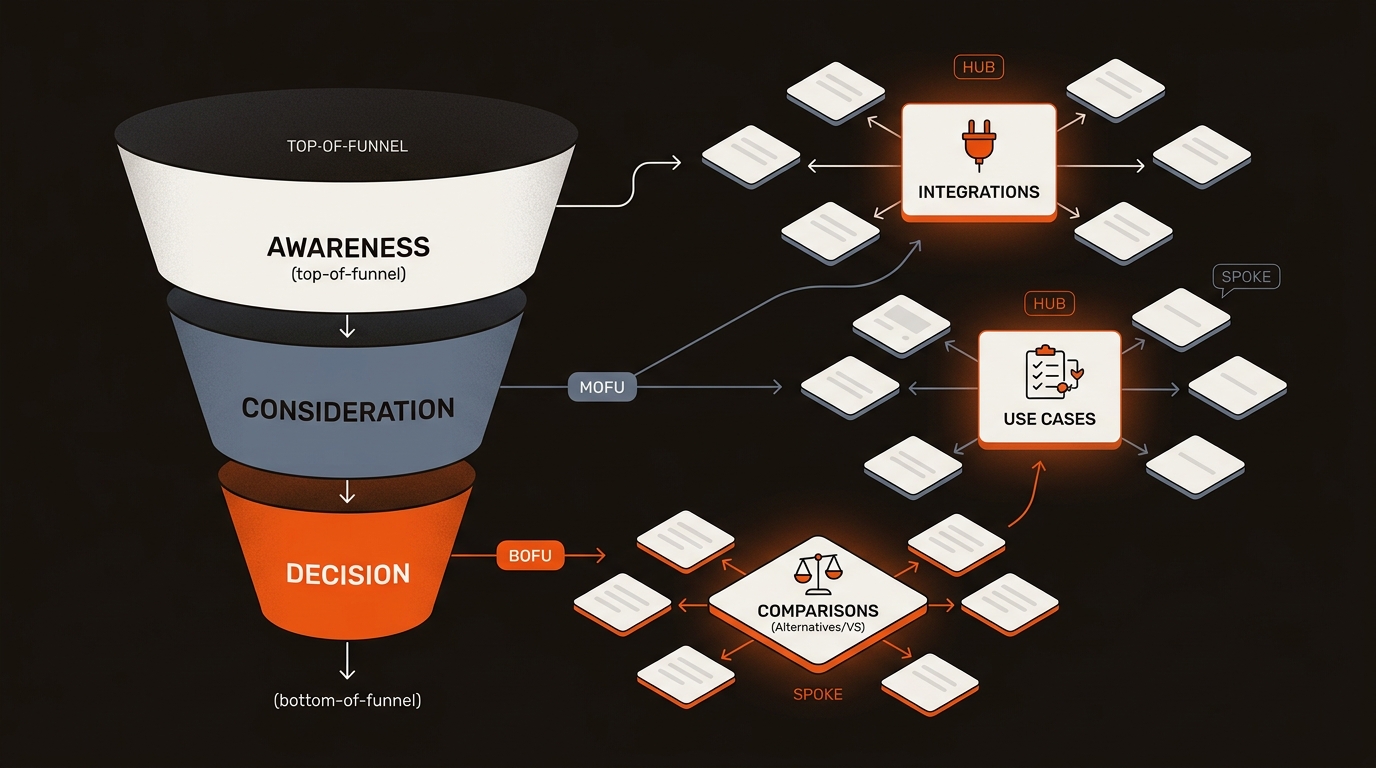
Ship page types that bind organic traffic to trials: integrations, use cases, and balanced comparisons. Integrations capture mid-bottom funnel demand with brand-plus queries. Use case pages convert PQLs when they show step-by-step workflows. Alternatives and vs pages win BOFU intent when they present criteria, pros/cons, and sources transparently.
Finish clusters before expanding, and wire them with descriptive internal links. Anchor hubs with clear intros, scannable sections, and Q&A. Add Product, FAQ, and HowTo schema where it fits. For docs and academy content, resolve subdomain and canonical rules early to avoid split index issues. See Google guidance on creating helpful content: https://developers.google.com/search/docs/appearance/creating-helpful-content
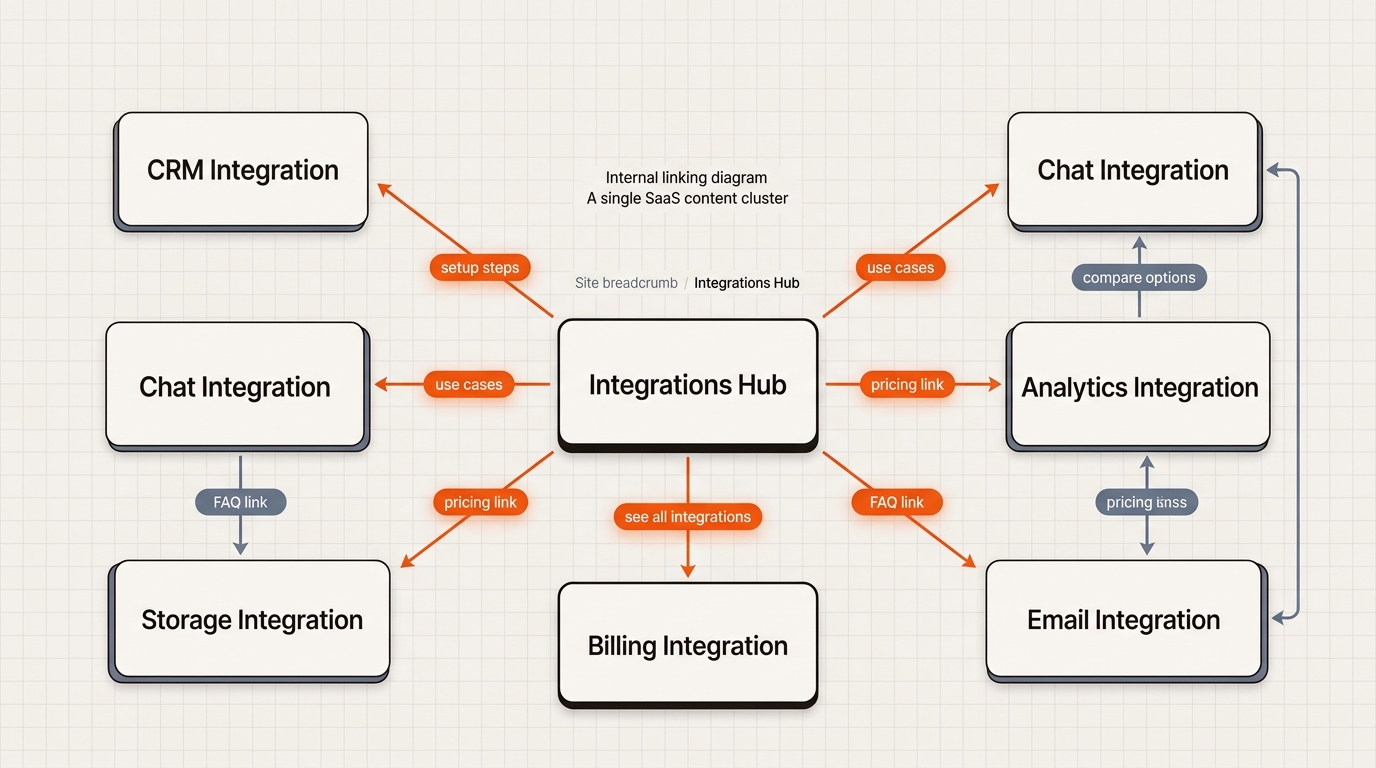
Pick the fastest path to qualified demand, then scale templates with real info gain.
caption

Run a weekly shipping cadence: 3-5 net-new high-intent pages and 2 refreshes, cluster by cluster. Every page gets problem framing, product tie-in, a step-by-step, Q&A, internal links, and schema. Track at the cluster level in GSC: impressions, average position, and CTR. Track AI citations across ChatGPT and Perplexity weekly to confirm extraction.
Integrations pages need light engineering for OAuth screenshots and QA; plan that capacity.
Mergeflo is an AI search visibility platform for startups. It tracks your Google positions and, on paid plans, checks whether ChatGPT, Gemini and Claude mention your brand. Product capability: an autonomous SEO + AEO content engine that finds gaps, drafts articles with FAQ schema and suggested internal links, and publishes the ones you approve to Webflow. For broader go-to-market context, see our take on a B2B SAAS marketing strategy.
Ship one complete cluster end to end: 1 hub and 4-6 spokes for an integration or use case. Add a single comparison page and update pricing FAQs with schema. Aim for a complete set of pages with internal links and Q&A blocks. Keep INP at 200 ms or less across these pages.
Track impressions and CTR in GSC at the query cluster level and monitor AI citations by checking mentions in ChatGPT and Perplexity weekly. Attribute trials, demos, and PQLs to page types in analytics. For programmatic libraries, watch indexing rate and average position deltas to catch template or duplication issues early.
Yes, if templates deliver information gain. Add unique setup steps, integration nuances, screenshots, and FAQs sourced from support tickets or sales notes. Prune or merge thin pages and avoid cloned city or vertical boilerplate. Monitor crawl stats and duplicate title/meta patterns in Screaming Frog to prevent deindexing.
Design for answer extraction: concise, factual summaries at the top, tight headings, and Q&A sections that resolve purchase objections. Use supported schema. Keep critical content early in the DOM and minimize JS that blocks rendering. The best SEO strategies for SAAS companies now include formatting for fast citation by AI engines.
