Short answer: The best way to drive organic traffic to an affiliate website is to publish buyer-intent review and comparison clusters optimized for SEO and AEO with internal links, Review schema, and fresh test data. Ship weekly, earn quality links, and refresh as SERPs shift. This repeatable system compounds and becomes your highest-yield channel.
Ahrefs reported 90.63% of pages get zero Google traffic across 1B pages; intent, links, and structured data separate the winners.
Indexing and refresh discipline matter. At 200+ pages, indexing lag compounds; without internal links and periodic updates, decay buries viable posts. Seed distribution via YouTube or Reddit can accelerate early links and engagement. The best way to drive organic traffic to an affiliate website starts with a cluster that your hub page supports and your spokes reinforce. If you need an AI search visibility platform for startups that ships this system end to end, consider AI SEO + AEO built for lean teams.
SEO/AEO buyer-intent clusters beat other organic plays on compound growth, control, and conversion readiness.
Channel tradeoffs for affiliate organic growth
Tactically, cluster hubs + review/comparison spokes with Review schema and consistent outbound testing data win featured snippets and earn AI citations. YouTube supports proofs and link earning. Reddit/Quora seed demand but rarely compound without a ranking hub. The cost: programmatic long-tail can scale faster but draws medium intent and lower EPCs; reviews/comparisons convert better but require real testing and upkeep.
For deeper context, see Why Does 96 55 Of Content Get No Traffic From Google.
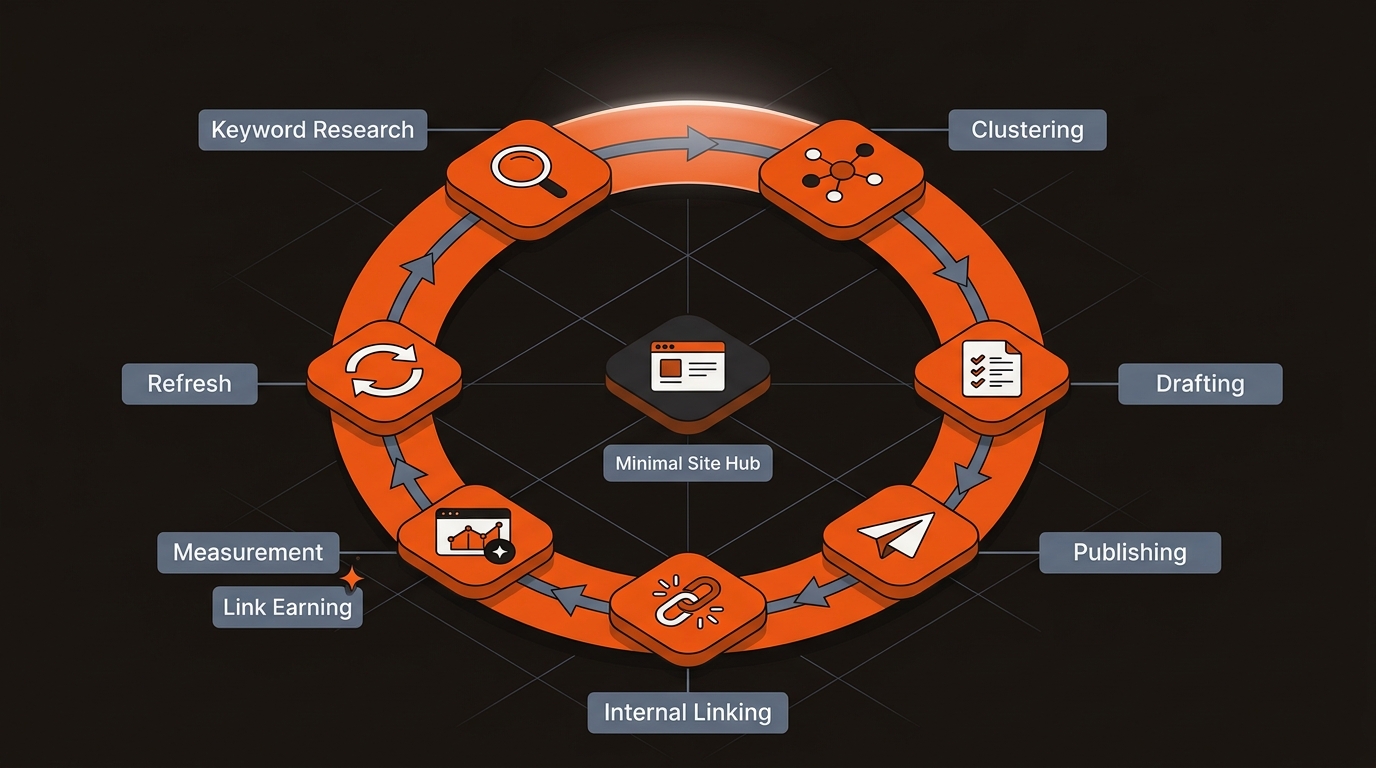
Map keywords to commercial tasks, then ship structured, test-backed pages on a weekly cadence.
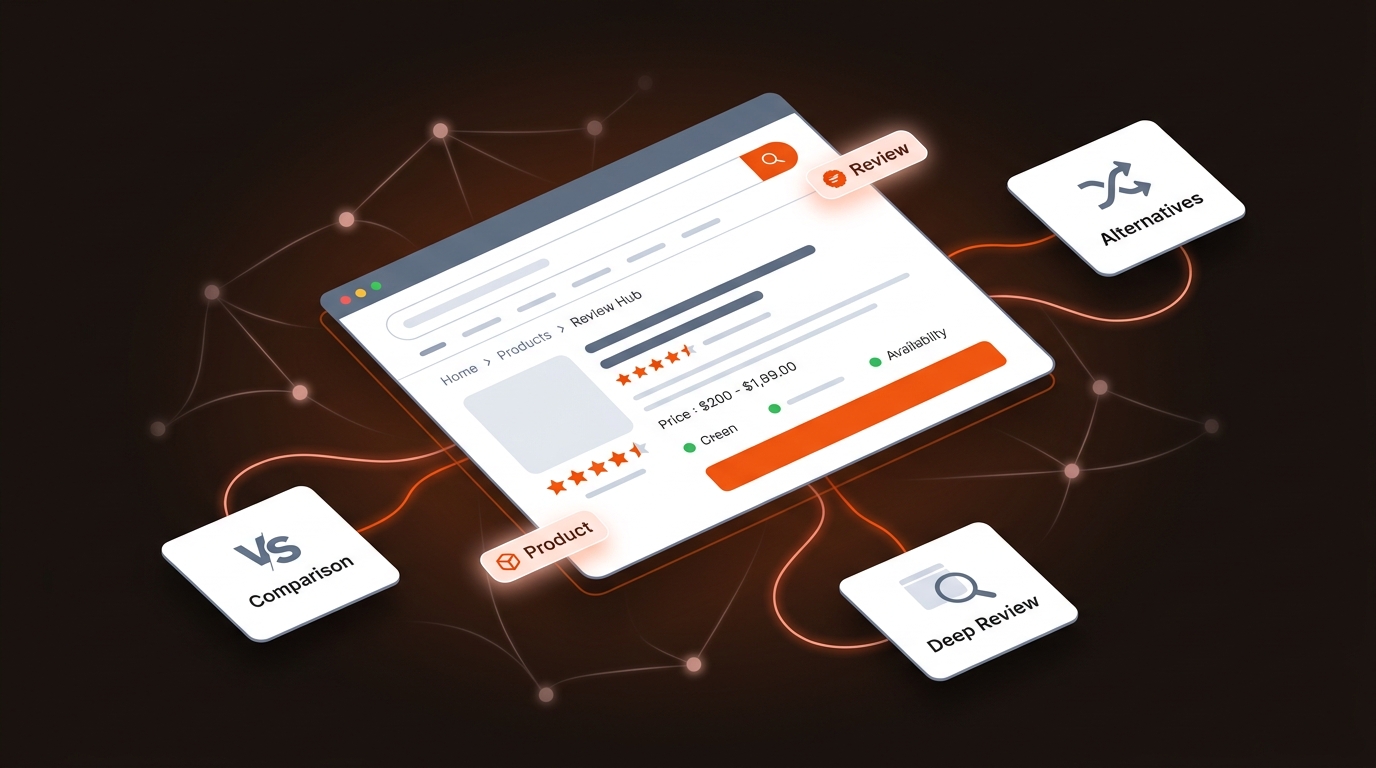
Start with Ahrefs or SEMrush to cluster “X vs Y,” “Best X for Y,” and “X review” queries by product category. Build one hub per category, then 6–12 spokes that cover comparisons, alternatives, and single-product deep dives. Wire every spoke to the hub and to 2–3 sibling spokes.
On-page, lead with the answer in the first 2–3 sentences, add pros/cons, pricing, and a specs table. Include Review or Product schema where eligible, FAQs with actual user questions from GSC and Reddit, and original screenshots. Refresh when pricing changes or you publish new test data. This is the best way to drive organic traffic to an affiliate website because it aligns structure, evidence, and crawl paths with buyer intent.
A 3-person team can hit traction by prioritizing cadence, links, and recency.
Weekly: publish 2–3 buyer-intent pages, each with fresh benchmarks or screenshots. Monthly: secure 3–5 quality referring domains via data assets (benchmarks, teardown videos), and update 5–8 pages with new findings. Track with GSC (queries, CTR), Ahrefs (RDs per hub), and a simple indexation log.
Tradeoff: chasing every sub-variant bloats inventory and slows refresh. This approach breaks above ~300 pages if you do not templatize specs tables and automate internal links. Use a CMS component for pros/cons blocks and a schema generator to keep output consistent and extractable.
Turn the playbook into a pipeline: research, publish, refresh, and measure across Google and AI engines without adding headcount.
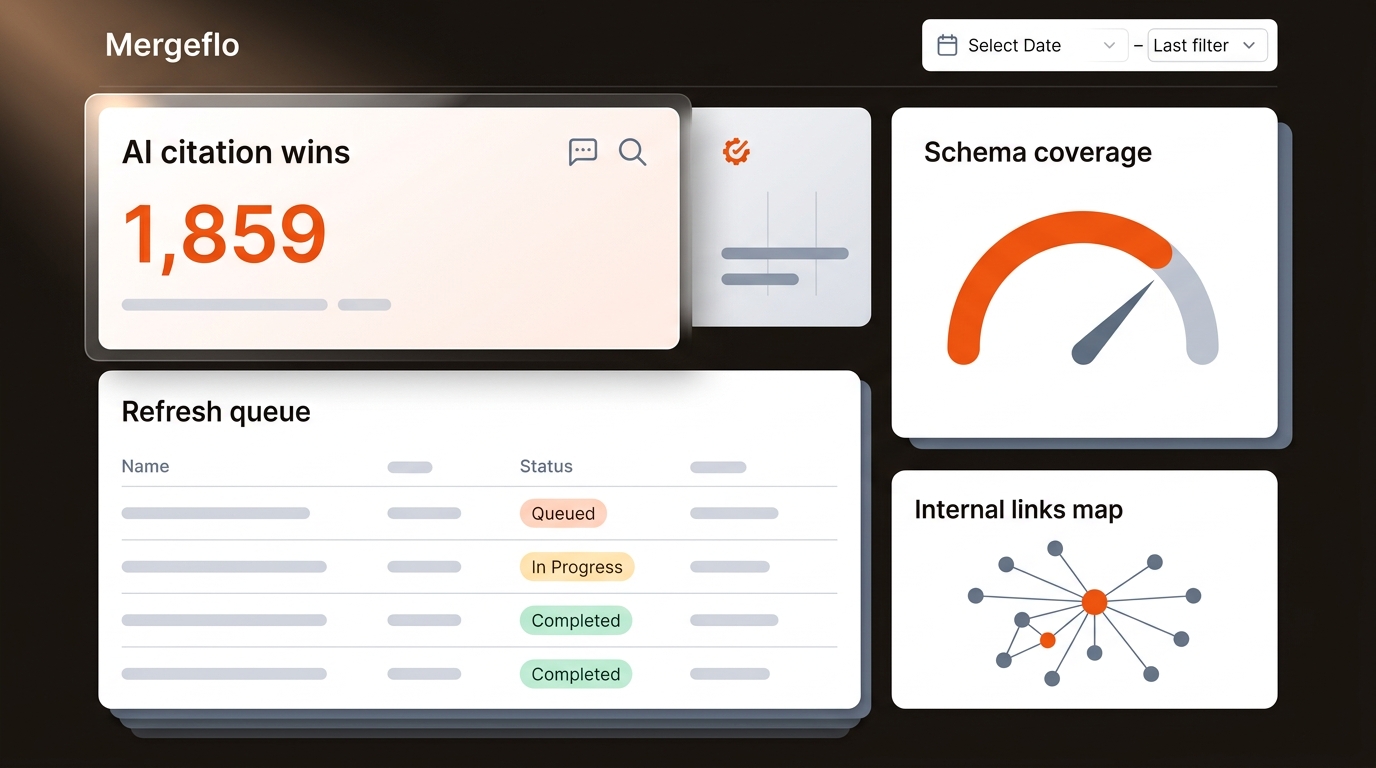
Mergeflo is an autonomous SEO + AEO content engine: research to published, AI-citable pages in your CMS, with schema, internal links, and ongoing refresh. It measures AND fixes visibility across Google and AI Overviews, ChatGPT, Perplexity, Gemini, and Copilot. Plans are startup-priced (149–649/month).
We bake buyer-intent clustering, on-page schema, and internal links into every publish, then auto-refresh pages as SERPs and AI citations shift. For link strategy depth, read our analysis on whether backlinks still matter and how to earn them with assets.
Four operator questions that decide if this system will work for your affiliate site.
Expect first clicks in 6–12 weeks if you publish 2–3 buyer-intent pages per week, secure 3–5 quality links per month, and maintain a refresh cadence. New domains with clean technicals and fast TTFB index faster. Social seeding (YouTube, Reddit) can shave weeks off the first-link hurdle.
Comparison pages (X vs Y), Best for [use case] lists with test data, and single-product deep reviews with scenarios convert reliably. Add pricing, alternatives, pros/cons, and original screenshots. Use Review or Product structured data where eligible; see Google’s Review snippet guidelines.
For competitive terms, plan 5–20 referring domains per cluster hub over 90 days. Earn links by shipping data-backed assets (benchmarks, teardown videos), contributing to niche newsletters, and syndicating summaries to communities. Avoid paid link blasts; velocity spikes without relevance invite devaluation.
Answer the intent in the first 2–3 sentences, structure with H2/H3, add concise pros/cons and specs tables, and include Review schema plus refreshed evidence. Consistency matters: publish, interlink, and refresh. Engines cite pages that are clear, recent, and easy to extract.
