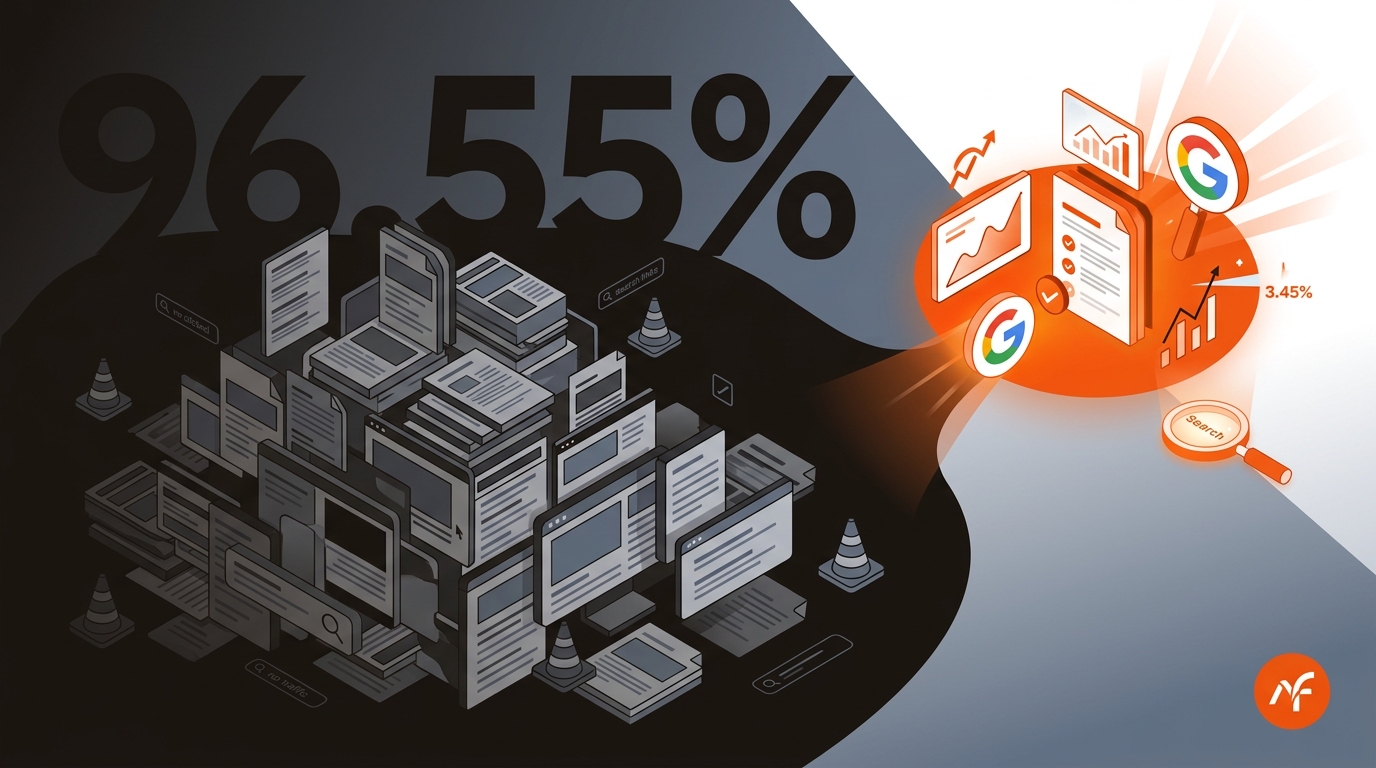
Short answer: Why does 96.55% of content get no traffic from Google? Most pages target no-demand queries, miss the dominant SERP intent, and lack topical authority to enter page one. Crawl and index issues, cannibalization, thin depth, and decay without refresh suppress testing. Fix intent, authority, and maintenance to earn traffic and citations.
Zero-traffic pages miss demand, miss intent, or lack authority; if you fail any gate, you will not get tested or cited.
Most teams publish into topics nobody searches, ship formats the SERP does not reward, or aim above their domain authority. If you are asking why does 96.55% of content get no traffic from Google, start here. Fixing these three gates moves you from invisible to testable. If you need a system, an AI search visibility platform for startups can enforce these gates across every page. See Mergeflo’s positioning as an AI search visibility platform for startups.
Only 3.45% of pages get any Google traffic at all. Source: Ahrefs study of about 14 billion pages.
Operators also miss the basics that ranking requires: single orphan pages without clusters, no internal link paths, thin coverage vs. the top 10, and pages that never refresh. Technical friction compounds the problem: blocked crawl paths, absent schema, index bloat, and duplicate or overlapping posts that cannibalize each other.
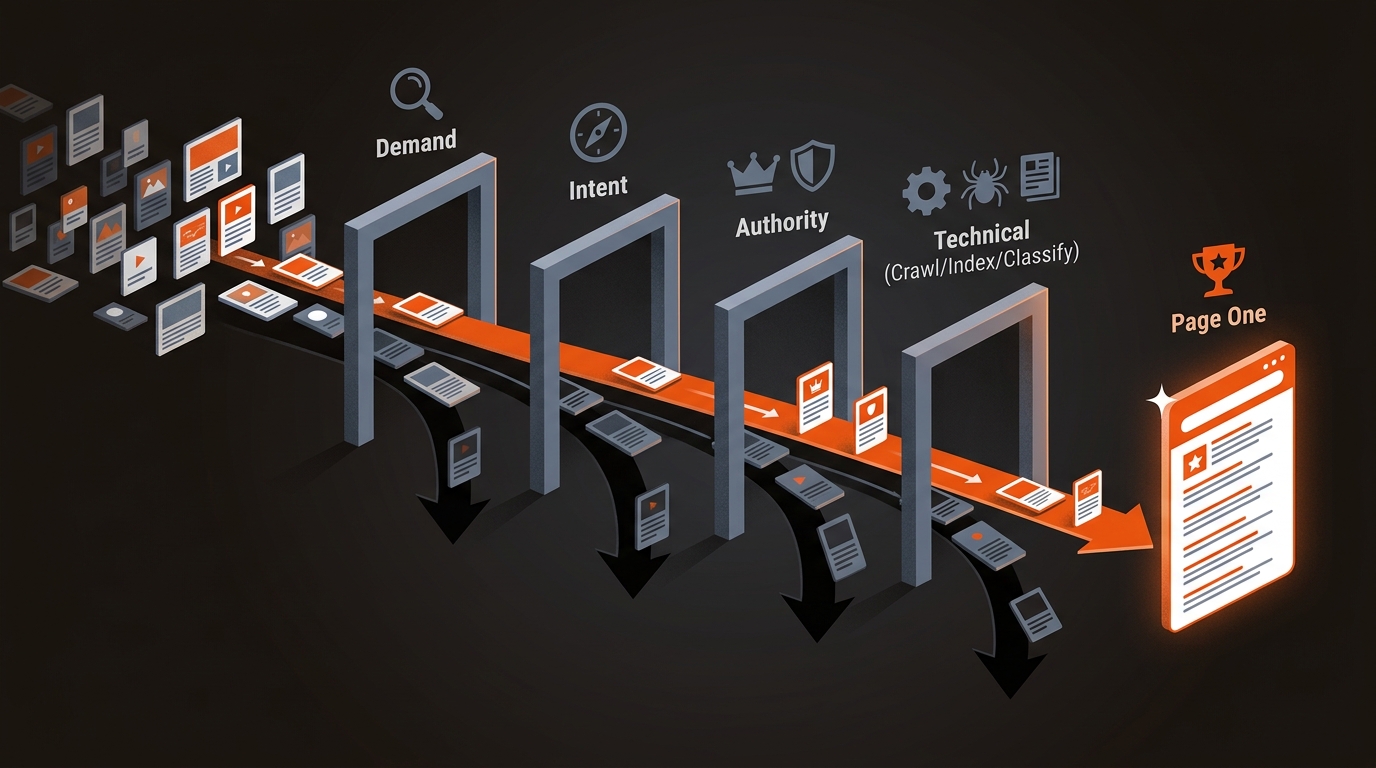
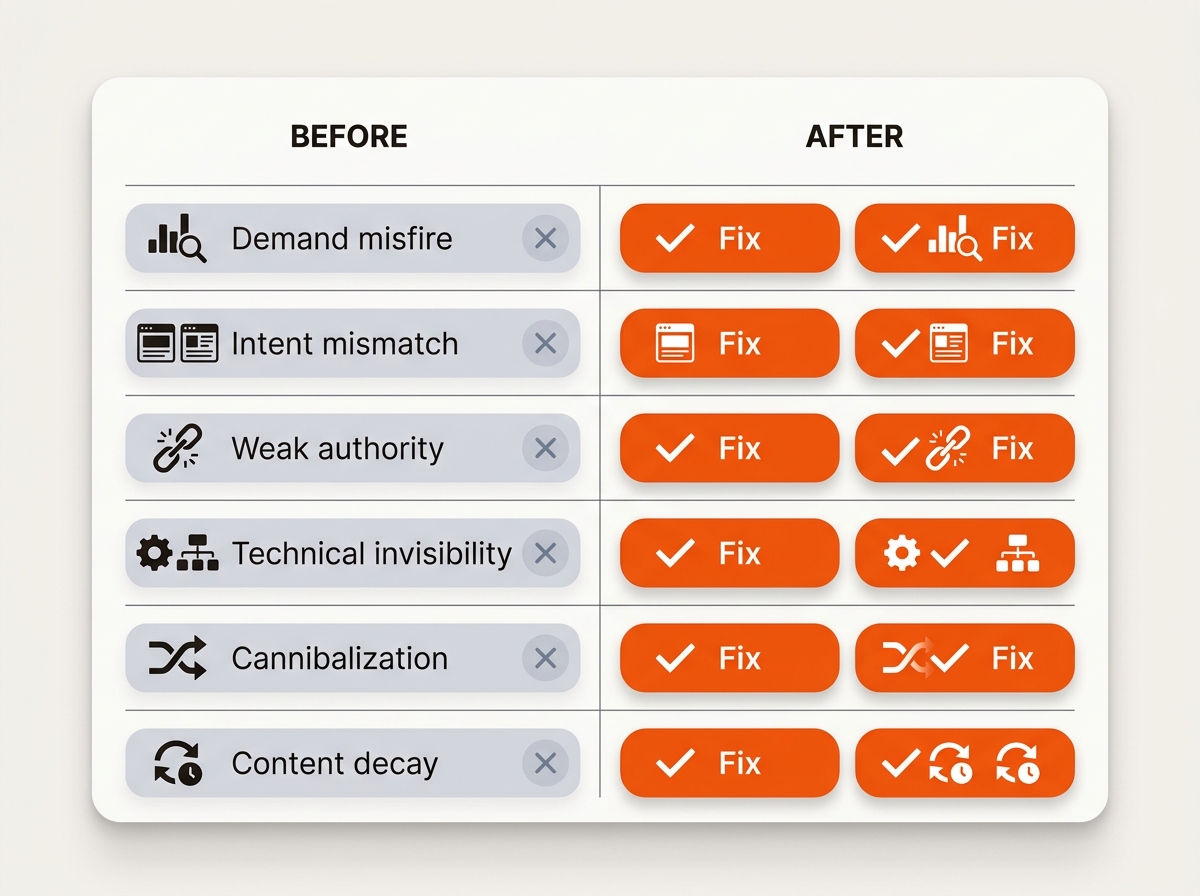
Treat zero-traffic as a system bug: confirm the cause fast, then ship the smallest fix that unlocks testing.
Comparison: Fast Diagnostics and High-Impact Fixes
If Google cannot reliably crawl, index, and classify the page, the rest does not matter. Start with GSC Coverage and the Rich Results Test, then fix indexability and schema before content edits. See Google’s guidance on crawl and indexing fundamentals.
For a small growth team, this workflow holds: 1 day on research and SERP intent, 2 days on drafts, 1 day on internal link routing and schema. Movement shows after Google recrawls the pages, and later on sites with prior bloat.
Manual playbooks crack as the library grows; you need an engine that keeps intent, authority, and freshness aligned.
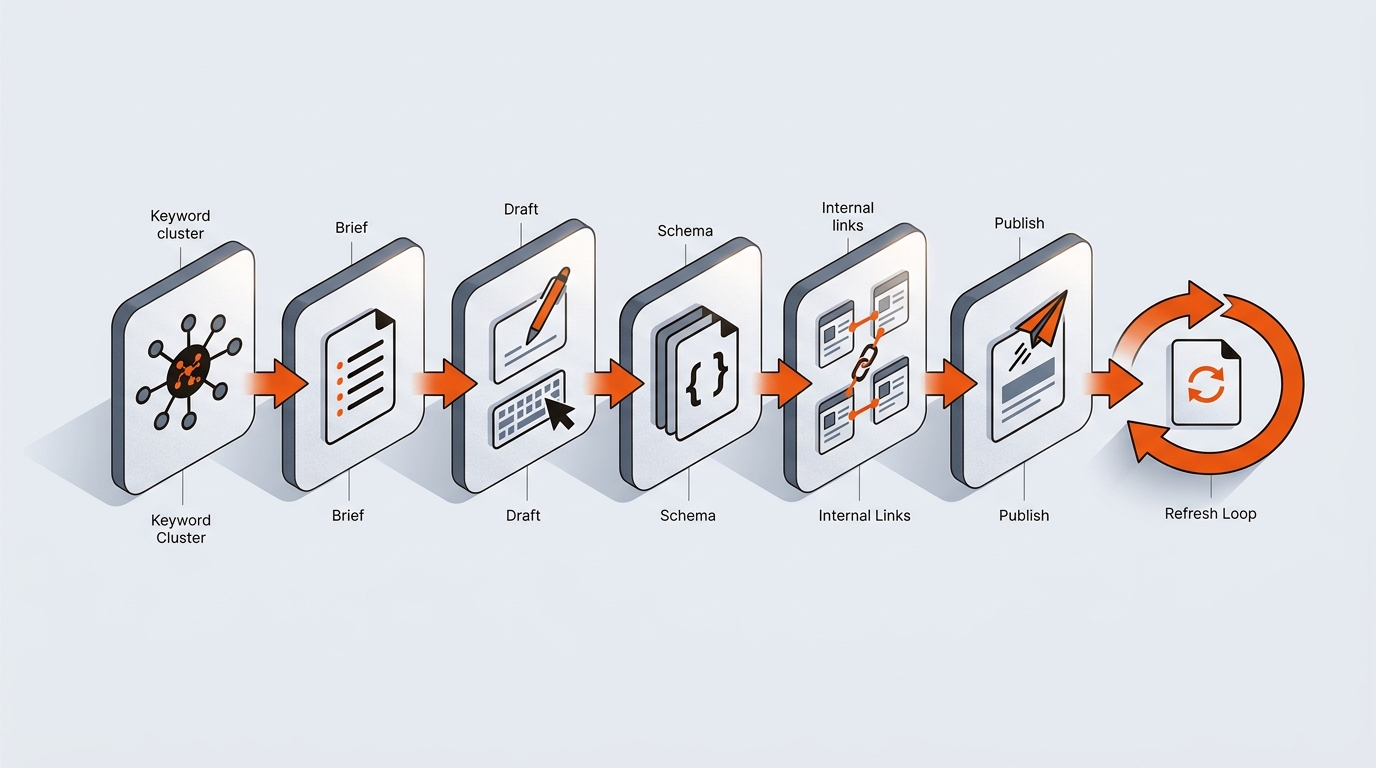
You need an engine that enforces demand-first research, intent-correct templates, authority scaffolding, and continuous refresh. As the library grows, indexing lag and drift pile up. Publishing more posts does not fix ranking if clusters, internal links, and schema are missing. The tradeoff is time vs. throughput: ad hoc fixes stall at volume.
Mergeflo is an AI search visibility platform for startups. Autonomous SEO + AEO content engine: it finds gaps, drafts articles with FAQ schema and suggested internal links, and publishes the ones you approve to Webflow. It tracks your Google positions and, on paid plans, checks whether ChatGPT, Gemini and Claude mention your brand. Our take on how SEO is evolving in 2026 shows why authority and AEO-ready structure win; Mergeflo turns that into a weekly plan and drafts for your review.
Tactical answers that move pages from invisible to testable in weeks.
Validate both monthly search volume and click potential. A practical floor is 150–300 SV with non-trivial CTR after SERP features. If SV is lower, the topic should earn through cluster value or conversions. For support pages, use them to pass authority with internal links to the money page.
Fix intent and internal links first. Align the format with page one signals, then route 10–15 internal links from relevant pages using exact and partial anchors. Add FAQ schema and a comparison table if the SERP rewards them.
Yes. Clusters raise topical authority, but competitive terms still require page-level links. Earn quality referring domains to the money page from contextually relevant pages. Pair with 3–5 supporting articles and a refreshed header and FAQ block to lock intent and lock in page-one volatility.
Publish fewer, tighter clusters. Ship fewer pages across one or two clusters with shared entities and mapped internal links, and set aside real time for refresh and link outreach. A small team usually gets more reliable rankings by concentrating authority than by scattering posts.
