
Short answer: Yes, Core Web Vitals are still relevant for SEO as a modest ranking tiebreaker and as critical UX metrics. They will not beat better content, but weak LCP/INP/CLS can cap visibility when intent and relevance are similar. Prioritize LCP and INP, then CLS, by fixing server latency, images, and main-thread work from scripts.
For thresholds, fixes and measurement in one place, start with our main guide to the three Core Web Vitals.
Content wins; Core Web Vitals sort ties.
Most teams asking "Are Core Web Vitals still relevant?" already have a content gap. A small team can burn sprints chasing Lighthouse 100s while thin pages and weak internal links block rankings. Use CWV as a quality floor to protect positions you earn with content. If you want help with the content side, an AI search visibility platform for startups like Mergeflo finds search gaps and drafts articles for your review.
Field data is the source of truth.
Google scores real-user data from CrUX with a 28-day rolling window. Lab tools (Lighthouse, WebPageTest) debug root causes; they do not move your Search Console Core Web Vitals report. INP replaced FID in 2024, which raised the bar on interactivity across the page’s lifespan, not just first input.
In a study of 37 brand sites commissioned by Google and run by 55 and Deloitte, a 0.1 second mobile speed improvement raised conversions by 8.4% for retail sites and 10.1% for travel sites (Deloitte, Milliseconds Make Millions). Speed pays, even when ranking gains are flat.
Prioritize in this order for most teams: LCP via server/hero media, INP via script control and main-thread cuts, then CLS via dimensioned media and layout discipline. See Google’s page experience guidance and the INP update on web.dev for targets and techniques.
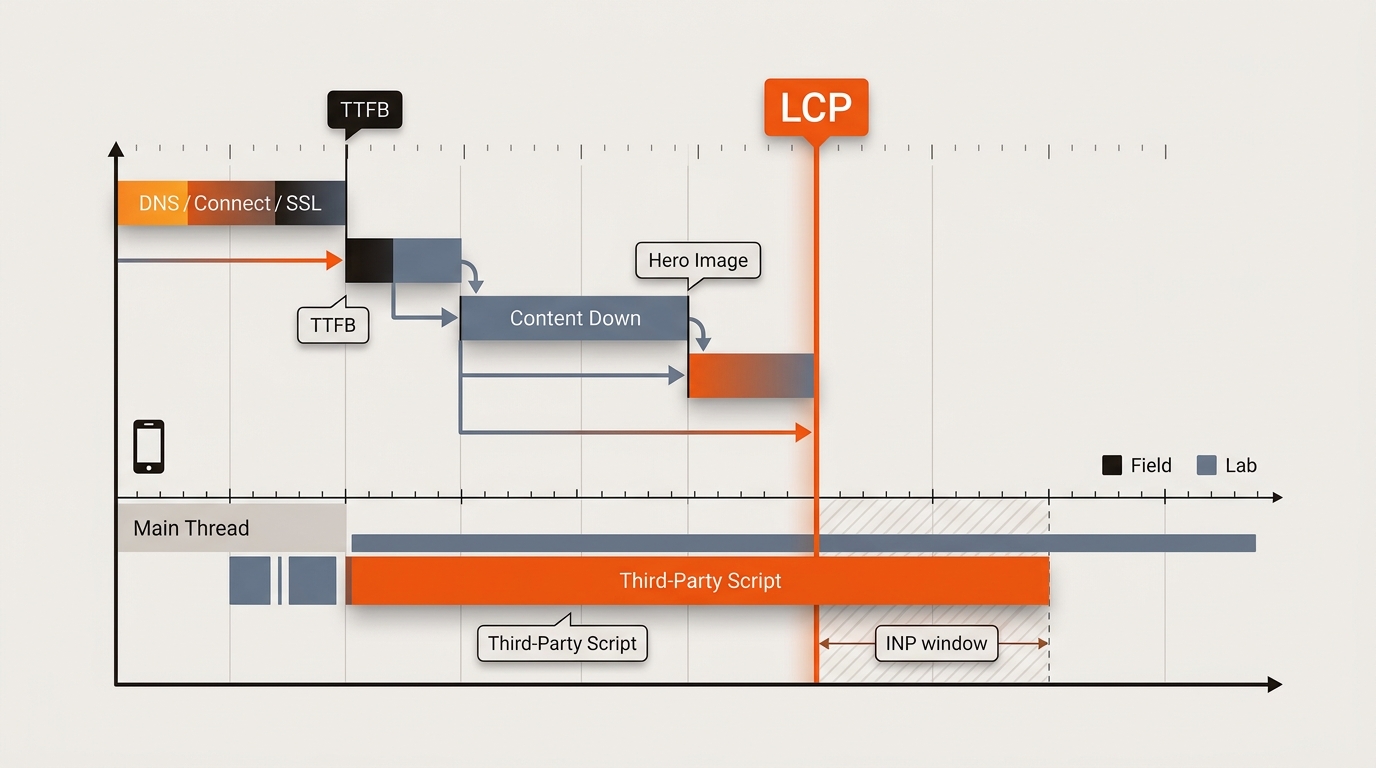
Hypothetical example, not a customer result: a team spends a quarter shaving 500 ms from LCP across the stack. They refactor the image pipeline, defer third-party widgets, and tune server TTFB. The cost is a quarter of engineering time and two postponed launches, including a 10-article cluster and a comparison tool. The site ends up with cleaner CWV but no new traffic. The issue was not the faster LCP. It was starving the roadmap items that compound discoverability, internal links, and query coverage.
Use CWV to defend CTR and conversions; expect ranking lifts mainly in competitive ties.
Plan fixes where users feel them. Start with TTFB, image weight, and JavaScript that blocks the main thread. Expect measurable UX gains even when rankings stay flat. Are Core Web Vitals still relevant for AI visibility? Indirectly yes: better UX sustains engagement signals and reduces pogo-sticking that can suppress long-tail queries.
caption
Two guardrails that prevent wasted sprints: close the TTFB-to-LCP gap before touching CLS (web.dev rates a TTFB of 0.8 seconds or less as good, and an LCP within 2.5 seconds at the 75th percentile as good), and cap third-party scripts with a performance budget; audit every tag for main-thread time and network cost.
Tie CWV to the job of each template. Blog posts need fast first paint to keep skimmers, but their growth comes from publishing volume and topic coverage. Category pages need responsive filters and stable layout to move visitors into PDPs. PDPs need quick hero image paint and no layout shift around price and CTA. Checkout needs zero layout shift and predictable input latency. Build a scorecard per template: target budgets on a mid-tier Android over average mobile network, track the microconversion it influences, and run 2-week experiments to see if a 300 ms gain changes that metric.
CWV is table stakes; rankings compound when performance ships with structured content at pace.
Mergeflo is an AI search visibility platform that tracks Google and, on paid plans, AI answers, and drafts content to close gaps. The autonomous SEO + AEO content engine finds gaps, drafts articles with FAQ schema and suggested internal links, and publishes the ones you approve to Webflow. Startup-priced, no agency overhead. If you need tactical CWV steps now, pair this with our sibling post, How To Pass Core Web Vitals Assessment, then dedicate the next sprint to shipping clusters that can actually rank.
Operationalize both. 1) Lock budgets per template, eg 2.2 s LCP on mid-tier mobile and CLS under visible jitter thresholds. 2) Create a living inventory of heavy components and cap their cost. 3) Automate checks in CI and reject merges that regress the 75th percentile. 4) Ship a predictable publishing cadence you can sustain, with briefs, internal links, and schema. 5) Review monthly: pages published, queries gained, click share, and CWV guardrail adherence. When performance is stable and content velocity is real, rankings accrue from breadth and freshness without surprise losses from regressions.
For net-new domains, relevance and content depth set the ceiling. CWV helps you hold positions once you earn them. Treat CWV as insurance against tie losses and UX decay. Ship clusters first; stabilize CWV as impressions rise in Google Search Console.
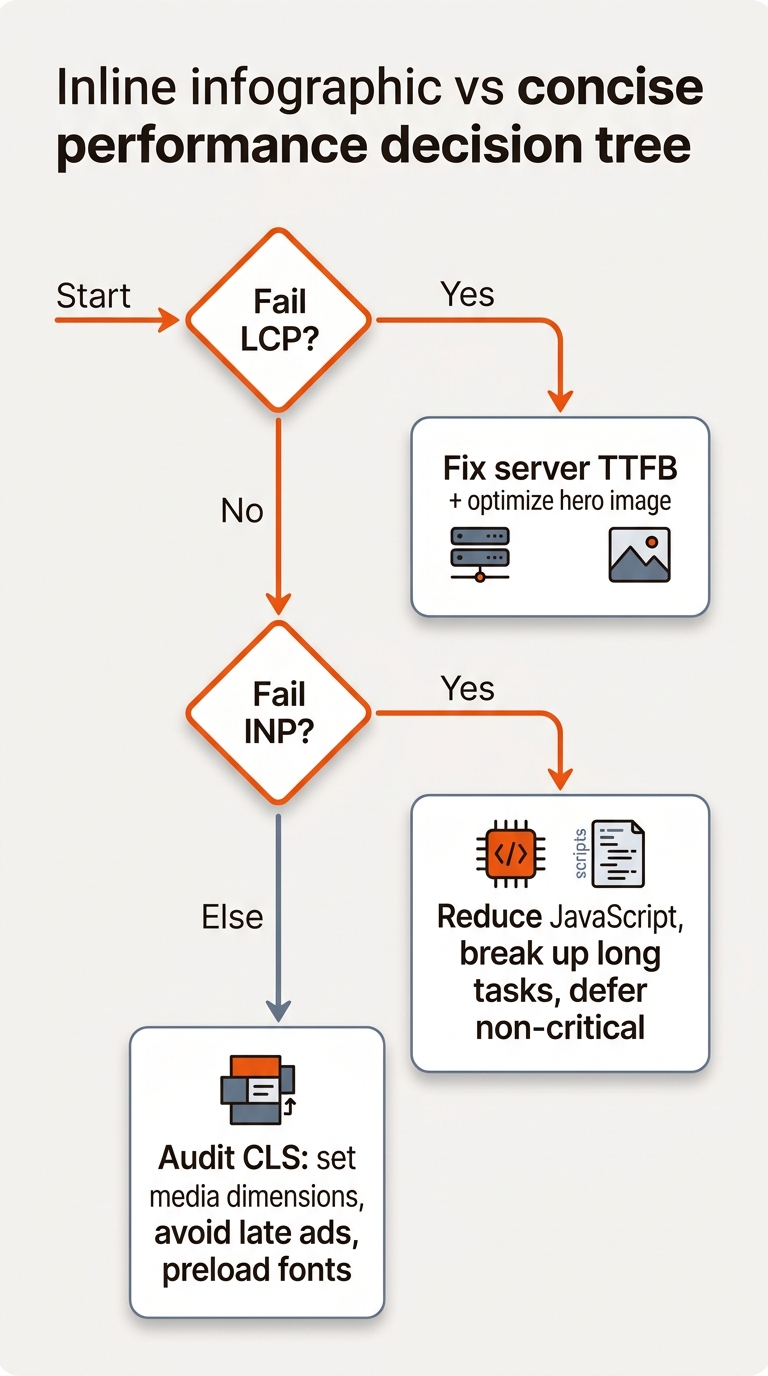
Fix what fails at the 75th percentile in CrUX, usually LCP via TTFB and hero media. If LCP passes but INP fails, profile JavaScript and cut long tasks, third-party tags, and hydration bottlenecks. Server and image work is the usual first move for LCP, ahead of micro-optimizations.
CrUX aggregates over a rolling 28-day window. Search Console’s Core Web Vitals report uses the last 28 days of data, so a fix shows up fully only after about four weeks of new visits. Use Lighthouse and WebPageTest to validate fixes the same day, but make decisions on field data trends over lab spikes.
Heavy scripts block the main thread and degrade INP; late-loading ads and injected widgets destabilize layout, hurting CLS. Load non-critical tags async/defer, use performance budgets, and measure main-thread time per script. Remove any tag that cannot justify its revenue or attribution value.
