
Most content gets no traffic from Google because it targets queries with little demand, lacks links that signal importance, and ships with technical issues that block indexing. Validate intent and demand before drafting, build topical clusters, interlink aggressively, earn a few relevant links, and keep pages technically clean with structured data and status checks.

Content fails when demand, authority, and indexability are missing at the same time.
Strong writing misses when it answers questions nobody asks. If your topics dodge demand, rankings never materialize. Start with live SERPs: confirm intent, page type, and format before you outline. Draft to match what wins there.
Authority gaps bury discovery. Many pages ship with zero links, leaving them unimportant in the crawl; 55% of webpages have no referring domains (a common pattern). Technical issues finish the job: messy sitemaps, thin duplicates, orphaned posts, and missing schema suppress both classic results and AI answers.
Example: a lean team on Webflow publishes five thought pieces a month from founder interviews, but none map search demand or interlink to a hub. Google crawls, hesitates on indexation, and nothing sticks. The fix was not more posts but a tight cluster, internal links from the hub, and a cleanup of thin pages.
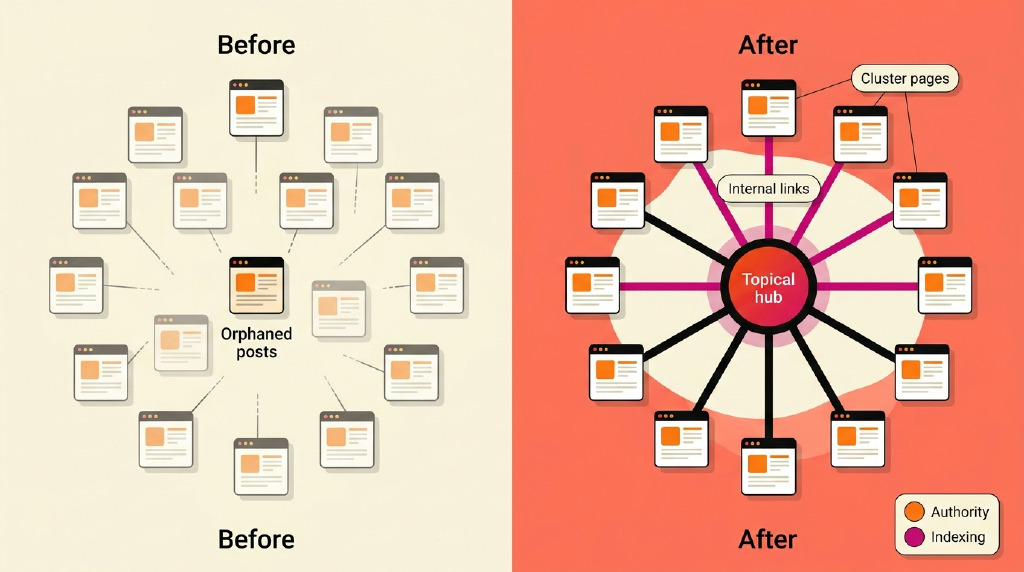
Use a triage table to turn zero-traffic pages into a repeatable system.
Zero-Traffic Triage: Replace Guesswork With A System
| Area | What Fails | What Works | Monday-Morning Step |
|---|---|---|---|
| Topic Selection | Random ideas with no SERP | Validate demand and intent | Run "why does most content get no traffic from google" and map top intents |
| Authority | No links; orphaned pages | Internal hubs + earned links | Add 3 in-cluster internal links per page |
| Indexing | Crawled but not indexed | Clean sitemap + status checks | Audit "crawled but not indexed" and fix thin or duplicate pages |
| Structure | Walls of text; no schema | Clear headings + schema | Add FAQ and Article schema where relevant |
| Maintenance | Publish once, never update | Periodic refresh for intent | Update titles, FAQs, and links to match SERP shifts |
96.55% of content gets no traffic from Google (treat this as a constraint).
Tie fixes to tasks your stack supports:
Tradeoff to manage: consolidating related thin posts protects indexation and authority, but you lose some historical URLs; keep the strongest URL and 301 the rest so signals concentrate.
For deeper context, see Why Does 96 55 of Content Get No Traffic From Google.
Ship clusters, interlink on publish, and audit weekly so intent and indexation never drift.
An AI Search Visibility Platform should turn research, drafting, schema, internal linking, and post-publish audits into a weekly lane. Generate AI-citable drafts with sources, ship with schema markup and clean slugs, auto-link into clusters, then probe citations across AI surfaces and refresh pages based on gaps. Only AI-citable content; no manual code or CMS integration Templates needed.
Mergeflo builds content briefs from live search demand. Mergeflo starts free with 250 credits and no card. Mergeflo Core costs $329 a month. Mergeflo publishes directly to a company's Webflow CMS. Mergeflo tracks whether a brand is named in answers from ChatGPT, Claude and Gemini. Nothing Mergeflo writes goes live on your site until a person approves it.
Use your system to:
Direct fixes beat generic advice; focus on demand validation, clean architecture, and citable on-page structure.
Anchor each post to a primary query with visible demand and clear intent. Use your keyword tool to find "how to find profitable keywords with low competition" and cluster 5-8 supporting posts around it. Check the live SERP: formats, questions, and page types signal what to build and how to structure it.
Thin, duplicate, or low-value pages are common culprits, alongside messy sitemaps and weak internal links. Fix "crawled but not indexed" by consolidating overlaps, improving depth, and routing links from your hub. Start with starter guide basics and remove anything you would not publish today.
Start inside your site: interlink clusters and hubs so authority flows. Then earn a handful of relevant links via partner write-ups, founder interviews, and citable assets. Given that 55% of webpages have no referring domains (a known gap), even a small number can improve discovery.
Answer engines prefer concise, source-backed summaries and structured sections they can lift cleanly. Add a Short Answer block, well-formed FAQs, and schema aligned to entities. When you ask models questions, design pages with clear citations so they can attribute your content credibly in their outputs.
