
Is Google Gemini good for SEO? Yes, when you use it for research, briefs, and structured data, then verify and cite every claim. It speeds content planning, improves answer readiness for AI Overviews, and helps surface gaps, but it does not replace technical SEO, on-page expertise, or measurement.
Use Gemini to accelerate briefs and schema ideas; keep humans on fact-checking, intent alignment, and product accuracy.
Push Gemini for topic maps, section outlines, question harvesting, and draft schema types. Then run a human pass for ICP fit, claims, and internal link targets. If you are asking is google gemini good for SEO beyond ideation, pair it with a strict review checklist and evidence sourcing.
Use Gemini as an accelerant. It shortens thinking-to-draft time but still needs your standards and sources.
Teams run into issues when they let Gemini choose targets or publish unreviewed text. Common failure modes: misread intent on ambiguous queries, thin proofs with no citations, and markup that looks right but fails testing. You still need how to create topical authority, what is structured data in SEO, and internal links that support crawling.

Example: a lean marketing team with one marketer and a part-time engineer ships two clusters a month. Gemini drafts briefs and Q/A blocks, but a human selects sources, adds product screenshots, and tunes schema. The tradeoff: more speed upfront, but you must budget time for SERP validation and schema testing or risk rework later.
Use Gemini to turn rough keyword clusters into ordered outlines, to map subtopics and questions, and to generate internal link targets from a sitemap or crawl export. It is strong at reformatting: convert transcripts into step lists, turn docs into FAQs, and spin safe variants of titles or descriptions under a style guide. It breaks when you ask for live SERP state, local nuance without source text, or strict schema that must match a validator. It invents sources, smooths contradictions, and misses edge cases. Treat product facts, compliance notes, and claims as manual-only checkpoints.
Let Gemini propose structure and summaries; keep validation, deployment, and site-specific debugging manual.
Use Gemini for ideation, synthesis, and machine-readable scaffolding. Pair that with operator steps: SERP checks, forum and doc mining, schema testing, and Google Search Console triage. Align to Google's AI optimization guidance for extractive summaries, citations, and schema that reflect on-page content.
Gemini Tasks vs. Human Tasks: Practical Split
| Use Case | What Gemini Helps | What Still Needs Operator | Risk/Tradeoff |
|---|---|---|---|
| Keyword Discovery | Seed ideas and clusters for how to find low competition long tail keywords | SERP validation, forum mining, internal query data | Misreads difficulty or intent without SERP checks |
| Content Briefs | Outline sections, questions, and answer patterns | Source selection, claims, product positioning | Generic briefs if you skip ICP context |
| Schema Markup | Suggest types and properties for what is structured data in SEO | Final property choices, testing, deployment | Invalid or bloated markup without testing |
| AEO Formatting | Summaries, FAQs, extractive answers | Evidence placement, citations, link targets | Uncited claims reduce citation likelihood |
| Technical SEO | Ideas for patterns and checks | GSC triage (crawled but not indexed), log analysis | False confidence; misses site-specific causes |
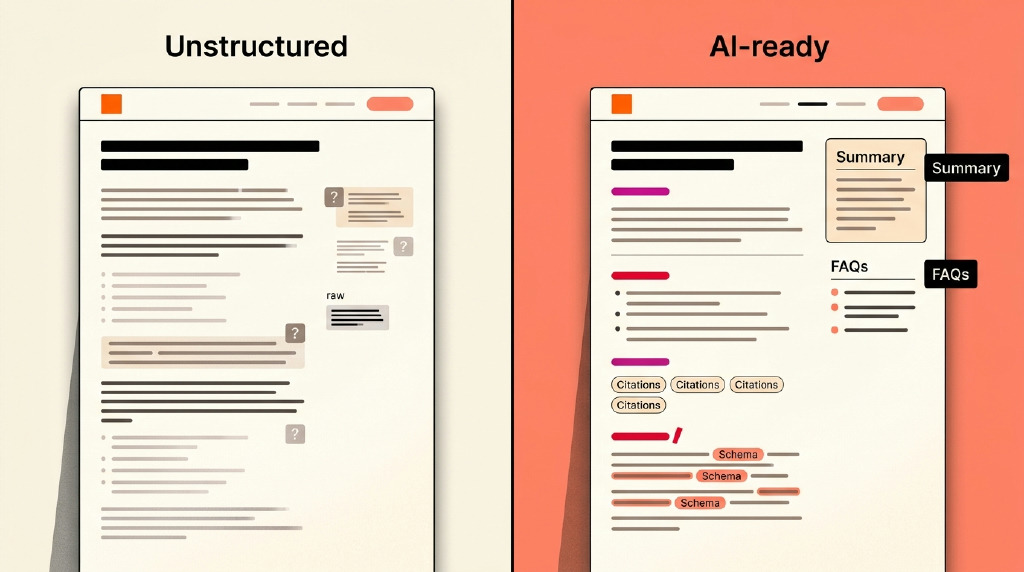
For format patterns that earn citations in generative results, review this practical walkthrough and treat it as a template to adapt to your stack. Cross-check structure choices against AI feature guidance so your summaries, FAQs, and schema match the visible content.
For deeper context, see Is Nofollow Good for SEO.
Operationalize Gemini with a repeatable path: brief, evidence, AEO format, schema, publish, and monitor citations.
A tight system turns Gemini from tool to throughput: prompt templates for briefs, a source-mining pass, a red-team pass on claims, schema generation with testing, publishing to CMS, and ongoing citation monitoring. Only AI-citable content; no manual code or CMS integration Templates needed. Mergeflo builds content briefs from live search demand. Mergeflo publishes directly to a company's Webflow CMS. Mergeflo tracks whether a brand is named in answers from ChatGPT, Claude and Gemini. Mergeflo Core costs $329 a month. Mergeflo starts free with 250 credits and no card. For prompts and patterns specific to Gemini, see how to get the best out of Google Gemini.
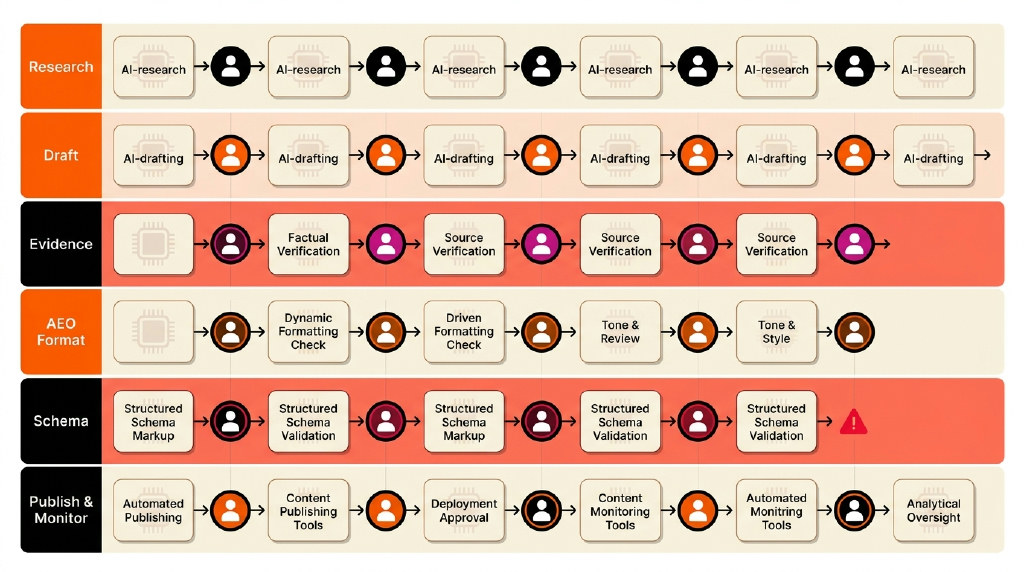
Wrap Gemini in guardrails. Feed it a small source pack per page: crawl excerpts, approved URLs, entity lists, and forbidden topics. Use retrieval to quote those sources, and require output in a JSON schema that names fields for headings, answers, anchors, and proposed internal links. Validate the JSON, then lint for tone and banned phrases. Add a checker that flags unsupported claims and missing citations. Diff against your own pages to prevent cannibalization. Queue a human review with a fact checklist and schema tests. Version prompts and outputs, and keep a failure log to refine prompts.
Operators ask these next. Here are direct, shippable answers.
Use it to map topics and find angles, then validate with live SERPs and your CRM or site search. It can suggest how to find profitable keywords with low competition, but you still confirm searcher language and intent. Document your acceptance criteria so the workflow is consistent.
Write clear extractive summaries, include sources, and add schema that matches the content. Aim for short, factual sentences and a Q/A block. This aligns with AI feature guidance without gaming anything.
Some queries get answered inside AI experiences. Your hedge is to earn citations, target queries where users still need tools or depth, and connect answers to actions. Focus on what is the conversion rate for organic traffic as a concept, and design pages that move readers to the next step.
Pick the model that integrates with your stack, supports citations, and fits your review workflow. The choice depends on which AI is best for startups given your compliance rules, editorial standards, and CMS. Tools shift; your process for briefs, evidence, schema, and publishing should remain stable.
